Bootstrap
Scott Richardson

Some Hard Truths

2 Peter 3:16
Scott Richardson November, 2 1975 Audio
0 Comments

Sermon Transcript

Auto-generated transcript • May contain errors

100%
to the second book of Peter. Chapter 3. Chapter 3 of the second book
of Peter. While you're finding that chapter,
let me remind you now that we'll meet
again this evening at 7 o'clock. Those of you that are here this
morning, do your best to be back with us this evening. It's necessary
for you, as well as us, to take advantage of all the services
that is afforded to us from time to time. We'll certainly look
back one of these days at lost opportunities and be remorseful
and sorry because we didn't take advantage of these opportunities. So let not that be the case. Let's do what we know to do and learn of Him who loved us
and gave Himself for us. this sixteenth verse of the third
chapter of the book of 2 Peter, as also in all his epistles,
or all his letters, speaking in them of these things, in which
are some things hard to be understood. which they that are unlearned
and unstable rest, or twist, as they do also the other scriptures, unto their own destruction. Ye
therefore, beloved, seeing ye know these things before, prepare,
lest ye also be led away with the error of the wicked fall
from your steadfastness, but grow in grace and in the knowledge
of our Lord and Savior Jesus Christ. To him be glory both
now and forever." Well, I think that anyone who will read the Bible
with a desire to know the truth will openly admit that it contains
many great mysteries, things that are hard to be understood.
And that's what the Apostle Peter openly admitted in regard to
the Apostle Paul. He said Paul wrote some things
hard to be understood, which they that are unlearned
and unstable rest or twist, as they do also other scriptures
even to their own destruction. I remember here in the Gospel
of John, our Lord Jesus preached to this congregation one time
and said, Except ye eat of the flesh of the Son
of Man, and drink his blood, ye have no life in you. For my
flesh is meat indeed, and my blood is drink indeed. And the
apostles exclaimed, This is a hard saying, and who can hear it?"
Now, it should be known, I believe, by you and I who profess
to be believers, that our inability to to understand the mysteries
of God ought not to hinder our accepting the truth of God and
to believe these things as true." Abraham, it says, that he didn't always understand
the things of God, but the scriptures say that Abraham believed God.
Now, that's what I'm trying to say at the outset of our discussion
here this morning, that first off, there's things that's hard
to be understood if we'll read the Bible with an earnest desire
to know the truth of the Bible. We'll admit that there's things
that's hard to be understood. And I've cited you a couple of
examples. except ye eat of my flesh and drink of my blood,
there be no life in you." They said, this is hard. We don't
understand it. We don't understand it. This
is a hard saying and who can hear it? God spoke in various ways and
forms and shapes to Abraham. Abraham didn't always understand
it, but the scriptures give this testimony in regard to Abraham
that he believed God. He believed Him. Well, here in the 8th chapter of the
book of John is a couple of verses that I want to read to you in
connection with what we have said thus far. John chapter 8. And I think that these verses
that we're about to read to you here in the 8th chapter of the
book of John, beginning there at verse 43, I believe, I believe
that you'll see that there is a difference between the individual
who cannot understand because he will not believe and one who
believes but does not understand. Now, the Pharisees acted as though
they understood all too well, but they simply would not believe
the Lord Jesus Christ. And he said unto them, he said,
Ye will not. Or why will ye not understand
my speech? Even because ye cannot hear my
word. And because I tell you the truth,
our Lord said, ye believe me not. The conclusion, then, is
this. He that is of God heareth God's
word. Ye, therefore, hear them not,
because ye are not of God. No matter big, small, simple,
or hard, he that is of God heareth God's word. Why do ye not understand
my speech, even because ye cannot hear my word? Ye are of your
father the devil, and the lusts of your father ye will do. He
was a murderer from the beginning, and abode not in the truth, because
there is no truth in him. When he speaketh a lie, he speaketh
of his own. For he is a liar, and the father
of it. And because I tell you the truth,
ye believe me not." 47th verse. Well, let me read to 46. "'Which
of you convinceth me of sin?' our Lord said. And if I say the
truth, why do ye not believe me? He that is of God heareth
God's word, Ye therefore hear them not, because ye are not
of God." Well, there are some things, brethren, in the Bible
that are difficult for us to understand, difficult for us
to believe. But I think that if we be of
God, then we'll believe them, whether we understand them or
not. Now, I've often said that there's more things in the Scriptures
that I didn't understand than what I do understand. Now that
may sound kind of bad for one who pretends
or in genuineness to be called of God
to the ministry of the preaching of the gospel. But yet it's true
nevertheless that there's more things that I do not understand
than what I do understand. Now, here in this ninth chapter
of the book of Romans, for instance, there are some things here that
are hard to be understood. Beginning there in the 10th verse
through the 13th verse. Romans chapter 9, beginning there at verse number
10, and not only this, but when Rebekah also had conceived by
one, even by our father Isaac, for the children being not yet
born, neither having done any good or evil, that the purpose
of God according to election might stand, not of works, but
of him that calleth. It was said unto her, The elder
shall serve the younger. As it is written, Jacob have
I loved, but Esau have I hated." That is a thing that's hard to
be understood, but yet it's in the Bible. Now, as we've already
said and read Scripture citing the precedence for this that
we're about to say, if we are of God, We'll at least
hear what God says, and we'll believe what God says. We may
not understand it, but we'll believe it. And now that's what
I'm saying now, that that which I've just read to you is hard
to be understood, that God hath loved Jacob, but he's hated Esau. That's hard to be understood
for this reason, because we have been educated through various
mediums, through our churches and through false teachers and
preachers into believing that God is not like the Bible declares
him to be. We have other ideas that have
been formed from early childhood until adult age as to who God
is and what He is like, His likes and His dislikes. And that's
the reason it's hard for us to face a verse of Scripture like
verse 13 that says, Jacob have I loved and Esau have I hated,
because we are used to hearing that God loves everybody, that
God hath loved everybody that was ever born into the human
race. And there is no preference with
God, that God does not prefer one above another, and we're
all equal. and that God really does love
everybody, and the Lord Jesus Christ came into this world to
save everybody and died upon the cross for everybody. And so we cannot cope with verses
like this that says, Jacob have I loved, but Esau have I hated. Well, it says here that Jacob
was loved and Esau was hated before either of them were ever
born. Now, that's not like the God
that we hear about, you see. That's not like the God that
we hear declared on the television, on the radio. and read about
in the twentieth century, that he would love one and hate one
before they were ever born. We always thought and were taught
that God rewarded us for our good deeds. That is, if we were
good, God would reward us. If we were bad, God would punish
us. But here it says, in this 11th
verse, for the children, being not yet born, neither having
done any good or evil, that the purpose of God according to election
might stand. It is said now, it is written,
Jacob have I loved, Esau have I hated." Usually we think of
how unfair such actions appear to be toward old Esau. But remember
now, if it's unrighteous to hate one who's done no evil, it is
also unrighteous to love one who has done no good. It's to be made perfectly clear
now, in light of what we've said, that there is no unrighteousness
with God, verse 14. What shall we say then? Is there
unrighteousness with God? God forbid. When men try to justify
the actions of God and make apologize for God, that's when they get
in trouble. The apostle here, now you remember
the burden of our lesson here this morning is this, that there's
things in the scriptures that's hard to be understood, hard to
be understood. And many, many people twist those
scriptures and other scriptures along with them to their utter
destruction. But I've said, and give precedence
for this, that he that is of God heareth what God says. He may not understand it, but
he hears it. He doesn't fly into the face
of God and rebuke God and say, now, that's not right. There's
unrighteousness with you. Now, I certainly would be foolish
to say this morning that I understand fully these three or four verses
of Scripture that I've read to you here in Romans chapter 9,
that I could understand the mechanics of why God would hate one and
love another when neither has given any evidence, they're still
in their mother's womb, and they haven't given any evidence of
doing evil or doing good. I can't explain that, the mechanics
as to why God would love one and hate the other. The only
thing that I can understand of these scriptures here is that
God is absolutely sovereign over his creation and it is perfectly
and absolutely right for him to do as he pleases because he
can do no wrong and he's God. See? Is there any unrighteousness
with God? Paul says, God forbid. So the
apostle here makes no apologies for God, but he rests his argument
now solely upon the revealed will of God. And he produces
the testimony of God to substantiate his argument in verse 15 of the
33rd chapter of the book of Exodus. And we'll look at that hurriedly. Turn with me there to the, if
you will, if you want to, to the 33rd chapter of the book
of Exodus. And I want to read just a few
things there. The 11th verse, it says, And
the Lord spake unto Moses face to face, as a man speaketh unto
his friend. And he turned again into the
camp. But his servant Joshua, the son
of Nun, a young man departed not out of the tabernacle. And
Moses said unto the Lord, See, thou sayest unto me, Bring up
this people, and thou hast not let me know whom thou wilt send
with me. Yet thou hast said, I know thee
by name, and thou hast also found grace in my sight. Now therefore,
I pray thee, if I have found grace in thy sight, show me now
thy way, that I may know thee, that I might find grace in thy
sight, and consider that this nation is thy people. And he
said, My presence will go with thee, and I will give thee rest.
And he said unto him, If thy presence go not with me, carry
us not up hence. For therein shall it be known
here that I and thy people have found grace in thy sight. It
is not in that thou goest with us, so shall we be separated,
I and thy people, from all the people that are upon the face
of the earth. And the Lord said unto Moses, I will do this thing
also that thou hast spoken, for thou hast found grace in my sight,
and I know thee by name. And he said, I beseech thee,
show me thy glory. Now listen to this. Moses is
saying, Lord, show me thy glory. I want to see your glory. If I have found grace in your
sight, show me thy glory. And he said, I will make all
my goodness pass before thee, and I will proclaim the name
of the Lord before thee, and will be gracious. Now, this is
his glory. His goodness, his graciousness,
and his sovereignty or his glory. I will make all my goodness pass
before thee, I will proclaim the name of the Lord before thee,
and I will be gracious to whom I will be gracious, and I will
show mercy on whom I will show mercy." Now, I said here at the
outset of our discussion, I said that the Apostle Paul makes no
apology, you see. for the testimony of God, or
for the will of God, but he rests his argument solely upon God's
revealed will. Now, he calls into testimony
the evidence in the Old Testament of Moses. And here in verse 15
of this ninth chapter, of the Book of Romans. For he saith
to Moses, God says to Moses now, I will have mercy on whom I will
have mercy, and I just read that to you there in Exodus chapter
33. I will have mercy on whom I will
have mercy, and I will have compassion on whom I will have compassion. Keep in mind this is what we
are talking about. There are some things that are hard to
be understood. But he that is of God, heareth
God's word. Abraham certainly did not understand
everything that God spake, but yet he believed God. How do you
suppose Abraham understood that his son Isaac, who was the child
of promise, who was given to Abraham and to his wife Sarah
when he was approximately a hundred years old and Sarah was ninety. And there was the impotency of
human nature involved, the deadness of Sarah's womb, the deadness of the fertility
of Abraham. And yet God said, I'm going to
give you a child. A child's going to be born unto
you, this old couple. It was so ridiculous that Abraham
and Sarah kind of chuckled at it. They kind of laughed. But
yet they believed that it would come to pass. And it did come
to pass. Now, after about 18 years, here
is Isaac, a grown man, And he's a child of promise. And God has
already told Abraham and says, I'm going to bless thee through
his seed. And all the nations of the earth
will be blessed through his seed. The seed of Isaac, that's the
royal seed. The whole world is going to be
blessed through his seed. That's the royal seed. That's
the seed through which the promised Messiah will come, Isaac. Now he tells Abraham one morning,
he said, Abraham, he said, get up early in the morning. And he said, get your son, thine
only son, Isaac, and he said, I want you to take him up to
a place that I'll appoint to you there in Mount Barak. And
he said, I want you to offer your son, your only son, as a
sacrifice unto me. Now, you see the point I'm trying
to make? The point's this. Though there's
things that's hard to be understood in the Scriptures, if God has
said it, let's believe it. Whether we understand it or not,
let's believe it. That's the problem. That's one
of the problems. There's many problems that confront
the churches of the Lord Jesus Christ in our generation, but
that's one of them, is that they refuse to believe the Scriptures
and take them for face value. Brethren, if God has said it,
if it's a bus, saith the Lord, let's just rest upon it, build
upon it, live upon it, and be willing to die upon it, whether
we ever understand it or not. Abraham didn't understand that.
How could a man understand that? How could he understand? God
has told him, said, I want you to kill this boy. You've had
him for 18 years. I told you he's a child of promise.
You know the miracle of his birth. Both of you were, there was deadness
of womb in your wife and the fertility of your own nature
was dead, but yet this miracle child was born of both of you.
A hundred-year-old man and a 90-year-old woman. Now I want you to take
him up there early in the morning and I want you to kill him. You see what I'm talking about?
The point is this. Abraham believed God. He didn't
understand, but he believed God. I believe that he believed this.
I believe that he believed that if he killed Abraham, or he killed
his son Isaac, somehow God was going to resurrect that dead
body and bring him back. Because he told those fellows,
he told his servants who was with him, he said after he got
to a certain point, going up that mountain, he said, now you
servants wait right here. I and the lad will go yonder,
but we will come again. We'll be back. And in his mind,
in the mind of Abraham, he'd already killed that boy. God
had already spoke to him once and told him, get up there, I
want you to offer him up as a sacrifice. He didn't have to tell him a
half a dozen times. How many times would he have to tell you?
How many times would he have to tell me? A lot of times I
preach things from the Bible and tell them to people and they
say, well, Well, I don't know. Where did you find it?" And I
said, Well, I find it right here in the Bible, and I read it right
to them. And they said, Well, I don't know about that. And
they have to be told and told and told, and you have to argue,
and you have to use logic, and you have to call in the testimony
of other brethren, other churches, and all that before they'll accept
it as the Word of God, before they'll do or act before Him
that which God has commanded them. Not so with Abraham. Not so, Abraham believed God.
That's the point I'm trying to make, is that Abraham believed
God. The things that's hard to be understood, but he that is
of God, careth God. You'll hear him. Abraham didn't
understand it. God only told him one time. As
far as I know, God only told him one time. He said, get him
up there. And he said, kill him. And of
course, you know what happened. Abraham got up there and he built
an altar. He built an altar out of stones,
and he put the wood upon the altar, and I suppose maybe even
got the fire started, I don't know. And the boy, I'm sure,
who knew something of what's going on, he said, Father Abraham,
he said, everything's in preparation. Here, I see that. He said, you
got the wood, you got the altar, you got the fire, you got everything,
but he said, where's the sacrifice? Where's the sacrifice? And Abraham
says, God will provide Himself a sacrifice. You're the sacrifice. And he was about, he took his
knife and the boy didn't run off. This is amazing, isn't it? The boy didn't say, well, no,
wait, you're trying to kill me and take off running down over
the mountain. It doesn't say that at all, but it says that
that he was submissive or indicated he was submissive to that which
was about to take place. And Abraham had the knife and
he had it raised, ready to kill him. And I say, in his own mind,
in his own heart, he'd already killed this boy. Killed him. About to plunge it into him and
heard a rustling there, and there was a ram. There was a ram with
his horns caught in the brush. God had provided himself a sacrifice.
Well, I've only said that that helped you and I this morning
see that if God has said it, let's believe it, though we don't
understand it, though we don't understand it. And I think that
we'll understand it better by and by, I believe that. I think
there'll come a time when it will be more understandable than
it is maybe now. We look, the scriptures say,
into a glass darkly. Now we look into a glass that's,
it's not a polished mirror. We can't see real good, but one
day we'll see as we are seen now, and we'll know these things. So it's our responsibility now
to believe what God has said, and there's some things I said
that's hard to be understood here, in particular in this ninth chapter
of the book of Romans. When one attempts to justify
God regardless of good intentions, he submits God to the judgment
or to the bar of man. But God, I want you to know this
now, God is not on trial for any of his actions. He is not
on trial. Let's not try God. and determine
in our minds whether God's right or God's wrong. God's not on
trial. He's not on trial. He's running
the whole show. Well, in that 15th verse there,
it says, For he saith to Moses, I will have mercy on whom I will
have mercy. and I will have compassion on
whom I will have compassion." God is not on trial for his actions
for he is a debtor to no man. Furthermore, God does not give
account to anyone for his actions. Now, since this fifteenth verse
has told us this in light of other things that we have read
here, I will have mercy on whom I will have mercy. I'll have
compassion on whom I will have compassion. Now, that verse says,
and other scriptures that I've read to you, says that God is
the sole offerer of mercy. He may freely give it or withhold
it as he pleases. Can we understand that? Now,
there are some attributes of God that are optional and some
are not optional. Now, this is an attribute of
God, mercy. Mercy is optional with God. That's what the scriptures say
and that's the burden of my teaching here this morning, that mercy
is optional with God He can grant mercy or he can withhold mercy. Things hard to be understood,
brethren. But God's not on trial. He's
not a debtor to you and I. And he will not give account
of any of his actions to you and I. He is the sole author
of mercy. He can give it or he can withhold. Now, I've said that there are
some attributes that are optional with God. Some are not. God can never forfeit his holiness. God can never forfeit his righteousness. God cannot forfeit his justice
even for a moment. Now, the crucifixion. of the
Lord Jesus Christ is the perfect example of the fact that God
cannot forfeit his justice or holiness or righteousness. He
hath said, The soul that sinneth shall surely die. Now, if God's
justice is ever to be satisfied, then someone must die to satisfy. No one could ever go to heaven
apart from the Lord Jesus Christ dying in their stead. Why? Because God will not forfeit
His justice. God will not forgive a sinner
at the expense of His justice. The justice of God binds God
fast. God's arms are bound fast by
his justice. He cannot exercise mercy upon
a poor sinner at the expense of his justice. So you see what
I'm talking about when I say that some attributes of God are
optional and some are not optional. The mercy of God is optional. He can give it or he can withhold
it. It's optional. His righteousness
is not optional. His righteousness, his holiness,
his justice must be satisfied. He cannot forfeit them. The Lord Jesus Christ became
identified with sin to the extent that God could not spare him
and be just. For him who knew no sin, but
became sin in our behalf, that we might become the righteousness
of God in him. Now, the same cannot be said
for mercy, however. God is not obligated to always
be merciful. He will give mercy or withhold
mercy and still remain just. Now I'll show you why this is
true. In 2 Peter, if you'll turn back there with me again, 2 Peter, chapter 2, verse number 4, you'll see here that God chose
not to show mercy upon the angels that sin. Now, how do I know that God chose
not to show mercy upon these angels? Simply because He sent
no Savior for the angels. The angels that rebelled and
sinned against God, there is no hope of them ever being released
from their torment. No hope for them. God sent no
Savior for fallen angels. He sent a Savior for fallen men. He came Himself. Listen to that
fourth verse. For if God spared not the angels,
that's sin, but cast them down to hell and delivered them into
chains of darkness to be reserved unto judgment, and spared not
the whole world, Well, turn with me, too, to the book of Jude,
Jude, the next to the last book of the Bible. Verse number 6, it says, And the angels which
kept not their first estate, but left their own habitation,
rebelled and sinned against God is what it means. He hath reserved
in everlasting chains under darkness unto the judgment of the great
day. You see what I'm talking about
then when I say that the same cannot be said for mercy? However,
God is not obligated to always He may give mercy or withhold
mercy and still remain just, and these are good biblical examples
of it. Another example is this. For
thousands of years, God showed mercy to the Hebrews, to the
Israelites, while the rest of the world remained in darkness. Today, however, God hath given
them, the Hebrews, the Israelites, the spirit of slumber eyes that
they should not see and ears that they should not hear unto
this day, while many Gentiles are the recipients of mercy or
have been shown mercy by God. One more truth that I have said
time and time again, It'll do for you to hear it again because
I think that it's essential that you understand this and you see
it if you're going to understand some things and believe some
things in regard to these mysteries found in the ninth chapter of
the book of Romans. Now it's this, it's mercy, mercy. Now
in order to be mercy, mercy in order to be mercy must be obtained. For mercy is favor which is not
deserved or expected. If all men are undeserving, mercy
may be shown to some while others may be left to receive their
just dues. If all deserve mercy, then there
can be no mercy shown. Get that now. If all deserve
mercy, if everybody deserves mercy, then there can be no mercy
shown. If God must show mercy to all,
whether they deserve it or not, then we must draw this conclusion,
there is no such thing as mercy. It's just a figment of our imagination. It's just a word without meaning. It doesn't mean a single solitary
thing. It's the will and the actions
of God that determines who will have mercy. Verse 16 of that 9th chapter of the book of Romans. See if that's not what that says. See if this verse doesn't say
that it's the will and action of God that determines who shall
be shown mercy. So then, 16th verse, so then
it is not of him that will it. That is, it's not according to
my will. I can't will anything to come
to pass. in particular in the realm of
salvation. I can't will to be saved. It's not up to my will. It's up to God's will. If I'm
to be saved, I must be shown mercy. If I'm to be spared from
hell, I must be shown mercy. You see that? God's got to show
me mercy because if He doesn't show me mercy, I'll continue
on and wind up in hell. Now, God's got to show me mercy
and He's got to spare me. He's got to spare me. If I'm
ever to fall short of eternal hell, well, I can't will it. I can't will it. I can't say,
well, I just will to be saved and I'll be saved. No, it's not
that way. God determines. It's God's will
that determines who shall be His favorite and who shall be
shown mercy. It's God's will and it's His
action, see? Verse 16, "...so then it is not
of him that willeth, nor of him that runneth, but of God that
showeth mercy." Now, that sixteenth verse, I
believe, speaks of the actions of Jacob and his mother. Now
they willed, that is, do you remember? Jacob and his mother
willed that Jacob should have Isaac's blessing instead of Esau's. Now Jacob ran to fetch two kids
for his father, but when it was all said and
done, the mercy that was shown Well, we're going to quit there
this morning.
Scott Richardson
About Scott Richardson
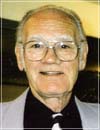
Scott Richardson (1923-2010) served as pastor of Katy Baptist Church in Fairmont, West Virginia.
Broadcaster:

Comments

0 / 2000 characters
Comments are moderated before appearing.

Be the first to comment!

Joshua

Joshua

Shall we play a game? Ask me about articles, sermons, or theology from our library. I can also help you navigate the site.