Bootstrap
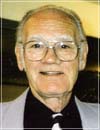
Scott Richardson

Perseverance Of The Saints

Romans 9:16
Scott Richardson November, 2 1975 Audio
0 Comments

Sermon Transcript

Auto-generated transcript • May contain errors

100%
I believe among Christians of this generation is that they fail to see, and I'm sure there's many reasons
for this failure, but one thing they fail to see
is this. is that God is to be worshipped
in spirit and in truth. That is, God cannot be worshipped
acceptably in error. He can't do it. It's
got to be truth. It's got to be truth and nothing
but the truth. God is to be worshiped in spirit
and in truth. Well, I trust that we can worship
God this evening in spirit and in truth. Turn with me, if you
will, to the ninth chapter of the Book of Romans, and let us
try to make a few comments in regard to this ninth chapter.
This morning I think we said that it was the will of God and the actions of God that determines
who will be the objects of his mercy.
And we told you that this verse in the ninth chapter of the book
of Romans, verse 16, certainly is evidence of that statement,
evidence of the truth of that statement, in that it says, So
then it is not of him that willeth, nor of him that runneth, but
of God that showeth mercy. Now, there are certain conditions
that one must meet in order to receive this mercy. In order
to receive salvation, certain conditions must be met. Now these
conditions may sound to you at first like
I'm saying that salvation is according to work. But that's not what I mean. I'm
only trying to say the truth. Certain conditions must be met for all who would become the
object of God's sovereign mercy or God's so great salvation. Certain conditions must be met.
I've already said that it's God who determines who shall be the object of his
favor. But certain conditions must be
met nevertheless. What conditions are these? Faith. No man can be saved unless he
has faith to believe in the Lord Jesus Christ as his Savior and
his Redeemer. Man cannot be saved apart from
that. He must have faith. Now, the
scriptures say that this faith that he must have is a gift of
God. In Ephesians chapter 2 and verse
number 8 it says, For it is a gift of God. By grace are ye saved
through faith, and that not of yourselves, for it reverting
to the faith, for it is a gift of God." Repentance is a condition that
one must meet in order to receive this mercy. Now, repentance too
is a gift of the Son of God. Turn with me to the book of Acts
chapter 5. Acts chapter 5 and verse 31. And see if this 31st verse and
5th chapter of the book of Acts doesn't say in no uncertain terms
that repentance is a gift of God. It says in the 30th verse that
the God of our fathers raised up Jesus whom ye slew and hanged
on a tree. Him, that's Jesus, hath God exalted
with his right hand to be a Prince and a Savior for to give repentance
to Israel and forgiveness Now, there are two conditions
that must be met in order for a man to receive the mercy that
the ninth chapter of the Book of Romans is talking about. He
must have faith and he must have repentance, and both of these
are the gifts of God. He can't repent unless God gives
him the gift of repentance. He can't believe on the only
begotten Son of God unless God gives him faith to believe. Yet he is commanded to exercise
faith toward God and repentance toward God. Now, another condition
that must be met is love. The Scriptures say that we love
Him because He first loved us. Another condition is good works. I want to read this to you in
Ephesians chapter 2, the same chapter that the verse of Scripture
that I just quoted to you here about faith is found. In Ephesians
chapter 2 and verse number 8, Listen to what this says, For
by grace are ye saved through faith, and that not of yourselves,
it is the gift of God, not of works, lest any man should boast. For we are his workmanship, created
in Christ Jesus unto good works, which," now listen to this, We're
the workmanship of God created in Christ Jesus unto good works
which God hath before ordained or determined that we should walk in them.
So there's repentance, there's faith, there's love, and there's
works. These are conditions that must
be met if we're ever to be the recipients of God's mercy. And every one of these that I've
named thus far are the gifts of God. They are that which God
gives us. They are not anything that we
can work up or out of ourselves. we must hold out faithful to
the end. Now, to hold out faithful to
the end means, in theological terms, in Bible terms, it means
perseverance, perseverance. Some call it the preservation
of the saints, but I'd rather call it perseverance. I'd rather
say holding out faithful to the end. Now, we've got to have faith,
we've got to have repentance, we've got to have love, we've
got to have good works, and we've got to have perseverance. If
we are to receive this so great salvation, this great mercy which
is in Christ Jesus, what about this holding out faithful
to the end? Everyone who receives the mercy
of God in the person of Jesus Christ will hold out faithful
to the end. Now, even if a man holds out faithful
for thirty years in his life and then falls by the wayside and lives in opposition to the
Lord Jesus or lives in indifference to the cross of Christ, that
thirty years goes for naught. His falling away is only the
proof that he never in the first place met the conditions of repentance
and faith and love and worth. because he never persevered.
He never held out faith. Well, you say, you mean that we're
saved by the grace of God and yet we've got to hold out faithful?
That's exactly right. We've got to hold out faithful
to the bitter end. Now, what does the Scripture
say about this? Turn with me here to 1 Peter
chapter 1, and verse number 5, and see what
this verse says in light of what I've said about holding out faithful
to the end. This fifth verse of 1 Peter chapter
1, it says, "...who are kept by the power of God." who are kept by the power of
God through faith unto salvation ready to be revealed in the last
time. Even our holding out faithful
to the end is of God. We are kept by His power. We
hold out faithful unto the end by and through the power of God. See that? Not of yourselves,
lest any man should boast not of works. All of these things that I've
mentioned to you, which are conditions which one must meet in order
to be the object of God's mercy, all of these are of God, even
the keeping us to the bitter end. God must do it. If God doesn't keep us, we'll
fall with the waves. If God doesn't keep us, we'll
be finally lost, every one of us. But the Scriptures, thank
God, the Scriptures promise that those that God hath begun a good
work, let me read it to you, shall complete or perform it
unto the day of redemption. Turn with me to the book of Philippians
chapter 1, I believe, of the book of Philippians. Listen to
this. Listen to this. Now, see if this
doesn't go right along with what I've said about perseverance
and about we are kept by the power of God. Philippians chapter
1, verse number 6. Listen to what this says, "...being
confident of this very thing, that he which hath begun a good
work in you." Maybe. It doesn't say maybe. It says, "...being
confident of this very thing, that he which have begun a good
work in you will, God will, perform it until the day of Jesus Christ. Even our holding out faithful
to the end is of God. So we must conclude that this
Mercy, this so great salvation that we have in Christ Jesus,
is all of God and not of us. Well, in this ninth chapter of Romans,
once more, we can draw this conclusion,
that it is God that gives life and therefore mercy. Now, secondly, I want to say
this about this chapter, that God used Pharaoh to reveal his
power. In this 17th and 18th verse,
it says, For the scripture saith unto Pharaoh, Even for this same
purpose have I raised thee up, that I might show my power in
thee, and that my name might be declared throughout all the
earth." God said, for this reason have
I raised you up. No other reason have I raised
you up, Pharaoh, only to declare only to show my power in thee that my name might be
declared throughout all the earth. God himself raised up Pharaoh
for a purpose. That is, God gave Pharaoh his
existence. God gave Pharaoh his life. God gave it to him. God preserved
his life. God caused him to prosper. God arranged for him to sit upon
a throne in Egypt, and he did this for a purpose. He did this
to reveal that God makes nations and individuals to differ according
to his good pleasure, And secondly, as I've already read in that
17th verse, to show his power. God shows his power over all
earthly kings, over all other gods, false gods that is. God shows forth his power. God shows forth his power over
Pharaoh, over false gods, over his enemies? For what reason? That man might declare his name
throughout all the earth. Well, we've said to you thus far that
the mercy of God is sovereign. We've said to you thus far that
this mercy is freely bestowed. We've said that this mercy is
given to those whom God calls. And this mercy is also for whosoever
shall call upon the name of the Lord. Now the next thing that I want
you to see is in this 18th verse that says that God hardens whom
he wills. Therefore hath he mercy on whom
he will have mercy and whom he will he harden. I guess that it's said in the
Bible no less than ten times that God hardened Pharaoh's heart. Now what does that mean, God
hardened Pharaoh's heart? Well, it does not mean that Pharaoh
can blame God because God tempts no man. Let
me read this to you from the book of James. the book of James, chapter 1, I believe it is, verse
13 to 15. Let no man say when he is tempted,
I am tempted of God. For God cannot
be tempted with evil, neither tempteth he any man. But every
man is tempted when he is drawn away of his own lust and enticed. So Pharaoh cannot blame God. Men are hardened when that which
has restrained them is removed. Men are hardened when left to
follow the suggestions of the devil. Men are hardened when
they are not immediately punished for their sins but shown mercy. What does that mean? It means every time we are warned
of God to repent of our sins, and to believe on the Lord Jesus
Christ. And when we fail to comply, when we fail
to submit to the Word of God, to the Word of Truth in regard
to His Son, and we are shown mercy, that
is, we are it can be said, left to get by
without any form of punishment at that minute. Then we are hardened
every time that we are warned by the Word of God and the Holy
Spirit of our just dues and the awfulness of hell. And God does not punish us right
on that particular spur of the moment. We're hardened. Every
time we hear the gospel and do not respond to it, we're hardened.
We're hardened. We harden our hearts toward God. Pharaoh hardened his heart toward
God. God, how many times dealt with
him there in those flags, showed him various miracles, things
that could not be duplicated in the most part by men. And yet he refused to believe. He refused to submit. So the
scriptures say that he hardened his own heart. Well, men's hearts
are hardened when they are not immediately punished for their
sins. Men's hearts are hardened when
they resist the will of God. Men can resist the will of God.
The will of God is for a man to repent and believe on the
Lord Jesus Christ. Men say, No. Men say, I will
not. I will not. It's some other time. We'll think about that tomorrow
or next month or when I become fifty years old or sixty years
old. Therefore, they harden themselves. Well, verse number 20 of this
ninth chapter says that men are not to reply against God, this
twentieth verse. Nay, but, O man, who art thou
that replyest against God? Who are you that replies against
God. Not supposed to, the Scriptures
say. Those who oppose God in His sovereignty would oppose
Him or reply against Him for at least three things. They would
say that His Word is not effective, they would say that He is unrighteous,
and they would say that God is unreasonable. Now, God is not
unrighteous. The Word of God is certainly
effective and certainly God is not unreasonable. But for a man
to reply against God and say, well, the 19th verse is the reply,
"...Wilt thou say then unto me, Why doth he yet find fault?"
Men find fault with God. They say, You can't do this.
We don't want you to do it. It's contrary to our thinking.
We don't think it ought to be done that way. We think that
you're unreasonable in making certain demands and we don't
like it. Well, when that attitude is formed
in a man's heart, he's replying against God. He's saying that
God is unrighteous. He's saying that God is unreasonable
in his demands, and God is not unreasonable. God is God. Well, those who reply against
God or those who oppose God certainly, well, I guess they just don't
know what they do. You see, if they knew, If a man
knew who he was replying against, would he really make these accusations? He's replying against Almighty
God. When he rebukes God for this
ninth chapter of the Book of Romans or any other portion of
Scripture and indicates that God is unreasonable and unrighteous,
He does not know who he's speaking to or who he's replying against. Therefore, I'm led to believe
that he just doesn't know because he's replying against God, not
man. He's not replying against the
author of this ninth chapter, the human instrumentality that
brought it about, the Apostle Paul, but he's replying against
God who inspired Paul to write it. and taught Paul these truths. They're speaking against Almighty
God. Let's not be too quick to speak
against God. You see, you and I are only creatures
of the dust. We're not creators. We are those who must give account
to God, not vice versa. God must not give account to
us, but we must give account to Him. Listen to this now. Every idle
word that men shall speak, they shall give account. They're all
in the day of judgment. We must give account unto God. God is not going to give account
of what he said to us. He's not on trial. We're on trial. God's not on trial. And he has
been so loving and so kind in his mercy and in his providence
that he's compiled a book. He's compiled a book, a whole
book that reveals himself. He didn't have to do it. He wasn't
obligated to do it. And he's made it very plain,
and he's sent his Holy Spirit to interpret this book to our
hearts that we might not be ignorant about our condition. So when
we reply against God, brethren, we're flying into the face of
providence, flying into the face of favor and mercy. And one day
we shall have to stand before him and give account of our objections to the so-called unreasonableness
of God Almighty. Now, I'll read one more verse
here, and I'm going to show you how big God is. In that 22nd
verse, this certainly will show us this
evening just how big God is. as if he's too big for us. What
if God, willing to show his wrath and
to make his power known, endured with much longsuffering the vessels
of wrath fitted to destruction? Is God getting too big for us
in this 22nd chapter, or this 22nd verse? Is this unreasonable? Is this unrighteous? It says,
What if God, willing to show his wrath and to make his power
known, endures with much longsuffering, he endures with much longsuffering
the vessels of wrath that are fitted to destruction? that he might make known the
riches of his glory on the vessels of mercy which he had prepared
unto glory." How does that sound? It says here that God hath prepared
the vessels of mercy beforehand unto his glory. And it also says
that God hath prepared aforehand vessels of wrath fitted to destruction. That's how big God is. Now, you
see what I'm talking about when I say that there are some mysteries,
there are some things in the Bible that are hard to be understood.
But God calls upon us to believe. God does not call upon us to
charge Him with unreasonableness, with unrighteousness. If we could
just get it in our hearts and in our heads that God knows what
He's doing, that He's Almighty God and He knows what He's doing,
and if we just trust in Him, this thing would work out for
our good and for His glory. You know that? He's God. And
he knows what he's doing. And he doesn't have to apologize,
and we don't have to apologize for what he said. He knows what
he's doing. It's funny that sometimes we
try to keep things like this hidden from those that we talk
to for fear that they might be offended with our God. Why? We ought not to fear that. God
knows what he's doing. The Lord Jesus Christ wasn't
afraid of offending people, was he? The Apostle Paul wasn't afraid
of offending people. He says, Paul says that this,
he said, I'm not ashamed of this. I'm not ashamed of the gospel
of Christ. power of God unto salvation to
them that believe, to the Jew first and to the Gentile. I'm
not ashamed of it, and certainly this evening I hope that you
and I are not ashamed of the ninth chapter of the book of
Romans. Rather than be ashamed of it,
we ought to rejoice in it. Listen, in this, is it the eighth
chapter of the book of Romans? I believe it is. The eighth chapter
of the Book of Romans says this, Moreover, whom he did predestinate,
that's predetermined, them he also called, and whom he called,
them he also justified, and whom he justified, them he also glorified. It says there that God predetermined
a certain group of people he predetermined. And those that
he predetermined he said he called, and those he called he said he
justified. And he said the certainty of
this is evidence in the fact that he considers them now glorified,
even though they are in this body of flesh. He said he's so
sure that it's going to be done that he considers them glorified
right now. Whom he justified, them he also
glorified. So there's a solid link or a
solid chain made up of links that cannot be broken in this
30th verse. Predestination, God predetermined,
God called, God justified, and God glorified. What shall we
say to these things? We reply against this? Does this
make us mad? Are we dissatisfied with it? Is it unreasonable? What shall
we say to these things? If God be for us, who can be
against us? He that spared not his own son,
but delivered him up for us all, how shall he not with him also
freely give us all things? Who shall lay anything to the
charge of God's elect? It's God that justifies. Who
is He that condemns? Why, I said, it's Christ that
died. Nobody can condemn you if Christ died for you. Who's
going to condemn you? We ought not to be ashamed of
these things. These are the glories of the cross here. Who is He
that condemns? It's Christ that died, yea, rather
that's risen again. who is even at the right hand
of God right now, who also makes intercession for us. Then he goes on, he says, No,
in all these things we are more than conquerors through him that
loved us, that's Christ. For I am persuaded that neither
death, nor life, nor angels, nor principalities, nor powers,
nor things present, nor things to come, nor height, nor depth. And he said, If I missed anything,
if I missed anything, death, life, angels, principalities,
powers, things present or things to come, height, depth, have
I missed anything?" He said, "...or any other creature shall
be able to separate us from the love of God which is in Christ
Jesus our Lord." Boy, that's fine, isn't it? I don't think
that there's anything unreasonable about that. I rejoice in that.
Nothing. I don't care what it is. No creature,
no creature, height, depth, power, principality, nothing shall be
able to save me. Why? Because He said those that
are the objects of My mercy, they didn't deserve it. They
didn't deserve it. I gave them repentance, I gave
them faith, I gave them love, I gave them good works, and I
gave them perseverance. I gave them everything and I
kept them. I kept them. by my power unto
the day of redemption in Christ Jesus. It's all of God, brethren,
every bit of it from start to finish, it's all of God, it's
all of Him. Now, if that doesn't cause you and I to live for Him, then if I had the
power this evening to pull back the curtains and let every one
of us walk over and look into the bottomless pit of hell and
hear the agony and the screams of those tortured people in hell,
that wouldn't do it. It wouldn't do it. Hell in all of its fury wouldn't
do it if the love of God won't make us conform to the Lord Jesus
Christ. Is that right? That's right. God help us, brethren. We've
got a good audience here this evening. We ought to have this
kind every Sunday evening, Wednesday evening, plus some more on Sunday
morning. Let's do our best to serve Him
who loved us and gave Himself for us. You remember now, keep
this in mind, If you've got reason to believe this evening that
you're a child of God, understand this, that that which brought about
your salvation was all of God. That the mercy that he showed
you was optional. He can give it or He can withhold
it. It is up to Him. But if you have
reason to believe that you're a child of God, He gave you mercy. He gave you
mercy. Not because you deserve it, you
didn't deserve it. If you deserved it, you see, it wouldn't be mercy,
would it? It wouldn't be mercy if you deserved it. You didn't
deserve it. So therefore we're what to? We're debtors to him. We're debtors to God. We're in
debt to him. We're in debt to him. So we ought
to what? Give ourselves body and soul
to him. Because we're debtors to him. Nothing ought to be too
difficult for him. For his glory, for his honor.
See? Time, money, whatever it is. Well, I know you do.
Scott Richardson
About Scott Richardson
Scott Richardson (1923-2010) served as pastor of Katy Baptist Church in Fairmont, West Virginia.
Broadcaster:

Comments

0 / 2000 characters
Comments are moderated before appearing.

Be the first to comment!

Joshua

Joshua

Shall we play a game? Ask me about articles, sermons, or theology from our library. I can also help you navigate the site.