Bootstrap
Scott Richardson

What Is The Gospel

Acts 16:25
Scott Richardson February, 23 1975 Audio
0 Comments

Sermon Transcript

Auto-generated transcript • May contain errors

100%
to the 16th chapter of the book
of Acts, Acts chapter 16. I was thinking how ungrateful we are, and I'm sure that we are ungrateful.
I'm not just making talk. I think if we'll be honest, we'll
admit readily that we're ungrateful, unappreciative people. It seems like we ought to, that
our hearts ought to seek more of the Lord than we do I heard some of the brethren
there remark before service that they had noticed on the television
a picture of a tornado just recently here in Georgia. What a sight! It was left behind. This tornado went through and
tore down houses. plate glass windows, overturned
cars. It was all just a small, in comparison
to the universe, just a small handful of air. And they said
that certainly it was representative of the power of God. And I'm sure that's right, that
to some degree that represents the power of God. And I thought
too, while they were talking there about that, that how ungrateful
we were when you get to thinking about the God of this power,
God who's over all this that we see, and now circumstances
and events do not control God, but just the contrary, God controls
circumstances and events, controls all this. He controls the elements,
the wind, the sea, the rain, the sun, the moon, the stars. He controls all of these things. Now, what do you think? ought to be our feelings towards
Him who is all-wise and all-powerful. God, now, I mean, to just repeat the name God ought,
in a sense, to cause us to be awe-stricken. But in light of
this now, God died. God Almighty died. A couple of years ago, you know,
the movement on foot, I don't really know what the theory was.
Theologians at Emory University, I think, in Atlanta, Georgia,
met and they come up with some idea that God was dead. Now,
I don't think that that was meant to be taken literal, although
a lot of people did take it literal. You know, folks were astonished
that anyone would even repeat such a terrible statement that
God is dead. But matter of fact, God did die
one time. God Almighty did die. He died in our place. God Almighty,
who we talked about, the whirlwind, the tornado there in Georgia,
I mean, that's a little thing. I mean, that is insignificant
in comparison as we try to describe the omnipotence of this deity,
Almighty God, who we read about here in the Bible, who we know
through the Lord Jesus Christ, this God Almighty. He died in my place. Now that ought to do something.
I mean that ought to do more for me than seemingly, than what
it's done. There must be something the matter
with my black heart. Because when you dwell on that,
meditate upon that a little bit, and realize that you're just
a, well I mean like a fly ash in the wind. Of all the millions and billions
of people that have lived and died upon this earth, you're
just, I mean you could hide under any rock. In fact, you and I
could be plucked out any time and probably in 24 hours we wouldn't
be missed. And probably we'd only be missed
then by our families. And I'm being honest. And the God, as I said, there's none besides
Thee, He died. He died for us. He died in our
stead. He died. He suffered. He said, God Almighty. Well,
that's what it means when it says, God so loved the world.
Well, of course, we know that he's talking about the world
of the elect. We know that he's talking about those that were
included in the covenant of grace before the world ever was. But
God so loved, you see, He didn't just coldly and blandly just
say, well, I picked this one out, and I picked this one out,
and I picked this one out. But it was in love. election, the election of God
was in love. Now I don't understand that.
I don't understand how God could have loved any of them. But He
did. God so loved us. Even before
time ever was, God elected so many unto Himself and those that
He elected, He loved them. Now what it says, with an everlasting
love, and came all this trouble, God went to all this trouble
to get you and I to serve Him and to be where He's at. God
went to a whole lot of trouble, giving Himself in humiliation,
degradation and all. I wonder about it, don't
you? I wonder about myself. In light
of these things, I wonder. I really do. What is the gospel? Let's talk about that just for
a little bit. I've talked to you about this for the past three
or four Sundays. Just a few things about what
is the gospel. I was telling some of them here
this evening that I kind of overheard a man He says he knows the gospel. If he knows it, he's keeping
it a secret because I've talked to him several times and he's
not been able to relate to me what the gospel is from the scriptures.
He's told me everything else but the gospel. He's religious.
He believes in the baptism. When I got to talking to him
about the gospel, the first thing he asked me was, has you ever
been baptized in the Holy Ghost? Oh, he might have been baptized
in the Holy Ghost, but I didn't speak any foreign language yet.
But now that was, you know, I mean, you don't want to get right down
to the bare facts of the gospel. And anyhow, I overheard him.
He was talking long distance on the telephone to his daughter. So he told his daughter that
I'd come in and said, it's a preacher and so and so and so. So they
got on religion. I don't know what all he was
talking about, but I did over here and say this. And this is characteristic
with the majority of people. He said, told his daughter, he
said, why don't you study the book of James? She said, it's
a nice book. That's about the asterisk. Why
don't you study the book of James? It's a nice book. There's 66
books in the Bible in a lamb house. Now pick that one out.
That's a nice book. We're talking about the Word
of the Living God. And that adjective that he used
to describe that little book certainly is an insult to the
Living God. That's a nice book. Every word,
every word between the covers of this book is the Word of God. God breathed. It's more than just a nice book.
It's God's book. What is the gospel? Well, is
it a message of glad tidings from heaven to make God-defying
rebels at ease in their wickedness? Is that what the gospel is? Is
it given for the purpose of assuring pleasure and crazy people that
providing they only believe, there's nothing left for them
to fear in the future. Well, one would probably think
so from the way the gospel is presented nowadays, that that's
about all there is to it. Here in this 16th chapter of
the book of Acts, it tells us about a man who was
under the conviction of the Holy Ghost. Now, this certainly has
been abused here. statement, what must I do to
be saved, which is found there in verse 31. And they said, Believe
on the Lord Jesus Christ, and thou shalt be saved in thy house. Now, this is what our generation has been taught. This is what our generation tells
others. They say, Believe on the Lord
Jesus Christ, and thou shalt be saved. They tell everybody
that. It doesn't make any difference who they are. And they say that
that's the thing that we need to tell people today. Believe
on the Lord Jesus Christ and thou shalt be saved. Now these
words certainly are found in the Scriptures. And I read them
to you and told you to turn there to Acts chapter 16 verse 31. They're there. Now, because they
are, Many superficial, and I think I can say this and
not say it harshly, superficial and untrained people conclude
that they are justified in repeating them to all they come in contact
with. Believe on the Lord Jesus Christ
and thou shalt be saved. I want you to notice here that
this particular verse of Scripture here and the
contents of this verse was not addressed to just a general multitude
of people, but it was addressed to a particular
individual. Now, there is a four or five-fold answer that
we can give in regard to, well, in defense of this particular
text here, Believe on the Lord Jesus Christ and thou shalt be
saved. to prove to our own hearts that this text, as it's applied
in our generation, is abused, it's taken out of context. Because to tell a man or the
run-of-the-mill individual that you come in contact with every
day, or a audience just to come right out and say, Believe on
the Lord Jesus Christ and thou shalt be saved won't save a flea.
Won't save nobody. I want you to notice, first off,
that the man to whom these words were spoken had just witnessed
the miracle working power of God. Now that's essential that
we see that in order to do away with this argument or do away
with this foolishness that the gospel is just believe on the
Lord Jesus Christ and thou shalt be saved. Let me read here. It says in verse 26, And suddenly there was a great
earthquake, And I said that the man to whom these words were
spoken had just witnessed the miracle working power of God. And suddenly there was a great
earthquake so that the foundations of the prison were shaken and
immediately all the doors were opened and everyone's bands were
loosed. Now that was a miracle, wasn't
it? Nobody was hurt. There was an earthquake that
just shook the whole prison, opened the doors, and the locks
that held their wrists and their arms suddenly fell off. And suddenly there was not just
a slight tremor, not a slight tremor like they had in California
here. In California here in the last
two or three weeks, how many earthquakes have they had? Around
a thousand. Around a thousand earthquakes they've had in California.
Slight tremors. Just slight shakes. He's not
talking about that. He said it was a great earthquake. So that the foundation of the
prison were shaken. Well, secondly now, in consequence
thereof, the man was deeply stirred, even to the point of self-despair."
Notice what he said. It says in verse 27, "...and
the keeper of the prison," waking out of his sleep didn't
even affect him, only woke him up. Awaking out of his sleep
and seeing the prison doors open, he drew out his sword and would
have killed himself, supposing that the prisoners had been fled. Deeply stirred, even to the point
of despair, drew his sword and would have killed himself, that
the prisoners had been freed. Now, you see the context wherein
this fact was preached or spoken? A man has observed a great miracle. The power of God has been evidenced
to the extent that he has been driven to to despair that he's
going to kill himself. This just was not going down
the street there and saying, hey, friend, won't you come and
go to church with me? No, I haven't got time. Well,
come on and go to church. Don't you know that you've got
to be saved to go to heaven? Well, I don't know. Well, believe
on the Lord Jesus Christ and thou shalt be saved. Well, I
believe on Him. I believe on Him. Well, then,
it looks to me like you're a Christian. You see, brethren, now, you say,
well, that's farfetched. No, it's not. For the most part,
that's what 20th century Christianity is. Listen to Billy Graham on
the television. And I've got no argument with
Billy Graham. I mean, I don't envy him. God
knows my heart, I don't envy that fellow. But if you'll just
get the sum and substance and the whole scope of his message,
it's man's capable of entering in and all he's got to do is
just believe. Nobody cares what he believes. All believe he's a sinner, made
some mistakes, but believe on the Lord Jesus Christ and thou
shalt be saved. Now, that's not the way that
this verse was intended to be used by preachers. This fella's an earthquake, boy.
A man just about tore that building down. Prisoners jumped out Thought
they'd got away. And man, he said, man, I better
draw my sword and take my own life. Now, you talk about someone
being to wit's end and to the end of himself. When you come
down, when things look so bad, and you're shut up, and you can't
see a ray of light nowhere, and you get to the place that you're
ready to take the sword and cut your throat. Now, you've been
somewhere. I've never known anybody that
way. I've never known anybody that's been that forlorn of hope
that they'd come to the place where they'd kill themselves.
That's the way this fellow was. Well, thirdly, he felt the need
to see. He needed to see something. And I want you to notice here
in verse 29, it says that he called for a light. Verse 29, after Paul said with
a loud voice, Do thyself no harm. Don't kill yourself now. Verse
29, as I said, he felt in need of illumination or he felt in
need of light and every center got to have some light. And he
called for a light. rang in and came trembling. Well, fourthly, his self-complacency
was utterly shattered, for it says he came trembling. He came
trembling. Well, fifthly, now notice this, he took his proper place That was in the dust. Verse 29, He called for a light,
and He sprang in, and He came trembling. Now listen to what
else He did. He took His proper place in the
dust. He fell down in the dust. He
fell down before Paul in silence. And sixthly, He showed respect
and consideration for the servants of God, for he brought them out."
Verse 30 says, "...and brought them out." He fell down before
Paul and Silas and brought them out. And he said, Sirs, what
must I do to be saved? That is the seventh statement
in regard to this text. serves what must I do to be saved."
This gives evidence that he had concern for his soul. He was
concerned about his soul. What must I do to be saved? He was an awakened soul. So I want you to see this, and
I think you do. I have no reason to believe that
you don't. But I think it's necessary that we see this if we're going
to have the right approach to evangelism. We can't say the end justifies
the means. The end doesn't justify the means. The end is to the glory of God. That's the reason that we preach
the gospel. That's the reason that you and
I serve the Lord. For what end? that God might be glorified. But if the end, wherein we serve
God and preach the gospel, is to the saving of souls, now listen
to me, if that be our all-consuming passion, that we're going out
to win souls. Now, you see, that's what the
all-consuming passion of this generation of so-called evangelicals. We're going to win souls for
Jesus. All right? If you're wrong here, if you're
wrong here, you're going to be wrong someplace else. Dead wrong. You're going to get into error.
You're going to get in error so deep you never will get out.
What they're saying is, the end justifies the means. Because
our all-consuming passion is to be a soul winner for Jesus,
to bring people to Jesus. But what I want you to see now,
that is not our first and foremost and chief aim, is to bring people
to Jesus. I don't know where that got in.
It's not in the Bible. Our first and foremost and chief
aim and desire is to glorify our God and to do it His way. See? Do it His way. Now, if you
get off on the wrong foot like a lot of our free will people do, they say
the chief end of me as a minister or a layman of this church, is
that we win souls to Jesus. Then you see, the end justifies
the mean. And so then they error and start using their own manipulations
and they tell people out of context, Believe on the Lord Jesus Christ
and thou shalt be saved. It's out of context. Of course
they've got the They can point right there, it says, the man
cried out, what must I do to be saved? And he said, believe
on the Lord Jesus. And they say, right there you
are. But you see how warped that is, how it's out of context?
This is an awakened sinner. He's been awakened. He's been
awakened by the Holy Ghost of God. And when you find an awakened
sinner, And when the law is sicced on to a sinner, and the Holy
Spirit gives him life or regenerates him, gives him life, that he
sees himself in his lost condition, his miserable condition, that
he is a rebel before God. And he begins to cry out to God,
then you can tell him. Believe on the Lord Jesus Christ. You can tell him about the gospel
of free grace. You can tell him about the doing
and the dying of the Lamb of God. See? Tell him to believe
on Him whom God sent. But we've got to keep it in the
right context. Well, I said that because I think
it's important. I think these things are important.
As I told you here this past Sunday, where there is no preaching
of the law, there cannot be any knowledge of sin. You can't have
any knowledge of sin if you don't preach the law. If you don't
preach the rigorous demands of a holy God, there's not going
to be any repentance. Because there cannot be any repentance
when man doesn't know what sin is. He's got to know what sin
is. Sin is a transgression of God's law, violation of God's
law. It's a crossing over. It's a
breaking of God's law. God's angry with him. God's on
the outs with him. And he's at enmity with God. And these things have got to
be known. They've got to be understood. And that's exactly the reason
for the shallowness of Christianity today. That's the reason that
you can go to most religious meetings. If there's an invitation given,
why, some will come laughing. There's no evidence of a broken
spirit. broken and contrite hearts. You
see them coming up grinning and popping, as Ralph Barnard said,
snapping their gum and clicking their fingers and all that. When the Holy Ghost of God brings
about repentance, there will be no smart aleck on the part
of the individual who is the object of God's affections. There will be no smart aleck.
Oh no, he'll be serious. If there's ever a time when a
man's serious, it's when God reveals that man's condition
to him. When God reveals to him that
he's a sinner and a lost sinner, and he's a rebel, and he hath
broken the law of God, and the weight of God's holiness and
justice is over his head, and it's about to crush him, and
if he dies, he'll split hell wide open. And I'll tell you,
he'll be serious. He'll be serious. Can you not
be smiling and jumping and hooping and hollering and throwing songbooks
and all that kind of foolishness? Yes, sir. Well, if you're wrong,
keep in mind now, if you're wrong about the chief end and aim and
desire of every blood-bought, born-again believer, which is
to the honor and glory of God, you're going to be wrong about
something else. You'd be wrong about a whole lot of things.
You've got to be right about that. You've got to be right about that. You
never will be right about preaching the gospel, see. You see these,
these, what do you call these people?
This big word to tell you? Charismatic? Is that what it
is, Pat? Charismatic? All right, this Charismatic Movement,
which is speaking in tongues. Well, it's really speaking in
a foreign language is what it is. They call it speaking in
tongues, unknown tongues. And that's all they're interested
in. Their chief aim and interest
in this life is what? That we might be what they call
be baptized in the Holy Ghost and speak with other tongues.
That's their chief interest. It must be wrong because the
chief interest of every man who is saved is to the glory of God. that charismatic movement, that
self-exaltating, and so forth. Believe on the Lord Jesus Christ,
now shalt be saved. Boy, that has to do with the
Pearl of Great Price. If you go out here and just pick
at random some fella in the barbershop or on the job, without any preparation of the
soil, if the heart has not been plowed, and you say, well, believe
on the Lord Jesus Christ, now shall it be saved, well then,
you know what you do? You insult the honor of Jesus
Christ. You insult Christ and His work
and His person. All right. And you cast what? Pearl before swine. See, you can't plant until the
ground has been broken up. Can't do it. Now, Pat McGinnis,
he's a, well, what's that fella in California,
that seed man? Oh, what is, what's that guy's
name, Pat? Who? Well, that's one of them. But anyhow, Pat, he's a great
gardener, organic gardener. And he got him some seed catalogs,
and he got to reading them. And he stayed up all night the
other night. He didn't go to bed until 3 or 4 o'clock in the
morning, reading them seed catalogs. Now, if there's anybody in this
building that is one of authority in regard to garden in his old
pasture. And he'll tell you that you cannot
plant unless the ground's broken. You can't do it. There ain't
no way in this world you can plant unless you break the ground.
The ground must be broken. Now, before the gospel of the
Lord Jesus Christ can take root, a man's heart must be plowed.
It's got to be plowed with God's holy law. And all this, you see, is keeping
the gospel in its context. When a man's heart is plowed,
when the fallow ground is broken, then, you see, you can say, believe
on the Lord Jesus Christ. But his heart's got to be plowed. You just can't, you just can't
go down in a barbershop and there's them fellas all talking and some
fellas come in and say, well, believe on the Lord Jesus Christ
and thou shalt be saved. Church is full of that kind of
people. That's the trouble right now with this generation. That's
the trouble with this modern 20th century Christianity. The
preachers come along and convince people they're Christians when
they're not Christians. And he's telling them, he says,
well, I can't understand you people. How come you can't live
a Christian life? Well, I can understand it because
you can't live a Christian life without Christ. You can't do
it. And the churches that are full
of those kind of people, and they fight, and they carry on,
and the demands of God's too much for them, and the burdens
are too heavy, and they'll fight the preacher, and fight one another,
and tear the church up. God help us receive the truth,
brethren.
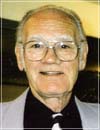
Scott Richardson
About Scott Richardson
Scott Richardson (1923-2010) served as pastor of Katy Baptist Church in Fairmont, West Virginia.
Broadcaster:

Comments

0 / 2000 characters
Comments are moderated before appearing.

Be the first to comment!

Joshua

Joshua

Shall we play a game? Ask me about articles, sermons, or theology from our library. I can also help you navigate the site.