Bootstrap
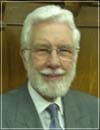
Stephen Hyde

One God and One Mediator

1 Timothy 2:5
Stephen Hyde May, 8 2018 Audio
0 Comments
'For there is one God, and one mediator between God and men, the man Christ Jesus;' 1 Timothy 2:5

Sermon Transcript

Auto-generated transcript • May contain errors

100%
May it please Almighty God to
bless us together this evening as we meditate in his word. Let
us turn to the first epistle of Paul to Timothy and the second
chapter and we'll read verse 5. The first epistle of Timothy,
chapter 2 and reading verse 5. For there is one God and one
mediator between God and men, the man Christ Jesus. The Apostle Paul, under the influence
of the Holy Spirit, was able to write such words from his
own personal experience and from his own personal knowledge. and
wonderful it is if we indeed can join with the Apostle and
be so thankful for the great truth of this word. There is
one God, only one God, one true God. There are many so-called
gods in this world at the present time but there is only one true
God. There is one God says the Apostle
and of course we know through the epistles that he writes,
how clearly he shows that in that one God there are the three
persons of the Trinity, the Father and the Son and the Holy Spirit. And of course to our natural
minds it is a mystery, but the Lord gave the Apostle Paul faith
to believe the great truth of God like he did all the apostles
and like he does the church of God faith to believe this wonderful
mystery and so what a wonder it is tonight that we can come
and rejoice together in the greatness of our God for the wonderful
way of salvation the wonderful plan of salvation and to realise
tonight we have a mediator between this great God and ourselves left to ourselves we could not,
we cannot approach to a holy God and the reason is because
the holy God is sinless and the holy God cannot look upon sin
And therefore we have no ability to approach unto that God. We
are separated through our sin. Just like the apostle, just like
all the saints of God. And to think tonight that in
and of ourselves we are separated from the true God. Now what does that do? What does
that do to us, even tonight? I hope it makes us really thankful
and really desire us to praise God for the Saviour, the Lord
Jesus Christ, who we have set before us here in this wonderful
office of mediator between a holy God and sinful men. And so tonight, may we truly rejoice in such
a great and glorious truth. And know therefore, that through
this truth, we do have access to the God of heaven, that holy
God who cannot look upon sin, because almighty God looks upon
his son. And he sees in his Son what he
has done to redeem our souls. And therefore we come, not because
of any virtue in ourselves, but we come accepted in the Beloved,
accepted in the Lord Jesus Christ. And so if we come in that way,
we will come because we will have some understanding of our
own condition, our own situation. The apostle was very clear, wasn't
he, of his situation. And he was able to tell us in
this first chapter when he says, and I thank Christ Jesus our
Lord who hath enabled me. And what a blessed thing it is
when God enables us. For that he counted me faithful. It's only because what God has
enabled us to do, as he's given us faith to believe, enabled
me. For that he counted me faithful,
putting me into the ministry. And then he describes himself,
who was before a blasphemer, and a persecutor and injurious,
but I obtained mercy because I did it ignorantly. And then
he says, and the grace of our Lord was exceeding abundant. Now I'm sure every true believer
would totally concur with that statement. The grace, the unmerited
favour of Almighty God, the grace of our Lord was exceeding abundant. It's a very strong description,
isn't it? Exceeding abundant with faith
and love, which is in Christ Jesus. What a mercy if you and
I are blessed with this gift tonight, this gift of faith and
this blessing of love, which is centered of course in none
other than the Lord Jesus Christ. And then he spells out in nine
certain words, this is a faithful saying and worthy of all acceptation. that Christ Jesus came into the
world to save sinners of whom I am chief. Now what enables
us to come alongside the Apostle? It's only the work of the Holy
Spirit. And bless God when the work of
the Holy Spirit is such that we stand as the Apostle utterly
condemned before our Holy God and we won't throw a stone at
the Apostle and say, well of course I wasn't like you, I wasn't
a blasphemer and I didn't do this and I didn't do that. When
the Lord God convicts of sin, when he points to us just like
Nathan the prophet did to David of old, when he said to David,
thou art the man, There was no way out. There was no excuse.
There was the conviction from Almighty God. And of course we
know that David fell under that conviction. What a blessing it
was. He did fall under that conviction.
And what a blessing it was that therefore he was then able, again
under the blessed influence of the Holy Spirit, because of that
incident and that situation which had arisen in his life, he was
then able to write Psalm 51. And how encouraging that is to
the Church of God, who come seeking as David did, as the Apostle
did. And he tells us, have mercy upon
me O God, according to thy loving-kindness." Now that's what David knew. He knew the loving-kindness of
the Lord. My friends, as we are under the
influence like the Apostle Paul was here, blessing God for his
grace, blessing him for this faithful and worthy truth that
Christ Jesus came into the world to save sinners of whom I am
chief. And so the Psalmist David tells
us, according to thy lovingkindness, according unto the multitude
of thy tender mercies, God's mercies are far above our sins. However many sins we have, there
is a multitude of thy tender mercies. It's a wonderful expression,
isn't it? Loving kindness and tender mercies. It shows to us how gracious God
is. It shows to us that God doesn't
deal with us as our sins deserve. It's because he is a compassionate
God. He is a God of loving-kindness
and of tender mercies. And because of that, David was
able to come then and request that all his transgressions would
be blotted out. And he asked then, wash me throughly
from mine iniquity and cleanse me from my sin. Now today, the
same need is for us. And the only way that you and
I can be brought through like this to be washed thoroughly
and cleansed. How is it? It's only through
the shed blood of the Lord Jesus Christ. But in order for us to
come under the blood, we have to be brought to the condition
that David was, where Nathan told him, the man, and he was
condemned. And then he comes and he says,
I acknowledge my transgressions and my sin is ever before thee. Yes, there was that confession. What a blessed truth it is, where
you and I are able to come and make confession. And that is
an open profession, not holding anything back, but to come in
this way wholeheartedly and be able to say, I acknowledge my
transgression and my sin is ever before me against thee. The only
have I sinned and done this evil in thy sight that thou mightest
be justified when thou speakest and be clear when thou judgest. How was David able to approach
unto Almighty God through the Mediator, the Lord Jesus Christ? And how today are we able to
approach unto Almighty God through the Lord Jesus Christ? He tells us about his situation,
he was shaped in iniquity and in sin, Did my mother conceive
me? And then as the Holy Spirit shines
in his heart, it's not then just the outward sins that he committed
with Bathsheba and her husband. It now comes much closer because
then he tells us, Behold, thou desirest truth in the inward
parts, and in the hidden part thou shalt make me to know wisdom. It's a good thing, isn't it,
when the Holy Spirit digs deep into our heart and brings to
the surface sins perhaps that we've forgotten about, sins perhaps
that we never realised were there, and perhaps sins that we didn't
want to be reminded of. And yet you see, this truth is
such, and how important it is that we recognise that God looks
right into our heart. into our inward paths. We can't
hide anything. And when the Holy Spirit comes
and really touches our heart, we're thankful for it. Because
we want to be clean. We don't want to have any sin
left. We want to be able to come and freely confess our sins.
And remember the great truth of the Gospel, if we confess
our sins, He's faithful and just to forgive us our sins. and to
cleanse us from all unrighteousness. Everything washed away in the
precious blood of Christ. Purge me with hyssop and I shall
be clean. Wash me and I shall be whiter
than snow. And what did he want to hear?
The voice of the Saviour. Make me to hear joy and gladness. And the bones which thou hast
broken may rejoice. Rejoicing in what Christ had
done. Rejoicing in that full salvation,
like the Apostle Paul, to the worst of sinners. You and I won't
look round, will we? We won't point fingers. No, it'll
be just like Nathan, thou art the man. And it's good when we
stand before a holy God and a just God, and yet we're able to seek
for his mercy. And so the Sami goes on and says,
creating me a clean heart, O God, and renew a right spirit within
me. How often, you see, we've had a wrong spirit. How often
we've had not a clean heart, perhaps a black heart. Well,
mercy is. David then with that acknowledgement,
you see, he doesn't stop there. He says, cast me not away from
thy presence. and take not thy Holy Spirit
from me." He knew he deserved it. And we deserve it, don't
we? We have a most merciful God. And then he comes and he says,
restore unto me the joy of thy salvation and uphold me with
thy free spirit. Then will I teach transgressors
thy ways, and sinners shall be converted unto thee. Well, it
could go on, but there's great truths, aren't there? And just
one last comment. The sacrifices of God are a broken
spirit, a broken and a contrite heart, O God, thou would not
despise, and such A blessing emanates from the grace and work
of Almighty God in the sinner's heart. It's not something that
you and I can produce ourselves. And so here was then the Apostle
writing these great truths, and they are glorious truths to lay
hold of. A faithful saying, and worthy
of all taxation, that Christ Jesus came into the world to
save sinners. And here we have, you see, this
wonderful word of a mediator, the Lord Jesus, who stands between
a holy God and a black sinner. No access to God, the Father,
without the Savior, without that sin-eternal blood, shed by the
Savior, without the sacrifice for sin that he made, in giving
his life as a ransom price to take away all our sin. What a mercy it is then, as we
read these words, and the Apostle says, howbeit for this cause
I obtained mercy. Again, not looking to himself.
You and I won't look to ourself. We obtain mercy because of the
sovereign grace of God, who saw us ruined in the fall, and yet
loved us, notwithstanding all. It's the great truth of the Gospel,
isn't it? It's a wonderful blessing. I obtain mercy that in me first,
Jesus Christ might show forth all unsuffering, for a pattern
to them which should hereafter believe on him to life everlasting. Now, blessed with the realisation
of these great truths to our soul, it will have a good effect. And the good effect is evidenced
by the words that the Apostle is able to tell us when he says,
Now unto the King, eternal immortal, invisible, the only wise God,
the honour and glory forever and ever. So when the Holy Spirit directs
us to this great truth that Lord Jesus Christ stands between a
holy God and a black sinner and intercedes for us as I advocate
with the Father, the realisation of access on
the throne of grace because of this, to realise that the Lord
Jesus Christ is the new and living way, it must surely produce in
our heart this desire, as the Apostle had. It seems he could
not exalt the Lord enough. Now unto the King, the King eternal,
the King of kings, immortal, invisible, the only wise God,
be honour and glory for ever and ever. Amen. Won't it be a
great mercy if you and I have come to that situation where
our heart is lifted up in true desire to praise God for all
His goodness and for all His mercy to such unworthy sinners. But all is worthy, what's the
song of the redeemed? We're told what it is. Worthy
is the Lamb that was slain. And my friends, surely worthy is the Lord Jesus
Christ, the Lamb of God. who was slain, to deliver us
from the condemnation of the law, to stand in our place and
to bear the punishment instead. Again, the Apostle, when he wrote
to the Hebrews, speaks about this wonderful blessing of the
mediator and how good it is when we're able to read these truths. And the Apostle says, and he
speaks about him, for every high priest is ordained to offer gifts
and sacrifices, wherefore it is of necessity that this man
have somewhat also to offer the Lord Jesus Christ. For if we
were on earth, he should not be a priest, seeing that there
are priests that offer gifts according to the law, who serve
unto the example and shadow of heavenly things, as Moses was
admonished of God when he was about to make the tabernacle.
Foresee, saith he, that thou make all things according to
the patterns shown to thee in the mount. But now, but now,
hath he, the blessed Saviour, obtained a more excellent ministry
by how much also he is the mediator of a better covenant, the old
covenant, the covenant of works, which poor sinful man could never
keep. But he is the mediator of the new covenant, the New
Testament of the Lord Jesus Christ, the mediator of a better covenant,
which was established upon better promises. For if that first covenant
had been faultless, then should no place have been sought for
the second. But finding fault with them,
he saith, behold, the days come, saith the Lord, when I will make
a new covenant with the house of Israel and with the house
of Judah. And so that promise had come
to pass. Oh, let's look back and bless
God for that great and glorious new covenant and new testament
which was fulfilled when Christ gave his life upon the cross
at Calvary. He says, not according to the
covenant I made with their fathers in the day when I took them by
the hand to lead them out of Egypt, the land of Egypt, but
because they continued not in my covenant and I regarded them
not, saith the Lord. For this is the covenant that
I will make with the house of Israel. After those days, saith
the Lord, I will put my laws into their mind and write them
in their hearts. That's the effect of the blessed
work of God. It's not a head knowledge. It's
a heart knowledge. It's the work of the Holy Spirit
when the light shines into our heart. And he tells us, and I
will be to them a God. And they shall be to me a people. a people redeemed, a people blessed. What a wonderful truth it is.
And then also, that's in the 8th chapter, in the 9th chapter
the Apostle speaks in very similar vein, but we might say he brings
home here this great important element of the blood of the Saviour.
And he speaks and says, but Christ being come, And high priests
are good things to come by a greater and more perfect tabernacle,
not made with hands, that is to say, not of this building,
neither by the blood of goats and calves, but by his own blood. He entered in once into the holy
place, having obtained eternal redemption for us." The high
priest of old, of course, entered into the holy place on that glorious
day of atonement, not without blood, the blood of goats and
calves. But now we have this great and
glorious scene set before us that the Saviour accomplished.
And he tells us this, how much more shall the blood of Christ
who through the eternal Spirit offered himself without spots
to God purge your conscience from dead works to serve the
living God. It's a wonderful truth spelled
out, isn't it? The blood of Christ who through
the eternal Spirit offered himself himself The Holy Saviour, the
Holy Jesus, who did no sin, stood between. Garments dyed
in blood. And it is true, how much more
shall the blood of Christ, who through the eternal Spirit
offered himself without spot to God, purge your conscience
from dead works to serve the living God. And for this cause,
here's the essence of it really, for this cause he is the mediator
of the New Testament that by means of death for the redemption
of the transgressions that under the first testament they which
are called might receive the promise of eternal inheritance. That's a very glorious verse,
that 15th verse in the 9th chapter and how foot it is. It's for
this cause that he is, he was and he is today and he will be
until the end of time, the mediator. of the New Testament. He tells
us how this has come about by means of death. There was no
alternative. The picture had been set before
the Israelites and before us in the Word of God from Genesis
right up to the time of Christ. As we read, without shedding
of blood, there is no remission. That means there's no forgiveness.
But here we have this stated, by means of death, for the redemption
of the transgressions. And my friends, we've all got,
haven't we, masses of transgressions. Masses deserving to be cast out
of God's sight forever and forever. And yet, here we have, through
his death, the redemption of the transgressions, the price
is paid to redeem us for the redemption of the transgressions
that were under the first testament the law of Moses that were under
the first testament they which are called those which are called
by God those which hear his voice speak into their heart Yes, called
by His grace, as the Apostle tells us, called by His grace,
might receive the promise of eternal inheritance. This is
the wonderful blessing. This great and glorious Saviour,
who is not only our advocate, our mediator, He is that one
who has paid the price to atone for all our sins. and therefore to believe that
through his death it is well with our souls forever. Yes, the devil cannot hold us
because we are free in Christ. And the Lord himself said, And
if you are free, the Lord has indeed made you free. And that's a wonderful blessing
to know that we are indeed free indeed. Yes, and there is therefore
to those who are free, no condemnation to those who are in Christ Jesus. so what a mercy it is for us
today if we are amongst those who are blessed with this wonderful
knowledge of the grace of God, the favour of God in our souls
and we can praise him and bless him for every favour and every
mercy. We'll come back then to these
words in Timothy, words which he was able to set before us
And he says, for there is one God and one mediator between
God and men, the man Christ Jesus, who gave himself a ransom for
all to be testified in due time. All his people, he gave himself
to pay that price, to redeem our souls. It was a ransom and
he willingly paid it. Never underestimate the cost
of your salvation. Never underestimate what it cost
the Lord Jesus Christ to redeem our soul, to think that he willingly
endured the cross, despising the shame, and is now set down
at the right hand of God, there to intercede for us today, and
indeed throughout our life, if we are amongst those for whom
the ransom has been paid. Well, if you and I can rejoice
in the great truths which we've thought upon tonight, surely
we have an evidence of the great work of God in our souls, and
to humbly believe that through his grace, one day we will be
united to him forever and ever, to sing his praise, who is so
worthy of all our exhortation. Amen.
Broadcaster:

Comments

0 / 2000 characters
Comments are moderated before appearing.

Be the first to comment!

Joshua

Joshua

Shall we play a game? Ask me about articles, sermons, or theology from our library. I can also help you navigate the site.