Bootstrap
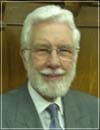
Stephen Hyde

By Faith Moses...

Hebrews 11:24-26
Stephen Hyde November, 2 2014 Audio
0 Comments
Stephen Hyde
Stephen Hyde November, 2 2014
'By faith Moses, when he was come to years, refused to be called the son of Pharaoh's daughter; Choosing rather to suffer affliction with the people of God, than to enjoy the pleasures of sin for a season; Esteeming the reproach of Christ greater riches than the treasures in Egypt: for he had respect unto the recompence of the reward. ' Hebrews 11:24-26

Sermon Transcript

Auto-generated transcript • May contain errors

100%
I please God to bless us together
as we consider his word this morning. Let's turn to the epistle
of Paul to the Hebrews, chapter 11, and we'll read verses 24,
25 and 26. The epistle of Paul to the Hebrews, chapter 11, reading
verses 24, 25 and 26. By faith, Moses, when he was come to years, refused to be called the son
of Pharaoh's daughter, choosing rather to suffer affliction with
the people of God than to enjoy the pleasures of sin for a season,
esteeming the reproach of Christ greater riches than the treasures
in Egypt. For he had respect unto the recompense
of the reward. The Word of God gives us on many occasions a
record of the life of godly people or sometimes an incident in the
life of godly people. and that great record which has
been preserved to us should be an encouragement to us and also
should direct us as to the way that we should walk and the things
that we should do and say as we now walk upon the earth. Surely the Word of God has recorded
these examples for us so that we may recognize the situation
that we come into from time to time, varied as it may be, to
see, well, this is what occurred in the Word of God and is recorded
with Sanso's life. And now I find myself facing
a similar dilemma, a similar difficulty, a similar trial,
a similar perplexity. And here I have an example in
the Word of God as to what I should expect and how I should react
and what I should do. Well, we are thankful, are we
not? I hope we are, that we have the
Bible which gives us so many accounts to instruct us in our
day. Although, of course, we live
in a very different day in one sense to those accounts which
are recorded in the Word of God, yet in truth they are very similar. because we today are men and
women, boys and girls of like passions as all the people have
been ever lived upon the earth. There has not been really any
change in our make-up, in our constitution. And so we do indeed
need the same help and the same instruction and the same blessing
and the same encouragement that those have had, that we read
of in the Word of God. Now I'm sure that we are familiar
with the life of Moses. And we should be thankful that
the Lord has recorded in some detail the reference to his servant
Moses. We know that he was born and
he was head three months and then remarkably Pharaoh's daughter
came along by the water and found him and saw him in that basket
and took him and decided to bring him up as her own son. That in
itself was a most amazing and most remarkable occurrence. Well, we know that it was the
purpose of God being worked out. It was God's purpose that Moses
should be brought up in the palace of Pharaoh, so that he would
come to a right knowledge and a right understanding of court
procedure, so that when He was called to go and to lead Israel
out of Egypt. He would have been familiar with
the situation which existed in Pharaoh's palace. It would not
have been something unusual or something strange to him. He
would have known what it was. And we should realise that today,
God does sometimes bring us into situations so that we are familiar
with certain conditions. And when the Lord therefore sees
fit to use us in a specific way, he has already, as it were, trained
us in that situation. So we should realise that God's
purposes are worked out and fulfilled. And sometimes the conditions
and situations which develop in our lives, we may not understand
why they are occurring, why scenes we are walking through, why are
we caused to Do this or do that? Well, may we realise that the
Lord is using us and training us. He has a work for us, a purpose
to be carried out. God's children are used in this
world. We should never think that our
lives are for no purpose. We should always realise that
God's people are placed in this world for a divine purpose. And that divine purpose is to
show forth the praise and the honour and the glory of Almighty
God. We should never think that our
lives are of no value and our lives are unimportant. The Lord causes his people to
walk in this dark world as lights shining in this dark place, that
we are indeed a light and salt in this world. And we should
always be conscious of that and we should be concerned about
it, that our lives might show forth the honour and glory of
our God. And if we have that fear of the
Lord in our hearts, that will influence the things that we
do and the things that we say, our actions, we will be concerned
to only do those things and say those things which are right,
are true and are God honouring and it will be a good thing therefore
if our lives are rightly influenced by such a blessed work of God
in our hearts. Now Moses was taught by the Lord,
he was used by the Lord and he was blessed by the Lord and We
read, as we read in this 24th verse, that Moses was blessed
with living faith. And that's what we all need,
faith to believe that God is instructing us, that God is leading
us and God is teaching us for a specific purpose, not to just
carry on in an aimless way and think, well, my life is utterly
unimportant. Well, Moses was blessed with
living faith. You and I need today to be blessed
with living faith as we spoke in prayer that reference which
is the substance of things hoped for and the evidence of things
not seen. And as we read on this morning,
for by it the elders obtained a good report. A good report. We therefore need to be possessors
of this living faith, so that we may obtain a good report. We don't want to obtain a bad
report, do we? We want to obtain a good report. And we pray that we may receive
that living faith, so that we do obtain a good report. Now Moses, when he came to us,
when he was grown up, When he became a man, we read this, he
refused to be called the son of Pharaoh's daughter. He refused. Let us not forget the very comfortable
surroundings that Moses was involved in, in the palace of the king. Very pleasant, I'm sure, to have
lived in that situation. and that condition. But did he
accept that and did he say, well I'm going to enjoy this position
that I've been placed in and I'm going to do all that I want
to do, I'm going to indulge my flesh, I'm going to be involved
in this and that and the other. Well we read here that by faith
he refused to be called the son of Pharaoh's daughter. And that
was a big sacrifice. We should not underestimate what
the sacrifice was in refusing such a position. He refused. And why did he refuse? Because
God gave him faith to believe in the promises of God and therefore
to turn away from those things which may have been attractive
to his flesh. Now let us have before our minds
this morning the gracious example here and recognise that God has
given us such examples in the Word of God to be a directive
to us in our lives. There will be those times then
when we shall have to refuse certain situations which may
appear to be very palatable, to be very attractive, to our
natural life. But Moses was given grace to
refuse to be called the son of Pharaoh's daughter. And sometimes
the Lord may place us in positions and we may be encouraged to do
certain things, to be called to a certain position. Well,
let us remember the example of God's servant Moses, who was
given faith and grace to refuse. He refused to be called the son
of Pharaoh's daughter. Now, was that an alternative? It's alright to refuse something,
but what's the alternative? Because there will be an alternative.
When we read what the alternative was and we read what Moses did
and it's very wonderful and it's very God glorifying to observe
the grace of God given to Moses to be willing to refuse a position
granted to him and to choose rather to suffer affliction with
the people of God than to enjoy the pleasures of sin for a season. Now, let's think what a great
change that was. What an amazing change. Not a
change that anyone would want to do naturally. Remember, that
God's people, Israel, were suffering. They were under bondage. Their
life wasn't easy. Their life was hard, difficult,
trying. Everything going against them,
and especially the promises of God not appearing to have been
fulfilled for them. And so, here was the alternative
to comfort in Pharaoh's palace, choosing rather to suffer affliction
with the people of God. Now Moses was given that faith
to view the people of God's lot, the people of God's position
as far more blessed than the comforts of Pharaoh's palace,
because they had an eternal blessing with them. He was given faith
to look beyond the short space of life that he would have spent
in relative comfort in the palace of Pharaoh, because he was given
that view to realise that what he was enjoying in that situation
was only for a season, it was only for a short time and it
will be good for us if in our lives we're able to view the
comparison between the things of this life and those things
of eternity and realise that the pleasures of this life are
only for a season and they are fading and they are passing away. Now that's what God gave faith
to Moses to believe and every one of us today need living faith
to believe great truths like this and be very aware that the
devil's aim is to try and make us content with the things of
this world, the comforts of this world, the pleasures of this
world. The devil will endeavour to make
us satisfied and content with such things, but he will not
direct us to the end of these things. He will not direct us
to that eternity which is to follow. Well, God blessed Moses
with living faith to be able to see the end of those things. And so rather than to enjoy the
pleasures of sin for a season, he was given that blessed choice
to suffer affliction with the people of God. Because if he
was numbered amongst the people of God, he realised that eternal
blessings were his. Blessings which could not be
removed from him. What a favour then it was to
be blessed with a right understanding of these truths, choosing rather
to suffer affliction with the people of God than to enjoy the
pleasures of sin for a season. He was given faith to look beyond
the things of this world, given faith to look to the glories
of those things which were to come. You know, the Lord Jesus
Christ, when he was on the earth, he spoke of these things which
are eternal, these things which will last and be forever. And he comes and he speaks and
he tells us In what we refer to as the Sermon on the Mount,
in Matthew's Gospel, the sixth chapter, in verse 19, we read,
Lay not up for yourselves treasures upon earth. Now that was the
position that Moses was in. In the palace of Pharaoh, he
was in a position to lay up for himself treasures on earth. The Lord says, Lay not up for
yourselves treasures upon earth. where moth and rust doth corrupt,
and where thieves break through and steal, there's nothing permanent
about the treasures of this earth, nothing permanent while we live
on the earth, and we should definitely have to leave all those earthly
treasures when we come to die. But the alternative that the
Lord blessesly gives is this, but lay up for yourselves treasures
in heaven. where neither moth nor rust doth
corrupt, and where thieves do not break through nor steal.
For where your treasure is, there will your heart be also." Well,
we can appreciate from those words and from the statements
of Moses that his heart was not in Pharaoh's palace. His heart was not in things of
this world. His heart was to be joined with
the people of God. His heart was to enjoy those
eternal blessings. And he realised that in order
to come to that situation, there would be a cost attached to it. And the cost attached to it was
spoken like this, to suffer affliction with the people of God. What
he was to know and to observe and to be taught was this, that
the Christian life on this earth is not an easy life, it never
has been and it never will be. Be very assured of this, the
life of a Christian as he walks through this world will not find
a comfortable place to live in. It will find as many temptations
to distress our own hearts because of the evil of sin, that our
minds are distracted onto this thing and that thing, and we
will perhaps be brought to that position when we cry out with
a hymn writer, O thou hideous monster sin, what a curse has
thou brought in." Now it's the grace of God which directs us
to view the reality and the terribleness of sin and to realise it is a
hideous monster and it has brought in a tremendous curse which we
are under by nature. And then to view then the blessings
which are to be found in the Lord Jesus Christ. Now, Moses clearly had a view
by faith of those blessings. We know of course that Moses
lived many years before the birth of the Lord Jesus Christ. But
he was given faith to look forward. He was given faith to believe
in the Messiah. that one who'd been prophesied,
that one who would indeed come to redeem his people from their
sins. And therefore, we see what the
man of God was able to declare. He tells us this, esteeming the
reproach of Christ, greater riches than the treasures in Egypt,
for he had respect unto the recompense of the reward. Now, we know,
of course, the wonderful blessings today which are to be found in
Christ by the many words recorded in the New Testament. Just consider
God's servant Moses, realising when he lived, realising what
we might say was a very limited amounts of evidence for him recorded
in the Word of God up to the time in which he lived. And of
course there was no written word as such. There was no actual
Bible to refer to because Moses himself wrote those first five
books of the Bible. So he had and he was blessed
with what he needed the wonderful favour of faith to understand
and believe those things which would have been passed down to
him. Well, see then today how wonderful is our condition and
our blessing. And yet Moses was able to state
these things, esteeming the reproach of Christ, greater riches and
the treasures in Egypt, for he had respect unto the recompense
of the reward. Now, this was suffering affliction
with the people of God. This was esteeming the reproach
of Christ. We might ask the question, well,
what does this word esteeming mean? I suppose we know when
we esteem someone, when we think of somebody, is a good person,
we esteem what they're doing. What we're really doing, we're estimating their value. It's
something which is good, which is being done. And so, esteeming
is to appreciate. It's to value that which is being
done. And so, it's amazing to think
that Moses was able to value and to appreciate the reproach
of Christ. And what is the reproach? Well it's really a humiliation. It's really being disgraced. So just think of that. Here was
the position that Moses was so willing to choose in very great
opposition to that comfortable life in the palace of Pharaoh,
but he saw the great value of it. And it will be a blessing
for us today if by faith we see a great value of being united,
being conformed to the image of the Lord Jesus Christ. You see, the Apostle Paul, in
a previous chapter, he wrote and he said, cold remembrance,
the former days in which after you were illuminated, that really
means after the light from heaven shone into our hearts. When God brought about that life
within, after you were illuminated, ye endured a great fight of afflictions."
A great fight. You see, the spiritual life is
a battle, it is a fight. It's a fight between our old
nature and the new nature. Our old nature wants ease and
comfort in the things of this life. The new nature, the enlightened,
the illuminated nature, seeks after heavenly realities heavenly
blessings, and they are illustrated by this truth, a great fight
of afflictions, partly whilst you were made a gazing-stock,
both by reproaches and afflictions, and partly whilst you became
companions of them that were so used. Moses here is sending
before us that desire to be blessed with this enjoyment of suffering
affliction with the people of God. He was desirous to be joined
to them, to go with them in their journey through this life. Well what's our position this
morning? do we desire to be joined to
the people of God, to go along with them, to be part of them,
to be united to them, as they have their great and
glorious leader, the Lord Jesus Christ. Now Moses recognised
what it was to be a true follower of a Saviour. And it's spelled
out, isn't it? It's spelled out here to suffer
affliction and to bear the reproach of Christ and to consider it
greater riches than the treasures in Egypt. He discounted the treasures
in Egypt. What a blessing for us today
if we can discount the treasures of this vain world and have that
living spiritual desire to be blessed in this way, to suffer
affliction with the people of God and to bear the reproach
of Christ because they are greater riches. Now, the Apostle Paul,
you see, he understood by the grace of God what it was to walk
in this path. Yes, the Lord had called him,
the Lord had chosen him, but the Lord had also ordained that
his life would not be easy. His life would not be easy at
all. His life was exceedingly difficult, but he rejoiced in
the fact that he was counted worthy to suffer for his sake. And he tells us in the, when
he wrote to the Corinthians in the second epistle, he speaks
about the affliction. You see, he writes about it here,
choosing rather to suffer affliction, and yet the Apostle Paul, he
gives us a little view of what this affliction was, and he enumerates
it like this, and it's good to recognise what he says. In the
fourth chapter and the seventeenth verse, he says, for our light
affliction. Our light affliction. If you
just for a moment meditate on what Paul the Apostle had to
face it. We might say, well Paul, I don't
think that was a light affliction, I think that was a very heavy
affliction. The Apostle says, no, he says
for our light affliction, which is but for a moment, again he's
drawing the analogy of time and eternity. He brings it like this,
He says, for our light affliction, which is but for a moment. It's
fleeting, it's passing away. Worketh for us. These afflictions,
they work for our good. The Apostle realised it. Worketh
for us a far more exceeding and eternal weight of glory. a weight of glory. On the one
hand, the light affliction on the other. You can imagine, can't
we, some scales. On the one side, just a light
affliction. We might think, well, I don't
know about that, I think it's a heavy affliction. No, the Apostle
says, a light affliction. Compare it with what's on the
other side, an eternal weight of glory. Now then, you see the
light affliction, enables us and encourages us and makes us
look to the other side, to that which is this eternal weight
of glory. He says, while we look not at
the things which are seen, but at the things which are not seen,
for the things which are seen are temporal. Pharaoh's palace,
temporal, passing away, The things that we might enjoy in this life,
temporal, passing away. But the things which are not
seen. The things which are seen are
temporal, but the things which are not seen are eternal. Now, the Apostle Paul had a view
by faith of those things which are eternal. God's servant Moses,
without any doubt, had a view by faith of those things which
were eternal. And therefore, he brings it to
us in this way, assuming the reproach of Christ, greater riches
than the treasures in Egypt, for he had respect unto the recompense
of the reward. We might say, well what does
this word respect mean? Well it means this, it means
he had a regard He had an understanding of the recompense of the reward. Those things which were to be
received. Those things to which he was
to be blessed with eternally. And therefore he was able to
look forward to those things. And as the Apostle tells us further
on in this same epistle, towards the end of the 13th chapter he
says, let us Let us, united together, the Church of God, all these
who are suffering affliction with the people of God, let us
go forth therefore unto him without the camp, bearing his reproach,
bearing his humiliation, bearing the disgrace which came upon
him. For, says the Apostle, here have
we no continuing city, but we seek one to come." That puts
it in a right perspective, doesn't it? We've got no continuing city
here, but we have a heavenly city which continues forever,
and there in the midst will be the blessed Saviour, that one
for whom we today, by the grace of God, are willing to suffer
affliction, to bear reproach, because we have a blessed understanding
of the value of that knowledge of our Saviour, the Lord Jesus
Christ. If you and I, my friends, are
blessed with that knowledge, it is so precious, it is so real.
And the Apostles, you see, he valued it. He valued this knowledge
of Christ. He valued being classified and
walking in that way of humiliation and disgrace. He valued it because
it set before him the truth of that knowledge of the Lord Jesus
Christ. You see, remember what the Apostle
said when he wrote to the Philippians, that passage in the third chapter
which and I often refer to, but it's a great and important position. And the Apostle desires the wonderful
knowledge of the Lord Jesus Christ above anything else. And he tells
us this, he says, Doubtless I count all things but loss for the excellency
of the knowledge of Christ Jesus my Lord. What a wonderful statement
that was. What a good thing today if we
view the knowledge of the Lord Jesus Christ in that way, the
excellency of the knowledge of Christ Jesus, my Lord. He was able to speak in positive
terms, my Lord, the one we bowed down and worshipped. He tells
us for whom I have suffered the loss of all things, and do countenance
but done, that I may win Christ and be found in him, not having
mine own righteousness, which is of the law, but that which
is through the faith of Christ, the righteousness which is of
God by faith." And so he goes on, as you may be familiar with,
that he might know him. Yes, he wanted to know the Lord
Jesus Christ more and more. And surely this is position that
we have here of God's servant Moses so many years previously
and now we, so many years past that date, as we view this same
truth, may it be our concern and our desire to be walking
in this way and to be blessed with that God-given choice, choosing
rather. I wonder today if every one of
us was to say, well, what are we going to choose today? Are
we going to choose the compass of this life? Are we going to
choose everything that we can obtain in this life and spend
all our energy in following, pursuing that avenue? Or do we
desire to choose to follow a despised and crucified saviour? The saviour
who went to the end of the law for righteousness, who paid up
the price due to us, the death he suffered upon Calvary's cross,
in shedding his most precious blood in order to redeem our
souls." Well, the God's servant Moses understood something of
the value of it. I believe the Apostle Peter also
understood something of the value of it. But truth, the Apostle
sets before us when he tells us, Beloved, think it not strange
concerning a fiery trial which is to try you. Now, no doubt
that God's servant Moses had many trials, as we know, which
is to try you as though some strange thing happened unto you,
but rejoice inasmuch as ye are partakers of Christ's sufferings. that when his glory shall be
revealed, ye may be glad with exceeding joy, if ye be reproached
for the name of Christ." That's what the Apostle is speaking
of with regard to Moses. Happy are ye for the spirit of
glory and of God rested upon you. On their part he is evil
spoken of, but on your part he is glorified. So, this morning
it would be good for us if we're able to look into our own hearts
and find there that desire, that God-given desire, and it can
only be a God-given desire because by nature we would not choose
such a path. But bless God, if by grace we
see the wonderful value, the wonderful virtue and the wonderful
blessing of following in these steps, choosing rather to suffer
affliction with the people of God than to enjoy the pleasures
of sin for a season, esteeming, valuing the reproach, the disgrace,
the humiliation of Christ, greater riches than the treasures in
Egypt, for he had respect. He had regard and may we today
also be blessed with that unto the recompense of the reward
of eternal life in glory forever. Amen.
Broadcaster:

Comments

0 / 2000 characters
Comments are moderated before appearing.

Be the first to comment!

Joshua

Joshua

Shall we play a game? Ask me about articles, sermons, or theology from our library. I can also help you navigate the site.