Bootstrap
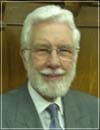
Stephen Hyde

Lord, Remember Me

Luke 23:42
Stephen Hyde November, 2 2014 Audio
0 Comments
Stephen Hyde
Stephen Hyde November, 2 2014
'And he said unto Jesus, Lord, remember me when thou comest into thy kingdom.' Luke 23:42

Sermon Transcript

Auto-generated transcript • May contain errors

100%
May the Lord be pleased to bless
us together this evening as we consider his word. Let's turn
to the Gospel of Luke, chapter 23, and we'll read verse 42. The Gospel of Luke, chapter 23,
and reading verse 42. And he said unto Jesus, Lord,
remember me when thou comest into thy This is probably a familiar passage
in the Word of God to most of us and it's the only place in
the Gospels where we read the detail of these two thieves who
were crucified alongside the Lord Jesus Christ. And we clearly
observe in these statements the sovereign mercy and love of God
towards the one thief and passing by the other one. And the relevant condition that
existed in this thief who was brought to recognise his need
recognise his true condition in a very, very short space of
time. But we should not think and we
should not rely on the fact that here was a person that was saved
right at the very last hour or so in his life. We have just
this one account of this one person dying like this. But don't forget there were two
thieves, and one was not blessed, and one was blessed. And let
us not be found in that dangerous condition of thinking, well,
I can put off the things of God until I'm a little older, perhaps
until I'm old. Because we may never be brought
to a condition like this and never find the wonderful favour
and blessing of salvation. Now, I want to notice first of
all that this man, he had a true prayer. And the prayer was very
short and very simple. And I believe the prayer that
he speaks, which is recorded here, is not something which
is isolated and reserved for this person. I believe it is
really the common prayer of the true living Church of God. And therefore you may say, well
what is it? Well it's here and it's in a
few words and it's just this, Lord remember me. I believe that God's people The
Living Church of God wants to know that God, the Great God,
the Almighty Saviour, is remembering them and that He is not passing
them by. Now this man, we know, had a
great need. He knew he was going to die.
He knew it was only a few hours at the very most that he had
left to him on this earth. But we don't know how many hours
we have to live on the earth. But he had a good, a true, a
living desire, and that was that the Lord Jesus would remember
him. He goes on to say, of course,
when thou comest into thy kingdom. Well, we know the Lord is now
in his kingdom. And therefore, we can pray that
as the Lord is in his kingdom, that he will remember us. Lord,
remember me. Well, I wonder then tonight,
if I was to ask you the question, have you prayed like that? Do
you know what it is to have been in a time when you needed God
to remember you? To not pass you by? To help you
perhaps? in some specific thing, perhaps
with reference to your eternal state, the Lord would remember
you. Well, it is a very necessary
blessing for every one of us to know that the Lord will and
does remember us. Now, this wasn't just a theoretical
prayer. This was a prayer coming from
the heart of this man, He was in a time of desperate need and
he needed to know the Lord Jesus Christ would remember him. It
wasn't just a mechanical prayer, it was a very real prayer, a
very vital prayer and it would be a great blessing if you and
I can look back in our lives to a time perhaps when we prayed
in a similar way, may not have been in quite identical words
but nevertheless We came with a desperate need and we needed
God to look upon us. We needed God to speak to us.
We needed God to remember us and not to pass us by. So this thief came and said,
Lord remember me when thou comest into thy kingdom. Now we observe
that this man was blessed. with a right understanding of
his condition and also the pureness and the blessing of the Lord
Jesus Christ. And this man, he speaks to his
fellow criminal. The other criminal had railed
on him saying, if thou be Christ save thyself and us." Again we
can recognise that wasn't something which was surprising. He wanted
to be saved naturally from a death on the cross and therefore he
speaks in those terms. But there's a very different
attitude with this thief who was saved. A very different view
he takes and he says, does not thou fear God seeing thou art
in the same condemnation. He brings, therefore, immediately
the need to fear God. By nature, this other man clearly
did not fear God. And this person comes and he
speaks to him, thus not thou fear God, seeing thou art in
the same condemnation. And then he makes a very important
confession, and we indeed justly. He didn't complain about the
condemnation, the sentence which had been given to him. He recognised
he had indeed offended the law of the land, and therefore he
makes this statement, we indeed justly. We don't like to be put
right to. We don't like to think we made
mistakes, but yet you see here was this man recognising his
condition. We indeed justly, for we receive
the due reward of our deeds. He recognised that the punishment
that they were receiving was just. He wasn't complaining. He recognised the justness of
that sentence. It wasn't, therefore, a rebellion
in his heart. And that's a good evidence of
God's work, when there is not that complaining, not that rebellion
against those things which may indeed come into our lives. Sometimes we might be tempted
to say, well, why has this come into my life? Why am I having
to walk this path? Why is it? Well, you see, it's
good if we have the same grace that this man had when he was
able to come and say, we indeed justly, for we receive the due
reward of our deeds. And then he draws the analogy,
the wonderful comparison with the blessed Saviour and he says,
but this man hath done nothing amiss. He saw, he saw, we have
to say, he saw by faith the glory of this Saviour, the Lord Jesus
Christ, and he was able therefore to confess him in this way, but
this man hath done nothing amiss. And so we observe here that in
these simple words, the man, recognising his condition, he
had offended the law, And also he recognises the pureness and
the blessing of the Lord Jesus Christ. Now this was a tremendous
revelation to this person. But we need the same blessing
in our lives. He knew it in his heart. It wasn't
just something which passed across him. It was something which he
really realised. Remember, he was a dying man. He was a dying man, you know. It's always important, is it
not, to listen to the words from children of God as they pass
out of time. Their last words are important
words. Sometimes those last words have
been a wonderful encouragement and a wonderful strength to the
Church of God to realise that such and such a person had ended
up well They were able to describe their condition and their dependence
upon the Lord Jesus Christ. Well, it was nothing less than
that, really, in this case, in this statement of this thief
here, who comes and says, Yes, we indeed justly, for we receive
the due reward of our deeds, but this man hath done nothing
amiss. And he follows on and makes his
statement, and he directs his words now to Jesus. The previous
words had been to his colleague and now they were directed to
Jesus with a tremendous request and a wonderful desire and a
real prayer, Lord remember me when thou comest into thy kingdom. Well, did Jesus ignore such a
prayer? Did he turn a deaf ear to this
man? This man deserved the punishment.
This man didn't deserve to go to heaven, did he? He'd offended
the laws of the land. He'd sinned. What did Jesus do? He didn't
pass him by. He said, verily I say unto thee,
today shalt thou be with me in paradise. I believe this is true, that
if we come in our condition, in a time of real need, and we
come to the Lord like this, with a simple request, Lord, remember
me. The Lord, I believe, will not
pass us by. The Lord will remember us. We may be in a low condition,
in a low state. We may be far off. We may be, as it were, the end
of the earth. This man was really there, wasn't
he? No way to escape. He couldn't come down from the
cross. He couldn't get out of the condition he was in. And
he brought it upon himself. We may sometimes bring things
upon ourselves and of course that makes it very much more
painful as we realise that we're the cause of the problem, we
produce the difficulty, we perhaps produce the hardness and the
barrenness in our heart. We look and we find there those
things which deserve our condition and therefore we have no ability
or hope to Free us from it. We are in a desperate condition. We are in a time of real need. And then to come like this and
say, Lord, remember me. It's not a long prayer, is it?
But bless God if it's a real prayer. And it meets many cases. It meets many situations. We
need the Lord to remember us. perhaps in many ways. Your children
may need the Lord to remember you in your school days. You
may have to pray like this that the Lord will remember you and
He won't forget you. He won't pass over you. You've
got something that you really need help on. Lord, remember
me. And of course, as we get older,
our needs don't get any less. Our needs are there continually.
Again and again, we may have to pray a prayer like this, Lord, remember me. Now, we should
remember that this account that we have here, blessed and wonderful
as it is, it's not the only occasion in the Word of God when God's
people desire the Lord would remember them. No, there are
a number of references in the Word of God in varied conditions
where there was that time of need, that time of requirement
that the Lord would indeed come and help and support and strengthen
and indeed deliver. He would not turn away his face. You may remember the occasion
in the life of Samson. Samson was a strange character,
wasn't he? He was a character, perhaps,
that we would think, well, he deserved all that he got. He needed to be punished. We
might think, well, really, did this man end up well? Well, we
know he did because of the accounts in in the Hebrews, we know he
did. But as he came to the end of
his life, remember he had his eyes put out, he was grinding
in the prison house, and he'd been called by the Philistines
to make sport. Now he was brought in, poor man,
all those 3,000 Philistines, and what did he do? Well, what
would you do? What would I do? This is what
Samson did. He called unto the Lord. And
what did he say? He said, O Lord God, remember
me. I pray thee and strengthen me. Here he was, you see, in that
place with all those Philistines. And now he pleaded to his God. He pleaded to his God, and he
came in this way, O Lord God, remember me. Now, Samson hadn't
lived a faultless life, had he? No, he'd done many wrong things
in his life, and there may be an encouragement. Perhaps if
we look at ourselves, we might see many faults in our lives,
many wrong things, and it may be that we've come down to a
situation almost like Samson, where our eyes are being put
out and we can't see as we would. And yet, here you see, at the
end of his life, he comes and he calls upon the name of God. He says, O Lord God, remember
me, I pray thee. Now then, was God going to turn
away from this man? Is God going to say, well, Samson,
I'm not having anything to do with you." God heard this man's cry, this
man's prayer and as we know the Lord strengthened him mightily
and he pushed on those two pillars and brought down the whole building
and 3,000 Philistines were killed on that occasion. We see the
Lord hearing and answering prayer. in order that his name may be
honoured and glorified. Lord, remember me. It's very personal, isn't it?
Religion is personal. And you and I will come to that
situation where we will need God to come to us in our time
of great need. And we have to come. There's
no one else to go to. And we come and we say, Lord,
remember me. No one else. Just the Lord God,
we need to come and to instruct us and to come and to bless us. Now, we move on to Samuel. You remember Hannah. I'm sure
you remember Hannah. Hannah was a godly woman. Hannah hadn't had a child. And it was a great sadness in
her life that she hadn't had a child. And she went out with
her husband, Elkanah, to the temple every year to worship.
And on this particular occasion, she'd come up and there she was
in the temple. And she was in bitterness of
soul. Bitterness of soul. Well, perhaps
there's not very much appreciation today of people her bitterness
of soul. But what did she do? She prayed
unto the Lord and she wept sore. It wasn't any trifling situation
with her. It was very real and surely this
evidences the reality of religion in the effect that it had upon
this woman. Bitterness of soul and weeping
sore. not something trivial, was it?
And so we see she prays and she vows a vow and said, O Lord of
hosts, if thou will indeed look on the affliction of thine handmaid
and remember me, and not forget thine handmaid, but will give
unto thine handmaid a man-child, then will I give him unto the
Lord all the days of his life, and thou shalt know ready to
come upon his head. Well, this woman, Hannah, she
vowed a vow. And that vow was centred upon
the Lord remembering her. That was really the centre of
her prayer. The Lord would indeed remember
her. Well, did the Lord remember her? Yes, the Lord did remember her. And the Lord did give her a man-child. He gave her that little lad,
Samuel, we know. And we read further on in this
first chapter of Samuel, wherefore it came to pass, when the time
was come about, after Hannah had conceived, that she bear
a son, and called his name Samuel, saying, because I have asked
him of the Lord. The Lord had remembered her and
that situation developed, and she was able to come again to
the temple in due time, and she prayed, and it was a very different
prayer now. She prayed in this way, she said,
my heart rejoiceth in the Lord, my horn is exalted in the Lord,
my mouth is enlarged over my enemies, because I rejoice in
thy salvation. There is none holy as the Lord,
For there is none beside thee, neither is there any rock like
our God." She had a living desire to praise and bless her God for
answering her prayer. What had the result been? She
prayed that the Lord would remember her, and God had heard her prayer,
and God had remembered her, and God had blessed her, and she
was able to come then and confess the truth of these things and
to bring honour and glory to her God. Well, these things,
you see, we might think, well, perhaps they're isolated. Well,
they're not isolated. I believe the living Church of
God again and again had to come and pray, Lord, remember me,
in a personal way, perhaps not with great detail, but yet the
wonderful desire and need that the Lord would indeed come and
remember them. We move on. Nehemiah. Nehemiah was a man of God, wasn't
he? And as we come right down to
the end of the little book of Nehemiah, the very last verse,
and we read this, and for the wood offering at times appointed,
this was for the sacrifice, and for the first fruits, and then
The last sentence, remember me, O my God, for good. Remember me, O my God, for good. He wanted the Lord to look upon
him and to encourage him and to bless him. Remember me, O
my God, for good. And we should observe that in
all these cases, there is that wonderful act and gift of faith
They come to the living God. Remember me, O my God. It wasn't
the unknown God. It was coming with true faith
to the real God. And praying in this way, Lord,
remember me, O my God. For good, O my God. Do we come
like that? Do we come to our God, believing
He is our God? If we have a great God, a real
God, a true God, surely we can come. We can come to Him as our
God. We can come to Him as our Father.
We can come to Him pleading that He will remember us. Oh Lord,
remember me. Remember me. How personal these
things are. How personal is our religion. What a need it is. Again and
again in our lives, The Lord causes us to enter into situations
where we come and cry to our God, oh, remember me, oh my God. And Nehemiah says, for good. It wasn't for evil, was it? He was asking the Lord to remember
him, oh my God, for good. And we know indeed the Lord did
remember Nehemiah. He did encourage him. He did
help him. He did strengthen him. And there
were wonderful blessings as the Israelites returned again to
Jerusalem and were able to rebuild the wall and the temple. Times
of wonderful prosperity, times of wonderful blessing. And then,
moving on to God's servant Job. Well, we know perhaps a little
of what God's servant Job had to pass through. None of us have been caused to
pass through the situation like God's servant Job. No, he had
to lose virtually everything. Virtually everything. And yet,
you see, there was much teaching in the life of Job. We know he
had a good end and we know there was a good blessing. And about
halfway through his book, the book of Job, We read what was
spoken, and what was spoken was this, O that thou wouldest hide
me in the grave, that thou wouldest keep me secret until thy wrath
be past, that thou wouldest appoint me a set time and remember me. Job was passing through a time
of real trial and temptation. His three friends were addressing
him. They were trying to put right everything that had occurred
with him and they were critical of the things that he'd said
and the way that he was operating. And so he comes and he says,
oh thou wouldst hide me in the grave. Perhaps he felt he couldn't
take any more. He felt the oppression was too
great. was overcoming him. And thou wouldst keep me secret
until thy wrath be past. Thou wouldst appoint me a set
time and remember me." Well, God did remember him. God did
bless him. God did wonderfully appear for
him. And we know that in the end of
that book of Job, we read so The Lord blessed the latter end
of Job more than his beginning. The Lord was gracious to him.
Yes, and the Lord wonderfully remembered him. No doubt in the
midst of that condition, in the midst of that trial, he must
have wondered whether the Lord would ever have mercy upon him
again. But yet he was able to come and
to speak that prayer, to cry out, Lord, remember me. So we have these evidences, do
we not, of the wonderful experience of the children of God. And it
is good to have the testimony of these things. We might think
sometimes that our condition is, well, it's so rare, it's
so unusual, that really no one else has walked this path, the
path that I'm walking. Well, we have so many encouraging
accounts in the Word of God to strengthen us and to Bless us
indeed. Now, one of the most wonderful
words for the God to remember me comes in the book of Psalms. We know that the book of Psalms
is very expressive of the spiritual experience of the Church of God. And the psalmist in Psalm 106,
in the fourth verse, it tells us this. Remember me, O Lord. What does it go on to say? With
the favour. that thou bearest unto the high
people." Surely that is a good and right prayer. Surely we want
the Lord to remember us with a favour that the Lord bears
unto His people because we know that will be a good result. We know it will be a good blessing.
We know it will be a favour because the Lord looks upon His people
and He deals graciously with them and He blesses them and
so We hear this word of the Psalmist, Remember me, O Lord, with the
favour that Thou bearest unto Thy people. And then he says,
O, visit me with Thy salvation. Visit me with Thy salvation.
Remember me. Visit me. Remember me with Thy
salvation. He wanted the blessing of the
Lord to shine into his heart in this way. It was a real prayer. It was a real cry. It emanated
from his heart. And oh, it's a blessing if we
come to a position like that. We have to come. We have to cry
out from the bottom of our heart, as it were, and say, Oh, Lord,
remember me with a favour that beareth unto thy people. O, visit me with thy salvation. And he goes on to say that I
may see the good of thy chosen that I may rejoice in the gladness
of thy nation, that I may glory with thine inheritance." Again,
joining together really with the Church of God to praise Him
for His blessings and His favour as the Lord does remember His
Church. He does not cast them away, He
does not pass them by, but He deals with them in love and mercy. Just one last reference, and
that's in Jeremiah. Jeremiah was a prophet of the
Lord. Jeremiah had a very tough life. Jeremiah had many things
against him. And yet, you see, he was able
to continue. And we have a prayer of the prophet
in the 15th chapter of this prophecy. And we read what he says, O Lord,
Thou knowest. Now you see, that's a good start,
isn't it? To come to our God, who knows the end from the beginning.
He knows everything which is occurring in our lives. And so
he comes and says, O Lord, Thou knowest. Remember me and visit
me. Remember me and visit me. Well, it's a good prayer, isn't
it, to desire a visit from the Lord. Lord, visit our souls. O Lord, Thou knowest. And He
does. He knows where you and I are
in our spiritual life. He knows our need to come like
this. O Lord, Thou knowest. Remember
me and visit me. He goes on and says, and revenge
me of my persecutors. When our great persecutor is
the devil, isn't it? The devil will come alongside
us and persecute us. Take me away in thy long-suffering.
Know that for thy sake I have suffered rebuking." He goes on,
"...thy words were found." The word of the Lord. The Lord remembered
him. Thy words were found. And I did
eat them. And thy word was unto me, the
joy and rejoicing of my heart. For I am called by thy name,
O Lord, God of hosts. And so we have this list of those
who were wonderfully blessed to be able to come in true simplicity
and desire, the Lord would remember them. And so we come back then
to this dying thief in this simple prayer. Remember, he said, Lord,
remember me when thou comest into thy kingdom. Wonderful faith,
wasn't it? To look forward, to realise there
was a kingdom The Lord Jesus Christ was going to. Where was
his hope? What was his hope based upon?
It was based upon the Lord Jesus Christ. My friends, if you and
I come to this place where we need the Lord to remember us,
it will be that we will need the Lord Jesus Christ to look
upon us and to remember us and to come to us, to come where
we are. The Lord knows where we are.
He knows where we are tonight. And as we come and say, Lord,
remember me. Oh, do come to me. Oh, Lord,
do come and bless me. And then do, Lord, in due time,
come and take me unto thyself. Lord, remember me when thou comest
into thy kingdom. And of course, the glorious words
that the Saviour spoke. Remember, he didn't turn him
away. He answered him in such positive words. And he said,
Verily I say unto thee, today Shalt thou be with me in paradise,
to be forever with the Lord." What a promise that was to this
dying thief, which a short time previously had been against the
Saviour. We have to say, do we not, in
regards to his life, amazing grace. Well, it was, but my friends,
it's no less so. In all the lives of the children
of God, it's amazing grace which causes us to come and to pray
in such a way because it is a prayer indicted by the Holy Spirit of
God and it's a prayer which is indicted, which will then receive
answers from our God. That God will not pass us by
with regard to such a prayer as this. Well, may we know the
reality of it and bless God for it and the thankful we have a
record in the Word of God of these prayers of his people,
especially this dying thief in the last moments of his life,
to be able to come and say from his heart, Lord, remember me
when thou comest into thy kingdom. Amen.
Broadcaster:

Comments

0 / 2000 characters
Comments are moderated before appearing.

Be the first to comment!

Joshua

Joshua

Shall we play a game? Ask me about articles, sermons, or theology from our library. I can also help you navigate the site.