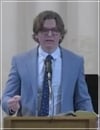
The sermon "Boastful and Burdened" by Eric Van Beek primarily addresses the doctrines of original sin, total depravity, and the grace of God in salvation as articulated in Ephesians 2:1-10. Van Beek argues that humanity, by nature, is spiritually dead due to sin and has no ability to save itself, thus reinforcing the Reformed doctrine of total depravity. He references Ephesians 2:1-5, emphasizing our deadness in transgressions and the sheer grace of God, who makes believers alive through Christ. The sermon contrasts human tendencies to boast about personal righteousness or to be burdened by guilt, asserting that both reactions focus on self rather than on Christ, who is the sole source of salvation. Van Beek concludes by highlighting the importance of looking to Christ for salvation, as He is the means through which believers are made righteous and accepted before God.
Key Quotes
“We are only the one being saved. We are only the subject of salvation.”
“Boasting makes no sense because we are nothing more than the subject of Christ's purchased salvation.”
“If you look to Christ, you will live. You will be saved.”
“When God looks at his people, he sees them in Christ. Righteous. Deserving of all of his love and all of his blessings.”
The Bible teaches that salvation is by grace through faith, not by our works, as seen in Ephesians 2:8-9.
Salvation by grace is a central theme in Scripture, particularly emphasized in Ephesians 2:8-9, which states that it is by grace you have been saved through faith, and this is not from yourselves; it is the gift of God, not by works, so that no one can boast. This doctrine asserts that human effort is inadequate for salvation; instead, it is entirely reliant upon God's mercy and grace. The idea of grace as unmerited favor underscores that we are incapable of contributing to our own salvation. Our role is merely to receive the gift that God offers to us through Christ.
Ephesians 2:8-9
Christ's atonement is sufficient because He bore our sins and fulfilled God's requirement for righteousness, as stated in 2 Corinthians 5:21.
The sufficiency of Christ's atonement is affirmed in Scripture, especially in 2 Corinthians 5:21, which teaches that God made Him who had no sin to be sin for us, so that in Him we might become the righteousness of God. This passage encapsulates the great exchange: our sin is placed on Christ, and in turn, His perfect righteousness is credited to us. This radical transaction is necessary for our justification before God, allowing us access to Him with confidence. The completeness of Christ’s sacrifice means there is nothing left for us to add; both our sins and our inability to be righteous are addressed through His work.
2 Corinthians 5:21
Grace is vital for Christians as it highlights our dependence on God for salvation and spiritual life.
Grace plays a foundational role in the Christian faith, revealing the profound reality that we are entirely dependent on God for our salvation. Ephesians 2:4-5 emphasizes that God, rich in mercy, made us alive in Christ even when we were dead in our transgressions. This notion of grace teaches us that our status before God is not based on what we can achieve but rather what Christ has accomplished for us. Understanding grace fosters humility within us, counteracting our natural inclination to boast in ourselves. It shifts our focus from our own efforts to Christ, encouraging us to live out our faith in recognition of His unmerited favor.
Ephesians 2:4-5
'Being dead in sin' conveys our total inability to save ourselves and our desperate need for divine intervention.
The concept of being 'dead in sin' is articulated in Ephesians 2:1, which states that we were dead in our transgressions and sins. This condition reflects a complete spiritual inability and separation from God, meaning that without the intervention of God’s grace, we are powerless to change our state. A dead person can do nothing; similarly, we can do nothing to achieve salvation or righteousness on our own. This biblical teaching underscores the necessity of divine grace to revitalize and redeem those who are spiritually lifeless, affirming that our salvation is entirely contingent upon God’s action in our hearts through the Holy Spirit.
Ephesians 2:1
Boasting in ourselves contradicts the essence of grace, which asserts that salvation is entirely a gift from God.
Boasting in ourselves reflects a fundamental misunderstanding of grace and our role in salvation. Ephesians 2:9 states that salvation is not by works, so that no one can boast. When we boast, we essentially claim credit for something that is solely God's doing: our redemption. Grace, defined as unmerited favor, reveals that we bring no righteousness to the table. All we contribute is our need for salvation. Realizing this should lead us away from self-sufficiency and toward reliance on Christ, who is the source of our hope and assurance.
Ephesians 2:9
Looking to Christ for salvation means placing our faith and trust in Him alone for our redemption and eternal life.
Looking to Christ for salvation is the essence of faith in the Christian tradition. It means acknowledging our inability to save ourselves, as emphasized in Ephesians 2:5, and turning to Jesus as the only source of hope and salvation. When we look to Him, we are trusting in His finished work on the cross, recognizing that He took our place and bore the penalty for our sins. This act of faith assures us of God's promises, including eternal life and reconciliation with Him. It is a radical shift from self-reliance to full reliance on Christ’s grace and righteousness.
Ephesians 2:5

Comments
Your comment has been submitted and is awaiting moderation. Once approved, it will appear on this page.
Be the first to comment!