Bootstrap
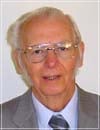
Bill McDaniel

Our Members

Bill McDaniel August, 28 2016 Video & Audio
0 Comments

Sermon Transcript

Auto-generated transcript • May contain errors

100%
All right, let's just read that
one verse because we read last week and we'll be all over the
place again this morning as far as scripture is concerned. But
look at Romans 7 and verse 5. As Paul is speaking to them about
being free from the law and how that came about, he now says
to them in verse 5, For when we were in the flesh, that is,
unregenerate, under sin. The motions of sin, which were
by the law, did work in our members to bring forth fruit unto death. Now the three words, in our members. If you look down at verse 23,
same chapter, Paul says, I see another law in my members. I see another law. Beside that
law of righteousness, I see another law in my members. Flip back
into chapter 6, let me point out a couple of verses, and they'll
come before us again in our study. Neither yield ye your members
as instruments of unrighteousness unto sin, but yield yourself,
same meaning as members, as those that are alive from the dead,
and your members as instruments of righteousness unto God. Now, look at verse 19. I speak
after the manner of men because of the infirmity of your flesh. For as ye have yielded your members,
servants to uncleanliness and to iniquity unto iniquity, even
so now yield your members, servants of righteousness unto holiness. Now, it is impossible, almost,
for us to study or to discuss the matter, except sooner or
later it will lead us back onto our connection and relationship
onto Adam. and to his sin, and to his fall,
and the fall of mankind in him, and therefore the effect that
that sin and fall of Adam had upon the human family at large. Now, we recently had a study,
and we recently considered the sin of Adam and its immediate
effects upon him and his wife in the beginning, that after
they became corrupt and they passed under the sentence of
death. In the day that you eat thereof,
you shall surely die, God said unto Adam. Now, what manner of
death was it that did seize upon Adam? What sort of death came
unto him immediately? Now we know that God cannot lie,
and he had said in the day, in the day, In eating you shall
surely die. Genesis chapter 2 and verse 17. And I notice that the margin
of the King James has it, dying thou shalt die. And they say
that in the Hebrew it is there a reference unto a plurality
of death. Now, can we say that death passed
through him, through his fleshly body, but it did not die that
particular day, then and there, but his body later would die,
but after some 900 years? Genesis chapter 5 and verse 5. Now, Gil also acknowledges that
the Hebrew, thou shalt in dying die, is the way that that Hebrew
might be expressed, saying, Gil does, that it has regard or reference
unto more deaths than one. And Gil wrote on Genesis chapter
2 and verse 17, Death at once began to work in him. He spiritually or morally died
in his very tracks where he was standing. His innocence was gone. He came to know good and evil. The faculties of Adam's soul
were corrupted and he became dead as to that soul in trespasses
and in sin. that had two results that we
want to notice. Number one, this corrupt nature
was passed then to all of Adam's children as in Genesis chapter
5 and verse 3. Adam begat offspring and it said
there in his own likeness after his image. Adam being a fallen
and A sinful and a corrupt man begat children, therefore, after
our in that image. Paul wrote about that. 1 Corinthians
chapter 15 and verse 49. We have borne the image of the
earthly, and he was speaking there of Adam. But then secondly,
this effect came from Adam's sin. that there is no reconciliation
under God except by a divine mediator and surety who stands
between God and man. And that surety and that mediator
must be able to satisfy the justice of God and bear the brunt of
their sin, therefore, to satisfy God, and this is the only way
that one can come back unto God. We notice that God barred Adam's
way from the tree of life, that he could never have access unto
it again. Now, concerning the first, the
derivation of a corrupt nature of all of Adam's children. How is that so? How is it that we have to all
confess with David that we are in depravity? How do we receive
our corrupt and our fallen nature? Why and how is it so in every
single individual without an exception. No exception. All are dead and corrupt with
sin in their being. We did not eat of the tree like
Adam to have a fall individually, separately, and on our own. So how is it that that God reckons
us corrupt and sinful, and that from our mother's womb, as we
will see? Well, the answer is that this
corrupt or sinful nature is passed to us by tradition. What I mean by that is the body. and the human nature are propagated
through our human parents and all the way back unto Adam. And
this sinful nature comes unto us by natural generation. Here's what the Puritan Thomas
Goodman said to express that, quote, the channel and the conduit pipe
of natural generation." And again, produced unto us by birth and
fleshly generation. So said the Lord in John chapter
3 and verse 6 in his conversation with Nicodemus about the new
birth. The Lord said this, and sometimes
I wonder if we fully grasp it. That which is born of the flesh
is flesh. That which is born of the flesh
is flesh. Now what the flesh produces is
more flesh. Flesh like itself. Now this is
a great saying in the scripture and it is contrasted with that
which is born of the spirit. That which is born of the flesh
is flesh, and that which is born of the spirit is spirit. I mentioned
David in his great penitential confession. In the 51st Psalm,
I was shapen in iniquity, and in sin did my mother conceive
me. Now he's not talking about the
act of his parents in conceiving and bearing him, but he's talking
about the effect of it upon himself. Again, in Psalm 58 and verse
3, the wicked are estranged from the womb. They go forth as soon
as they be born speaking lies. Job 11 and verse 12, man is born
like a wild ass's coat. Therefore, these are a few testimony
about our depravity. But let's consider John 3 and
verse 6. a little bit further. Concerning
the sin and the fall of Adam and the defilement of our human
nature, here is a relevant point to bookmark, as it were, in our
memory. That though Adam's nature was
defiled when he sinned, and the image of God in him was greatly
deformed, yet none of his faculties were extinct. All of the faculties
in Adam remained in him. None of his faculties became
extinct. None of them were abolished.
None of them fell out of existence or became inactive. but instead they fell under depravity
and darkness. For example, he did not lose
his conscience. It worked stronger than ever.
He did not lose his will. He did not lose his mind or his
understanding or his ability to reason and to think. He lost
nothing of memory and of affection or desire. Instead, all of those
faculties that were the soul of Adam, his whole human nature
became depraved and fell into spiritual or moral deadness. They became dead in trespasses
and in sin. Now I know the Arminian loves
to accept or exclude the will of from that deadness and depravity. They say that the will is still
capable of deciding whether to be saved or not saved. And not
only so, but most of them deny the full measure of human depravity. They deny that all are sinful
from the womb, and they have invented a dodge for that, and
they call it the age of accountability. Now, in all the years, all the
history, human nature has not purified itself over the ages. It remains depraved. and sinful
and fallen and corrupt. Now, the second point to be bookmarked
is, as man lost no faculty in the fall, so no new faculties
are needed or created in regeneration. No new faculties are needed to
regenerate and convert. And an old time preacher put
it this way, there are no more faculties in the soul when it
is regenerate than when it was dead in trespassing and in sin. So the question is, what then?
How, then, is conversion wrought in those existing faculties and
members that are spiritually dead, and yet they are active
in our believing and in our repenting? So, as the will and the desire,
the understanding, and such like. And the answer is very simple,
very biblical, and very blessed. Because in regeneration, that
body of dry bones that comprises human nature are made to live
again and back unto God. Lifted up, brought up, out of
their deadness in trespasses and in sin. There's a question
in Job chapter 14. If a man die, shall he live again? Is that the end forever? If a
man die, can that man live again? Well, only by the great power
of God, as did Lazarus and some other. And if the faculties of
the soul be spiritually dead, can they ever be endued with
new and spiritual life again? And the answer is the same, only
by the power and the work of the Holy Spirit. Now, I think
that Paul proved that the members, or the faculty, are the same
ones before and after the work of grace. We read it. Romans
6, 19. Listen again. as you have yielded
your members servants to uncleanliness and to unrighteousness and iniquity
unto iniquity. He's talking about in the past
when they were not Christian, when they were not regenerate.
Even so now yield your members servants of righteousness unto
holiness. because those members once were
dead, and they serve sin. And then they have been quickened,
and now they serve righteousness and holiness. So what is the
difference between those two states? Prior to regeneration,
we were under the principle of sin, under what Paul calls in
Romans 8 and 3, the law of sin and death. And then we were made
free from it by the law or the rule of the spirit of life in
Christ Jesus. Also Romans chapter 8 and verse
3. Now, before we look further into
the members and the faculties of the human makeup that Paul
is talking about, Let's look closer again at the words of
our Lord to Nicodemus in John chapter 3 and verse 6. That which
is born of the flesh is flesh. And then he adds, that which
is born of the spirit is spirit. Now this is part of the Lord's
nighttime exchange with Nicodemus Nicodemus was a Jew was a ruler
of the Jew he was a teacher in the synagogue and there is a
clear contrast here between being born of the flesh and being born
of the spirit all who are born are in body are born of the flesh,
every single one without exception. Not all are born of the Spirit
of God. All that are born of the flesh,
flesh are. those that are born of the spirit
are spirit now the natural and the physical form from our mother
and know not how to experience said Nicodemus a second birth
how can this be he said can one enter a a second time into his
mother's womb and be born, and that after he is old, that is
after he's grown to full stature and to manhood and has some years? How is it possible that this
new birth should occur, or again, one should be born? But the Lord
speaks not of a physical birth, but of a birth from above, a
birth of the Spirit, a new birth from God, not the physical or
the material body, but a spiritual birth, also called regeneration. For that which is born of the
flesh is flesh. For there is the unchanging law
set in motion in Genesis chapter 1. after its own kind. Everything produces after its
own kind. And flesh, fallen flesh, can
only produce more fallen flesh. It can rise no higher. Most commentators
understand flesh here to have the meaning of corrupt nature,
our sinful nature, the depravity that dwells in us, and what Paul
calls at time the natural man. And even, even if, supposing
it possible, even if one should be born again physically the
second time, or for that matter, a dozen times, if they could,
then it would still be fleshly. It would still be natural. It
could rise no higher. Fleshly only brings forth fleshly. That which is born of flesh,
flesh is. and will remain so until and
unless a work of God. Now notice, flesh or fleshly,
that's another word in the scripture with different meanings. It does
not mean the same thing every time that we read the word flesh
in the Bible. It can mean Jewish nationality
in Romans 9 and 3. My kinsmen after the flesh, 1
Corinthians 10, 18. It can mean the meat or the flesh
of animals, 1 Corinthians chapter 8 and 13, Daniel chapter 10 and
verse 3. And it can mean the supper element
as a symbol of the Lord's body, John 6, 53, 54, whosoever eats
my flesh. And we certainly know that that
has a peculiar and a unique meaning. So it is sinful nature. No flesh
shall glory in his sight. 1 Corinthians 1 29. Now like
the word world in the scripture, it must be studied and interpreted
in its context in which we find it in the scripture. Now, to
some things that Paul says about our, quote, members, unquote. That's where our focus is today. And also what he calls the body
of sin in the scripture. This body of death and such like,
as Paul speaks about it. Now, here is another word which
is used with different meaning and must be interpreted in the
context in which it is found. And that is the word member,
or members, as we see. Paul uses that word a lot in
his writing, if you'll find it. Most of the mentions of it are
in the writing of the Apostle Paul. And I counted at least
29 times that Paul used this word in his epistle. James used it three times, I
found in the Concordant, and in different ways and different
applications, though it is one the same Greek word, like world
and like flesh. Melos or melos, a limb, a member,
a part of the body, but in some cases it is used as a metaphor
or a figure of speech when he says member or member. For example,
Paul describes the church as a body and the saints as the
members. And you find that 1 Corinthians
12 12 through 27. He likened the church to a functioning
body with all of its members, and each one of them having their
particular part, each one of them working in harmony with
the body as a whole, performing their appointed function. For
example, he mentioned the hand, the feet, the eye, the ear. You
have it again in Romans chapter 12, verse 4 through 8. But let's
go back to Romans 7 and verse 5, which we used recently to
study the law and sin, and the word here, the motions of sin,
which did work in our members. Now we saw that the word motion
means passions or desires. And now what is included under
the word members? How are we to understand that
when we meet with it so many times in the scripture? Is it
to be restricted in every case to the physical body, to members
or to parts of our physical body? Those that Paul mentioned there,
the hands, the eye, the foot, the ear, and the tongue is mentioned
in James and the mouth in Romans chapter 3. So, how are we to
understand this word members? Are they members only of a physical
body? Now, it is sure that they are
included. As Paul writes, Romans chapter
3 and verse 10 of the throat the tongue the lips the feet
and the eyes all of them instruments of sin all of them working in
sin and they operate in the physical body and then in James chapter
3 verse 5 6 7 & 8 he called the tongue quote a
little member unquote a little member not large like the leg
or or the arm, and yet he said that it is full of sin, that
it can be set on the fire of hell. Now, we dare not deny that
our physical body is every one of their members capable of sinning,
acts of sin. The ears take in lies and gossip
and heresy, and they itch for filth. and heresy. The eyes look
in lust and in envy. The hands reach for that which
is forbidden, and the feet are swift to go and to commit mischief
and shed blood. And yet by members and the body
of sin, I think these are not to be restricted exclusively
to the physical members of the body, and that now I intend to
attempt to prove. First, I want to give you a quote
from a man by the name of James Fraser, writing commentary on
Roma. Quote. By comparing other texts,
we find that under the name members are comprehended the various
faculties, powers, passion, affections of the soul, as well as the members
of the body," unquote. So let's compare some texts that
I think will confirm that. Colossians 3 and verse 5. Paul writes, mortify therefore
your members which are upon the earth. Now, mortify, where we
get our word, mortician. Death, or to deal with the dead. Put them unto death. And he names
some of those members, and listen to what he named. Inordinate
affection. Passion, in other words. Now
that, not committed with an outward member, hand, foot, or such like. And then he names evil desire
as a member, and it is the word concupiscence, all manner of
unbridled desire. Covetousness, he named, and covetousness
is a sin out of the heart and out of the soul. And I think
that JB Lightfoot got it right, that the members in this verse
is used morally and not just the physical members, unquote. And you have the same thing in
verse 9 of that third chapter of Colossians. They had put off
the old man, which is not their physical body. They had not put
off their physical body, but they had put off moral corruption,
or, as in other texts, where it is called the body of sin. Now, I'm taking you all over,
and I apologize for that. But in Romans chapter 6 and verse
6, knowing this, that our old man is crucified with him, that
the body of sin might be destroyed, that henceforth we should not
be the slaves of sin. not serve it, not slavishly,
not be a slave to it as we were before. James 4 and verse 1. He speaks there of lust, that
war in your members, not just the hand, feet, and such like,
but in the inward faculties and members as well, in the faculties
and powers of the soul, the conscious, the mind, the will, and the affection,
and perhaps more. And Paul, in Romans 7 and verse
23, in describing his great experience and encounter with the law said
this in my mind I serve the law of God but then he said in verse
23 I see another law in my members notice this warring against my
hands, feet, eyes, no, warring against the law of my mind. I see a warring against my members. inwardly not outwardly, spiritually
and not physically. The law was working in his members
but not in the outward bodily members. Twice in verse 23 he
mentions members and the word warring can express an unceasing
and a constant warfare, a campaign of war against the law or the
members of his mind. He mentions members in the plural
and mind. And this warring or working in
the member is the effect of sin in the imagination and the intellect,
in the passion of the heart, in the determination of the will,
and also in the craving and the desire of even our fleshly or
physical body. In the Regenerant, these are
the cards of sin with which they and we were bound. While in the Child of God, these
are the members, the instrument through which remaining corruption
still works in a believer. Now, a lot of people refer to
this as indwelling sin. The old timers did. Still working
in our members. Do we not find that same experience
of Paul? I see another law warring against
the members in my mind, and we see that too. In spite of these
things in scripture, there have been those who have held to and
still hold to the possibility of attaining sinless perfection
while yet living in this body, in this world, in this life. There are those who taught that.
So let's look closer at what Paul calls now the body of sin. What is this? Paul uses this
expression in Romans 6 and 6. He uses it in Colossians chapter
2 and verse 11. And in the first one, Romans
6 and verse 6, he writes, knowing this, that our old man is crucified
with him, that the body of sin might be destroyed, that we should
not serve sin. In the second, Colossians 2 11,
he writes, in whom, that is in Christ, also ye are circumcised
with a circumcision made without hands in putting off the body
of sins by the circumcision of Christ. Now we're going to camp
here a little bit. This is a very interesting important
teaching in the scripture. We have two interesting phrases
here to be looked at. Number one, the old man. Now what does that signify? The
old man. not one old in years, as we think
about one my age or worse. The old man, what does it signify? And then secondly, the body of
sin. What is this? In Pauline theology,
what is the old man and the body of sin? First question first. What is the old man? What does
this picture? Again, Paul uses it in Romans
6. Ephesians 4 verse 22, Colossians
chapter 3 and verse 9. Now I understand the old man
to mean what Murray called the unregenerate man in his entirety. one dead in sin, one not a Christian,
one not a believer, not having been born again. Gill called
it the corruption of nature, the person as they are or were
by nature, the natural man, the sinful nature, which we bring
from the womb with us and it cleaves to us until the day that
our hearts are circumcised by Christ. Shedd called it the sum
total of the human power and faculties before regeneration. Now, it is not confined, as I
said, to yearly age. We can expand it a little more
in that it is innate, it is inborn. This principle of sin, with all
of its various lusts, the faculty, the power of the soul. Remember,
this is part of Paul's proof that grace will not lead to unbridled
sin. And that reason is because the
believer is dead to sin in Paul's way. in Roman chapter 6, 1 and
2. How shall we continue in sin? He that is dead to sin, how shall
he live any longer therein? He is clear. The old man has
been crucified with Christ. That co-crucifixion has this
result, that the body of sin might be destroyed. Now again,
we ask, what is this body of sin? A body is made up of members,
1 Corinthians 12 and 12, such as the members of a natural body
and the spiritual body of Christ, the church, each member performing
that certain function, as we mentioned before. So the body
of sin, which Paul speaks of in Colossians 2 and 11, In relation
to circumcision, and let's look at that now, if you're there,
in Colossians chapter 2, and I think that we're looking for
verse 9 and verse 10. For in him dwelleth all the fullness
of the Godhead bodily, and ye are complete in him which is
the head of all principality and power. Now look at verse
11 and notice the word also, in whom also, or it might be
in also whom you are circumcised, with a circumcision made without
hand, putting off the body of the sins of the flesh by the
circumcision of Christ." Now the word also kahi or whatever,
can mean to, that is T-O-O, it can mean and, it can mean even,
and it can mean also. So when we see it in the scripture. And when the word means also,
it usually proceeds the word or the subject which is being
stressed by the word also. Good example is John chapter
9 and verse 40, when the Pharisees said, Are we also blind? Instead of, Are we blind also? It is, Are we also blind? In Acts chapter 2 and 26, there's
another. Also, my flesh shall rest in
hope. Instead of, My flesh also shall
rest in hope. And hope shall my soul rest. So you're having also circumcised
with a distinct kind of circumcision, not handmade. It involves not the flesh. It
involved no knife, sharp knife, as it said in Joshua chapter
5, no shedding of blood, and this circumcision is suitable
to females as well as unto males. Which circumcision is this? Romans
2.29, of the heart in the spirit, not of the flesh. This circumcision
is of the heart and in the spirit. When Paul said in Philippians
3 and verse 3, we are the circumcision which worship God in spirit and
in truth and have no confident in the flesh. And by the way,
this heart circumcision was mentioned in the Old Testament as well
as the antitype the circumcision in the flesh here are some places
in the Old Testament where you have not physical circumcision
but heart circumcision Deuteronomy 10 and verse 16 Deuteronomy 30
and verse 6 Jeremiah 4 and verse 4 Leviticus 26 and verse 41 all
of them speak of heart or inward circumcision it speaks of even
of taking away the foreskin of the heart Stephen called his
tormentors he insulted them in this way you uncircumcise in
heart that's in Acts chapter 7 and verse 51 to that bunch
of Jews you uncircumcise in heart yes you wear a the circumcision
in the flesh, and you proudly attach yourself to Abraham, but
you are lacking that circumcision of the heart. Now look at Colossians
2 and verse 11, if we would, again. You having been circumcised
is the tense, I believe, and that not done by hand. Now, in what does this circumcision
consist? Now, to circumcise means literally
to cut, to cut around, or to cut away, so that the excised
or cutaway part is cast away And it dies. It is destroyed
in the physical. It is the foreskin. In the spiritual,
Paul calls it the body of the sins of the flesh. And it has
three features. Number one, it is not outward,
but inward. Not of the flesh, but of the
heart. Number two, it pertains not to
one part of the body, not one member, but the whole body of
sin. And then number three, it is
not mosaic or Abrahamic circumcision, but it is the circumcision of
Christ. It is not done with a knife,
involves no bloodshedding, but is performed through the Spirit. Now notice two words, putting
off. They're in Colossians 2 and 11.
And that the body of the sins of the flesh, putting them off. Now we have yet put, we have
not yet put off this body of flesh. Peter writes, 2 Peter
1, verse 14, he uses the metaphor of spiritual circumcision as
the way to describe a spiritual work of cutting away, and that
what John Davenant called, quote, the mass of vices and sins which
spring from the flesh from our inbred and original corruption."
That is circumcised away. That body of sin is cut away
by a supernatural act of the Spirit. I believe it's regeneration. Now, as fleshly circumcision,
listen carefully, Abraham's fleshly circumcision was, quote, a token
of the covenant betwixt me and you, unquote. Genesis 17 and
verse 11. And I believe literally to Abraham
and none else was it so. Jeremiah 31, 34. Hebrews 8 and
verse 10. The sign, the seal, the token
of the new covenant is a new heart. The sign, seal, token
of the new covenant is circumcision of the heart, a cutting away,
a spiritual surgery performed by the Holy Spirit. Won't you
listen to those Old Testament texts? Deuteronomy 10.16. Moses
said, circumcise the foreskin of your heart. Jeremiah 4.4,
circumcise yourself to the Lord and take away the foreskin of
your heart. Deuteronomy 30 and verse 6 is
a promise. The Lord your God shall circumcise
your heart. My point, those in covenant with
God through Christ have a circumcision of the heart, and their members
are yielded up unto God as instruments of righteousness. Regeneration
is a vital work in this process. Without it, there is no faith,
there is no conversion, there is no repentance. This work of
God is absolutely necessary for one to come to this position
where their members have been cut away in the body of sin,
has been cut away so that their members are enlivened by the
grace of God to love, to serve, to worship God Almighty through
Jesus Christ. So, I hope that a lesson on our
members has been helpful to us this morning.

Comments

0 / 2000 characters
Comments are moderated before appearing.

Be the first to comment!

Joshua

Joshua

Shall we play a game? Ask me about articles, sermons, or theology from our library. I can also help you navigate the site.