Bootstrap
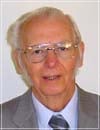
Bill McDaniel

Gentiles & The Ceremonial Law

Acts 14:26
Bill McDaniel July, 7 2013 Video & Audio
0 Comments

Sermon Transcript

Auto-generated transcript • May contain errors

100%
And thence they sailed to Antioch,
from which they had been recommended to the grace of God for the work
which they fulfilled. When they were come, that is,
to Antioch, and had gathered the church together, they rehearsed
all that God had done with them, and how He had opened the door
of faith unto the Gentiles. And there, that is, at Antioch,
they abode long time with the disciples. And certain men, which
came down from Judea, taught the brethren, and said, Except
ye be circumcised after the manner of Moses, ye cannot be saved. When therefore Paul and Barnabas
had no small dissension and disputation with them, they determined that
Paul and Barnabas and certain other of them should go up to
Jerusalem unto the apostles and elders about this question. And being brought on their way
by the church, they passed through Phenice and Samaria, declaring
the conversion of the Gentile, and they caused great joy unto
all the brethren. When they were come to Jerusalem,
they were received of the church and of the apostle and elder,
and they declared all things that God had done with them. But there rose up certain of
the sect of the Pharisees which believed, saying that it was
needful to circumcise them and to command them to keep the law
of Moses. For the apostles and elders came
together for to consider of this matter. Now, here are some things
for us to ponder to get our minds and our attention firmly fixed
upon the subject and the text of our study today. Chapter 15
is an interruption, if I may call it that, an interruption
in the history of the extension of the gospel and the spread
of the Christian church, an interruption particularly of Paul's labors
among the Gentiles. It is a necessary interruption,
however, because of an issue that arose in connection with
the influx and the admission of Gentiles into the church. Now, this interruption occurred
between the first and the second missionary tour of Paul and his
company. For, as we read here, when he
had returned home to his, quote, home church, or his home base,
if you will, which was at Antioch, that one in Syria near the Mediterranean
Sea. Antioch, the church there, came
to be on this wise. It came to be an assembly, a
worshiping place of God on this wise. For it was not just zeal
among the apostles in Jerusalem that caused the gospel to be
preached in the outer region and in the territories beyond.
But that was hastened by the persecution against the preaching
of the Word of God in Jerusalem. And I'm going all the way back
to chapter 11 and read a short passage in verse 19 through verse
23. That's Acts 11, verse 19 through
verse 23. Now they which were scattered
abroad upon the persecution that arose about Stephen traveled
as far as Phoenice and Cyprus and Antioch, preaching the word
to none but unto Jews only. And some of them were men of
Cyprus, and Cyrene, which when they were come to Antioch, spoke
unto the Grecians, preaching the Lord Jesus. And the hand
of the Lord was with them, and a great number believed, and
turned unto the Lord. Then tidings of these things
came unto the ears of the church which was in Jerusalem, And they
sent forth Barnabas, that he should go as far as Antioch,
who, when he came, and had seen the grace of God, was glad, and
exhorted all, that they with purpose of heart would cleave
unto the Lord. Now, how ironical that in Acts
chapter 8, And verse 4, Saul himself had been a cause of the
scattering and the persecution of the church that was at Jerusalem. But notice in that passage in
Acts 11 and in verse 19, those who fled the persecution, being
Jews, restricted their preaching to the Jews dwelling in the places
where they fled." Notice, preaching the Word to none but Jews only. Now, that raises the question
in our mind, why? Why did they do this? Why did
it occur? Well, we might surmise. First of all, was it fear of
persecution if they did so? Did they fear their brethren? the Jew if they preach unto the
Gentile. Remember what happened unto Peter
earlier in chapter 11 after he had preached the gospel unto
the Gentile. Secondly, we raise the question,
was it lingering ignorance of the command of the Lord in Acts
chapter 1 and verse 8? Preach the gospel of Jerusalem
and Judea and Samaria and to the uttermost ends of the earth. Thirdly, we might raise the question,
was it cultural bias or prejudice? The Jews are only God's people,
as it had been their belief all of their life, and so they restricted
their preaching under the Jew. However, as Luke relates in verse
20 of chapter 11, some from Cyprus, some from Cyrene, came to Antioch,
and they preached the Lord Jesus Christ unto the Grecian. And verse 21, God's hand was
upon them, and they preached unto them salvation in Christ. And a goodly number of them were
goodly affected by it and believed on the Lord Jesus Christ. Now they are identified as Grecian,
and that they believe. we might say, believing they
turned unto the Lord. When they believed, they embraced
the salvation that had been proclaimed unto them in Jesus Christ. Now, in reading my books, I found
that there is disagreement among some good expositor concerning
what is meant by the term or the word Grecians here. And the point between the different
commentators is this, whether they were one of two things. Whether they were one, Gentiles
after the flesh, native Greeks, and therefore as to their relationship
unto the Jew and unto God, They were strangers to God and the
commonwealth of Israel, Gentiles they would be, called on circumcision
by the Jew. Secondly, there are those commentators
that were of the opinion that these were Hellenists, as they
are known by the Jew, who were Jews, but were born and raised
in and under the Grecian culture and they even conversed in the
Greek language and they lived after the custom of the Greek. Now to side the issue would consume
too much time and take us too far away from our focus and our
subject today. But a couple of things here are
certain. Number one, there must be some
kind of contrast between the statements to the Jews only in
chapter 11 and verse 19, and in verse 20, others who spoke
the gospel unto the Grecian. Secondly, it is certain that
the controversy in chapter 15 of Acts concerned the Gentile
and the ceremonial law and the issue of circumcision. Now, let's focus a minute on
the 14th chapter, verse 26 through verse 28 that we read, which
is the end of Paul's first circuit preaching tour, mostly and primarily
among the Gentiles. They came back again to where
they had started. In verse 26 it said, from whence
they had been, that is, Antioch. In verse 27, they reported their
experiences and they declared unto the church how God had opened
the door of faith unto the Gentile as they preached. And in verse
28, how He had for a good while many disciples and they settled
again as teacher and instructors and prophet in the church at
Antioch for a while. Some say for about a year. Now first let us notice a collection
of statements that we find scattered throughout the book of Acts concerning
the Gentile and the word of God. Acts 11, verse 1, This after
the Gentile Pentecost, and the apostles and brethren which were
in Judea heard that the nations, or the Gentiles, had also received
the Word of God. And in Acts chapter 10 and verse
45, that on the Gentiles also is poured out the gift of the
Holy Spirit. Acts 11, And verse 18, Then hath
God also to the Gentiles granted repentance unto lie. In Acts
15 and verse 19, we didn't read that far, but it speaks of them
who from among the Gentiles are turned unto God. Now needless
to say, this large influx, this large engathering of Gentiles
into the churches and into the synagogues gave occasion for
dissension in the churches of that time. For it raised a very
complex situation as far as admitting the Gentile into full participation
and privileges in the churches was concerned. This not in Paul's
mind, neither in Barnabas's mind, not in the mind of the brethren
who dwelled at Antioch, nor the newly once converted Gentiles. The dissension came about in
chapter 15 and verse 1 when certain men came down from Judea, when
certain men heard When certain men came, they made their way
from Judea down unto Antioch. Now, the word certain here I
think would be an indefinite pronoun. It would simply mean,
or say, some men, unnamed, a man, some person, they coming down
to Antioch. And their coming was likely to
a purpose. They were not sent likely by
the apostles to come under the church. They insisted when they
came and mingled themselves among the church there at Antioch that
the Gentiles who had believed the preaching of Paul and of
Barnabas, who profess Christ and who have even followed the
Lord in baptism and been admitted into the fellowship, must undergo
circumcision of the flesh exactly after the order of Moses. Not just Moses personally, but
as taught in the writings of Moses in the books of the Bible,
and what is called the law or the mosaic law. And notice, if
you will, the depth of the dogmatism of their insistence. It was not
as an act of charity or foregoing of Christian liberty for the
sake of some that had a weaker conscience on the issue. It was
not as a concession to the Jewish feeling and the Jewish view and
such like. But they made circumcision and
the keeping of the Mosaic law a necessary and indispensable
part of the salvation of a Gentile. In verse 1, Without it, you cannot
be saved. Now get this, if you will. Their
position was no salvation apart from the Abrahamic and the Mosaic
rite of circumcision and of the law. Now the same thing we see
again in verse 5 of chapter 15. And this came from some of the
Pharisees in the city of Jerusalem with this exception. They insist
upon the whole Mosaic Law, not just a part and not just circumcision. These were Jew Pharisees in the
city of Jerusalem. And we have to notice something
here that might puzzle us, and it bids us to take a little bit
of a closer look. That is, in chapter 15 and verse
5, These Jerusalem Pharisees are said to be believers. They are said to be believers. The tense is, according to some
familiar with the Greek, having believed. Pharisees having believed."
Certain from the sect of the Pharisees, having believed, stood
up, rose up, took the floor, not to deny salvation to the
Gentile by faith in the Lord Jesus Christ, but insists that
it also include fleshly circumcision as well as the law of Moses as
a necessary part of Gentile salvation. Now before it goes out of our
mind and slips away, let us expand upon the idea of people having
contrary views and yet being called in the Scripture as believers. And I think we ought to do so
in the historical setting of the Scripture and the time and
the circumstances that are applicable unto the situation. For example,
let me offer you a couple more examples somewhat along this
line. In John chapter 12 and verse
42 we read, Nevertheless among the chief rulers also many believed
on him, but because of the Pharisees they did not confess, lest they
should be put out of the synagogue." They believed on the Lord. They
believed Him to be the Messiah. But they held positions of leadership
in Israel and feared the Jew lest they be put out of the synagogue. You have that in John 9 and verse
22. They had been put out an edict
that if any did confess the Lord, he should be put out of the synagogue. Now, in Acts chapter 8, there
is perhaps an even more puzzling situation in regard to the case
of Simon the sorcerer. Well, we read in verse 13 there,
Acts chapter 8, he believed and was baptized. But yet down in
verse 18, And verse 19, he offered a bribe of money to Peter and
John that they might give him the power that on whomsoever
he lay his hand they might receive the Holy Spirit. Then the verse
before us now in Acts chapter 15, that believing Pharisees
could hold such a position that circumcision and law observance
must be a part of Gentile salvation. I'll call you to notice that
down in verse 10, this is called attempting God and an unbearable
yoke for a man to bear. I admire Paul in this, that as
Calvin put it, quote, there was nothing of Pharisaism left in
Paul, unquote. He counted it done for Christ. Galatians 3, verse 7 and verse
8. I think no man that we can read
about in the New Testament was more quickly purged of his self-righteous
Pharisaism than was Saul, not even Peter. For it took a special
vision in Acts chapter 10 to ready Peter to preach the gospel
unto the Gentile. And there is, of course, his
lapse written up in Galatians, the second chapter, that affected
even Barnabas. and other of the Jew when Peter
dissimulated. Though these Pharisees are described
as having believed, they remained large segments of the leaven
of Phariseeism in them. And as one commentator wrote,
they remained largely legalists at heart. And that causes us
to say and to confess that sometimes old ways die slowly and die hard. And though Judaism died with
Christ on the cross, yet it had its supporter who sought to resuscitate
it and keep it alive as long as they could. Let me illustrate
this. If you have difficulty understanding
how one could be said to be a believer and then hold a position like
that. To illustrate this, If you were
first an Arminian, if you were first in your Christian experience
of Arminian persuasion, then you came over to embrace the
doctrines of grace, it is very likely that some old conviction
and some old practices died hard and they died slow. For example,
the invitation system. What a loss some people have
counted that. Some refer to it as the old-fashioned
altar call. when people came down to the
front. Some there are who miss the excitement
and the enthusiasm of Arminianism, the soul winning and the music
and such things. But be that as it may, the issue
being so contentious and divisive that a special meeting had to
be convened in order to consider the question. And this meeting
in the final end consisted of apostles and elders, the leaders
that were in Jerusalem. The issue is this. Must the Gentiles
submit to circumcision and the Mosaic Law as part of their salvation? Now, many were being admitted
to church fellowship without it. Many had already been baptized
in the name of the Lord and entered into the fellowship of the church. In Acts 15, the apostles and
elder meet to consider this matter, this question, or this issue. Now, I want to just raise a question
for us to consider. Does this seem a risky move on
the part of Paul and Barnabas and the church at Antioch? Does
this seem a little risky here, what they are doing? to have
this matter of the highest importance decided by the elders and apostles
in Jerusalem. For consider, if you will, these
men are all Jews. at Jerusalem. And Jerusalem was
the stronghold in that day of Judaism. It was a hotbed of Phariseeism. The high priest and the Sanhedrin
were there. So my question is, why risk such
a threat to the gospel, to this venue, as they did? On the other
hand, consider a decision favorable to the practice and the position
of Paul, Barnabas, and the Antioch church would carry greater weight
with the Jews at large and with the Christian churches, binding
the churches where there was a mixture of Jew and of Gentile
to settle the issue forever, or it ought to have settled the
issue forever. Though some of the Judaizers
never gave up, and even in the face of the verdict favoring
the Gentiles, they continued their assault upon the gospel
and their persecution of Paul and those that preached it. But
to Jerusalem we go. It seems that Paul and Barnabas
and their party first met with the church at large. in verse
4 and verse 5. The church received them in Jerusalem
very cordially, heard them while they spoke of the Word of God
among the Gentiles, how God had opened the door of faith and
had poured out His favor upon the Gentiles, how He had called
many. God had wrought a saving work
among them. However, verse 5, some Pharisees
insisted on binding Gentiles to the Jewish ordinances and
circumcision and the ceremonial law. So, in verse 6, emphasis
is put on this issue. When the debate became heated
and volatile in verse 7, no doubt the Pharisees being loud and
insistent, then the apostles and elders gather together for
to consider the matter. And there are three different
speakers or groups of speakers. And Peter takes the floor. Peter is the first one to speak.
And he rehearses his experiences with the Gentiles down in Caesarea. You have that in Acts chapter
10. how God, by him, at an earlier time, chose Peter to preach the
gospel unto the Gentile that they might believe. Not only
that, but look at verse 8 of Acts 15. God, as a witness or
evident of his saving intention toward them, gave them the Spirit
of God in the same manner that he had given it unto the Jew. Notice the word, even unto us,
in the same way. And what's more, this was witnessed
by Jews that were in the company of Peter and had come with him
to Caesarea. Notice then in Acts 15 and verse
9 how God made no difference between the Jew and the Gentile,
purifying their hearts by faith. Both are saved in the same way. Both have access unto God through
Christ by faith and grace. Even saying in Acts 15 and 11,
saving them by the same grace as the Jew. Why, therefore, subject
the Gentiles, which have turned unto God, with a yoke which neither
we nor our fathers were able to bear, to wear, or to endure? It would be a tempting of God
to do so. The law was an intolerable burden,
for no man ever lived up to the full compliance of the law. Not one, saving our Lord and
Savior Jesus Christ, not one other ever lived up to the full
compliance of the law. Give it much, it demanded more. Go to a certain point, it demand
you go further. Keep it in one point, yet transgress
it in another. Always asking what lack I yet
would be the man or the woman who stood before What's more,
their hypocritical teacher, in addition to the burden of the
law itself, had bound or piled heavy burdens upon the backs
of their students. Matthew 23 and verse 5. Heavy burdens, heavy to be borne. Why deny the Gentiles their liberty
in the Lord Jesus Christ? So Peter, in effect, says to
them on this occasion, the question has already been settled. The
question has already been settled, and that by God Himself, because
God sovereignly gave the Gentile the Spirit. He purified their
heart by faith. If you remember, the Jews at
that time, in chapter 11, strongly faulted Peter as in Acts 11 and
3, for keeping company with uncircumcised men, that is, with the Gentiles,
and eating with them. They took Peter to task for his
having gone into the Gentiles, fellowshiped with them, and preached
them the Word of God. Peter's only defense And the
only necessary one is this. Who was I to withstand God? He said it was a sovereign, irresistible
work of God. How could I withstand God? He had no intention of that happening
when he went. He knew not of it. Now, if we
look at verse 12 in chapter 15 again, silence fell upon them. as Peter's testimony was airtight
and irrefutable. God Himself had given witness. God Himself had spoken upon the
matter of Gentile salvation and had settled it. So again, Barnabas
and Paul declare what God had done by their hand among the
Gentiles, mighty things God had done, calling them miracles and
wonders. We'll just look at some of them
very quickly as the blinding of Elymas, the sorcerer, and
the conversion of the deputy in Acts chapter 13. As in Acts
14 and verse 3, signs and wonders were done by them in the city
of Iconium. Acts 14, 8 through 11. A man who had been crippled from
his mother's womb was healed and made whole at Lystra, and
saved Paul from death by stoning in Acts 14, 19 and 20. They drug him out of the city,
stoned him, left him for dead. And the next day he's preaching
the gospel. Not to mention the number of
Gentiles that believe the gospel of Christ. Now, their point of
emphasis is this. God was at work among the Gentiles,
doing the same thing among them as He did among the Jews, confirming
the message of the gospel by accompanying Zion and sealing
their faith by an unequaled work among them, which was evident. It was a point of reference.
Look at Galatians 2, 1-5. Hebrews 2 and verse 4, that God
gave the apostle confirming sign as their apostolic credential. Then back to Acts 15, and this
time verse 13, and James takes the floor. James takes the floor
to weigh in on the matter at hand. Now James was one of those. We need to look at him a minute.
James was one of those that Paul named in Galatians that seemed
to be a pillar in the church at Jerusalem. Galatians 2 and
verse 9. Could this be the James that
was one of the original twelve? There were other Jameses that
are named in the New Testament. James, the brother of John, but
he was killed by the sword in Acts 12, verses 1 and 2. One
is called the Lord's Brother in Galatians 1 and verse 19. And it seems that Paul there
also recognizes that one as an apostle of the Lord Himself. He was with the Lord, James was,
on the Mount of Transfiguration. James was one of the three that
was taken. He was one of the three in the
garden that the Lord took with him a little bit further than
the other disciple on the eve of the crucifixion. And according
to I Corinthians 15 and verse 7, he saw the Lord after his
resurrection. And in Acts 12 and verse 17,
he seems to have some kind of authority in the city or the
church of Jerusalem. It is the belief of some good
commentators that James pretty much stayed in Jerusalem to labor
the gospel, even when John and Peter were out of the city and
preaching in other places. And that it was James that oversaw
the church in Jerusalem. It is also said that he was well
respected, having a blameless reputation among the Jews of
that time. And he knew them well. And he
understood their attachment to the law of Moses since they heard
it read every Sabbath day in the synagogue, Acts 20, 20 and
21. And as F.F. Bruce wrote, in his commentary on the book
of Acts, quote, James knew how to carry this difficult audience
with him on this issue, unquote. James does not directly refer
to the report of the works of Paul and Barnabas among the Gentiles,
but to the testimony of the fellow Jerusalem apostle Peter, using
now his former name Simeon. He said, Simeon has declared
how God at the first did visit the Gentiles to take out of them
a people for His name. For a minute, let's focus on
that word first there in that verse. this council was convened
as a result of what Paul and Barnabas and the church at Antioch
were doing among the Gentiles, not making proselytes of them,
but making Christians out of them. And James has here an irrefutable
argument that this mass influx of Gentiles was indeed a new
thing. But it was not begun. It was not Paul and Barnabas
who started it. It was not Paul and Barnabas
that first did it. God sent Peter to open the door
of faith unto the Gentile that had initially occurred under
the apostle Peter, not Paul and Barnabas. And then James cites
a passage from Amos. chapter 9, verse 11 and 12, that
such a thing was according to the divine plan. that it was
written up in the Old Testament canon of the Scripture, that
God's works are eternal and that they are finished from the foundation
of the world. Therefore, that the conversion
of the Gentile is according to the will of God as expressed
in the Old Testament prophet. understanding and description
of this, study Paul in Ephesians chapter 3, verse 1 through 11,
summed up in the sixth verse there that the Gentiles should
be fellow heirs unto the same body and partakers of his promise
in Christ by the gospel. So James has an irrefutable argument
as well. James then says to them, listen,
my sentence is this. My judgment, my opinion, my recommended
conclusion is this. Circumcision and the ceremonial
law are not required of the Gentiles. They are saved and saved by faith
alone. And if we look at verse 20 in
Acts chapter 15, but that we write unto them that they abstain
from pollution of idols, from fornication, from things strangled
and from blood. Now the them and the they refer,
of course, unto the Gentiles. They were to respect some of
the scruples that the Jews yet held concerning some idolatrous
practices that were carried on among the Gentiles at large. For example, They were asked
to avoid meat that had idolatrous connection. Meat that had idolatrous
connection, had been sacrificed to an idol, or had been sold
in the shambles or something as that, and participating in
anything to the infamous temple rites of the Gentile and of the
pagan. Do this. Grant this. Be charitable
in this. Give this up for the sake of
your Jewish brethren. Now, this pleased the council
we read. Letters were written up and drawn
up. no doubt signed by them all, and sent out as witnesses under
the churches where Paul and Barnabas would preach the gospel under
the Gentiles. Now, close with this conclusion. This is a very very important
event in the New Testament. This is perhaps the high point
of the book of Acts in chapter 15. For what the Pharisees wanted
would not only be a perversion of the gospel of grace, of the
gospel of Christ, but it would also be a slight and an insult
of Christ. for them to require something
in addition to Christ's death and blood as necessary unto salvation. To add something to the work
of Christ is an insult and a spoiling of the gospel. Now, you're saying
to me, listen, I've never heard this contention. It's not in
the churches today. It's not an issue. And you're
right about that. But there are still those in
the churches who demand more than Christ and Christ alone. Have you not heard them say,
except you be baptized. Except you observe the Old Testament
Jewish Sabbath. Except you belong to our denomination. Except you are in our church. There is no salvation outside
of our church, is the teaching of several denominations today. So there still are those things
that are the exception. Except you do this. And we say, as Paul said in Colossians,
you are complete in Christ. and belief and faith in Christ
is sufficient for the Gentile as well as for the Jew. And I'll
just close by emphasizing it one more time. This is a very
important, critical moment in the history of Christianity in
Acts chapter 15.

Comments

0 / 2000 characters
Comments are moderated before appearing.

Be the first to comment!

Joshua

Joshua

Shall we play a game? Ask me about articles, sermons, or theology from our library. I can also help you navigate the site.