Bootstrap
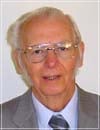
Bill McDaniel

The Voice of Wisdom

Proverbs 1:20-23
Bill McDaniel October, 2 2011 Video & Audio
0 Comments
The inspired Proverbs include a lengthy portion about the Lord's Wisdom. Does the writer refer in particular to the Divine Person of Wisdom in the Lord Jesus, or the Divine Attribute of Wisdom?

Sermon Transcript

Auto-generated transcript • May contain errors

100%
We're kind of breaking in the
middle because this section on wisdom consumes about eight chapters
of Proverbs, or taken up with this subject and a discussion
of it. But verse 20 through 23 of chapter 1 will get us on our
way. Look what he says. Wisdom crieth
without. She utters her voice in the street. She cries in the chief place
of concourse, in the opening of the gates. In the city, she
utters her words, saying, how long, you simple ones, will you
love simplicity? And the scorners delight in their
scorning, and fools hate knowledge. Turn you at my reproof. Behold,
I will pour out my Spirit upon you, and I will make known unto
you my words." Now, teaching by means of Proverbs was one
of the earliest forms of teaching and of instruction, especially
in training young children in the lessons of life and of living. Proverbs were a very common means
of instruction employed by the Jew, and they had many proverbs
that they repeated over and over again. Ralph Wardlaw, who wrote
one of the lengthier commentaries on the book of Proverbs referred
to the Proverbs as, quote, short, weighty, authoritative sayings,
sentitious, that is, full of meaning, unquote. Maximum practical
wisdom is to be found in Proverbs. No words are wasted, no long
flowing thoughts or paragraph. They simply are concisely and
precisely set forth before us. Now there are two things that
characterize the Proverbs of God. Number one, They are by
nature and necessity, as we have mentioned, short saying. They're
not long and drawn out. They are brief, they are expressed
in a few words, and yet there is a fullness of meaning that
is to be found in each of them. not long soliloquies drawn out
like we sometimes hear today. They get right at the point,
which is a great help in committing them to memory and knowing them
by heart. Secondly, they give evidence
of a wisdom far above any human wisdom that we might be able
to imagine. There is an elegance about them,
there is a majesty that is attached under the proverb, there's a
glory about them that helps us to understand that indeed they
are the Word of God. And they, by their wisdom and
the truth contained, they bear an internal evidence that sets
them above the uninspired proverb that sometimes we have among
in our language. Now, in the very first of the
book proverbs, we are brought before two friends. I'd like
to call them that. I'd like to refer to them as
two friends that we will meet shortly. And if heeded, if we
listened and followed, the counsel of these two friends, we would
have much less misery in life, because they are two aids to
a happy and a prosperous life. Now those two friends mentioned
early in Proverbs are Number one, the fear of God, for Solomon
says a lot about that. And secondly, the voice of wisdom,
as he personifies wisdom in the symbol of the Hebrew. Now, let's look first at the
fear of the Lord. Proverbs 1 and verse 7. The fear
of the Lord is the beginning of knowledge. Chapter 9 and verse
10. The fear of the Lord is the beginning
of wisdom. Chapter 16 and verse 6. By the fear of the Lord, men
depart from evil. So that when we have the fear
of God, which at times is put for the whole of religion. Sometimes the Christian religion
is simply summed up as the fear of God, a restraining influence
it has. It has a sanctifying influence
upon those. It has a great influence on the
life of those that fear God. It acts as a bridle, as it were,
to hold us back from sin. It restrains from iniquity. if one is walking in the fear
of God. As an example, if a child reverences
and fears their parent, it is an influence upon their life
and the behavior to restrain them from great disobedience. Ah, but our second friend and
counselor is a friend of great value Indeed, a friend that sticketh
closer than a brother, a friend to old and to the young alike. Wisdom here is personified in
the form of a virtuous woman whose voice may be heard in every
place. Not only heard, but giving good
and wise. and beneficial instruction who
would guide us in a good way and spare us many troubles if
they were heeded. Now, let's consider a bit perhaps
the division of the Proverbs. There are some who see in Proverbs
3, some find 5 distinct divisions throughout the book of Proverbs. But one thing does appear to
be clear, and that is that chapter 1 through chapter 9 is the addresses
of wisdom and mostly toward the youth. Then at chapter 10, And
verse 1 begins again being, as Charles Bridges called it, evidently
designed for the person advanced from the state of youth and into
that of adulthood. But before we get ahead of ourselves,
let's consider the object of the author in writing these proverbs
and leaving them for us. What's the design of a proverb? What is the purpose of all of
these proverbs? What effect are they designed
to have? To whom are they directed? What
is the message then of wisdom that we meet here? Without question
the intent and the object of it is stated in chapter 1 in
verses 2 through verse 9. that even is capable itself of
a twofold division. Look at 2, verse 6. Verse 2 through
verse 6 summarize the overall design of the writing, that the
readers may come to know, understand, write instruction and wisdom. If we look at the second verse,
it said, to receive the instruction of wisdom and justice and equality. And then we look again and see,
to receive the instruction of wisdom, to give subtlety to the
simple, to the young man devoid of discretion. Verse six, to
understand a proverb and the interpretation of the words to
the wise and dark saying. So this is the design of the
book. Then following in verse 7 to
verse 9, we have the first explicit declaration of what is meant
by wisdom and by the fear of the Lord. Then in verse 8, And
verse 9, we have there an exhortation to yield to the instruction and
admonition of godly parents, that they preserve us in the
way. My son, writes Solomon, that
is to the young or to the youth. Hear the instruction of a mother
and a father. So many today do not hear wisdom
and do not have an ear to listen to that which will guide them
and help them on their way. but we set out to study the voice
of wisdom, and this will take us in a circular route as we
look at it from the book of Hebrew. First of all, to identify this
wisdom, then to consider what sermons it is that wisdom is
preaching unto the youth and then unto others. Now the question
is whether wisdom here is, number one, a divine attribute, the
attribute of God's wisdom, whether it is a divine person. But here we think that it is
personified, at least I do, and try to prove that unto you. Most
expositors, however, take the other view. Now, there are three
tremendous passages that personify wisdom in the early chapters
of the book of Proverbs. Here they are. Number one, our
text, chapter one, verse 20 through 23. Wisdom crieth without. She utters her voice in the street. She cries in the chief place,
our concourse in the opening of the city and the opening of
the gate. In the city, in the street, her
voice can be heard as she cries out to those that pass by, to
those on the balcony, to those that look out of their window.
There's another one in chapter 8, verses 1 through 3. Really, the whole chapter. Does
not wisdom cry, understanding put forth her voice? Listen.
She stands in the top of the high places. in the way of the
places in the path. She cries at the gates, at the
entering of the city, at the coming in of the door. Then there's another great passage
on wisdom, chapter 9, and that's verses 1 through 12. There is
a brand new image of wisdom that is introduced in this place.
Not only so, but she is here in this place opposed to a rival
woman of folly. Now the two are shown in the
results to whom they deliver to their respective doors and
to those that listen. Wisdom is represented as a gracious
host. Look at it. She has builded her
house. She has slain her beast. She
has mingled her wine fit for the table. She has set her table
and she has sent out her maidens that they might bid the simple
to come and feast at her banquet table where they would be fed
a rich and delicious fare, and given wise instruction to guide
them in the way. Now, with those in our mind,
our next task is to seek to identify this wisdom which is such a forceful
and a prominent power in Proverbs. It is brought before us in such
a dynamic way. It is so important to the writer
for the readers to understand it. Now it seems that there can
only be two possible answers. Number one, that it refers to
the embodiment of wisdom in the person of the second person in
the Godhead, and that would be our Lord and Savior Jesus Christ. For he is the essence of the
wisdom of God. He is made unto us wisdom. Secondly, as we look at all of
these passages, it could be the personification of the attribute
of wisdom, which as we all know, is also an attribute of divinity. The wisdom of God, He knows all
that there is to know. It is no doubt true. Most sound
expositors prefer the first, that wisdom is one and the same
with the Lord. Jesus Christ, that it is justly
applicable to the eternal attribute and also to the incarnate Son
of God. I will try to make a case for
the second, that this in Proverbs is the personification of a divine
attribute of wisdom. That is, wisdom is personified. It is made to speak. It is given
a pulpit in which to preach, so that under the symbol of a
wise lady, she, that is, wisdom, counsels, teaches, exhorts, and
rebukes being, as it were, a voice of God unto them that hear or
that pass by. Now before we set out upon this
Herculean task, let's make an admission that in Christ is the
sum and the excellence of wisdom. We take absolutely nothing away
from Christ. In Him is wisdom. He's made to
us wisdom, 1 Corinthians 1 and verse 30. This would never, never
deny, we would, lest our wretched tongue might cleave unto the
roof of our mouth and never say another word. But here are some
interesting points to consider. Number one, wisdom, that is,
in each of these passages is used a woman personage. a lady, a female, which is never
done of Christ in any of the many prophecies and the typologies
of Him in the Old Testament. Secondly, there does not appear
to be any New Testament passage that connects this directly unto
Christ and makes this particular application. Now this we say
while at the same time granting that many things ascribed to
wisdom are also ascribed to Christ and are found in him. But I suggest
to you that what we have here is the personification of the
divine attribute of wisdom, which means that such lessons and instruction
learned from wisdom and at her desk, are not portrayed from
Solomon only, but from God, that they are divine instruction. Ralph Wardlaw put it this way,
the voice of wisdom is the voice of God, the authority of wisdom
is the authority of God, and the warning of wisdom is the
warning of God, unquote. But that then leads us to a blessed
point. By what authority does wisdom
take it upon herself to instruct us? By what authority does she
speak and does she instruct, does she correct, does she rebuke,
and do all of those things for our good? We might ask her, as
was asked of Moses, who may be a judge or a guide over others? Now that brings us to note that
her work is set forth in a two-fold way in the scripture. A. By use of the word she. Notice it again and again. She
cries. She stands. And her. And her
voice. And her works. Solomon describes
her and her works. But B, notice something else,
and that is, by use of the first person I. Wisdom speaks unto
us in the first person. Not only is wisdom personified,
but is made to speak in her own person and words. And we especially
begin to notice this and to pick it up in chapter 8, where there
in verse 12, I wisdom dwell with prudence. Verse 17, I love them
that love me. Verse 20, I lead in the way of
righteousness, so says wisdom unto us. But especially notice
verse 12 of that chapter. I, wisdom, dwell with prudence
and find out knowledge of witty inventions." Wisdom declares
herself as the source of all beneficial discoveries which
people make. She has been the origin of any
and every invention, of every convenience for the well-being
and the happiness of the human family, of the development of
the arts scientists, sciences, and so on. Charles Bridges, who
also wrote a commentary on Proverbs, put it like this, quote, all
the witty inventions of science are ultimately traceable to this
heavenly source, unquote, that is of wisdom. Now, if we scan
verse 12 through 21, To sum up some of the claims of wisdom,
in verse 12 it is the general declaration, I find witty invention,
we're in chapter 8 now. Verse 13, wisdom by its special
nature hates all false ways. Verse 14, counsel is mine, I
am understanding, I have strength. Verse 15, by me kings reign and
princes decree, just it. So she intrudes also even into
the mundane life. the civil life, and even the
political arena. By me princes rule and noble,
even the judges of the earth. Verse 18, riches and honor are
with me. Verse 19, my fruit is better
than gold. yea than fine gold, and my revenue
than choice silver." Verse 20, I lead in the ways of righteousness. Verse 24, that I might cause
those that love me to inherit substance and I will fill their
treasure. Now to rise higher and higher
as wisdom makes the greatest claim perhaps that one can make
And that is that it is eternal. Look at chapter 8 again. There
we read verse 22 and verse 23. What wonderful verses are these. Chapter 8, verse 22 and verse
23. The Lord possessed me in the
beginning of His ways, before His works of old. I was set up
from everlasting, from the beginning, forever the earth was." Now this
is a claim that no amount or no degree of human wisdom can
make or attribute to themselves. But the attribute of wisdom Infinite
wisdom, if we may so say so, was from everlasting. It was in the present and in
possession of the eternal God before the creation of the world
and all things therein. So if you look at that claim,
chapter 8, verse 22 and verse 23, the Lord possessed me in
the beginning of His way before His works of old set up was I
from everlasting." Now the term, the beginning of His way in verse
22 does not mean that God Himself had a beginning, for that is
unreal and impossible. It is just dated before the great
God commenced the great work of creation and inhabitation
of the earth. It was before His works of old. It was from everlasting, from
the beginning, wherever the earth was. The point of this is to
magnify the wisdom and being from eternity as being possessed
by God, as serving God even from the eternal yesteryear. Notice, however, that the subject
is not dropped with the declaration of the everlasting nature of
this wisdom. There follows a series of declarations
confirming the everlasting duration of wisdom as a personification
getting bolder and bolder and bolder. Proverbs 8, 24, when
there was no depth I was brought forth. Verse 25, before the mountains
were settled, before the hills was I brought forth. Verse 26,
while as yet He had not made the earth or the field. Verse
27, when He prepared the heavens, I was there. When He set a compass
upon the face of the deep. Verse 28, when He established
the clouds above, when he strengthened the foundation of the deep. Verse 29, when he gave the sea
its decree, when he appointed the foundation of the earth. Verse 30, then was I with him,
I was daily his delight. Now the two entities in the passage
are those in verse 22, the Lord possessed me, God's wisdom which
was personified since Proverbs chapter 1 and verse 20. Here
is a voice crying out in our ears. She cries out when we are
young. She stands before us as we go
on our ways of folly and, as it were, would stop us and turn
us back and give us good guidance and give us good advice and lead
us in a good and a right way. Now, we close the study by asking
again the question, what does wisdom do? What action is there
that is ascribed to her, personified as a female or as a woman? Chapter 1, verse 20. She cries
without. She utters her voice in the street. Chapter 8 and verse 1, she cries
aloud like a trump, putting forth her voice that they might be
clearly heard. Chapter 9 and verse 3, she cries
upon the highest place in the city. She speaks of the right
way and warns of the wrong way. Now, if we go back to chapter
8 and verse 32 through verse 36, and therefore hearken unto
me. O children, for blessed are they
which keep my way. Hear instruction, be wise, refuse
it not. Wisdom is the principal thing. With all of thy getting, get
wisdom, we read in the Bible. It is of great value. It is the
way to happiness and prosperity, even to eternal life. is the
way of wisdom. Hear and hearken, open thine
ear, listen to the voice of this one as she cries in our ear. Proverbs 4 and verse 5, get wisdom,
get understanding, forget it not, neither decline from the
words of my mouth. Proverbs 4 and verse 7, wisdom
is the principal thing, therefore get wisdom. Proverbs 8, 10, and
11, receive my instruction and not silver, and receive knowledge
rather than choice, go. For wisdom is better than rubies. And all the things that may be
desired are not to be compared to the wisdom of God that cries
out unto us. Proverbs 16, 16. How much better
is it to get wisdom than gold? Now that's contrary to most people's
thinking today. Let's go for the gold. Let's
go for the things that are valuable in the world. But wisdom exhorts
us in the end of chapter 8 saying, Blessed is the one that hears
me. Listen, whosoever finds me finds
life and obtains favor with the Lord. The only way to true happiness
and peace and life eternal is heralded out in the voice of
wisdom. It is to be found in her advice. It is to follow the one that's
called wisdom that cries out unto us and shall fall into ruin
all of those who tread underfoot her counsel and her advice. He destroys his own soul. who
refuses to hear the voice of wisdom. He does it to his own
hurt or her own hurt. Such a person, according to the
scripture, is a fool who stops their ears at the voice of wisdom
because, in effect, it is the voice of God. It is counsel from
heaven. when we hear the voice of wisdom. Now, we could have other studies
on this, but the instruction, the teacher of wisdom, is one
that we ought to learn. We ought to be in her school. We ought to sit at her desk and
we ought to hear her voice and her instruction. and desire to
hear her voice evermore. The voice of wisdom. What a voice
it is, how beneficial it is, how much for our good does she
cry out unto us. Think back over our life, in
our own youth, how we disregarded wisdom, how we listened not and
went on our way and suffered the consequences for it and because
of it.

Comments

0 / 2000 characters
Comments are moderated before appearing.

Be the first to comment!

Joshua

Joshua

Shall we play a game? Ask me about articles, sermons, or theology from our library. I can also help you navigate the site.