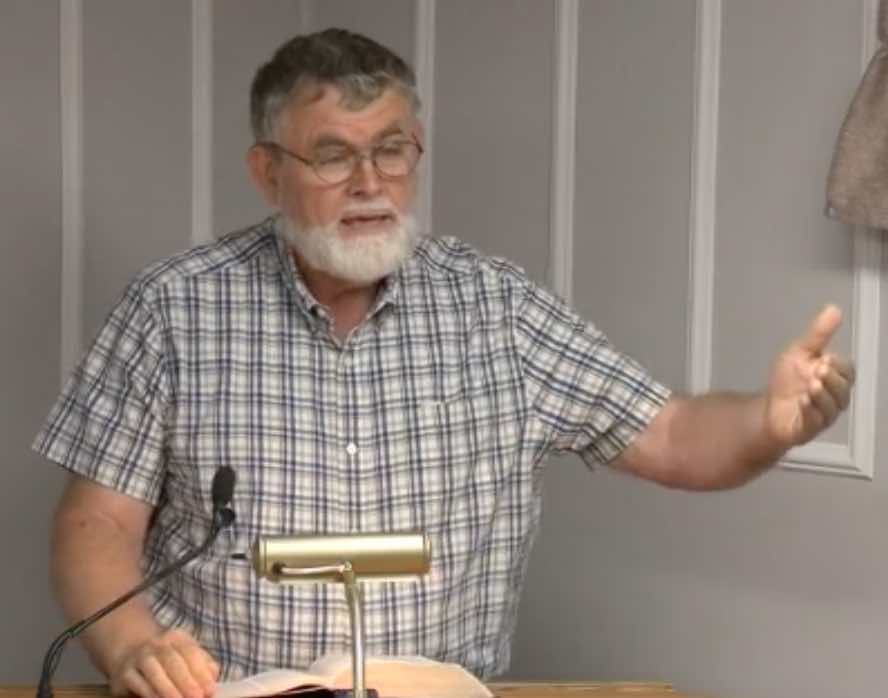
In the sermon titled "The Portal of Death," Mike McInnis addresses the inevitability of death as a central theological topic, emphasizing its universal nature and divine appointment. He argues that no one, regardless of their position or faithfulness, is exempt from death, as illustrated by the death of Samuel and supported by Scripture references such as Hebrews 9:27 and Job 30:23. McInnis refutes the notion that Christ's suffering guarantees physical healing for all believers, asserting that sickness serves as a precursor to death and a reminder of human frailty. He emphasizes that death is under God's sovereign control, functioning both as a means of judgment against the wicked and a demonstration of God's redemptive plan for His people. The sermon concludes by urging listeners to consider the significance of death as either a gateway to eternal life in Christ or a path to condemnation.
Key Quotes
“As it is appointed unto men once to die, so shall all flesh taste that fate and shall not escape.”
“No matter how faithful or blessed a man may be, God will not overturn the sentence he has passed on sinful flesh.”
“Death is but a tool in the Lord's hand that he uses to administer judgment on the wicked.”
“Will your death be an entrance into the glory of Christ's kingdom or merely a portal to your everlasting destruction?”
The Bible teaches that death is appointed for all men, as stated in Hebrews 9:27.
The Bible emphasizes the inevitability of death, stating in Hebrews 9:27 that it is appointed unto men once to die. This truth is echoed in Job 30:23, which affirms God's sovereign control over life and death. Death is not merely a natural occurrence; it is an act of divine appointment, underscoring God's authority as both the giver of life and the administrator of death. As Samuel's death illustrates, even the most faithful servants of God are not exempt from this reality.
Hebrews 9:27, Job 30:23
The scripture confirms God's sovereignty over death, as he directs its occurrence according to his will.
God's sovereignty over death is illustrated throughout Scripture, demonstrating that He controls both life and death. As stated in Job 14:5, man's days are determined, and his bounds cannot be passed. God owns death and uses it as a tool to administer judgment and manifest His power, showcasing His ultimate authority over all creation. Furthermore, scriptures like Isaiah 45:6-7 affirm that He forms light and creates darkness, indicating His mastery over all aspects of existence, including death.
Job 14:5, Isaiah 45:6-7
Understanding death helps Christians grasp the nature of God's judgment and the hope of redemption.
Understanding death is crucial for Christians as it highlights the severity of sin and the reality of God's judgment. As the sermon explains, the wages of sin is death, illustrating that all humanity faces mortality due to the fallen nature inherited from Adam. However, for believers, death also serves as a means of reconciliation and a glorious transition. Through Christ's death and resurrection, death transforms from a fearful finality into a gateway to eternal life in the presence of God, emphasizing the hope of redemption.
Romans 6:23, 2 Corinthians 5:8
God uses death to demonstrate His judgment, power, and to facilitate reconciliation with His people.
God employs death for various divine purposes that serve His overarching plan. According to the sermon, death acts as a tool for God's judgment against the wicked, while also revealing His power to an unbelieving world. For instance, Jesus highlighted Lazarus' death to enhance the disciples' belief in His sovereignty over life and death (John 11:14). Additionally, death plays a pivotal role in the reconciliation of believers, as Christ's death redeems the elect (Romans 5:10), allowing them to experience the joy of spiritual freedom and victory over death.
John 11:14, Romans 5:10
Comments
Your comment has been submitted and is awaiting moderation. Once approved, it will appear on this page.
Be the first to comment!
