Bootstrap
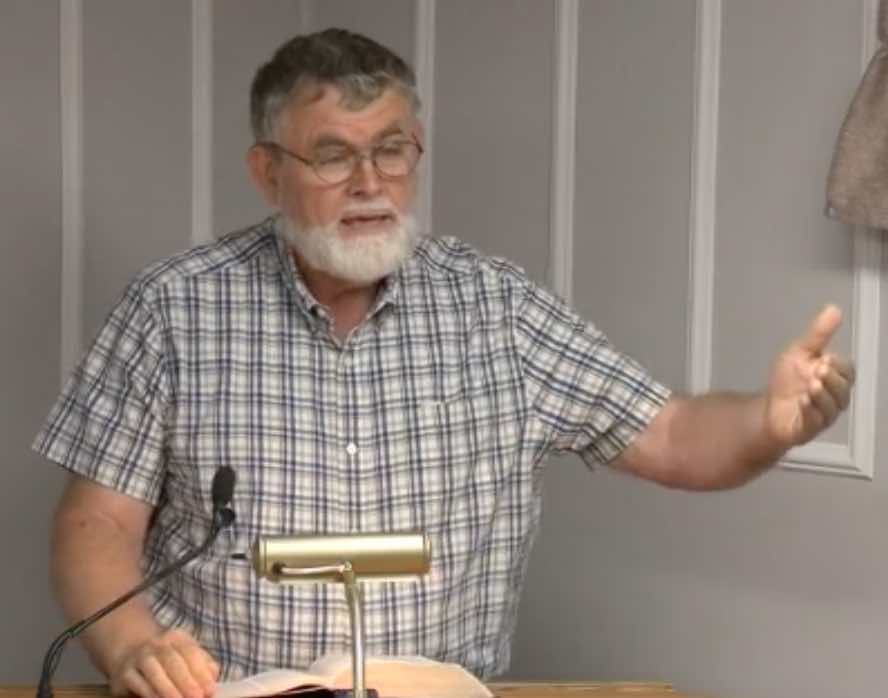
Mike McInnis

God's Law, God's Purpose #264

Mike McInnis May, 9 2019 Audio
0 Comments
What does the Bible say about the purpose of God's law?

The purpose of God's law is to reveal human depravity and our inability to keep it.

The Bible portrays God's law not merely as a set of requirements but as a tool to expose our sinful nature. As seen in the interaction with the rich young ruler, the law serves to demonstrate our inability to achieve righteousness on our own. The law reveals the hard truths of our hearts, showing us that we cannot earn eternal life through our actions. This aligns with the Apostle Paul's testimony that he understood his sinfulness only when he saw the holiness of the law through God’s grace.

Romans 7:9-11, Matthew 19:16-22

How do we know that total depravity is true?

Total depravity is evident in Scripture, showing that all humans are incapable of keeping God's law perfectly.

Total depravity is supported by numerous scriptural examples, illustrating the fallen state of humanity. The law is not a mere list of dos and don'ts but a reflection of God’s standards of holiness, which we cannot meet on our own. As individuals become aware of their sinfulness through the law, it emphasizes that everyone falls short of God's glory. The Apostle Paul’s experience, as he moved from self-satisfaction in law-keeping to recognizing his own sinfulness, exemplifies the truth of total depravity.

Romans 3:23, Ephesians 2:1-3

Why is understanding our inability to keep the law important for Christians?

Understanding our inability to keep the law drives us to Christ for righteousness.

Recognizing our inability to adhere to God's law is crucial for every Christian because it highlights our complete dependence on Christ. We cannot establish our own righteousness through our efforts but must rely on Christ's perfect obedience. This understanding fosters humility and a sincere acknowledgment of our need for grace. As believers, when we grasp the depth of our neediness, we can truly appreciate the grace that God offers through Jesus, who fulfilled the law perfectly on our behalf.

Philippians 3:9, Galatians 2:16

How does God's law drive us to Jesus?

God's law shows us our shortcomings, pointing us towards Christ as our source of righteousness.

The law functions as a tutor that leads us to Christ, helping us realize that our attempts at obedience are insufficient. By exposing our weaknesses and failures, the law makes it clear that we need a Savior. This understanding urges us to cast aside our attempts at self-righteousness and embrace the righteousness that is found in Christ alone. As we see the impossibility of achieving holiness through our strength, we are driven to rely entirely on Jesus, who embodies the perfect fulfillment of the law.

Galatians 3:24, Romans 10:4

Sermon Transcript

Auto-generated transcript • May contain errors

100%
Thy mercy, my God, is the theme
of my life. God has a purpose in all things,
but that purpose is not always readily apparent. There is always
a way which seems right to man, but that way is never the right
way and is that which leads to death when pursued. This is demonstrated
quite clearly in the manner in which men approach the law of
God and the purpose for which they think it was given. The
natural man looks at the law as a catalogue of requirements
which God has set forth to give men a guideline as to how they
should live their lives. Now there is no doubt that this
law does set forth some very stringent guidelines, but the
purpose of them is not to give the sons of God a simple rule
to follow, but rather to reveal the depravity of their own hearts
as they see the enmity of their mind against such rules, and
to teach them of their utter inability to keep that law. The
rich young ruler asked the Lord for a simple rule whereby he
might inherit eternal life. The Lord told him what seemed
to him at the time a simple enough plan. Thou knowest the commandments.
Do not commit adultery, do not kill, do not steal, do not bear
false witness, honor thy father and thy mother. He replied, All
these have I kept from my youth up. He was quite satisfied with
his performance, as many are who claim that they keep the
commandments of the Lord, all the while shaking their heads
in disgust at those who they call lawbreakers. Yet when the
Lord revealed to this young ruler what the true nature of the law
was, he went away sorrowing. What he thought the purpose of
the law was and what the Lord showed him it was were two different
things. The Lord used the law to teach him of the hardness
of his heart. By this revelation he manifested to him how far
short of keeping the law he was, and therefore how far he was
from inheriting eternal life by his own effort. The man who
thinks he can keep the law and is satisfied by his own performance
of it, he is going about to establish his own righteousness. Paul testifies
that he had the exact same mindset until, by the grace of God, he
was shown his own depraved heart by revelation of the absolute
holiness of the law. For I was alive without the law
once, but when the commandment came, sin revived and I died,
and the commandment which was ordained alive I found to be
unto death. He testifies that he was satisfied
with his performance when he considered himself to be a law
keeper, but he was void of an understanding of the nature of
the law. So when the Lord revealed to him the purpose of the law,
he was judged in his mind as a wicked man and slain in his
conscience, seeing the utter impossibility of his keeping
the law. He discovered that the law, which
he expected to be justified by, could only condemn him, not because
of a fault in the law, but because of the depravity of his own heart
which precluded him from keeping it. As long as a man thinks that
he can and does keep the law of God, that man will go about
to establish his own righteousness before God, and being unable
to see himself for what he is, shall perish in his own righteousness,
being void of that one and only true righteousness which is found
in Christ alone. Yet when the Lord in sovereign
mercy acquaints a man with his own innate depravity and secret
rebellion against the law of God, contrasted against the backdrop
of the utter immutability and holiness of that law, then that
man will fall down and confess of a truth that he is a sinner
without any hope of being found righteous before the Lord by
his own obedience. There are many who would confess
that they are true believers in Christ, who nonetheless continue
on with the notion that since they are now believers, they
are somehow able to perform the deeds that they are exhorted
to do in the New Testament. It is no less a principle of
legalism for those who claim to be saved by grace through
the faith of Jesus Christ to look at the exhortations of the
New Testament as a list of requirements which they faithfully work on
keeping as obedient sons of God than it was for the Jews to think
that they could keep the law of Moses and be justified thereby.
The exhortations of the New Testament must not be neglected in any
wise, yet for a man to consider that he is able to perform them
in his own power is the same error which the Jews were destroyed
by. The reason that we are exhorted to perform acts of obedience,
which we gladly confess are beneficial and good, is to drive us to Christ
as our performer. The Spirit of God will teach
His children of that perfect law or principle of liberty to
which the sons of God are called. He will remind them of their
continual weakness in the flesh. He will acquaint us with the
character of Christ as that perfect man who did no sin, neither was
guile found in His mouth. All of those things that we are
exhorted to perform, he has already demonstrated a complete obedience
to. Would we pray without ceasing? Christ has already prayed that
our faith fail not. Would we rejoice evermore? Christ
is our rejoicing. When we are unable to see Christ
as our all in all, then the law has had its perfect work. What
is your source of righteousness? If you would like a free transcript
of this broadcast, email us at 4the4 at windstream dot net.
Mike McInnis
About Mike McInnis
Mike McInnis is an elder at Grace Chapel in O'Brien Florida. He is also editor of the Grace Gazette.
Broadcaster:

Comments

0 / 2000 characters
Comments are moderated before appearing.

Be the first to comment!

Joshua

Joshua

Shall we play a game? Ask me about articles, sermons, or theology from our library. I can also help you navigate the site.