Bootstrap
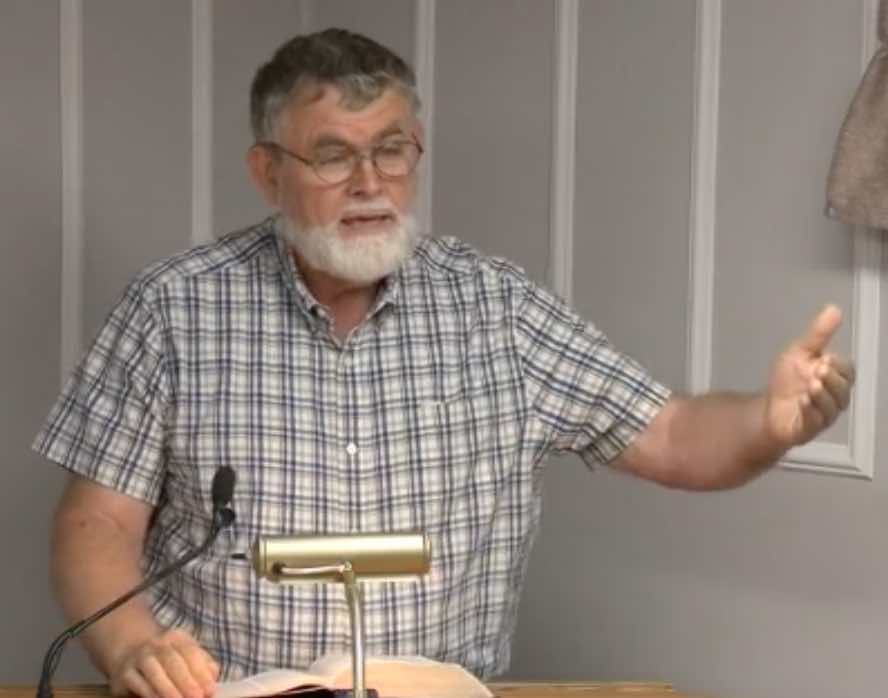
Mike McInnis

In Him #204

Mike McInnis June, 27 2018 Audio
0 Comments
What does the Bible say about the immutability of God?

The Bible states that God is unchanging, as seen in Malachi 3:6 and Hebrews 13:8.

The immutability of God is a central doctrine in Scripture, asserting that God does not change in His nature, character, or promises. Malachi 3:6 reminds us that 'I am the Lord, I change not; therefore ye sons of Jacob are not consumed.' This aspect of God's character provides profound comfort to believers, affirming that His promises remain steadfast and unbroken. In Hebrews 13:8, it is proclaimed that 'Jesus Christ is the same yesterday, today, and forever,' emphasizing that His redemptive work and love toward His people are eternally secured.

Malachi 3:6, Hebrews 13:8

How do we know that God is sovereign over all events?

Scripture affirms God's sovereignty through passages like Isaiah 46:10 and Proverbs 16:9.

God’s sovereignty is a foundational belief in Reformed theology, underscoring that all events occur according to His divine purpose. Isaiah 46:10 declares, 'I declare the end from the beginning, and from ancient times the things that are not yet done,' showcasing His control over all history. Similarly, Proverbs 16:9 states, 'A man's heart deviseth his way: but the Lord directeth his steps,' which further illustrates that despite human plans and intentions, it is ultimately God's will that prevails. Understanding God's sovereignty reassures believers that nothing occurs by chance, but rather according to His perfect and wise ordination.

Isaiah 46:10, Proverbs 16:9

Why is predestination important for Christians?

Predestination is crucial as it highlights God's eternal choice of the elect for salvation.

The doctrine of predestination is integral to understanding God's grace and mercy in salvation. According to Ephesians 1:4-5, God chose us in Christ before the foundation of the world, illustrating that our salvation is rooted in His sovereign will rather than any foreseen merit or action on our part. This doctrine affirms that salvation is a gift of grace, demonstrating God's love and purpose for a people set apart for Himself. It provides believers with assurance, knowing that their salvation is not based on their fluctuating faith or works but on God's unchanging purpose. Furthermore, it emphasizes the glory of God's grace in redeeming a people decisively chosen in Christ.

Ephesians 1:4-5

Sermon Transcript

Auto-generated transcript • May contain errors

100%
Thy mercy, my God, is the theme
of my song. As we read through the book of
Jeremiah, we see the prophecies which the Lord gave to him coming
to pass one by one at the precise time and in the exact manner
in which he said. Multitudes of people from various
parts of the world had to be in the exact place which they
needed to be at those precise moments in order for these things
to occur exactly as the Prophet declares. Thus it astonishes
us that some would opine that such events occur in a random
order according to the whims of men. If there is an order
to the universe which we can observe, then we can be certain
that the same One who put the planets in their respective orbits
and established the bounds of the sea that it cannot pass,
most surely has ordained that these events must occur according
to the good pleasure of His will. The greatest basis of comfort
to the sons of God is found in His immutability. That is a big
word which men use to describe what the Lord said quite simply.
For I am the Lord, I change not, therefore ye sons of Jacob are
not consumed. The writer of Hebrews said it
like this, Jesus Christ, the same yesterday and today and
forever. The unchanging nature of the
Lord ensures that all of his promises must forever stand sure
and that the objects of his everlasting love can never perish. In keeping
with his immutability, all things in heaven and earth must occur
according to his sovereign purpose. This fact is never left in doubt
in the scriptures, that they may know from the rising of the
sun and from the west that there is none beside me. I am the Lord,
and there is none else. I form the light and create darkness. I make peace and create evil. I, the Lord, do all these things. This is the God whom the natural
man rails against and will not worship. The crowning glory of
the Lord's predestination of all events is His revelation
of His purpose to bring glory to His name in the redemption
of a people which He has chosen in Christ from before the foundation
of the world. He did not choose them out of
the whole fallen race of Adam, but rather loved them before
they were ever born in Adam. They were in Christ before they
were in Adam, even as the covenant of promise preceded the covenant
of law. The promise came by and through
Jesus Christ to all who were in him from the beginning of
the world. As surely as the Lord is unchanging, so is his love
towards his son and those who are found in him. This is the
whole basis upon which any of them has a hope that cannot fail. The Lord told Jeremiah that he
would surely destroy Jerusalem and enslave those whose life
was to be spared by Nebuchadnezzar. He also said that he would bring
destruction upon the nations surrounding them, and that ultimately
he would completely destroy Babylon. None of this failed to occur
precisely according to his ordained purpose. All of these events
occurred in order that he might demonstrate that salvation belongeth
unto the Lord. He would manifest the truth that
no one can deliver himself from his hand, and that no one could
find deliverance except according to his mercy. It is his sovereign
prerogative to destroy the very one which he ordained to be the
destroyer. Who can speak against him who
made all things for himself? Shall the thing formed say to
him that formed it, Why hast thou made me thus? In the demonstration
of his judgment and subsequent destruction of the wicked, he
would set the stage in order to magnify the glory of his grace
and the redemption and salvation of that people which he reserved
for himself. which were chosen in Christ from
before the foundation of the world. There are many who claim
that those who are redeemed shall yet have to answer for their
sins and give an accounting for each one. If that be the case,
then Christ did not obtain eternal redemption, but merely hoped
to mollify the anger of God. The Lord told Jeremiah that even
a search for the iniquities of his elect would not enable any
to be discovered. He has become sin for us that
we might be made the righteousness of God in Him. The salvation
of the sons of God is not a mere commutation of the sentence of
death, but rather a full and free pardon from the crimes they
have committed, so much so that they are seen by Him as those
who have never sinned. The Scripture speaks of this
as justification. Those whom He has reserved are
a people who are predestined to believe in Him. Do you believe
in the Justifier? If you would like a free transcript
of this broadcast, email us at 4the4 at windstream dot net.
Mike McInnis
About Mike McInnis
Mike McInnis is an elder at Grace Chapel in O'Brien Florida. He is also editor of the Grace Gazette.
Broadcaster:

Comments

0 / 2000 characters
Comments are moderated before appearing.

Be the first to comment!

Joshua

Joshua

Shall we play a game? Ask me about articles, sermons, or theology from our library. I can also help you navigate the site.