Bootstrap
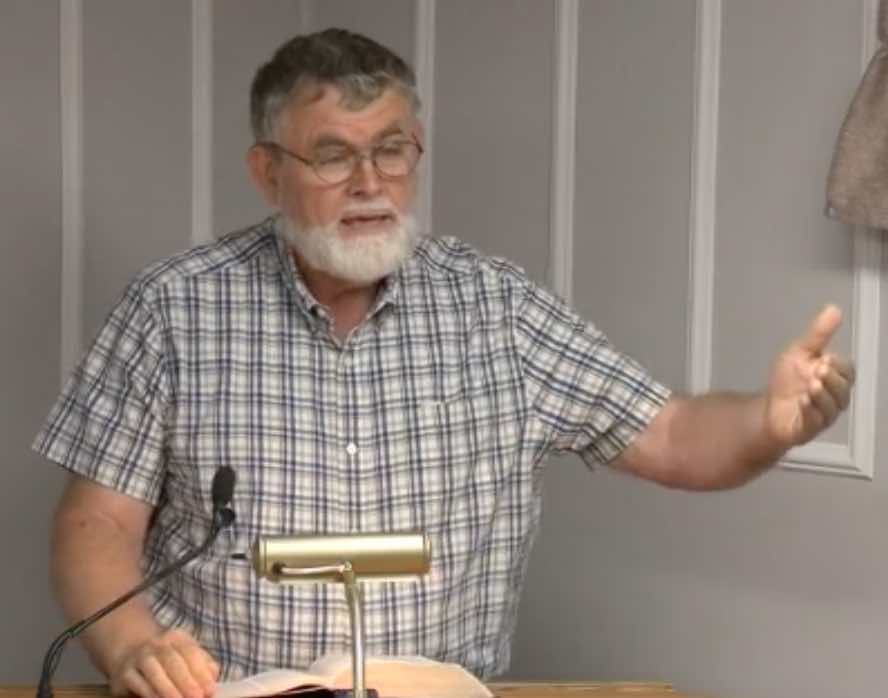
Mike McInnis

In Christ: A New Creature

2 Corinthians 5:17
Mike McInnis October, 15 2017 Audio
0 Comments
2 Corinthians Series

Sermon Transcript

Auto-generated transcript • May contain errors

100%
2 Corinthians chapter 5, and it is a glorious thing how
the Lord causes us to see a compatibility between those
things that Brother Al has been bringing forth and these things
that the Lord would teach us here in this passage that Paul
is setting forth before us. And Paul has been setting forth
in this chapter, and of course throughout his whole ministry,
that there is a contrast between religion and knowing Christ. And there
is a difference between those things that men pursue in the
flesh and those things that they pursue in the Spirit. And there is, while there may
be some understanding in a measure in the flesh of spiritual things,
there is no true understanding of spiritual things apart from
the gift of the Spirit. And that's kind of what he's
touching on here in these verses. And we look in verse 14 and begin
reading there. It says, For the love of Christ
constraineth us, because we thus judge that if one died for all,
then we're all dead. and that he died for all, that
they which live should not henceforth live unto themselves, but unto
him which died for them and rose again." Now that is the real
manifesto of the preaching of grace to the children of God. The love of Christ constrains
us. There is nothing else. rules of the church, it's not
the order of religion in which we
might walk, it's not even the Bible per se, just as it is words
upon a page, but it is the love of Christ that constraineth us. And if the Lord does not give
a man the love of Christ, He will not be constrained. Now,
you might corral Him for a little while. You can take a horse and
you can shut Him up in a pen and He will be constrained. But
as soon as you open the gate, if He has not been constrained
by the love of His Master, or if He has not been broken, that
would be a word to say, He'll be out that gate and gone, and
you might not find Him again. But you see, the Lord, He doesn't
build fences around His people in outward things, but He constrains
them in the heart. And that's what constrains God's
people, is the love of Christ. Because we judge that if He died
for us, then we are dead to sin. Now if we are dead to sin, how
can we live any longer in it? How can we delight in it? How
can we walk in it? How can we say, well, we are
just going to kick off the traces and just do our own thing without
any compulsion of conscience or mind? Now this old flesh is
strong and it indeed wars against us and it indeed does cause us
to stumble from time to time, really on a very regular basis,
because that warfare never ends. But nonetheless, the man who
has been born again by the Spirit of God is constrained by the
love of Christ. And he cannot help it any more
than the man who is not constrained by the love of Christ can help
the way he feels about things. I mean, can you cause yourself
to love something? Now, you can cause yourself to
act in love towards something, but you cannot love somebody
or something unless you have a love for it. Now, you know,
in a fleshly sense, there are various different interests that
people have. Some people love honey. I've
got people that come in the store and they talk about hunting all
the time and they'll just quit work and go hunting because they
love hunting. Now, I don't care anything about
hunting. I mean, it doesn't constrain
me in the least. And so I don't even think about
it. But I guarantee you this, if a man is constrained by hunting,
he knows when the opening day of bow season is. He's got that
thing circled on his calendar. I mean, he's not wondering when
it is. He knows when it is. Because
why? Because he loves hunting. And
so it is. Dear brethren, that's what it
is to be constrained by Christ. If a man loves Christ, he just
loves Christ. I mean, you don't have to tell
him, well, now you need to love Christ. Why? Because he loves
Christ. And he's constrained by it because
he thinks in his mind of what it is that the Lord has done
for him. And it causes him to have a different
thought pattern than he otherwise would have. Is that not true? I mean, is that not what Paul
is saying here? The love of Christ constrains
us because we thus judge that if one died for all, then we
are all dead. We died with Him. He is our Savior. And that He died for all, that
is, all for whom He died, that they which live should not henceforth
live unto themselves, but unto him which died for them and rose
again. Wherefore henceforth know we
no man after the flesh. Yea, though we have known Christ
after the flesh, yet now henceforth know we Him no more. Therefore
if any man be in Christ, he is a new creature. Old things are
passed away. Behold, all things will become
new." Now what Brother Al was talking about there, about the
phylacteries, is a good illustration, I believe, of what Paul is talking
about here, about knowing Christ after the flesh. Now, when the
Lord gave those Jews those commands to do those things, it was not
in itself a bad thing for them to have these phylacteries. There
was nothing wrong with the phylactery. I mean, if a guy wants to carry
a Bible with him, is that a bad thing? I mean, if you've got
a pocket New Testament and you put it in there, or you've got
your phone and you've got the Bible on your phone and you want
to have that with you so that you can take it out when you
want to and read it, is that a bad thing? No, that's a good
thing. There's nothing wrong with that. But that's just what
you're doing in the flesh, is it not? I mean, those are things
that are external. Reading the Scriptures, that's
a good thing. Teaching your children the Scriptures, that's a good
thing. I mean, don't we have the illustration of where Paul
commended Timothy's grandmother and mother because they gave
him or instilled in him a love of the Scriptures and a knowledge
of the Scriptures because those things were precious to them.
Now those were external things. Did those things that they did,
is that why Timothy believed the gospel? Now some people would
tell you that it is. But I'm telling you it's not.
Now was it a good thing? Well, sure it was a good thing.
Should every person who believes the Scripture to be the Word
of God Desirous of having their children
taught the Scriptures? Should they not instill in them
the Word of God as best they can? Well, sure they can. But
Paul is saying, we've known these things after the flesh. We've
known Christ after the flesh. He was a Pharisee of the Pharisees.
Paul didn't say, I wish I'd have never been a Pharisee. No, I
believe if you'd ask Paul, he'd say, man, that's the greatest
thing that ever happened. Or not the greatest thing, but he'd
say it was a good thing that I was raised as a Pharisee. I mean, there are things that
I gained in the flesh knowledge, he says, that are good. And I've
known some things of truth. Well, in the same way, he said,
we have known the things of Christ. Now, when the Lord Jesus walked
with His disciples, was that not a good thing? When He walked
with them and He taught them every day, was that not a good
thing? Well, of course it was a good thing. They knew Christ
after the flesh in that sense, in the liberal sense. They knew
Him. But you know what the Lord said?
He said, it's needful. He said, it is going to be better
for you, for me to go away. And they all said, no. No, we
don't want you to go away. When Mary saw him in the garden and she fell down to his feet
and she reached out and grabbed him, he said, don't touch me.
She said, touch me not. Now some have made this into
like a mystical thing, like he was like electric or something
and he didn't want her to touch him because he hadn't ascended
yet and her hand would go through him or some kind of ridiculous
stuff like that. That wasn't it at all because
later on he told Phillip, he said, touch me. He said, put
your hand there. Well, he still hadn't ascended
had he? No, what he was saying to Mary was, He said, don't cling
to me in the flesh. She wanted to be with him in
the flesh. She was glad to see him. He said,
touch me not. He said, the time is not right
yet. He says, I have not ascended.
He said, it is good for me to go away. He said, go and tell
the disciples that I am risen and I will see them. He said, you go tell them that.
Because you see, it is not needful for the disciples to cling to
Christ in the flesh. It was needful for them to come
to the place where they understood that the work that Christ came
to do was not a work that would be manifested in flesh and blood,
but would be manifested in spirit and power. And he says, I am
coming. But he says, you go down to Jerusalem
and you wait. And he says, I'm going to send
a Comforter to you. I'm going to send the power of
my kingdom upon your head and you shall be witnesses unto me. You shall declare my name in
the earth. Because he said, you're going
to know me. Not simply, you know me. I remember
Jay Wembley talking one time about going down to Mexico. And he said, you know, if you
go down to Mexico and you ask somebody, do they know Jesus? Of course, it would be Jesus
to them. They'll say, oh yeah, he lives
down the road in the house down there. Why? Because that's a
common name among Mexicans. You know, to be named Jesus. But that would be to know Jesus
after the flesh, would it not? Because that was not the Jesus
of which he was speaking. And so Paul says here, we henceforth
know we know man after flesh. We are not concerned with fleshly
religion. We are not concerned with those
things that we can see we are not concerned with phylacteries
and those outward forms that men see. We are not concerned
with religion that men dote upon and think to be important. Now
there are a lot of different religions and denominations and
sects and all kinds of organizations and what not, and all of them
believe they are the right one, do they not? I mean, if you really
want to be on the inside track, you need to be a part of this. You mentioned some of them. But
it bleeds over, not just in those cultic type organizations, but
among Christian denominations. They say, well now, you know,
all these others might be alright, but if you really want to know
it, you've got to be part of this. In fact, some of them will
tell you, Willie, you've got to be baptized. You know, you've
got to be baptized by somebody in our organization to really
be in there and have your sins washed away. Brethren, all of that stuff is
to know Christ after the flesh. And there may be some outward
benefit in those things in some measure in a lot of people's
lives. I would venture to say that most
churches today are filled with people that know Christ after
the flesh. If you ask them a question about
the facts concerning the life, the death, the burial, the resurrection,
the ascension of Christ, They could tell you a lot of answers.
They could talk to you about the Bible. They might even send
some folks around to tell you about the Bible. But Paul said, we are not interested
in all of those things because this is what is the important
matter. It is not what you talk about.
It is not what you say. It is not what you claim to know.
Because a lot of people claim to know a lot of stuff. I guess there are probably other
subjects that have maybe equally as much volume written about
them, but you could not fill ten buildings
with the books that had been written about Christianity. The books would not fit in fifteen
buildings this size. Just one copy of each one put
in there. It is just a voluminous matter. And all of it is not necessarily
bad. All of it is not necessarily
wrong. There is a lot of it that is good. But you could know all
that. You could memorize every book. And you wouldn't be gained a
thing, according to what Paul is saying here. Because that's
not the important thing. It wouldn't be that it wouldn't
be of some use to you. But he said, that's not how we
want to know Christ. Now we sang that song a moment
ago, written by Joseph Hart, and one line in there, he says,
a sinner is a sacred thing. The Holy Ghost has made him so.
Now we know that everybody is a sinner if you want to define.
He says so in the psalm. You know, if you're just talking
about a sinner as being someone who's broken the law of God,
you can't find anybody that's not a sinner. But you see, the
sinners that the Lord Jesus Christ came to save are not those who
have sinned. That's the definition of them.
But it's those whom the Spirit of God has taught. what sin is, and has caused them
to grieve in their heart and mind over the fact that they
have sinned against God. Now David, in his prayer, of
repentance in Psalm 51, he confessed this, and this is the confession
of all those who have been brought to the place I am talking about.
When he came before the Lord, he said, Lord, unto Thee, against
Thee and Thee only have I sinned. My sin is great against Thee. Lord, I am an unclean man. I have nothing to claim before
thee. I have despised thy way, and
I have gone against it." And you see, the heartache of sin
is not the heartache that it's caused in David's life. You know, it was a heartache
to David when that baby died. That was a heartache. But he
didn't come to the Lord and say, Lord, heal the heartache of this
baby dying. He said, Lord, I've sinned against
you. He said, I have grieved you. And he said, don't take
your spirit from me. And so David knew himself to
be a sinner. And that's what Paul is speaking
about here. He said, therefore, if any man be in Christ, he is
a new creature. Old things are passed away. Behold,
all things are become new. And all things are of God. You see, that becomes the most
important matter in a man's life when he has made a new creature
in Christ. I remember back when Jimmy Carter
became the president. And it was a real buzz word to
go around talking, and even from that day it's become more, you
hear this a lot, well, he's a born-again Christian. As if there was some
other kind. You know, well, he's just a Christian.
Well, he's a born-again Christian. Well, let me tell you something.
There's no other kind of true Christian follower of Christ
who has not been born again. And what Paul is speaking about
here is this very thing. He has become a new creature.
Now, how did the man become a creature in the first place? I mean, did
you decide, you're just going, I think I'll be a creature? Huh?
Now, what does a creature, the word creature, what does that
have in it? Create. Now, that which is created
can't be the Creator, can it? Huh? So if any man be a new creature,
guess what? He had to be created. And he
most certainly did not create himself, which were born not
of the will of the flesh, nor of the will of man, but of God.
Because it is God which worketh in his people both the will and
the do of his good pleasure. So Paul says here, if any man
be in Christ, now how did he get in Christ? Did He do something? Can you do something to get in
Christ? Can a man do something to get
in Christ? No. The Scripture says, He hath
chosen us where? In Christ, before the foundation
of the world. He put us in Christ. How else
could we have gotten in there? You see, it's not within the
power of a man to put himself in Christ. But thanks be unto
God, if a man is in Christ, he can't be put out either. Therefore,
if any man be in Christ, he is a new creature. He has been born
again. Now, his thing about the manifestation
of it, because actually, you see, the children of God have
been in Christ from before the foundation of the world. There's
one sense of this matter where we could say they've never been
out of Christ. And he's going to touch on this
very subject here in just a minute. If any man be in Christ, he's
a new creature. Now, he can't put himself in
Christ, but he can, by the grace of God, come to the place where
he recognizes the glory of what it is to be in Christ. And you
see, that's what it is when the Lord brings a man out of darkness
and into the light, is that He causes him to see the glory of
being in Christ. He didn't put himself in Christ,
but now he can see the joy and the glory of being in that position
which he had no knowledge of prior to the Lord showing it
to him. He is a new creature. There is something transpired
within the man. His old things are passed away. Behold, all things are become
new. There is a different mind that He has been given. The Scripture
says that the old man is crucified with Christ. Now some have made
the debate, and they have used the Scriptures to make this debate,
but they have used it in error, I believe, Speaking
of the old man and the new man. Now, you often hear men confuse
the terms, the flesh and the spirit, and the old man and the
new man. That is talking about two different
issues. Now, we have the flesh with us.
We are in the flesh. We are not of the flesh. But
we are in the flesh, just like we are in the world, but we are
not of the world. And we will remain in the flesh
until the time Lay it down. But we're in the flesh. We're
walking in the flesh and the flesh is in us. But when the
Scripture speaks about the new man, it's not talking about the
new man being the spiritual man and the old man being the flesh,
because the old man is not the flesh. The old man is who we
were before we were born again. And that old man has been crucified
in Christ. Crucified with Christ. And we
are made new men in Christ. Now that's what he's saying here.
Now that doesn't mean that we've been made new men without being
in the flesh. We're in the flesh. But we're
new men. Why? Because old things have
passed away. Old things will become new. Now
the flesh is still with us. It hasn't changed. The flesh
won't change a bit until we die, until we are raised out of that
fleshly body. The flesh remains just what it
is, a source of constant turmoil and struggle to those who are
in the flesh. But who are those who are born
again? They are new men. We are new
men. We have been made new men. In
Christ, old things are passed away. And old things are of God. All of this is in the realm of
the operation of God. He is the one that has brought
these things to pass. And old things are of God who
has reconciled us to Himself by Jesus Christ and has given
to us the ministry of reconciliation. Now we talked a little bit about
this last week. and using the illustration of
the bank, and you reconcile in your checking account. And I
want to go over this again because this is important. Now, God hath reconciled us to Himself
by Jesus Christ. Now there is a picture that some
people have of the dilemma that men are in when they are in this
world, and that is that God is angry with them, and that they
are all under condemnation, and that they are all headed for
hell, and that He is angry with every man that is born into the
world. Now, the Scripture says that
there is no condemnation to those which are in Christ Jesus. The sons of God, those who are
the appointed heirs of salvation, have never one day been under
the wrath of God. God has not been angry at his
people whom he loved with an everlasting love. But there was
the necessity of reconciliation Because the reason that he sent
Jesus Christ into the world was that he might be both just and
the justifier of those which believe. Now, the Lord, for His
own purpose and to manifest the glory of His grace, did subject
His people, as well as the whole human race, unto vanity. That
is, unto sin, unto the way of this world. And we have all been
We are all sinners in that respect. Not one of us is worthy of the
least of God's mercies. But God, who is rich in mercy,
sent His Son into the world to reconcile the account of those
whom He loved. Now that is what the Scripture
indicates. And so He was in Christ reconciling the world. We're
not going into a lengthy explanation of the world. If you think that
the world always means every person in the world, then you've
missed what the Scripture's meaning of the word world is. There are
many worlds, but just suffice it to say for the sake of our
point today, because we don't have a whole lot of time to make
it in, that the world In this case, when the Scripture says
the Lord reconciled the world, He did reconcile the world because
we are part of the world, are we not? Now, He didn't say He
reconciled every individual in the world, but He did reconcile
the world to Himself because the world that He created was
created for the purpose of magnifying the glory of His grace and him
being seen by those who were the inhabitants of that world
as both just and the justifier of them which believe in Christ.
And so it behooved him, it pleased him, it was according to his
purpose to send Christ into the world to satisfy the law in the
behalf of those people whom he loved, thus reconciling the account. See, there is no just cause that
the sons of God cannot stand before the Lord as those who
are free from sin. Now, the man who is not in Christ,
he is just the exact opposite. He has no grounds or basis upon
which he might stand and not be condemned because he has no
reconciliation. He has no atonement. He has no
satisfaction for his sin. Now, is he sitting around worrying
about that? I mean, is he saying, man, I
want my sins to be taken away, Lord. You know, I want to be
saved, but You didn't die for me. I mean, is that happening? Of course it's not happening,
because man by nature hates God. Man by nature is not concerned
with the glory of God. Man by nature is going contrary
to the way of God. And apart from the mercy of God
to awaken a sinner and cause him to see himself for what he
is, he won't ever call upon the Lord or be concerned for one
moment that he is a sinner of old God. He is just as happy
as a lark. You know, he is going down the way. Everybody wants
to go to heaven when they die, don't they? But like the little
boy in the Sunday school class, the teacher said, does everybody
want to go to heaven? And everybody raised their hand,
but one little boy didn't. And the teacher said, well, Billy,
you don't want to go to heaven when you die? He said, well,
yeah, I want to go to heaven when I die. I thought you was
getting up a load to go right now. So you see, everybody wants
to go to heaven when they die, but the sons of God want to be
conformed to the image of Christ. See, they are constrained by
love. They are few creatures. And the Lord has reconciled their
account. Not because they needed that. You understand that the Lord
could have created the world just like He did, And he could
have just, without the redemptive work of Christ, he could have
done everything that he has done, and everybody that was in Christ
would have been saved, and everybody that wasn't wouldn't, except
that the Lord would not do that, except that He showed to men
His creation, that He would be both just and the Justifier. of those which are in Christ
Jesus. Because of that reason. Because it pleased Him. Not because
He was under some cosmic necessity to redeem anybody or to do anything
else, but because it pleased Him to show forth His grace and
His mercy and His kindness unto men, He sent forth His Son without
any necessity except to magnify the glory of His grace. And God
was in Christ reconciling the world unto Himself because it
pleased Him to reconcile that account, to take away any accusation
that any could ever bring against Him in the heavens that He had done unjustly. He
sent forth His Son. And He reconciled us to Himself
by Jesus Christ and has given to us the ministry of reconciliation. Now, we don't have any more time,
but we'll go a little further into this because this is an
amazing thing, dear brethren. The Lord has reconciled the account. And He has sent forth men into
the world to declare to His people, to declare to the world To say to men, be ye reconciled
unto God. Throw down your arms. Look at
the bank statement. Read it. There it is. Paid in full. The account is
settled. The bank of heaven is right.
Be ye reconciled unto it. Oh, what a glorious thing. Reckon
ye yourselves to be dead indeed unto sin. but alive unto God
through Christ. What a glorious redemption is
ours in Christ. It's all His. He did it from
beginning to end. Man didn't have a thing in the
world to do with it, and He gets all the glory. I can't think
of a better plan, can you? Now the man who is a rebel against
God, he don't like that at all. Well, if that's the way it is,
I wouldn't have nothing to do with it. You probably wouldn't. But you see, we're constrained
by the love of Christ. What can we do but fall on our
faces and worship Him? He's worthy of praise.
Mike McInnis
About Mike McInnis
Mike McInnis is an elder at Grace Chapel in O'Brien Florida. He is also editor of the Grace Gazette.
Broadcaster:

Comments

0 / 2000 characters
Comments are moderated before appearing.

Be the first to comment!

Joshua

Joshua

Shall we play a game? Ask me about articles, sermons, or theology from our library. I can also help you navigate the site.