Bootstrap
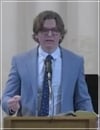
Bill Parker

The Word of Substitution - 1

Matthew 27:46
Bill Parker May, 17 2020 Video & Audio
0 Comments
Matthew 27:46 And about the ninth hour Jesus cried with a loud voice, saying, Eli, Eli, lama sabachthani? that is to say, My God, my God, why hast thou forsaken me?

Sermon Transcript

Auto-generated transcript • May contain errors

100%
All right, Matthew chapter 27.
As I said, we're dealing with a series, I've entitled the series,
Preaching from the Cross. The words of Christ from the
cross. In his seven, what we see in
the New Testament, in the gospels, in various ones, Matthew, Mark,
Luke, and John, those things that Christ spoke while he was
hanging in his suffering on the cross. And this right here, if
you'll look at verse 46, this is my text, this is one of the
most awesome, mind-boggling sayings that he spoke. Think about it. About the ninth
hour, as I said, probably around three o'clock in the afternoon,
he was probably hanging on that cross for about six hours at
this time. Jesus cried with a loud voice,
Eli, Eli, that's the Hebrew name for God. El, Eli, my God, my
God, that's what it means. And then Lama Sabachthani, that's
probably the Aramaic, the language that they spoke that day. And
it means, that is to say, my God, my God, why hast thou forsaken
me? And the people didn't understand
it. Some thought when he said Eli, he was calling for Elijah
or Elias to come and save him. I even had a man tell me one
time that Jesus spoke in tongues. He used this verse. And I said,
you're just like those who said he was calling for Elias. You
don't understand. It has meaning. Think about it.
And you know, when I read this passage, just like over in verse
36, he says, sitting down, they watched him there. Think about
that. Sitting down there seeing the
glorious son of the living God suffer on that cross. What did
they see? And I thought about a verse in
Lamentations. You remember Jeremiah's Lamentations?
Lamentations 112, which says this, and Jeremiah is speaking
of his own suffering, but he's speaking as a type of Christ.
He says this, he says, is it nothing to you, all ye that pass
by? Behold and see if there be any
sorrow like unto my sorrow, which is done unto me wherewith the
Lord hath afflicted me in the day of his fierce anger. Is it
nothing to you? Well, if you're a child of God,
a sinner saved by grace, I'll tell you what it is to you, it's
everything to you. What he said here, some of them
wagged their heads, you know, some of them, they would spout
out things, you know. Cannot save himself, well that's
right, they didn't know they were speaking the truth. Why
couldn't he save himself? Because he was hanging there
as a substitute. And that's why I call this, this
my God, my God, why hast thou forsaken me, the word of substitution. And it boils down to this, what
think ye of Christ? Not just some picture or some,
the true Christ, what do you think about him, his glorious
person? Who he is? And then here he is
hanging on that cross in utter agony. What do you think about
that? What did he accomplish by this?
Forsaken. Here's the Lord of the universe.
God manifests in the flesh. The Creator. The Creator. In the beginning was the Word.
The Word was with God. The Word was God. All things
were created by Him. Without Him, there was nothing
created that was created. That's who this is. God manifests
in the flesh and He's suffering. Like no man ever suffered. Dying
for the sins of his people. The good shepherd. The only good
shepherd there ever was. He said the good shepherd gives
his life for the sheep. Here is the Son of God incarnate
being found, as Paul wrote, is inspired by the Spirit in fashion
as a man, humbling himself being obedient to his father's will,
obedient unto death, even the death of the cross. What a death. And in his indescribable pain
and agony, he cries out, Eli, Eli, lama, sabachthani. What does that mean? It means
my God, my God, why hast thou forsaken me? Think about this. Here is the perfect, sinless
son of God forsaken by his father. Is that even possible? Not only
is it possible, it happened. That's what's happening here.
Forsaken, what does that mean? That means to abandon totally. To desert. and renounced to turn
away from. How can that be? Why was all his pain, think about
this, why was all his pain and suffering and agony and death,
why was it even necessary? Well, you know, men try to figure
this out, but no man can figure it. No human being could understand
what is really going on here. Only God, now think, this is
where I want you to go. Only God can tell us what He
wants us to know about this awesome transaction. And we have to leave
it there. And here's what God tells us
in His word. Now, I have a lot of information in this message. And it, I think it's gonna probably
carry me over into next Sunday. and because I have some statements
that I wanna make about this. I basically have four statements
that I wanna make, and they're pretty long statements, but I'm
gonna start, I'm gonna read you the statements, the four statements
that I'm gonna make, and then I'm gonna come back and begin
expounding upon these. But here's the first statement,
here's statement number one. God's word tells us that the
reason he forsook his son was because his son is the surety,
the substitute, and the redeemer for a people whom he chose before
the foundation of the world to save them in love and mercy and
grace. That's why. Why was he suffering? He's the surety of his people.
He's the substitute of his people. He's the redeemer of his people.
That's what this statement is about. It's what the whole cross
experience was about for Christ. It's about redemption. It's about
paying the redemption price for the sins of his people. And that's
the first statement. Now here's the second statement.
The ground upon which God justly punished his son and forsook
his son was the sins of his chosen people
imputed to him. Christ had upon him the account,
the charging, bearing the sins of his people to do for them
what they could not do for himself. This was based upon God's legal
act of imputing sin to Christ. Now, that's not the only thing
about this subject. People say, oh, it's gotta be
more than legal. Well, sure it's more than legal,
but it's all based upon the legal imputation of sin. He's suffering. He's dying here. And then he
died. So that's the second statement.
And then the third statement, if I can find it in my notes
here. I decided to do this just before I got up because I thought,
no, I'm not gonna get through this whole thing. But here's
the third statement. Though he was crying out on that
cross out of the weakness and infirmities of his sinless humanity,
though he was crying out of that hurt because of his sinless humanity,
it was a cry of pain, a cry of agony, When he stated this, my
God, my God, why hast thou forsaken me? He wasn't asking for information. It's not as if he didn't know
why God the Father forsook him. This is not a cry of ignorance.
It's a cry of dependence. And I'm gonna show you that.
He knew exactly why he came to Earth. and where he was headed. And you want to know something?
He knew that before the world was ever created. You say, well, he could have,
in a brief moment, out of his humanity, forgotten about that.
I don't believe he did. I don't believe he's asking this
for information. I don't believe he's saying,
Father, I just don't know why I'm here. Remember, he told his disciples,
he said, I've got to go to Jerusalem. They knew, you're going to die.
He said, that's the reason I came here. We'll look at that. And then here's the fourth statement.
And listen to this. Because Christ was forsaken as
the substitute of his people, they can never be forsaken. You see that? They're justified. They must be saved. They must
be given eternal life. They must be brought to glory
and live forever and ever with Him. Why? Because He was forsaken. Because He died. Well, listen. Here's what God's
Word tells us. Let's go back to statement number
one. God's Word tells us that the reason He forsook His Son. His Son on that cross was because
the Lord Jesus Christ, God the Son incarnate, was the surety,
the substitute, and the redeemer for a people whom God chose before
the foundation of the world to save in love and mercy and grace.
The people whom God chose, who were they? Who are they? They're
sinners. Sinners who deserved the same
punishment and who earned the same punishment that our Lord
is suffering right here. What he's going through, you
understand this now, the ones whom God chose, what Christ is
going through right here, we deserved it and we earned it
because of our sins. For God to save such people as
us, and be glorified in that salvation. He has to do it in
a way that honors every attribute of his nature. We wanna talk about the love
of God, what a subject. On this cross here is the very
expression, the very highest expression of God's love for
his chosen people. Herein is love, John wrote. Not
that we loved him, but that he loved us and gave his son to
be the propitiation for our sins. This is what Christ is working
out, a propitiation, a sin-bearing sacrifice to bring satisfaction
to the justice of God. So when we talk about his love,
if we don't talk about his righteousness too, we do a disservice. to the people who hear us. You
say, I want to hear about God's mercy. Oh, I do too. He delights
to show mercy. Here's the mercy seat right here.
My God, my God, why hast thou forsaken? He's the mercy seat.
But my friend, don't speak of his mercy without speaking of
his truth. What's the truth? Who needs mercy? Sinners like us. I need mercy. You can't earn mercy. You can't
deserve mercy. If you earn it and deserve it,
it's not mercy. It's payment. Same thing with
grace. Oh, I want to talk about peace
with God. We talked about that this morning in the Song of Solomon,
peace with God. I do too. But we don't do anybody
any good if we speak of peace without justice satisfied. You see, my God, my God, why
hast thou forsaken me? You know what that brings to
mind? It brings to mind the eternal question of questions. The heart
of the gospel, the issue that only God can settle and answer,
how can a holy and just God save sinners like us and still be
just and righteous and truthful in doing so. How can he be both
a righteous judge, which he must be, and a loving father, which
he is? How can he save me and still
honor himself? And God in his infinite wisdom
devised the only way he could do this. Listen, no other religion
of man, no religion of man, has ever settled that question. In
fact, no religion of man has even posed the question. I told
somebody when I first began to see the glory of God and God
began to reveal himself to me in the scriptures, before that
I thought I had most of the answers. I didn't even know the right
questions. God in his infinite wisdom devised
the only way he could be just and justify the ungodly. How?
By making his son the surety of his chosen people. And what
does that mean? What does a surety do? He takes
responsibility to pay the debts of another. And that's what Christ
did in the everlasting covenant of grace. When God chose a people,
he gave them to his son, and he put all the responsibility
of their sin debt upon Christ's account. Our sins imputed to
him. God was in Christ, reconciling
the world unto himself, not imputing their trespasses unto them. Who
did he impute them to? Who did he charge them to? Christ. How do you know that? My God,
my God, why hast thou forsaken me? That's it. God answered this question by
sending his son into the world to be the substitute of his chosen
people. This is the word of substitution.
He's hanging there not for himself, but for his sheep, for his church,
for the elect, for believers. He's there to pay the ransom
price, to redeem them from their sins. Look over at Psalm 87,
or 85 rather. I love this Psalm, but I wanna
just read a few verses from Psalm 85, beginning at verse seven.
Listen to this. He begins by saying in here in
verse seven of Psalm 85, show us thy mercy, O Lord, and grant
us thy salvation. Now that's, The mercy that I
want and that you want is not just what some preacher says
out of emotion. I want the mercy that God provides. I want the salvation that God
provides. And he says in verse eight, I
will hear what God the Lord will speak. Now that's what we need
to do. False preachers, they'll speak
peace to you. They'll tell you you're a good
person and you've done enough. I wanna hear what God the Lord
will speak. For he will speak peace unto his people and to
his saints, but let them not turn again to folly. Surely his
salvation is nigh them that fear him, and glory may dwell in our
land. And here's the issue, verse 10.
Mercy and truth are met together. It's not just mercy, it's mercy
in truth. Righteousness and peace have
kissed each other. Do you realize that if God gave
me what I deserved and what I've earned, it would be, it would
be hell. Nope, not peace. But here righteousness,
that means justice and peace have kissed each other. How?
Verse 11, truth shall spring out of the earth. Now you know
who that is? That's Christ. He came from heaven, but he united
himself with a perfect sinless human nature in the womb of the
Virgin Mary. So he came out of the earth in
that sense. And righteousness shall look down from heaven.
What did he do? He fulfilled all righteousness
and went unto his father. Verse 13, righteousness shall
go before him and shall set us in the way of his steps. That's
the gospel. That's what it's all about. Is substitution necessary? Back
over in our text, this is the word of substitution. Well, is
substitution necessary? Absolutely necessary because
the law requires perfection. The law requires righteousness.
The law says love God perfectly. Have you done that? Have I done
that? The law says love our neighbor
perfectly as ourselves. Have you done that? Have I done
that? No. See, we've all sinned and
come short of the glory of God. We've missed the mark. You say,
well, I've tried to be, I've tried to love everybody. I didn't
ask you if you tried to be. Have you done it? The law says
do and live, disobey and die. And then the law requires punishment. for sin. Justice must be satisfied. The debt of sin and failure must
be, and our failure must fully be paid. The penalty is eternal
death and separation from God. And if the law is not satisfied,
if righteousness is not established for us by a God honoring, God
appointed, able substitute, then we have no hope of salvation.
We have no hope of a right relationship with God. If that didn't take
place, the only thing we've got to look forward to is separation
from God eternally. We've broken the law. We cannot
pay the penalty. We need a substitute. Again, one who's appointed of
God. One who's willing to take our
place. One who is able to do what is
required. That's what we need. We don't
need this weak Jesus that's being preached around the world, who's
trying to save you if you'll let him. We don't need him. We need this Christ. who cried
out, my God, my God, why hast thou forsaken me? Why? He's our
substitute. He's our surety. He's our redeemer.
He's our representative. That's the gospel, who Christ
is. And what he accomplished, he
paid the penalty. The word of substitution. Here's
the second statement that I make. The ground upon which God justly
punished his son was the sins of his chosen people imputed
to him. Turn to 2 Corinthians 5. Here's what I want you to understand.
He cried out, my God, my God, why hast thou forsaken me? At
its core, the very basis of what's going on here, This was a legal,
penal separation from His Father for the sins of His people imputed
to Him. Now there's one thing the Bible
teaches us. Whenever the Bible speaks of
the non-imputation of sins, in other words, I'm a sinner, but
God does not in His legal law book, you can say it this way,
He does not charge me with my sin. He doesn't impute sin to
me. Look at verse 19 of 2 Corinthians
5. To wit that God, this is the
ministry of the gospel, the ministry of reconciliation. To wit that
God was in Christ, reconciling the world unto himself, that's
the world of his elect, not imputing their trespasses unto them. That's
the non-imputation. He doesn't charge me. Who shall
I anything to the charge of God's elect? Nobody! It's God that justifies. And
therefore, who can condemn us? Nobody! It's Christ that died.
Yea, rather, He's risen again. You see that? David wrote in
Psalm 32, blessed is the man to whom the Lord imputeth not
iniquity. Now that's the non-imputation of sins. Now God is a just God.
He cannot just say now, he can't just look at you and say, Paul,
I'm just not gonna charge you with your sins. Got no reason
to, no basis, just not gonna do it. He can't do that arbitrarily.
Sin brings death. Justice must be satisfied. So
who's he gonna impute those sins to? He imputed him to Christ. Verse
21 of 2 Corinthians, he hath made him sin for us. Now how
did he make him sin? By imputation. And that's it. Don't carry it any further. If
you do, you're trying to write your own book of theology. And
you've messed up from the get go. The legal ground. upon which Christ suffered the
wrath of God, separation, alienation from the Father, was the sins
of His people imputed to Him. He had to be forsaken by the
Father. He had to die. Why? Because He
stood there in our place, bearing our sins, having the iniquity
of us all laid upon Him, being made a curse for us. How? By imputation. And though he
suffered justly for sins imputed to him, he remained in himself
the spotless, uncontaminated God-man in himself. He was not
made a sinner. He was never contaminated with
our sins. Think about that. I mean, here
he is hanging on the tree. My God, my God, why hast thou
forsaken me? He didn't have any thought of
sin, any motive, any desire for it. He was totally sinless in
himself. Now he was guilty and he was
cursed, but only legally based upon our sins imputed to him.
But our sins became his because they were laid to his charge.
They were his sins. He says that in Psalm 22, Psalm
69. They were His, but not because
they were infused into Him or imparted to Him or contaminated
Him. He suffered all the consequences
of our sins imputed to Him, but none of the contamination of
our sins that were laid upon Him. On the cross, He suffered
for our unbelief. But he himself had perfect faith
in the Father through the whole thing. You say, well, what is
he saying here? Notice he said, he didn't just say, why have
you forsaken me? He said, my God, my God, why
hast thou forsaken me? Perfect faith. On that cross,
he suffered for our idolatry, but he himself remained perfect,
sinless. He didn't become an idolater. On that cross he suffered for
our hatred, but he himself remained in perfect love to his father
and to his brethren. Yet he cried, why have you forsaken
me? This is not a cry of disillusion
or ignorance or unbelief, it's a cry of dependence upon his
father. He became obedient, humbled himself,
lowered himself, obedient even to the death of the cross, And
he was expressing total dependence upon his heavenly father. The
only time that our Lord addressed his heavenly father as God, instead
of father, is right here. Every other time he addressed
him as father, father. Even on the cross, he said, father,
forgive them. Father, into thy hands I commend
my spirit. But here he addresses him as
my God. The reason was to show that God, his eternal heavenly
father, was also dealing with him as a righteous judge. Again, God must be just when
he condemns. He condemned Christ, his son.
On what ground? Sins imputed to him. And when
he justifies, when he declares righteous, he must be just. He
declares his people righteous. Christ was made sin, who knew
no sin, that we might be made the righteousness of God in him.
How does he declare a sinner like me right? Based upon his
righteousness imputed. David in interpreting, or Paul
in interpreting by the Holy Spirit what David said in Psalm 32.
Remember David said, blessed is the man to whom the Lord imputeth
not iniquity, not imputation. Here's how Paul interpreted that
as the Holy Spirit led him in Romans 4.6. The blessedness of
the man to whom the Lord imputeth righteousness without works. Now the opponents of the legal
imputation of sin to Christ have many empty arguments. They'll
holler, they'll say, oh, it's more than legal. Well, that's
true, nobody, listen, what Christ is suffering here was a legal,
based on legal imputation of sins to Him, but what He, it's
more than legal, He had to actually suffer. He had to be, He had
to suffer all the consequences due unto our sins. What our Lord
is experiencing here on the cross, His suffering unto death. And
we can't even begin to describe this. Think about the pain and
the agony he was going through in his sinless humanity. He's
suffering the untold agony of being separated from his father. It was not only a legal separation
from the father, there was a spiritual separation here, but it was all
based on that legal separation in order for God to be just,
to punish him. And here's something else. We
cannot describe this or know what was going through his mind.
I've seen preachers try to do that. We can't do that. You know why? Because it's not
revealed here, other than what he cries out. That's an awesome
thing to think about. My God, my God, why hast thou
forsaken me? I know It was based on sin imputed. I know that he remains sinlessly
perfect in himself, but what was going through his mind? The only thing I know is what
the scripture says in Hebrews 12 concerning his crucifixion. It was for the joy that was set
before him. How can you reconcile that with,
my God, I don't know how. You don't either. No preacher
or theologian knows. I know the joy, what his joy
was, it was the glory of his father and the salvation of his
people. That he suffered this. But we
can't describe it. Oh, people say, well, God wouldn't
be just to punish his son for the sins of others. Oh yes, God
would be just to do that. And let me give you three things
and I'll conclude this part of the message. Let me give you
these three things. I'll come back even to these
three, because they're important. Somebody would say, you know,
would it be justice for you to take my place in jail if I committed
a crime? Even if you had that kind of
heart to do it, would that be justice? And the answer is no.
People might admire you, and they might give you the key to
the city, but they wouldn't. You let a criminal go. That's
what happened. Let me give you these three,
what makes this separation between the father and the son and the
son's death, what makes it right and just? Number one, God the
son volunteered willingly for this duty. He willingly went
to the cross. He willingly laid his back open
to their stripes. He willingly let them put that,
Crown of thorns. He said in John 10, 17, listen
to this, therefore does my father love me because I lay down my
life that I might take it again. This is his work. He said, no
man taketh it from me, but I lay it down of myself. I have power
to lay it down and I have power to take it again. This commandment
have I received from my father. He willingly submitted to the
old father's will. He humbled himself. That's first. Number two, it's right and just
because Christ, the Son of God incarnate, had the ability to
substitute for others and ensure a good outcome. You know, if I committed a crime
and they put me in jail and you came and said, I'll substitute
for Bill, That's not going to ensure a good outcome. Because
if I'm a criminal and they let me out, what am I going to do?
I'm going to commit more crime. They're talking about during
this pandemic, these mayors and governors letting criminals out
because of the coronavirus. Well, what are those criminals
going to do? They're going to do what criminals
do. They're going to break the law. That's not a good outcome.
Oh, but they did it healthily. He robbed that bank, but boy,
wasn't he a healthy thief. Oh, they murdered that person.
Oh, but they were healthy. You see what I'm saying? But
Christ had the ability to do this and ensure a good outcome.
What was the good outcome? Righteousness established to
justify his people and life given to change their heart towards
God. If I be lifted up, I'll draw
all unto me. And then thirdly, it's right
and just because the wisdom of God devised the way in which
he could justly do this. This is the wisdom and the power
of God to save his people from their sins. All right, I'll quit
there and we'll pick up that next week.
Bill Parker
About Bill Parker
Bill Parker grew up in Kentucky and first heard the Gospel under the preaching of Henry Mahan. He has been preaching the Gospel of God's free and sovereign grace in Christ for over thirty years. After being the pastor of Eager Ave. Grace Church in Albany, Ga. for over 18 years, he accepted a call to preach at Thirteenth Street Baptist Church in Ashland, KY. He was the pastor there for over 11 years and now has returned to pastor at Eager Avenue Grace Church in Albany, GA

Comments

0 / 2000 characters
Comments are moderated before appearing.

Be the first to comment!

Joshua

Joshua

Shall we play a game? Ask me about articles, sermons, or theology from our library. I can also help you navigate the site.