Bootstrap
Bill Parker

Excerpt from The Election of Grace

Romans 11:1-6
Bill Parker • October, 27 2019 • Video & Audio
0 Comments
Bill Parker
Bill Parker • October, 27 2019
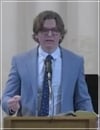
This is the first 5 minutes of the sermon, "The Election of Grace" where Bill Parker clearly explains the doctrine of election.
What does the Bible say about the doctrine of election?

The Bible presents the doctrine of election as God's sovereign choice, not based on human merit.

The Bible clearly affirms the doctrine of unconditional election, illustrating that God's choice is based on His purpose and will rather than any foreseen merit or action on the part of the individual. Romans 9:11 states, 'the children being not yet born, neither having done any good or evil,' indicates that the election of Jacob over Esau was not based on their actions but solely on God's gracious decision. This underscores the biblical teaching that God's election is not a matter of pride or personal achievement, but a demonstration of His sovereignty and mercy.

Furthermore, Paul emphasizes this truth again in Romans 11:5-6, showing that grace operates in the context of divine selection. The doctrine, when understood biblically, removes all grounds for human boasting because it is entirely dependent upon God’s choice. Therefore, the doctrine of election, though often contested, is deeply rooted in Scripture, reflecting God's sovereignty over salvation and His mercy towards the undeserving.

Romans 9:11, Romans 11:5-6

How do we know unconditional election is true?

Unconditional election is affirmed throughout the Scriptures, emphasizing God's sovereign will in salvation.

The truth of unconditional election is substantiated in Scripture, beginning with key passages that reveal God’s purpose in choosing certain individuals for salvation. Romans 9:11 effectively illustrates that God's choice is made before any deeds are performed by Jacob or Esau, making it clear that human actions do not influence God's sovereign decisions. This signifies that it rests on God's mercy and will rather than human effort.

Additionally, Romans 11:5-6 reiterates that God extends grace to His elect according to His sovereign will, further supporting the truth of unconditional election. When we study the entirety of Scripture, from Genesis to Revelation, we see a consistent theme: God's selection of His people is not contingent upon their works or righteousness, thereby affirming the Reformed understanding of election. This naturally leads us to acknowledge that faith in this doctrine is rooted in a correct interpretation of God's Word and His sovereign character.

Romans 9:11, Romans 11:5-6

Why is understanding election important for Christians?

Understanding election is crucial as it highlights God's sovereignty and assures Christians of their salvation.

Understanding the doctrine of election is vital for Christians as it underscores the sovereignty of God in the salvation process. It reinforces the assurance that salvation is not based on human effort or worthiness but on God’s gracious and sovereign choice. In this context, Romans 9 provides a profound example wherein God, in His divine wisdom, loves Jacob and hates Esau, solely based on His will and purpose, independent of their actions (Romans 9:11). This reveals God's authority over salvation and His capacity to extend mercy, which is foundational for understanding the Christian faith.

Moreover, apprehending election fosters deep humility among believers, as we recognize that we are saved not through our own righteousness but exclusively through God’s grace. It dispels any notions of pride associated with 'being chosen' by emphasizing that God’s choice is based on His will alone (Romans 9:16). Embracing the doctrine of election ultimately leads to greater worship, gratitude, and devotion among Christians, as they understand the profound nature of God's grace and mercy in their lives.

Romans 9:11, Romans 9:16

Sermon Transcript

Auto-generated transcript • May contain errors

100%
The title of the lesson, beginning
in verse one of chapter 11 of the book of Romans, is The Election
of Grace. You know, most people who claim
to be Christian, I don't think I'm exaggerating to say that
most people either despise the biblical doctrine of election,
or they don't really know anything about it, And a lot of times
they'll try to discredit the biblical doctrine of election
by claiming that it's a doctrine of pride. Oh, you think you're
elect. You see, that kind of thing.
The chosen few. And then they talk about the
chosen few and the disposable majority. But first of all, the
thing that we have to understand is that the doctrine of unconditional
election is in the Bible. And whatever it says about it,
that's the way it is, whether you like it or I like it or whatever.
You know, this is one of the things, when I came in to really
start studying the Bible, and I didn't, you know, when I really
began to study the scriptures, I came to see, well, I don't
want to put something in there that's not there, and I don't
want to ignore anything that is there. But at the time, I
didn't have a good motive. I've told you all how I went
to the Bible to study the scriptures to prove a gospel preacher wrong.
And so when I began to see these things, I didn't like them, and
I can confess loudly, I don't believe it. I just don't believe
the Bible, but I do now. And that change didn't come about
of my own free will. It didn't come about because
of my goodness. But here's the point. I saw early
on that whether I believe the Bible or not, this is what the
Bible says. And so the doctrine of election,
you know, the Lord, go back to Romans nine just for a minute.
The doctrine of election is set from Genesis to Revelation, but
here's a good, here's one of the best explanations of it concerning
Jacob and Esau. You know how, we studied this,
verse 11. It says, for the children being
not yet born, neither having done any good or evil. Now that
removes all pride if you understand the doctrine of election biblically.
In other words, he's talking about Jacob and Esau. Now people
say, well, he's talking about nations. Well, you know, get
off, that's just a diversion is all. Jacob have I loved, Esau
have I hated. Lord, why did you love Jacob?
No reason. It wasn't because he did any
good or evil. Jacob was a sinner and deserved nothing but God's
hatred. Then God, why did you hate Esau? Well, it had nothing
to do with Esau doing good or evil. See, all this came about.
But Esau was a sinner and deserved, and God gave him what he deserved,
but God decided not to give Jacob what he deserved. Now, you say,
well, I don't like that. Well, okay, take it up with God,
because he's the one you've got to deal with there. It's not
me. And it says here, it says, before
they having done any good or evil, that the purpose of God
according to election might stand. Did you hear that? that the purpose
of God according to election might stand, not of works, but
of him that calleth. It's all of God. And he says
down in verse 15, here's the reason. He said, he said to Moses,
I'll have mercy on whom I will have mercy, and I'll have compassion
on whom I will have compassion. And that's God's way of doing
things. And I didn't write these words. These are words that Paul
wrote under inspiration of the Holy Spirit. And so it's basically a situation,
you know, of saying, you know, this is the way God is, now shut
up and go on. Really? Now, you know, this is
the way it is, now deal with it. You know, you say, well,
I don't believe it. Well, God says it's true.
Bill Parker
About Bill Parker
Bill Parker grew up in Kentucky and first heard the Gospel under the preaching of Henry Mahan. He has been preaching the Gospel of God's free and sovereign grace in Christ for over thirty years. After being the pastor of Eager Ave. Grace Church in Albany, Ga. for over 18 years, he accepted a call to preach at Thirteenth Street Baptist Church in Ashland, KY. He was the pastor there for over 11 years and now has returned to pastor at Eager Avenue Grace Church in Albany, GA

Comments

0 / 2000 characters
Comments are moderated before appearing.

Be the first to comment!

Joshua

Joshua

Shall we play a game? Ask me about articles, sermons, or theology from our library. I can also help you navigate the site.