Bootstrap
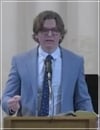
Bill Parker

Christ Makes All Things New

Revelation 21:5-8
Bill Parker February, 19 2017 Video & Audio
0 Comments
Bill Parker
Bill Parker February, 19 2017
Revelation 21:5 And he that sat upon the throne said, Behold, I make all things new. And he said unto me, Write: for these words are true and faithful. 6 And he said unto me, It is done. I am Alpha and Omega, the beginning and the end. I will give unto him that is athirst of the fountain of the water of life freely. 7 He that overcometh shall inherit all things; and I will be his God, and he shall be my son. 8 But the fearful, and unbelieving, and the abominable, and murderers, and whoremongers, and sorcerers, and idolaters, and all liars, shall have their part in the lake which burneth with fire and brimstone: which is the second death.

Sermon Transcript

Auto-generated transcript • May contain errors

100%
Christ makes all things new,
that's the title of the lesson. Here he is upon the throne, look
at verse five. He that sat upon the throne,
that's Christ in his mediatorial glory. The mediatorial glory
of Christ is something to behold. That's the conquering Messiah
on his throne. That's the suffering servant
who finished this great work of redemption, sitting in the
glory of his person and his finished work as the righteousness of
his people. That's what it is. God-man, that's
who he is. And he speaks out here. He says,
behold, I make all things new. That's all things in the new
heaven and the new earth, the heavenly Jerusalem. In other
words, just like in every aspect of salvation, none of it is our
work. It's all his work. We're just
the recipients. He's going to talk about an inheritance
here. We're just the recipients of
the blessings. And there are fruits of salvation.
There are things that we enjoy in this salvation. but we didn't
earn them and we didn't deserve them. He made all things new.
The old heavens and the old earth are burned up by this time as
we look here into the future. And he said, John, as he seen
this vision, verse five, it says, and he said unto me, write, for
these words are true and faithful. Christ himself is the true and
faithful one. He speaks the truth, he is the
truth. And he's faithful to honor all
of his promises as well as all of his threats. We sing that
hymn, great is thy faithfulness. Most people in religion today
boast of their own faithfulness, but the Bible doesn't do that.
It boasts of his faithfulness. The reason that sinners are saved
by grace, kept by grace, and brought to this position here
in the new heavens and the new earth is because he's faithful.
And anytime the Bible talks about us persevering or continuing
in the faith, it's always based upon the preserving grace of
God through his faithfulness. So you can bank on this. You
can depend on this. You know, when the Bible says,
let God be true and every man a liar, what's it talking about?
It's talking about in these matters of salvation. in these matters
of faith. Don't bank on what man says.
Bank upon what God says. And if any man tells you anything
about this, then you make sure that you test that by the word
of God. Because he's true and faithful.
So let that be settled. He fulfilled... Christ did what
he said he would do. And so When in the covenant of
grace before the foundation of the world, he, he took up upon
himself all the sins of his people as our surety. In other words,
he made a promise and that that's another thing. All the promises
of God in Christ are yay and amen. So you see, understand
it. Now, if the promises were conditioned
on us, they wouldn't be true and faithful. They'd be failures.
We may have every good intention, you know, so I've often used
the example, I may make you a promise and I may have every intention
of fulfilling that promise, but here's the problem. I can't foresee
all the obstacles and I may not be able to provide all the means,
you see, I may be hindered in a way. Well, that's not the case
with God. He foresees all obstacles and
provides all means, He's sovereign. And so it's promise. We're going
to talk about Abel this morning in Hebrews 11 and Genesis chapter
4. How could Abel be justified before
God based upon a work that had not even happened yet in Abel's
day? It was all by promise. You say, well who made that promise?
God did, the true and faithful one. And that's how Abel was
justified based upon the blood and righteousness of Christ,
which hadn't even come in into existence yet in time, as far
as the historical act, but it was in the mind of God. It was
in the purpose of God. And it was sure and certain to
be fulfilled by Christ because he is true and faithful. So when somebody says, well,
they were just, the Old Testament saints were justified by promise.
Yes, they were. The promise of a righteousness
brought in by the Lord Jesus Christ. And that was just as
real as when it actually took place in time on the cross. Look
at verse six. He said unto me, it is done.
This is it. Now this is when all things are
finished. You remember when he was on the
cross, he said, it's finished. What was finished there? Redemption.
The price was paid. Justice was satisfied. He made
an end of sin. He finished the transgression.
He brought in everlasting righteousness. He accomplished. His death was
an accomplishment. But there were still things unfinished.
What is that? All of his elect had not yet
been brought into the kingdom. You see, God's not willing that
any of them should perish, but they should all come to repentance.
Well, at the time of the cross, that had not taken place yet.
There were some, but not all. But now it's done. The last sheep
has been brought into the kingdom, brought into the fold. What else
wasn't finished? Well, Christ had not yet returned. He had not yet burned up the
old heavens and the old earth and made all things new. But
now it's done. So that's what he's talking about
in time. He says, it's done. And then he said, he follows
that with this identification of himself, which is really familiar
to us. We saw it in Revelation 1. We're
gonna see it again in Revelation 22. He says, I am alpha and omega,
the beginning and end. Somebody said he's the beginning,
he's the end and everything in between. He's all in all. He's everything
that God has for his people in the way of salvation and grace. And so when he says this, he's
speaking of eternity. He's speaking of his immutability.
He cannot change. Jesus Christ, the same yesterday,
today, and forever. He says in verse six, I'm the
beginning and the end. I will give unto him that is
a thirst of the fountain of the water of life freely. unconditionally
without a cause. Now, you know, I thought when
I read that verse, I always think about all of the objections that
unbelievers bring against God's election, God's sovereign electing
grace, the fact that God chooses who he will save and he passes
by others. And you know, there are a lot
of objections that are familiar to you. For example, somebody
says, well, that's not fair or that's not just. Well, the Bible
has an answer for that. You'll find it all over the Bible,
but the one that comes to mind clearly is Romans chapter 9.
You know, who are we to reply against God? God never does anything
unfair or unjust. He's always right in what He
does. And so When these objections come out,
we've got to point people to the Bible. Now, they may not
like the answer they get. I know when I first heard it,
I didn't like it. But nonetheless, it's true. Other people will object to election. They'll say, well, that means
that if I want to be saved, I can't be saved unless I'm elect. Well,
that's not true. That's not the way to put it
now. First of all, the Bible says that none of us, by nature,
want to be saved God's way. And I emphasize God's way. You
see, I'm not saying that none of us want to be saved. Everybody
wants to be saved in some way, shape, or fashion. But by nature,
we want to be saved our own way, a way that gives us room to glory. So nobody wants to be saved God's
way. I can't remember, years ago I
heard somebody, one of our members was talking to a fella who said,
well, they were talking about these issues of election and
grace, and the fella told him, he said, well, the way I've got
this figured is salvation's like a big chocolate cake, and anybody
who wants a piece of that cake can have it. And the member of
our church said, well, if you want to be biblical about that,
here's the way you'd have to start. Everybody hates chocolate
cake. And somebody might say, well,
who in the world would hate this salvation? Well, you've got to
see that in the light of the scripture. For example, I think
of Luke 16, 15. Anybody know what that says? That which is what? Highly esteemed among men. is
an abomination unto God. Now what's highly esteemed among
men? Let's take the unbelieving Jews for example. What did they
highly esteem? Their physical connection with
Abraham, their circumcision, and their law keeping. Now when
the gospel, God's way of salvation comes along and says all of that
is evil deeds. Then you get a little bit of
a context that says why people by nature hate the light. You're
telling me that everything that I've depended upon, everything
that I've worked for, everything that I've believed is no good. Well, God's way of salvation
does that, doesn't it? That's why God is not willing
that any of his elect should perish, but they should all come
to what? Repentance, that's the issue of repentance. Repentance,
think about it this way. We should all feel sorry, or
I'll say sorrier for our sins. But that's not repentance. Feeling
sorry for your sins is not, repentance is that change of mind and heart
that comes when you see the true and living God and what it takes
for him to be just to save a sinner. And my heritage or my works will
not do it. And you think about people in
our day, raised in religion, thinking that God loves everybody,
Christ died for everybody, now you make the difference. And
when we preach the gospel to them and tell them, no, that's
not the way, that's not what the Bible teaches. You won't
find one message in this book that preaches that way. That
that's evil deeds. Then you get a context of this
thing about why we don't want salvation God's way because I'm
gonna have to turn loose of all that I highly esteem. Well, wait
a minute, you know, I walked an aisle, I got baptized, I joined
the church, I've been working hard, I've given my tithe. All
of that when compared to the righteousness of Christ is evil
deeds. So that's why Men by nature hate
the gospel, the true gospel. But here it says in verse six,
he says, I will give unto him that is a thirst. Thirsty for
what? Well, Matthew chapter five tells
us, blessed are they who hunger and thirst after righteousness. They'll be filled. Now man by
nature is not hungry and thirsty after righteousness. He's hungry
and thirsty after morality, reformation, religion, but when he sees what
righteousness really is, that it has to equal the merits of
Christ's obedience unto death, that's when by nature we reject
it. How good does one have to be to be saved? Think about that. Well, you just
gotta keep the Ten Commandments. We were talking about it, Jim.
You that desire to be under the law, do you not hear the law? You hear what that law says?
Cursed is everyone that continues not in all things which are written
in the book of the law to do them. And that law doesn't just
demand obedience or prohibition in action. It goes
to the thoughts. It goes to the heart, goes to
the intentions, the motivations, the desires. Now, how righteous
are you? See what I'm saying? Now, if
you hunger and thirst after righteousness as convicted by the Holy Spirit,
you're not going to find that righteousness except in one person,
and that's the Lord Jesus Christ. If you find it anywhere else,
it's not Holy Spirit conviction. We used to have a fella here
when we'd have visitors come in and they'd come back, he'd
say, I believe that person's under conviction. And I'd always
tell him, I'd say, well, I can tell you how you'll know that
for sure. He said, how? And I said, where will they end
up? You know there is a legal natural
conscience conviction. You know that, don't you? Somebody
said one time that the mental hospitals are full of people
who have guilt complexes. That's a legal conviction. Well,
here's the thing. Election does not teach that
anybody who wants salvation God's way may not have it if they're
not elected. Election teaches that those who
are chosen of God will be made thirsty and desire salvation
God's way. And here's what I'm telling you.
Anybody who desires salvation God's way in Christ by grace
will have salvation. Period. Mark it down, that's
what the scripture teaches. He said, I will give unto him. Now, is that every him in the
whole human race? No. I will give unto him that
is a thirst. Thirsty, like a sinner. Coming
before God. I also thought about that passage
in John 6, 37. He says, all that the Father
giveth me shall come to me, and him that cometh to me I will
in no wise cast out. I guarantee you that if you come
to Christ as he's identified in this word, as he's described
here and distinguished, come as a sinner under conviction
of the Spirit, you will receive salvation. In fact, you'll find
out that that salvation's already been in place in Christ. But you're gonna get it freely.
You're not gonna earn it, you're not gonna merit it, you're not
gonna make the difference. You're gonna see that Christ
earned it, Christ merited it, Christ made the difference. It's
the water of life. Who is the water of life? That's
Christ. We're gonna see that more in Revelation 22. We'll
look at verse seven. He that overcometh shall inherit
all things. Who overcomes in this situation? What's he talking about? He's
talking about victory over sin, victory over Satan, victory over
self, victory over death. Who's the victor here, you say? Who overcomes? Only those who
are in Christ. That's it. He is our victory. Oh death, where is thy sting?
Oh grave, where is thy victory? Where am I gonna find that victory?
How am I gonna overcome all of this that's against me? Romans
chapter eight. What does he say? Who shall lay
anything to the charge of God's land? Who can condemn us? Who
can separate us from the love of God? And all that list that
he gives there. It's Christ. And that's what
he's saying here. And how do you know? Because
we inherit all things. We don't earn it. We don't deserve
it. We inherit it. It was bequeathed to us by God
in the covenant of grace through Christ. And he, as the testator,
died to enact the will. And we received the inheritance.
Peter called it an inheritance that's incorruptible, irreversible,
and it cannot be Cannot be withdrawn. It cannot be lost. Now, how can
we be sure of that? Because it's all conditioned
on Christ. If it were conditioned on us,
we would lose it. And if you don't believe that
and don't see it, you've never been convicted of your sin. That's what I've been talking
about on our television program about the power of God's grace,
not only to save us, but to keep us. and to bring us to glory. And here's what we know about
ourselves if we've been convinced of our sin. We know that if God
were to take one minute out of the day and say, now that minute
your salvation and your blessings are conditioned on you, what
would happen? We'd hit the dirt like a failure,
like the failures we are. Why does the Apostle Paul speak
in paradoxes sometimes? When I'm weak, I'm strong. Because
when he sees his weakness, and in his moments of weakness, by
the power of the Holy Spirit, where did he look to? For strength,
to Christ, who is our strength. And that's what this is about.
And look at verse seven, those who overcome, that is believing
in Christ, resting in Christ, They get the inheritance of all
things and he says, I will be his God and he shall be my son. Covenant language, isn't it?
Remember back over in Jeremiah 31? He said, I'm gonna bring
them out, I'm gonna give them a new heart, a new spirit, and
they shall be my people and I will be their God. Now think about
Israel under the old covenant. You know, in a temporal, ceremonial,
civil way, based upon that conditional covenant, they were God's people. But you know what? He wasn't
their God in their minds, what I'm talking about now. Oh, he's
everybody's God, ultimately, sovereignly. But by nature, we
don't know Him. We don't bow to Him. The Bible
says even the people of God, the true people of God, even
the elect, by nature, we're enemies of God in our mind by wicked
works. So in other words, God made them
His people in spite of themselves. But they didn't recognize Him
as their God. They left Him. They rebelled. That was their whole history.
In any given time, the entire nation was lost except for who? What was the prophets calling? The remnant, according to. And so remember when he says
in Jeremiah 31, he said, they shall all know me from the least
to the greatest. That's what this is saying. This
is covenant language. This is covenant of grace. This
is all conditioned on Christ. They'll be my people and I'll
be their God. It's like a marriage now. That's the language of a marriage
union. They cannot be broken. Look at verse eight. He says, but the fearful and
unbelieving and the abominable, and then he lists these sins,
murderers, whoremongers, sorcerers, idolaters, all liars, shall have
their part in the lake which burneth with fire and brimstone,
which is the second death." Now whenever you come to scriptures
like that and you hear the list of these sins, what do most people
do? Think about it. Yeah, they point the other way.
Well, that's talking about that segment of society that ought
to be in jail. All right? No, it's talking about
all of us by nature, but here it's talking about unbelievers,
all unbelievers, even the most religious. Everything that is said here
can be applied to people in different ways, but it can be applied to
all unbelievers in one way, and that's talking about spiritual. Like for example, it says the
fearful. Now, we're to fear God. But that's
a holy fear, that's a fear of faith, that's a respect and a
regard. But here he's talking about those who fear men, those
who are caught up in legal fear. What does legal fear of punishment
cause a person to do? Causes them to get religious,
doesn't it? In a false way. I mean, how many
times did we say, Lord, if you get me out of this one, I'll
never do it again? That kind of thing. I mean, we have a lot
of moments like that. I'll start going to church, and
I'll be faithful. Well, you ought to go to church
where the gospel's preached. But going to church is not going
to wash away your sins. Going to church is not going
to make you righteous. You understand what I'm saying? The unbelieving,
there he identifies those who do not believe in Christ. Those
who are not submitted to his righteousness as the only ground
of salvation and the only source of spiritual eternal life. And
then he says abominable, that means detestable. The word abominable,
let me see, I've got it here in your lesson, it describes
those who are offensive to God, they offend God. Now when you
see that, you say, well, now that drunk walking down the street,
he's offensive to God. Yes, he is. But that preacher
standing in the pulpit preaching a false gospel, he's even more
offensive to God. Do you believe that? That's what
marks repentance. That drunk can quit drinking,
join a church, and become two-fold more the child of hell than the
ones who got him there are. Do you understand that? Now,
don't get me wrong. If I see a drunk walking down
the street, he ought to be arrested and I hope and pray that he stops.
But you got to put these things in the context of what Christ
is speaking of here in the gospel and how sinners are saved. Murderers, he says. Well, a person
who is a murderer ought to be in jail. And those who are Serial killers or whatever. Yeah,
they're abominable. But so is those who murder souls That's what say that you remember
Christ told the Pharisees that in John 8 44 They're there. He said you're of your father
the devil and you do the works of your father He's talking about
the evil that he did He was a murderer from the beginning now Satan
did not take out a knife and kill Eve or Adam He didn't mow
them down with a machine gun. You know what he did? He lied
to them. Under the guise of something that's right. And that's how
he murdered. He brought the whole human race
into sin and death. And that's what he... What about
those who murder souls, you see? Whoremongers. Now you know we've
been talking about that through Revelation. About spiritual adultery,
spiritual harlotry. The great whore, Babylon, which
is false religion. Sorcerers, that has to do, when
you talk about sorcery, it has to do with some kind of a spiritual
guidance that's evil. That's what that's talking about.
It's not talking about just people who dress up in black robes and
wear pointy hats and kill chickens. Sorcery is a spiritual guidance
that is evil. Understand that. And it comes
in many forms. And then he goes on, he says,
idolaters, those who do not know and worship the only true and
living God as he reveals himself in the salvation of sinners by
grace through the righteousness of the Lord Jesus Christ, God's
son. Liars. All liars. Well, sure. I know some very
honest people among men who are liars when it comes to religion.
And they're deceived. And he says, they shall have
their part in the lake which burneth with fire and brimstone.
That's the wrath of God. He that believeth not, the wrath
of God abides on him. And that's the second death.
That's eternal death. That's what that's talking about.
The first death being our, well, you think about death, the first
death is when we died spiritually in Adam. And then you talk about
physical death, which those are talked of in the same thing as
the first death. The second death is eternal damnation,
eternal perishing without Christ, eternal separation from God.
Bill Parker
About Bill Parker
Bill Parker grew up in Kentucky and first heard the Gospel under the preaching of Henry Mahan. He has been preaching the Gospel of God's free and sovereign grace in Christ for over thirty years. After being the pastor of Eager Ave. Grace Church in Albany, Ga. for over 18 years, he accepted a call to preach at Thirteenth Street Baptist Church in Ashland, KY. He was the pastor there for over 11 years and now has returned to pastor at Eager Avenue Grace Church in Albany, GA

Comments

0 / 2000 characters
Comments are moderated before appearing.

Be the first to comment!

Joshua

Joshua

Shall we play a game? Ask me about articles, sermons, or theology from our library. I can also help you navigate the site.