Bootstrap
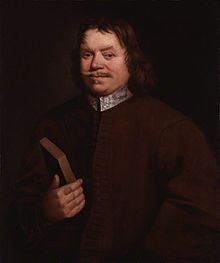
John Bunyan

25. Atheist

1 Peter 2:11; Matthew 7:13-14
John Bunyan • September, 16 2017 • Audio
0 Comments
We have published John Bunyan's "Pilgrim's Progress" in modern English. As you listen to this professionally read audio, you can also read along with the text here:
http://www.gracegems.org/pilgrims_progress.htm#..., where you can purchase additional superb audios at very reasonable prices.

In John Bunyan's sermon "25. Atheist," the central theological topic revolves around the reality of the Celestial City, representing eternal life and fellowship with God, as contrasted with the skepticism of atheism. The conversation between Christian and Atheist emphasizes the tension between faith and doubt, as Atheist mocks the arduous Christian journey toward an unseen destination. Key Scripture references include 1 Peter 2:11, which underscores the believer's status as strangers and exiles, and Matthew 7:13-14, highlighting the narrow path that leads to life. The sermon emphasizes the Reformed doctrine of persevering faith despite worldly counter-arguments, asserting that true believers trust in God's promises regardless of external skepticism, thus reinforcing the importance of steadfastness in faith for spiritual assurance.

Key Quotes

“Do not listen to any advice which would lead you to stray from the words of knowledge.”

“As for this man, I know that he's blinded by the God of this world.”

“Let us believe to the saving of our souls.”

“Now I rejoice in the hope of the glory of God.”

What does the Bible say about atheism?

The Bible acknowledges the existence of atheism, warning believers to be cautious of those who deny God's promises.

The Bible engages directly with the topic of atheism, particularly in passages like 1 Peter 2:11, where Christians are urged to abstain from worldly desires that wage war against the soul. The encounter between Christian and Atheist illustrates the realistic interactions believers face from those who mock their faith. Atheism is seen as a denial of the truth of God's promises and the existence of the celestial city, which believers know to be real through faith. In contrast, faith leads Christians to trust in the unseen realities of God’s kingdom, as they navigate through a world often filled with skepticism.

1 Peter 2:11, Matthew 7:13-14

How do we know the promises of God are true?

We know the promises of God are true through faith and the testimony of Scripture.

The assurance of God's promises is rooted in the believer's faith, which is confirmed by the teachings found in Scripture. Christian reflects on the importance of believing in the celestial city despite Atheist's ridicule, grounding his hope in the truth that faith enables believers to see. This aligns with the biblical principle found in Romans 1:20, where Paul writes that God's invisible qualities are clearly seen in creation, leaving humanity without excuse. The testimony of believers throughout history also bears witness to the reliability of God's promises, encouraging Christians to hold fast to their faith against doubts and distractions.

Romans 1:20, Hebrews 11:1

Why is believing in the celestial city important for Christians?

Believing in the celestial city provides hope and direction for Christians in their spiritual journey.

The concept of the celestial city serves as a pivotal hope for Christians, guiding their actions and decisions according to their faith. The journey to this city symbolizes the Christian life, filled with trials and temptations that require perseverance and steadfastness in belief. As illustrated in the dialogue between Christian and Atheist, the promise of the celestial city encourages believers to reject fleeting earthly pleasures and to steadfastly pursue eternal glory. This belief empowers believers to live according to God's righteousness and to rely on His guidance, knowing that the journey, though arduous, leads to the fulfillment of God's promises.

Philippians 3:20, 2 Corinthians 4:17-18

Sermon Transcript

Auto-generated transcript • May contain errors

100%
atheist now after a while they perceived far off one coming softly along the highway to meet them then Christian said to his fellow yonder is a man with his back toward the celestial city and he's coming to meet us hopeful I see him. Let's be careful now, as he should prove to be a flatterer also."

So the man drew nearer and nearer, and at last came up to them. His name was Atheist, and he asked them where they were going.

Christian, we're going to the Celestial City.

Then Atheist burst into laughter.

Christian, what's the meaning of your laughter?

Atheist I laugh because I see what ignorant people you are, to take so tedious a journey, and yet are likely to gain nothing for your travel but pains.

Christian Why do you think we shall not be received?

Atheist Received? There's no such places you dream of in all this world.

Christian That's true, but there is in the world to come.

Atheist When I was home, in my own country, I heard of that place which you speak of. So I went out to find it, and I have been seeking this city for these past twenty years, but have not found it in all this time.

Christian, we have both heard and believe that there is such a place to be found.

Atheist Had not I, when at home, also believed, I would not have come thus far to seek it. If there had been such a place, I would have surely found it by now, for I have gone much further than you. So, not finding it, I am going back home again, and will seek the pleasures which I had then cast away, for the vain hope of a world to come.'

Then Christian said to Hopeful,â€"'Do you think that what this man has said is true?' Take heed, he's one of the flatterers. Remember what it has cost us once already for our hearkening to such a fellow. What, no celestial city? Did we not see from the delectable mountains the gate of the city? Also, we're now to walk by faith. Let us go on, lest the man with the whip overtake us again.

You should have taught me that lesson, which I now remind you of. Do not listen to any advice which would lead you to stray from the words of knowledge. I say, my brother, do not listen to him, but let us believe to the saving of our souls.

Christian, my brother, I did not ask the question of you because I doubted the truth myself, but to test you and to hear your heartfelt response. As for this man, I know that he's blinded by the God of this world. Let us go on knowing that we believe the truth and that no lie is of the truth.

Hopeful, Now I rejoice in the hope of the glory of God.

So they turned away from the man and he, laughing at them, went on his way back home. you
John Bunyan
About John Bunyan
John Bunyan (1628-1688) was a Puritan preacher best remembered as the author of the allegory The Pilgrim's Progress. In addition to The Pilgrim's Progress, Bunyan wrote nearly sixty titles.
Broadcaster:

Comments

0 / 2000 characters
Comments are moderated before appearing.

Be the first to comment!

Joshua

Joshua

Shall we play a game? Ask me about articles, sermons, or theology from our library. I can also help you navigate the site.