Bootstrap
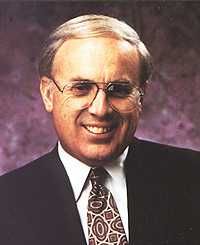
John MacArthur

Why Does God Allow So Much Suffering and Evil?

Psalm 135:6; Romans 9:11-23
John MacArthur March, 2 2008 Video & Audio
0 Comments
One of the most pressing challenges to Christianity is the problem of evil. Unbelievers are quick to ask how Christians can believe in the existence of a good God in the face of so much evil. In this session, John MacArthur will examine what Scripture teaches regarding evil and suffering and why it exists in the world.

In his sermon “Why Does God Allow So Much Suffering and Evil?”, Pastor John MacArthur addresses the profound theological dilemma surrounding the existence of evil in a world governed by an all-powerful and wholly good God. He argues that while evil is pervasive and persistent, it exists ultimately under God’s sovereign decree, as evidenced by Scripture references such as Romans 9:11-23 and Lamentations 3:37-38. He outlines that evil can be categorized as natural, moral, and supernatural, all of which point back to God's overarching sovereignty, asserting that God allows evil to exist for the demonstration of His own glory and attributes such as righteousness and mercy. Practically, this understanding encourages believers to trust in God's ultimate plan and sovereignty, framing their suffering within the broader context of divine purpose rather than despair.

Key Quotes

“If you know the divine playbook, then you know there's a perfect play designed not just to get us temporary escape, or get us a first down, or get us in field goal range, but there is an answer in the Bible with which we will score a touchdown.”

“God is not trying to protect Himself from the idea that He might actually have a purpose for evil. He is holy. He cannot do evil. He cannot look upon evil positively.”

“He will live forever in the glories of the new heaven and the new earth, where evil will never, ever exist again, because you are the sovereign.”

“The existence of evil is, in the end, to the praise of His glory.”

Sermon Transcript

Auto-generated transcript • May contain errors

100%
I have been assigned an easy
question to answer. I don't know how I'm going to
fill the time. I'm just going to give you the
answer. Why does God allow evil and suffering
in the world? This is a very, very important
question. This is a question that I will
tell you on a personal level. is the single question that my
friend Larry King always goes back to as… you didn't know about
that? Friendship. That he always goes
back to, to demonstrate why he cannot believe. There are some
agnostics, and that's usually a word thrown around as if it
were noble, but the Latin equivalent is ignoramus, just to put it
in perspective. But there are some people who
are agnostics simply because they don't care to know. There are some people who are
agnostics, and they can give you an apologetic defense of
their agnosticism. No matter what you say, they'll
take you through a rational series of arguments as to why they cannot
believe. And with him, it is always the
fact that there's so much evil in the world, how can God be
good? We never get past that dilemma for Him. Try as we may. One of the, I think, favorite
justifications for biblical skeptics and theological liberals' inability
to accept the Scripture is they cannot resolve the issue. of
God being good, loving, wise, kind, powerful, and the world
being dominated by evil in all kinds of forms. Syllogism might go a little bit
like this. The biblical God is loving. The biblical God is good. The biblical God is holy. The
biblical God is wise. The biblical God is all-powerful. Massive evil exists in the world,
therefore the biblical God does not exist. How can you tell me that God
is all-loving, all-good, all-holy, all-knowing, all-powerful, and
then explain to me evil? Therefore, in the minds of some,
the biblical God cannot exist. Therefore, the Bible that presents
such a God is not to be believed. Now there are some who see this
as such a serious dilemma that it sort of puts the Christian
at maybe fourth and forty on his own ten-yard line, and the
only option is to punt, change the subject, or snap back with
Deuteronomy 29.29, the secret things belong to the Lord, and
kick that as far as you can into enemy territory. Is that the best that we can
do impressed against our theological end zone? Absolutely not. If you know the divine playbook,
then you know there's a perfect play designed not just to get
us temporary escape, or get us a first down, or get us in field
goal range, but there is an answer in the Bible with which we will
score a touchdown. It'll take us all the way to
triumph and victory. Scripture gives us an answer,
not only an answer that you can understand, but an answer that
you can joyfully accept, an answer in which you can rejoice. And
it's not one of the inadequate short answers like, well, God's
not responsible. Adam and Eve are. which only poses the question
as to why God allowed Adam and Eve the option of making sinful
choices. He created them. If God knew they were going to
make those kinds of choices, then why did He make them capable
of making those kinds of choices? That doesn't help. Well, you
say, well, God's not responsible, the devil is, which only then
poses the question, why did God create angels knowing that they
would fall, one of them would become the devil and lead the
whole human race into sin? If He knew He was going to make
those choices and lead to these issues, why did He make them?
And since He's the Creator who created them from nothing, He
could have made them any way He wanted to make them. So that
doesn't help. All the answers that are legitimate
answers lead us back to God. You can't stop asking the question
at Satan, and you can't stop asking the question at man, even
Adam and Eve. You're going to wind up in heaven
if you really want an answer to this question. It'll take
you all the way back to God, but that's basically true. of
every aspect of foundational theology. Everything ultimately goes back
to the nature of God and the purposes of God. So this is not
unusual in that sense, although for some people it seems to be
more mystifying than some other issues. Now, let me give you
a little sequence of things, and we're going to be a little
bit theological, but this is a theological issue before us.
So let me just give you some little bullet points, okay, and
move you along toward an answer to this question. Would you agree
with point one, evil exists? Can I hear an amen? Yes, evil
exists. You're not equivocal on that,
are you? You understand that. Unless you happen to belong to
Christian science, and follow the teachings of Mary Baker,
Eddie Patterson, Glover Fry, who believed there was no such
thing as evil, including adultery and divorce, and death. If you are somehow stuck in Christian
science, which is like grape nuts, it's not grapes or nuts,
and it's not Christian or scientific. Well, I don't know why they call
it grape nuts, do you? I don't care. This kind of thinking is for
people who think they're poached eggs, aren't even dealing with
reality, playing metaphysical games. We all understand that
evil exists. It exists massively. It exists
in a dominating way in our world, a dominating way. Now, there
are several ways to break down evil, just to give you some categories
to think about it. First of all, let's talk about
natural evil, or maybe you like the word calamity. We're not
talking about moral evil, first of all. We're talking about the
presence of that which is dangerous, destructive, and deadly, which
is a reflection of that which is most emblematic of sin, which
is decay and death. There is natural evil in the
world. Anyone would be a fool to deny
that. This, in a sense, is not a personal issue. It is a part
of the creation itself in its fallen condition. It is impersonal. It is external
to us. It is temporal – diseases, disasters,
catastrophes. from tidal waves to tiny bacteria,
from viruses to volcanic eruptions, this planet is a very dangerous
place to live, a very dangerous place. I preached last Sunday
night, kind of an interesting sermon, on what the Bible says
about global warming. Be ready for it, 2 Peter 3, the
elements will melt with fervent heat and the whole earth will
be burned up. Okay? Yeah. But you're not going to
do that with your hairspray. So spray away, walk on the grass,
kill a deer, and drill for oil. Well, those were some of the
conclusions I drew Sunday night. I read a book this summer called
The Great Influenza. It's normally out of my reading
zone. The Great Influenza by John Berry. It is It is a magisterial
work. It is one of the most thoroughly
researched books of any subject I've ever read in my entire life,
and once I started reading, couldn't put it down. It's not graphs
and scientific data. It's the story of the great flu
epidemic that hit the United States in the teen years, 1918,
and in 24 months, the best estimates are 100 million people died on
this planet. one hundred million people. They faced a virulent virus that
had morphed itself and mutated itself into such virulence that
the normal process of viral infection didn't operate. It was so virulent,
some people died of the sheer trauma to the body that the virus
brought, Some people died of secondary causes, primarily pneumonia. Most people who died, died between
the ages of 20 and 40, who had the strongest immune system because
their own immune system killed them. In its effort to fight
the virus, it killed the person, a hundred million people. All
of that happened because of a tiny virus in some pigs in Kansas.
All viruses come from birds, got in pigs. Some people who
were around the pigs were conscripted to go into World War I. They
were sent to a base in Kansas of 25,000 soldiers, infected
the soldiers there, and it went all over the world. A virus isn't
like a bacteria. It's not a fully live entity. It only has half a life. In order
to reproduce itself, it has to attach itself to a living cell,
and then it takes over the encoded genetic system in that living
cell and reproduces itself through that living cell. What kind of
a mysterious evil is that? And it could happen again. This
is a very dangerous place to live. I am so glad to be living
on this end of human history. Do you know there wasn't a disease
in the history of humanity cured scientifically until 1885? Because
they didn't know what caused disease. They were bleeding people.
So you can be thankful for advancement, right? You can be thankful that
you're living on this end of man subduing the earth. But this is a dangerous planet
to live on. I want all the energy I can get,
and I want it for all the world, because people who are poor and
deprived of energy are the ones that die in natural disasters. So, this is a very, very, very
hard place to survive. And you know that, natural evil.
That's why Romans 8 says, the whole creation does what? Groans. There is secondly moral evil.
Moral evil is personal, internal, spiritual, wickedness, sin, transgression. This dominates the human race.
And I'm not just talking about moral evil like you heard in
those presidential kind of discussions on television. I'm not talking
about what goes on in Darfur. We all know that's evil at massive
proportions. But this kind of moral evil is
so pervasive, it's in every single human heart and is a dominating
and controlling force. The Bible says, there's not one
who's good, no not one. All the thoughts of the heart
are only evil continually. Man is driven by lusts that produce
sin and death. And so the world is itself under
a curse which makes natural evil everywhere present, and it's
inhabited by people who are evil to the core morally. All these
immoral sinners trying to survive in a fallen world, colliding
with each other in malfunctioning marriages and families and friendships
and rivalries that escalate into wars are manifest evidence of
the moral evil in the world. Thirdly, there is supernatural
evil. There is not only the evil that is in the heart of man,
but there is a force of demonic beings that are as old as their
creation, which would have been around the time of the creation
of everything else, who are spiritual entities who by disposition and
nature, spiritual nature, are corrupt. They're evil spirits. They are liars and deceivers.
And 1 John 5.20 says the whole world lies in the lap of their
leader and their system. Revelation 12 tells us a third
of the holy angels fell. out of heaven and constitute
the force of demons who develop their ideologies, the fortresses
that become the tombs of people, as Paul describes them in 2 Corinthians
chapter 10. These are vile beings who really,
in some ways, were a little bit more clandestine until Jesus
arrived, and when Jesus arrived, they made an all-out effort to
try to stop Him, and so they surfaced in a way that we don't
have any record of in biblical history during the life and ministry
of Jesus. He was demonstrating His power
over them, but at the same time was unmasking the reality of
them. They infect our lives, as we
learn from Job. God sometimes even allows that,
as we learn from Job, and from Peter, and from Paul, who was
given a messenger of Satan to buffet him to keep him humble. They have a delegated sovereignty
in the world. You understand that Satan is
the prince of the power of the air. He has a temporary right
to rule over the world system. So you have evil on a natural
level, you have evil on a human level, moral evil, and then you
have evil on a supernatural level with a force of demons who use
their powers to seduce and deceive humanity and to fight the purposes
of God, and they are primarily involved in the development of
false religious systems. They are the purveyors of doctrines
of demons. Boy, are they sophisticated.
One of the more prominent ones currently is Mormonism, which
is making an all-out effort to be accepted as a form of Christianity.
You need to understand this. Nothing is more explicitly pagan
than Mormonism. It is more like Hinduism than
it is like Christianity. Christianity has one God. The
Mormons have millions. That should be enough. They believe
in millions of gods. They believe they become gods.
They believe some god created the god who created the world,
and the god who created the world had some kind of spiritual sex
with the mother god and produced Jesus. The cleverness of this, putting
it in a moral context, a superficially moral context, with a kind of
commitment to families and giving it the facade of acceptability,
morality, only makes it more deadly. We do not wrestle against what?
Flesh and blood, principalities, powers. There's a structure.
There's an order in the demonic world. And then, just to add
a fourth, there is one evil that will last forever, and I just
call it the evil of hell, the evil of hell, evil forever, unmitigated, for
all the people who But for now, evil is not just present in our
world, it is pervasive, it is subtle, it is powerful, it is
dominant, it is outside of us, it is in us, it is around us. So we start with the obvious.
Evil exists. And it's not just minimal, and
it's not just the kinds of things that we see on the television
and read about in the criminal realm or the social realm in
deprived places in the world. It is everywhere, in everyone,
out of control, systemic evil. The second thing we can affirm
is that God exists. Evil exists, and God exists.
The God of the Bible is the true and only living God. He is the God whom Scripture
reveals Him to be, because Scripture is His self-revelation. He is
the God that Scripture reveals. And Scripture tells us that He
is the only God. He is a trinity, but He is one
God in three persons. He is the only God, and He is,
according to Scripture, absolutely sovereign. Now, by that I mean
He's absolutely in charge of everything. Everything. He controls everything. He created
everything out of nothing. He controls everything, and He
will consummate everything. He is governing history in every
minute detail. There's not one molecule in the
universe that's out of line with His purposes. Yes, this earth will be destroyed,
but not because the polar ice caps melt and it gets flooded.
Every time you see a rainbow, you know that's not going to
happen. And Genesis 8.22 says, as long
as the earth remains, there will be seed time and harvest, day
and night, morning and evening. And the way it's all going to
come to an end is when God determines to uncreate it in an atomic implosion. He is in control of everything. The earth is the Lord's and the
fullness thereof. 1 Chronicles 29 says, "'Thine,
O Lord, is the greatness and the power and the glory and the
victory and the majesty, for all that is in the heaven and
in the earth is Thine. Thine is the kingdom, O Lord,
and Thou art exalted as head above all. Thou reignest over
all, and in Thine hand is power and might, and in Thine hand
it is to make great and to give strength to all.'" And I love
what it says in Psalm 115 verse 3, "'Our God is in the heavens,
and He does whatever He pleases.'" Daniel 4.35, and He does according
to His will in the army of heaven and among the inhabitants of
the earth, and none can stay His hand or say to Him, what
are You doing? Call into question any act of His. Scripture repeatedly,
as we well know and appreciate, tells us that God is absolutely
sovereign, absolutely sovereign. You say, what's a difficult concept?
Oh, not nearly as difficult as believing that He's not. If you're having trouble accepting
the sovereignty of God, then think a while on the idea that
He's not in charge. How do you like that? I'm so glad that He is in charge.
That just goes with being God, by the way. It's not a stretch. Deuteronomy 32, 39, "'See now
that I, I am He, and there is no God besides Me. It is I who
put to death and give life. I have wounded, and it is I who
heal, and there is no one who can deliver from My hand.'" God
is not trying to protect Himself from the idea that He might actually
have a purpose for evil. Exodus 4.11. The Lord said to
him, that was to Moses, who made man's mouth? Who makes him mute,
or deaf, or seeing, or blind? Is it not I, the Lord? Psalm
105, 16, God called for a famine on the land. 2 Kings 17, 25,
they didn't fear the Lord, therefore the Lord sent lions which killed
some of them. So for all those folks who are
trying to get God off the hook, he's happy to leave himself on
it. Lamentations 3, 37 and 38, is
it not from the mouth of the Most High that both good and
ill come forth? I'm not sure how anybody could
miss the fact that God exists as sovereign and allows evil,
especially if you read the book of Genesis and read about the
flood? What was the population of the earth when the flood came?
I've heard estimates from 10 million to 100 million, depending
on how fast they multiplied when they lived to be 900 years old.
I'm just glad there weren't homeschoolers in those days. How fast they multiply, we don't
know, but we know that God drowned millions of people personally,
took responsibility for that. So, while liberal theology and
assorted other so-called evangelicals feel desperately the need to
rescue God from this perception, God is quite content to make
it clear that He is, in fact, unhesitatingly sovereign over
everything that exists without a hint of reluctance. He's not asking to be rescued
from bad press that's fallen upon Him because He's been blamed
for all the bad things that are in the world. Don't be mistaken. He is holy. He cannot do evil. He cannot look upon evil positively. He is the God who is incapable
of doing anything evil. He is holy, holy, holy, but He
is content to leave the responsibility for evil's existence and even
its action with Himself. Another way to say it would be
to borrow the words of 1 Timothy 6.15, He's the only potentate.
He's the sole ruler of the universe. And why does He do what He does?
Jesus gave us a good insight into that in Matthew 11 when
He said, "'Even so, Father, for so it seemed good in your sight.'"
He does what He wills. Job 23, 13, He is in one mind,
and who can turn Him? And what His soul desires, even
that He does. Psalm 33, He spoke and it was
done. He commanded and it stood fast. The Lord brings the counsel
of the heathen to naught. He makes the devices of the people
of no effect. The counsel of the Lord stands forever, the
thoughts of His heart to all generations. Psalm 103, 19, The
Lord has prepared His throne in the heavens, and His kingdom
rules over all. Isaiah 14.27, the Lord of hosts, His purpose,
and who shall disannul it? His hand is stretched out, who
will turn it back? Isaiah 46.9 and 10, remember
the former things of old. I am God, there is no one else.
I am God, there is none like Me, declaring the end from the
beginning, from ancient times things that are not yet done,
saying, My counsel shall stand, I will do all My pleasure. 1 Samuel 2, 6 to 8, the Lord
kills and makes alive. He brings down to the grave and
brings up. The Lord makes poor and He makes rich. He brings
low and lifts up. For the pillars of the earth
are the Lord's, and He has set the world on them. Or Amos 3,
6, if there is a calamity in a city, will not the Lord have
done it? Here is God taking full responsibility
for the existence of evil. since He is God and controls
everything. Evil is no disruption in God's
purpose. So, it comes to a third point.
Evil exists. Sovereign God exists. Inescapable
is the third point. God wills evil to exist. He wills evil to exist. And certainly there are Scriptures,
I don't want to belabor the point, but just to give you one to think
about in Isaiah 45. Verse 5, "'I am the Lord, there
is no other beside Me, there is no God. I will gird you, though
you have not known Me, that men may know from the rising to the
setting of the sun. There is no one besides Me. I
am the Lord, there is no other, the One forming light and creating
darkness, causing well-being and creating calamity. I am the
Lord who does all these.'" Or verse 9, woe to the one who quarrels
with his maker, an earthenware vessel among the vessels of earth.
Will the clay say to the potter, what are you doing? Or the thing
you are making say he has no hands? Woe to him who says to
a father, why are you begetting? Or to a woman, to what are you
giving birth? Thus says the Lord, the Holy
One of Israel, His Maker, asked me about the things to come concerning
My sons. You shall commit to Me the work
of My hands. It is I who made the earth and created man on
it. I stretched out the heavens with My hand. I ordained all
their host." Again and again, God takes full responsibility
for the existence of evil unfolding in this world. Now at this point,
panic strikes the heart of Arminians. Their eyes roll back in their
heads. They become short of breath,
and they go into rapid heart rate. Their palms become sweaty. They were okay with evil exists,
and they were okay with God exists. They were even okay with God
as sovereign, as long as you limit His sovereign. power or
His sovereign knowledge. They don't want to deny the power
of God. They don't want to deny the knowledge of God. They just
want to limit that. The panic attack hits them because
they just can't let God be held responsible for evil. And they
want to save God from a fate worse than death, being responsible
for the existence of evil in the world. Now how do they go
about doing this? Well, they reinvent God. And
you have to understand that this is a diminished God, okay? While Scripture commands us to
exalt God and to lift Him high, the restructured God, the reconstructed
God, let's say, is a diminished deity. They have to pull Him
down at some point, and you really only have two options. Many would
say God has limited power. He can't stop evil. He can't stop evil, either because
He doesn't have the power in His nature, or because He has
willingly limited that power in some way. Nonetheless, God
has limited power. He is powerless to stop it. I
heard that so many times growing up as a young person. When I
posed the question, I would say something like, why doesn't God
stop evil in the world? And I would get answers like
this, well, He didn't start it. And then I would hear an illustration
from a pulpit like, if you saw a fight going on, you didn't
start it, you might not stop it. Those answers did not help. Either he doesn't have the power
to stop it, and so God is in a very difficult position like
everybody else. He doesn't like what's going on, but can't do
anything about it any more than we can. He has the power, but he's somehow
limited in his knowledge of what's going to happen. And so, it catches
him by surprise when it happens. You think that's a pretty lay
concept? It isn't. Behind that is a whole
theology called process theology. Have you heard of that? You'd
be better off if you haven't, truthfully. Here's what process
theology says. God is in process. He's developing. And the more
stuff that goes on, the more information He gets, the better
He becomes at dealing with it. Really. That's process theology. God is getting better at doing
His God work. You know, and nothing teaches
like experience, right? He's a deity in process. He's
becoming what He is not yet, but will be in the end what He
should be. We also meet another little group
of theologians in this category of limited knowledge, and they
are known as the openness group. And they simply say this, it's
another form of the same thing, God doesn't know the future.
God can't know the future because the future can't be known because
it hasn't happened. God does not know the future. Do you understand
all the machinations you have to go through to write a book
to make that convincing argument using the Bible? But they do. God, the newly designed
God has a huge limitation. He does not know what hasn't
happened. So everything God does is a reaction. And I just want
to say, well, then how do you explain Psalm
22, which starts out, "'My God, my God, why have you forsaken
me?' Because Jesus said that on the cross. And Psalm 22 gives
details of the cross, explicit details of the cross. And that's just one important
passage to bring up. But the idea is that God is reacting
and He feels so bad about the way things worked out. Well,
do you mean then that the crucifixion of Jesus Christ was a surprise?
He was hanging in there on Thursday night thinking, hey, I don't
know how this is going to go. It's not Friday yet. Really? Really? And then when Christ
did get on the cross, God quickly came up with this great idea.
As long as He's going to die anyway, might as well make Him
a substitute for sinners. What a great concept. Unfortunately,
that entire concept was revealed in Isaiah 53 in explicit detail. But all of this overturning of
the nature of God and the truth of Scripture to get God off the
hook, and God doesn't want to be off that hook. He's God. We'll never be able to divest
God of the responsibility for the existence of evil. He allowed it and designed it
into this universe. without being responsible for
it. I don't really think he was in
the garden keeping his fingers crossed, hoping for the best
from Adam and Eve. And I'll tell you one thing,
if positive thinking for God doesn't work, you can forget
about it. Oh, you can be anything you want
to be, really. Since he's not able to know what's
going to happen, he had to adjust with everything that surprises
him along the way. Now, all of that is foolishness,
but I point it out to you because these are efforts that are being
made by educated theologians to get God out from being responsible
for evil. You know, they all jump on the
Kushner bandwagon. Remember the rabbi that wrote
the book, When Bad Things Happen to Good People? The problem with
that title is there are no good people. But that's His view. He knew that God was the issue.
And in the problem of evil, you're going to end up with God. You're
never going to get away from that unless you invent a new
God. And that's the ultimate blasphemy.
You talk about violating the commandments, you take in the
name of the Lord your God in vain when you create a God of
your own making and call Him the God of Scripture. It's an
idol. You can't get God off the hook. All these kind of answers come
from people who have a warped theology proper, a warped view
of God. Now, okay, let's then move on
in our little discussion. Now that we understand God exists,
evil exists, and God allowed evil to exist, we could say,
well, why? How are we to understand the
existence of evil? What kind of theodicy do we use?
Theodicy from theos, God, decay, righteous or just. How do we
defend the justice of God? What kind of system do we use?
Maybe philosophical at first. There are metaphysical systems.
I'll give you a couple. The metaphysical system says
that evil is an inevitable reality, a corollary of good. It has to
exist because yin has to have yang. In fact, I had a fascinating
experience. I was on Larry King one night,
and I was talking about the exclusivity of Christ as the only Savior,
what we'll talk about tomorrow, and I was talking about the single
authority of Scripture. And I was just really, you know,
people say, how do you prepare to go on there when you don't
know what the questions are going to be? And it's easy, I know
what I want to say, I really don't care what the questions
are. There's two things I want to
get to. One is the singular authority of Scripture, and the other is
the singular reality of Christ as the one and only Savior. I'm
just looking for places to say that. So I was banging on those two
drums this night, and I went back to my office the next day,
and I got a phone call. And I got a phone call, and it was from
Guy Ritchie, the husband of Madonna. Now, I don't think I'm on his
favorite five. Pretty sure I'm not, so I don't
know what resurrected him out of the woodwork, but he said,
would you come to my house and talk to me? Sure. So I got in my little car and
I drove to Beverly Hills, and I went to their house. And he
said to me, you know, this is a very, I have to have a very
serious conversation with you. I said, really? I said, this
is great. What's the issue? He said, you,
you are so dogmatic, you are so absolute in your affirmation
of truth, you are throwing the universe's equilibrium off. Wow! And my response was, are you
kidding me? Throwing the universe's equilibrium
off. I said, tell me about it. So
we sat there face to face, and he spent an hour telling me all
about Kabbalah and metaphysics and yin-yang and all that. And so when he got done, I spent
an hour telling him about the gospel. So it was a good opportunity. But there are people who have
this metaphysical concept that there is a necessity of evil
by virtue of the fact that there has to be something opposite
good. It isn't created by God, they
would like to say. No, it just exists. It's just
there, and that's the way it is because for every plus there
has to be a minus, etc., etc. It is a fact of privation. And, you know, there's actually
some truth in that. It is an element of finitude. It's just there because it has
to be there by contrast. And there is a sense in which
evil is a deprivation. It is not something God created.
It is something that reflects the rebellion against what God
created and who God is. So there is some truth, but it
still doesn't get to the issue of why. And then there are other
theodicies that fall into what I call the category of free will.
And this is the most popular way to answer this problem, or
it's what keeps people in the dilemma the longest. It is that
You just can't have a God who takes away our free will. Can't do that. We're Americans. This is a democracy. I'll promise
you this, though. If you grew up in medieval England,
or if you were living in a tribe with a chief, or if you grew
up in a totalitarian dictatorship, you wouldn't be wrestling quite
as much with human rights You would have a better understanding
of unilateral power and sovereignty than you do. The American experiment
doesn't really help our theology at this point. Free will is more important to
God than disallowing evil. That's an interesting concept.
Free will trumps evil on God's value scale. I am so committed
to free will that it's going to mean I have to allow evil. God prized human autonomy, and to protect human autonomy,
He had to allow evil. So evil backs in the door because
free will trumps everything. Humans have to have the self-determined
freedom to act, and if God acted as the primary cause on them,
if God decided and God coerced and God compelled, it would violate
their will. Again, you would still have to
answer the question as to why, if God knew they would have free
will and make stupid choices, He made them capable of doing
that. It doesn't help you. You see, to design a God that
has limited knowledge, to design a God that has limited power,
to design a God, listen to this, who would rather have us do our
will than Him do His will, is to design a God that is not in
the Bible. God is all-knowing. God is all-powerful. Evil exists. God willed evil
to exist. He didn't create it. That would
be impossible for Him, as it is impossible for Him to do any
evil. But He willed that it exist. Now that leads us to the question,
why? And I think maybe we just have time to address that. Why? Well, you might be glad to know
that I'm not here to be the first person to give you the answer.
How about the Westminster Confession? Listen to this. from all eternity
did, by the most wise and holy counsel of His own will, freely
and unchangeably ordain whatsoever comes to pass. Yet, so, as thereby neither is
God the author of sin nor is violence offered to the will
of the creatures, nor is the liberty or contingency of second-hand
causes taken away. Sinfulness proceeds only from
the creature and not from God, who being most holy and righteous,
neither can be the author and approver of sin." And later it says, all that God
decrees and providentially brings to pass is all to the praise
of His glory. Therefore, the existence of evil
is, in the end, to the praise of His glory. And if you answer
this question right, my friend, it will take you to heights of
worship that you would never be able to experience if you
don't answer it correctly, because you have a diminished God. The reason God ordained evil
is for His own glory. Simple question. Is God made more glorious because
evil exists, or is He made less glorious because evil exists?
I will tell you this. God is made infinitely more glorious
because evil exists. We praise Him because of what
He has done to overcome evil. We saw our fourth down winning play
in the playbook. Listen to some things from Romans,
and turn to Romans 9, if you will. That was the introduction.
Now I'm going to go to the text. Romans 9. But I'm going to talk about a
couple of other passages before we get there. I want you to kind
of capture a word, if you can. There's a great little statement
in Romans 3, 5, and this is what it says. Our unrighteousness,
here's the key word, demonstrates the righteousness of God. Our unrighteousness demonstrates
the righteousness of God. In other words, our unrighteousness,
and in that case he's talking about Israel particularly, our
unrighteousness Our sin, our fallenness, our
iniquity, our corruption, our wretchedness puts the righteousness
of God on display. And that is singularly a reality
at the cross, isn't it? Where you see the full manifestation
of the righteousness of God displayed. as He punishes the holy, harmless,
undefiled Son for our sins to satisfy necessarily His righteousness. Romans 10, Paul says the Jews
have a problem. They do not understand the righteousness
of God. What do you mean by that? They
don't know how righteous God is. How is that reflected? They go about to establish their
own righteousness. They think the righteousness
of God is attainable to them. In other words, they think God
is less righteous than He is, and they are more righteous than
they are, and so they can earn acceptance with God. They can
meet His standard. They don't understand that Christ
is the end of the law for righteousness. You never will understand how
righteous God is until you go to the cross. And you will see
there that as loving and gracious and merciful as God is, as eager
and willing as He is to forgive the sinner, He still has to carry
out infinite punishment on a substitute to deal with His righteousness. You know, I don't know if you
read that whole cross scene thoughtfully, but from 9 in the morning until 12
when he's hanging on the cross, he says some things. First thing,
Father, forgive them, and then today you'll be with me in paradise,
and then it goes dark, and it goes dark for three hours, and
he says nothing. and then the darkness is gone
and He speaks His final words. And I don't know if you ever
think about that darkness. Most people think that that's
the absence of God. I haven't been really thinking
that lately. There are Old Testament accounts
that tell us that God reveals Himself in the darkness. Sinai,
the covenant with Abraham, the darkness emblematic of the presence
of God in judgment. Maybe that three hours of darkness
was the infinite punishment of an infinite person by God for
all our sins. And it's when that ended in the
text that he said, my God, my God, why have you forsaken me?
Maybe he was saying, you've been here in judgment presence, and
now you're gone, as if there was no immediate
comfort there. It's interesting to think about that. But what
was on display at the cross was the righteousness of God in the
necessity of pouring out an infinite punishment on an infinite person
who therefore had an infinite capacity to absorb it all in
three hours, which all the sinners of all the world who end in hell
will never be able to absorb in all eternity. This puts the
righteousness of God on display. We would never see the majesty
of that righteousness if we didn't see the cross. We'd never see
the cross if there were no sin. So for the sake of demonstrating
His righteousness, He would allow sin. But look at Romans 9. Just a
couple of comments. Verse 22. although willing to demonstrate
His wrath and to make His power known, endured with much patience
vessels of wrath prepared for destruction. And He did so in
order that He might make known the riches of His glory upon
vessels of mercy, which He prepared beforehand for glory." So in
Romans 3, 5, Paul says that God demonstrates His righteousness
in response to our unrighteousness. In Romans 5, 8, he says that
God demonstrates His love toward us in that, well, we're yet sinners.
Christ died for us. Here, God demonstrates indigname. God demonstrates two things. He demonstrates His wrath and
His mercy. Does God not have a right to
put His wrath on display? Does God not have a right to
put His holy anger on display? Verse 22 says He does. What if? What if? So what? Doesn't God
have the right to demonstrate His wrath on vessels of wrath
prepared for destruction? God gets glory from His wrath.
God gets glory from His judgment. But on the other hand, He also
has made known, verse 23, the riches of His glory on vessels
of mercy. We wouldn't know what wrath was
and we wouldn't know what mercy was if there were no sin, and
in both cases Romans 11 ends with that great paean of praise,
that doxology that God is demonstrating the riches of His glory. He's
putting the full range of His attributes on display. In Revelation 15, listen to this. After the wrath of God is finished,
verse 1 says, I saw a sea of glass mixed with fire, those
who had come off victorious from the beast and his image and from
the number of his name standing on a sea of glass holding harps
of God, the glorified saints. and they sang the song of Moses,
the bondservant of God, and the song of the Lamb. And this is
how it went, "'Great and marvelous are Thy works, O Lord God the
Almighty, righteous and true are Thy ways.'" Thou King of
the nations, who will not fear, O Lord, and glorify Thy name?
For Thou alone art holy, for all the nations will come and
worship before Thee, for Thy righteous acts have been revealed." God puts His righteousness on
display by the way He confronts and deals with sin, and that
becomes the very essence of heavenly worship. Perhaps the greatest illustration
of this is to understand that the greatest evil the world ever
did, the murder of Jesus, the greatest evil that men ever did,
The crucifixion of the Son of God was, in fact, ordained by
God Himself. Acts 2.22, men of Israel, says
Peter, listen to these words, Jesus the Nazarene, a man attested
to you by God with miracles and wonders and signs which God performed
through him in your midst, just as you yourselves know, this
man delivered up by the predetermined plan and foreknowledge of God,
you nailed to a cross by the hands of godless men and put
him to death. by the predetermined plan of God. The most evil thing
that men have ever done in history, the execution of the Son of God
in mocking sarcasm, was in fact planned by God so that He could
display His righteousness in the fourth chapter of Acts, verse
27, "'Truly in this city they were gathered together against
Thy holy servant Jesus, whom Thou didst anoint, both Herod,
Pontius Pilate, along with the Gentiles, the people of Israel,
to do whatever Thy hand and Thy purpose predestined to occur.'" The writers of Scripture understood
it perfectly. Just a final Final passage, tough
talk from God, Job 38. This is really tough talk on
this issue. Job, you remember, is posing
all these questions as to why God has done what He's
done, because he's suffered all this stuff and all this evil
has come into his life and all this calamity, and he was a good,
righteous man. So the Lord answered Job out
of the whirlwind and said this, "'Who is this that darkens counsel
by words without knowledge?'' Huh, that's a pretty straightforward
indictment. "'Now gird up your loins like
a man, and I will ask you, and you instruct me.'" Divine sarcasm. "'Well, you tell me then, Job. You tell me what I should have
done. Tell me how to do it better. By the way, where were you when
I laid the foundation of the earth?' Tell me if you have understanding.
Who said it's measurement since you know? Who stretched the line on it?
On what were its bases sunk? Who laid its cornerstone when
the morning stars sang together and all the sons of God shouted
for joy? Who enclosed the sea with doors when bursting forth
it went out from the womb? When I made a cloud its garment,
thick darkness its swaddling band, and I placed boundaries
on it and set a bolt and doors, and I said, Thus far you shall
come, but no farther. Where were you when I bounded
and bordered the oceans?" Have you ever in your life commanded
the morning? Job. Have you ever caused the
dawn to know its place? Have you entered into the springs
of the sea? Have you walked in the recesses of the deep? Have
you seen the gates of deep darkness? Have you understood the expanse
of the earth? By the way, where is the way to the dwelling of
light and darkness? Where does it belong? Who cleft
a channel for the flood and a way for the thunderbolt?" And he
just goes on like this. This is just one shot after another. Can you bind the chains of the
Pleiades and loose the cords of Orion? Are you in charge of
the stars and the constellations? I mean, do you understand how
stupid it is to pose these kinds of questions that call the nature
and purposes of God to account to you? Then he gets even more
earthly in verse 1 of chapter 39. Do you know the time the
mountain goats give birth? It goes all the way down through
all these ostriches and horse and other animals. This is just
a, just a diatribe against the folly of asking stupid questions
and thinking God needs to explain Himself to you. And then he asked him if he thinks
he can control a dinosaur. Then he comes down to 42, Job
42. Okay, then Job answered the Lord and said, I know you can
do all things and no purpose of your hand can be thwarted.
End of discussion. That's it. You got it. That's
it. Who is this that hides counsel
without knowledge? Therefore I have declared that
which I did not understand." I admit it. And the beautiful
part of it is, verse 5, he says, I had heard of you at the hearing
of mine ear. You know, I had a certain understanding of you.
But after all this, I really see you, and I repent in dust
and ashes. Let God be God and worship Him
for the sovereign that He is, unfolding the glory of His own
nature through wrath and mercy, which necessitate evil. This is our God. I'll tell you
this, I don't want to live in a world where evil controls God. No such world exists, but that's
the choice you have. You either believe in the God
who is in complete control of evil, or you believe evil is
in control of God, and He's reacting to it the best He can. That's
not the God of Scripture. We worship You, Lord, with thanksgiving. These things in many ways are
Simple to understand and yet mysterious to us, but there's
no mystery about the purpose you had to demonstrate, to demonstrate
your righteousness, demonstrate your love, demonstrate your wrath,
demonstrate your mercy, demonstrate forever your glory through allowing
evil in this world. and through triumphing over it.
And Lord, if we thought for a moment that You were not in control
of evil, we would have no guarantee that it wouldn't appear again
in heaven, and heaven wouldn't be the heaven of Scripture where
there is no sin and no corruption and no death. You are in control
of it. And when its day is done, and
you have made your demonstration complete, we will live forever
in the glories of the new heaven and the new earth, where evil
will never, ever exist again, because you are the sovereign. We worship You, we praise You,
and we rest in this great confidence, thanking You that all of this
has been committed to us through the grace that has come in Jesus
Christ. And we pray in His name. Amen.
Broadcaster:

Comments

0 / 2000 characters
Comments are moderated before appearing.

Be the first to comment!

83
Joshua

Joshua

Shall we play a game? Ask me about articles, sermons, or theology from our library. I can also help you navigate the site.