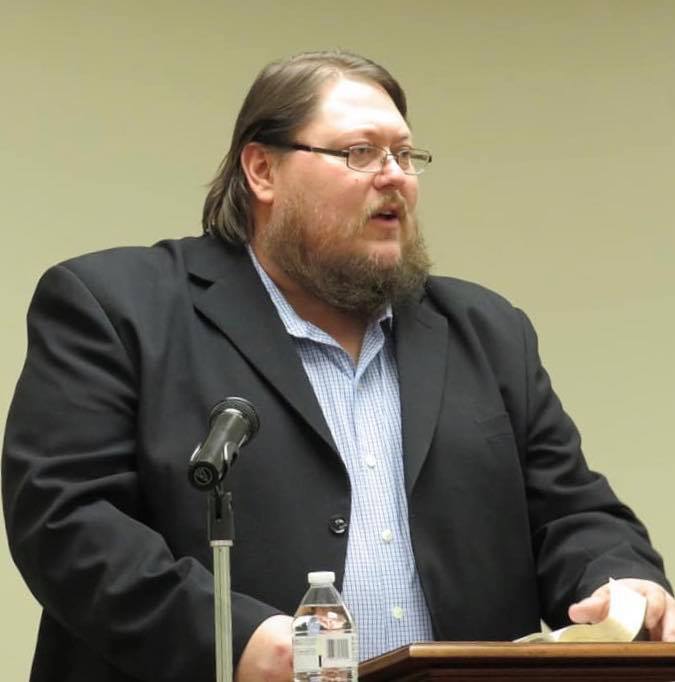
In this sermon titled "Nature of the Church pt 13," Mikal Smith addresses the Reformed doctrine of the church, particularly focusing on the term "ekklesia" as it is used in Scripture. Smith argues that the term has predominantly been employed to refer to specific, gathered congregations rather than a universal or invisible church. This assertion is supported through a thorough examination of passages, particularly in Philemon, Hebrews, and other New Testament texts, where the word consistently denotes a local assembly. For instance, he explicates Hebrews 2:12, emphasizing that Jesus' declaration among "the church" signifies a specific congregation. The practical implication of this teaching is the necessity for believers to understand the importance of local church assemblies in the life of the Christian, countering contemporary misunderstandings about what constitutes the church. Smith underscores that the local church is essential for worship, community, and the edification of believers.
“In every instance so far that we have up until this point in Philemon, the word ecclesia or church has been used as a gathered congregation, a specific gathered congregation…”
“The church is a gathered, organized body of people that God has orderly put together with officers, with gifts, with ministry, with ordinances…”
“There’s too many people out there today that are becoming so nitpicky about every little thing... You need to be careful about that.”
“If you find a place, why don’t you get there? Move there... If it meant not having a place to fellowship and worship and not being part of the Lord’s church, hey, it’s worth getting the U-Haul.”
The Bible describes the church primarily as a local, gathered assembly of believers.
Philemon 1:2, Hebrews 2:12
Being part of a local church is vital for the worship, ministry, and edification of Christians.
Hebrews 10:24-25, 1 Corinthians 12:12-27
The Bible defines the church as a gathered assembly of believers for worship and ministry.
1 Corinthians 1:2, Ephesians 1:22-23
Elders are appointed leaders in the local church responsible for spiritual oversight.
Acts 14:23, James 5:14
Auto-generated transcript • May contain errors

Comments
Your comment has been submitted and is awaiting moderation. Once approved, it will appear on this page.
Be the first to comment!