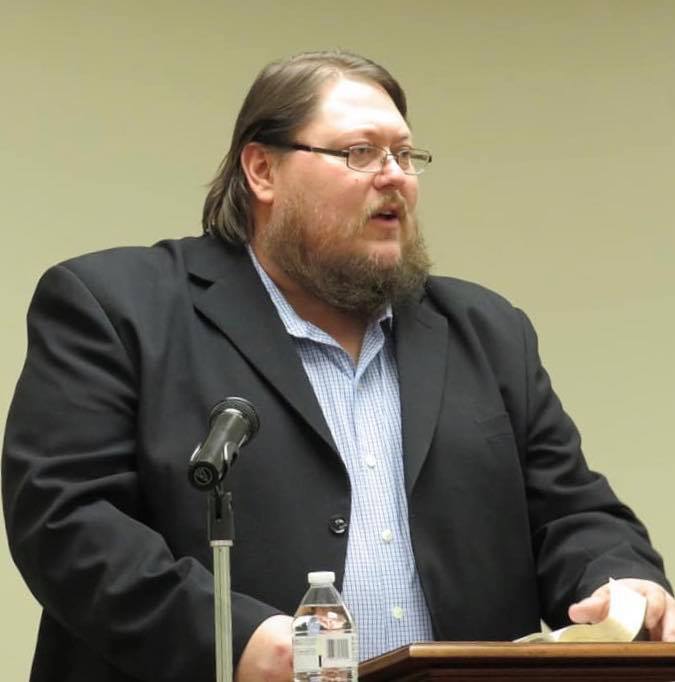
Mikal Smith's sermon focuses on the nature of the Church, particularly the concept of "ekklesia" found in Scripture. He emphasizes that the Church is not merely an abstract or universal body but a tangible, gathered congregation that conducts services and worship. Citing Ephesians 1:22, he illustrates how Christ is the head of this body, linking it to the theme of authority and the vital role of Christ over the Church. Smith argues that the ecclesia is essential for fulfilling Christ's commandments, including worship and service, and is crucial for maintaining correct doctrine and practice. He contrasts this with the popular notion of an invisible church, asserting that true worship and service occur within the gathered assembly—the local church.
Key Quotes
“The church is a called-out gathered assembly or a lawful assembly or congregation; it's actually coming together into one place at one time altogether.”
“If you want to serve Christ, you serve Him in the church. If you want to worship Christ, you worship Him in the church.”
“The local lawful assembly is the house of God; it doesn't have to necessarily be in a big building. It could be in a small house, in a warehouse, it could be anywhere, but it's the lawful assembly, that’s the house of God.”
“The church, the local lawful assembly is the pillar and the ground of truth.”
The Bible defines the church as a called-out assembly, emphasizing its role as a local gathered congregation for worship and service to God.
Scripture presents the church, derived from the Greek word 'ekklesia', as a gathered assembly of believers who come together for worship and service. In Ephesians 1:22, Christ is described as the head of the church, reinforcing this communal aspect. This definition transcends mere identification of believers; it insists on their active participation in a local assembly where they conduct the business of God’s kingdom. Historic Reformed theology places significant emphasis on the visible church, asserting it is in the gathered congregation that believers experience corporate worship and mutual accountability, aligning with the Great Commission to make disciples.
Ephesians 1:22, Matthew 22:37-40
The Bible explicitly states that God appointed Christ as the head over all things to the church, affirming His authority and leadership.
Ephesians 1:22 depicts Christ as having all things put under His feet and being made the head over all things to the church. This passage underscores the sovereign authority that Christ has over the church, tying His lordship directly to His role as the head. Throughout scripture, especially in the Gospels and the letters of Paul, we see the church is designed to operate under the direction of Christ, who is not only our Savior but also the governing authority of the body of believers. The functionality of the church reflects His teachings, commandments, and the inspired guidance of the Holy Spirit, establishing a framework wherein the local assembly articulates Christ's preeminence in worship and service.
Ephesians 1:22, Colossians 1:18
Church membership provides accountability, edification, and enables believers to participate in the ordinances and teachings of Christ within a community of faith.
Being an active member of a church is crucial for Christians as it fulfills Christ's commandments regarding corporate worship, baptism, and discipleship. Hebrews 10:25 encourages believers not to forsake assembling together for mutual encouragement and growth in the faith. The local church serves as the primary context for believers to practice their faith, receive teaching, partake in communion, and engage in fellowship. It also provides a framework for accountability, where believers can support and exhort one another in their spiritual journeys. Engaging in a local church is not merely beneficial but essential for growing in faith and fulfilling the Great Commission, as the church is the ordained structure through which Christians are nurtured and sent out.
Hebrews 10:25, Matthew 28:19-20
Comments
Your comment has been submitted and is awaiting moderation. Once approved, it will appear on this page.
Be the first to comment!
