The sermon centers on the peril of half-hearted faith, illustrated through the story of Reuben, Gad, and half of Manasseh, who chose to settle east of the Jordan rather than fully enter the Promised Land, symbolizing spiritual complacency and compromise. Drawing from Numbers 32, it warns that decisions based on visible, earthly desires—such as material comfort or ease—lead to separation from God's full blessing and spiritual vulnerability, echoing the consequences seen in Eve's fall, the ungodly unions of the sons of God, and Lot's misplaced priorities. The message underscores that sin often begins with the eyes, when believers fixate on what is seen rather than trusting God's unseen promises, resulting in spiritual decline, fractured community, and divine judgment, as seen in Achan's hidden sin and Ananias and Sapphira's deceit. The preacher emphasizes that vows made to God carry weight; failure to keep them constitutes sin, and though God's mercy allows for repentance, unrepentant sin will inevitably be exposed, for 'your sin will find you out.' Ultimately, the call is to wholehearted discipleship—denying self, taking up the cross, and fully following Christ, not as secret or half-hearted believers, but as those who walk in faith, unity, and obedience under God's authority, trusting that only in complete surrender to Christ can true rest and blessing be found.
The sermon titled "Settled on this side of Jordan," preached by James Gudgeon, addresses the theological topic of half-hearted faith and its perilous implications for believers. Drawing from Numbers 32:23, the preacher highlights the story of Reuben, Gad, and half of Manasseh, who opted for temporary comfort rather than the fullness of God's promise. Key arguments include the dangers of prioritizing earthly desires over spiritual commitments, the inception of sin through visual temptation (as seen in biblical examples like Eve and Lot), and the consequences of unrepentant sin in the community of faith. The sermon underscores the Reformed doctrines of total depravity and the necessity of perseverance in faith, emphasizing that true discipleship requires total surrender to Christ. Ultimately, the message calls believers to reject complacency and embrace a life of active obedience, as unrepentant sin will ultimately lead to exposure and judgment.
Key Quotes
“Decisions based on visible, earthly desires lead to separation from God's full blessing.”
“Sin often begins with the eyes, when believers fixate on what is seen rather than trusting God's unseen promises.”
“Your sin will find you out—unrepentant sin cannot remain hidden forever.”
“Only in complete surrender to Christ can true rest and blessing be found.”
The Bible teaches that if we do not follow God's commandments, our sin will surely find us out (Numbers 32:23).
In Numbers 32:23, we see a clear warning about the consequences of sin: 'But if you will not do so, behold, you have sinned against the Lord, and be sure your sin will find you out.' This passage emphasizes that disobedience has ramifications, not just on a personal level, but it can also extend to the community of believers. The idea is that God is omniscient; nothing can be hidden from Him. Thus, unconfessed sin will ultimately lead to exposure and potential judgment, both in this life and the next.
God's promises are confirmed through His faithfulness throughout Scripture and history.
The assurance of God's promises stems from both His character and the historical acts recorded in Scripture. For instance, the promise of a land flowing with milk and honey to Abraham, Isaac, and Jacob has its basis in God's faithfulness. Repeatedly, God has fulfilled His promises, demonstrating that He does not waver in His commitments. As believers, we can trust that God's promises, whether they relate to our salvation or future hope, are steadfast and true. This unwavering faithfulness invites us to wholly follow Him, as He has proven Himself to be faithful through all generations.
Following God is vital for Christians as it reflects obedience and a living faith.
For Christians, following God means more than mere belief; it encompasses a lifestyle of obedience and devotion. As Jesus calls His followers to take up their cross and follow Him (Luke 9:23), it indicates a commitment to live according to His ways, rejecting sin and actively serving Him. This reflects true faith and validates our identity as His children. Additionally, as seen in the example of the Israelites, failing to follow through with God's call can lead to isolation from the community of faith and neglect of the abundant life He offers. In essence, our journey of faith culminates in an active, living relationship with the Lord, characterized by obedience.
Luke 9:23, Numbers 32:23
Sermon Transcript
Auto-generated transcript • May contain errors
100%
Taking once again the help of the Lord, I would like you to turn with me to the chapter that we read, Numbers 32, and the text you'll find in verse 23.
But if you will not do so, behold, you have sinned against the Lord, and be sure your sin will find you out. we looked at this morning regarding the Lord Jesus Christ and his conversation with Peter and the miracle that took place so that the Lord Jesus would not offend the temple officials in not paying them the tax that was due for the upkeep of the temple and that we saw that throughout the Old Testament there was that need for the tithing to take place for the ongoing work of the ceremonial law and the upkeep of the temple and the sacrifice system and those Jews under that covenant were required by law to pay those taxes for the upkeep of that system and even under that law there was that opportunity for them also to voluntarily give in the building of the temple, also at other times for the upkeep and renovation of the temple and even in the times of the Lord Jesus we saw that there was that collection box that was there and there were those Pharisees and those who loved to be seen of men who put vast sums of money into those collection boxes but The Lord Jesus said there was not the amount of money that was given but the way by which that money was given and he used the illustration of the lady, the widow, who put in her last mite and how he said that she had put in more than all of those because she had given all that she had.
We could say like Caleb, she had wholly, completely followed the Lord. She had devoted herself to the service of the Lord Jesus Christ. And the scripture tells us, doesn't it, to deny ourselves, take up our cross and to follow the Lord Jesus, to lay down our lives as living sacrifices unto the Lord, which is our reasonable service and so as believers in the Lord Jesus Christ we are not under any law to give but we have that desire within our hearts to give as the Lord lays it in our hearts to give for his work and for the advancement of his kingdom. And as I was thinking about what to bring before you this evening, this word here in numbers seemed to slowly come into my mind. And I wondered how it was really tying in really with this morning. But in a sense, it does.
You see, there were those of Israel, if you remember, Abraham and Isaac and Jacob, they were told that the Lord had promised to them a promised land, a land that they could call their own, a land flowing with abundance, with milk and with honey. It was to be their rest. We know that it is a type of heaven, that the River Jordan is a type of death, that they cross over from the wilderness journey through the River Jordan into the promised land, but no type is a perfect type. It is just a mere shadow of the perfection of the type that it is representing.
And so as they cross over into this promised land, and they are allocated the various places for each different tribe, there was war that had to take place. Those enemies that were in that land had to be driven out. And they left some people in the land. The Canaanites were still in the land. And the Lord said, these Canaanites are going to continue to be thorns in your side.
And so it's not a perfect type, but it is a type of heaven. that they crossed over from the wilderness through the river Jordan and into this rest. As each believer will know that this journey that we're on, it is a wilderness journey. As it says of Abraham, strangers and pilgrims on the earth, they look for a city that was out of sight, whose builder and maker was God. That city for the believer is the other side of death, that eternal kingdom which we are are going to. And so as the people of Israel are taken out of Egypt and as they walk through the promised land, we know that they get there very quickly.
Yet as Caleb and the others cross over, they bring an evil report and they say, no way are we going to be able to possess this land. It's too strong. There are giants in the land. We're never going to be able to do it. And they forget the greatness of God. And so God judges them as they turn the hearts of the people. They're left to wander in the wilderness for 40 years. And they and all those that were under the over the age of 20, they died in the wilderness. And so the time comes 40 years later. They return back to the same place.
They're there at the River Jordan. They're there to cross over into the promised land. But we see the children of Reuben and the children of Gad. They say, hang on a minute. we see that the land of this side of Jordan is suitable for us. We don't want to cross over the Jordan. We don't want to go over into the promised land. We're quite happy to remain this side of the Jordan and Moses is concerned.
Moses is concerned that this desire is going to turn the hearts of the people again and that God is going to come and judge them again as he did before. And so he is concerned and so he says to them, shall your brethren go to war? and shall you stay here? Shall the brethren wholly follow the Lord and will you be left behind this side of Jordan?
It seems that that is the main concern that Moses had. and to start with, that they wanted the easy option. They wanted to take the easy route and to stay that side of Jordan. They didn't want to go and to fight and to chase off the enemies from the promised land. They saw that the land that side of Jordan was more suitable for them. And so it is like Moses was concerned that they were not fully following the Lord. They didn't want to take that step over Jordan and into the Promised Land. They wanted to remain that side of Jordan.
And so trying to consider, comparing this morning and this evening, how is it with us? as we looked at this morning, there are those who wholly follow the Lord. there are those who believe that the Lord has purchased them, that they belong to the Lord Jesus Christ and they have denied themselves, they have taken up their cross and they have followed the Lord Jesus. They wake up in the morning and they say, Lord what will thou have me to do?
Their life is dedicated to the service of Christ Jesus, whether they are in the workplace, whether they're at school, at college, they desire to to follow the Lord. And people know that this one is a Christian. They're a light in a dark place. They are willing to stand out. They're not ashamed of the gospel of Christ. They do not deny the Lord Jesus Christ by their behaviour, by their vocabulary, by their lifestyle. They have crossed over Jordan, as it were, and they have put themselves out there as ambassadors for the Lord Jesus Christ. But there are those that are not willing. they are quite happy, as it were, as these cheap people of Gad to hide, to stand back, and to allow others to do the work, and allow others to be witnesses of Jesus Christ.
They don't want to wholly follow the law, they want to be like a secret disciple. They say, like Like those in the New Testament, we will not have this man to reign over us. They're governors of their own lives. They don't want to do all that the Lord wants them to do. They half-heartedly follow the Lord.
And this is what Moses was concerned about. As we saw this morning, you remember I said about Hudson Taylor. And he said, I'm going to go down into the pit. But if I go down into the pit and dig with my hands, I need someone up there holding the rope. In doing so, we're both doing the work. You're holding me. I'm down there digging and you're holding me up. And Moses is concerned that these these people were not willing, as it were, to dig or not willing to hold the rope.
They wanted to stay this side of the Jordan. They wanted not to be part of the main body of Israel. They were separating themselves from what God had promised to Abraham, to Isaac and Jacob. We could say in today's In today's gospel time, they wanted to stay outside of the church. They didn't want the responsibilities that come with church membership and the authority of the church over them. So they wanted to keep themselves separated.
And that's what Moses is concerned about. Shall your brethren go to war? Shall they go and do all the hard work and you're just going to sit here and watch them fight, watch them suffer loss, watch them suffer injury and hardship and you are just going to sit back and relax. That's what he was concerned about. And in doing so, he believed that judgment was going to come again upon Israel because of these two tribes wanting to separate themselves from the main body of Israel.
But they reassure him. They reassure him, no, we will cross over. We still want to stay this side of Jordan. We still believe that this land is better for us, but we're going to leave our wives and our children this side and our animals this side, and we're going to come and we're going to help you fight. And once the land is delivered from its enemies, then we will cross over back to our families and our animals, and we will settle there. And so their desire was to settle this side of Jordan, to live really in the gospel day, to live for what they could see rather than what they believed was the promise, the other side of Jordan.
That promise had been given to Abraham. Abraham had been told, by God, I am going to give you a land that's going to flow with milk and with honey, and that your children are going to be as the stars of the sky and as the sand of the seashore. Abraham left the land of the Chaldeans because of that promise. And yet, as it comes to it, the 10 tribes believed in God and crossed over.
And the other two, and half the tribe of Manasseh, stayed the other side of Jordan. You know, when the Bible says something like this, and they saw, and they saw, they made a decision based upon what they could see, it's never a good thing. It says, they saw the land of Jazar, and the land of Gleed, and behold, it was a place The place was a place for cattle. They saw. They made a decision based upon what they could see, rather than believing what God said. God said the promised land is the land that's flown with milk and honey. That's the place where you want to be, but they didn't wholly believe God. they didn't wholly believe what they heard about the promised land and they made a decision based about what they could see. They said we see that this land is going to be better than what God has promised us the other side of Jordan, therefore we want to stay here. And if you look at the stages of sin, the stages of sin always begins with what we see. What we see is the slippery slope of sin.
How did Satan tempt Eve? He went for her eyes. He pointed her in the direction of something that she could see. And as soon as he got her attention and saw that she was focused upon something, he then begins to sow the seeds of doubt in her mind. He begins to speak to her.
The eyes are the windows of the soul. We can be so distracted by the things that we can see. We can be so drawn after the things that we can see. The idols that we have are things that we have seen and they get into our hearts and our minds and we're drawn after them. And that is how Satan desires to get us. desires to present things before our eyes that he may capture our attention and our imagination and then take hold of our hearts.
Genesis 3 it says, when the woman said unto the serpent we may eat of the fruit trees of the garden but the fruit of the tree which is in the midst of the garden God has said you shall not eat of it neither shall you touch it lest you die. And the serpent said unto the woman, you shall not surely die, for God does know in the day that you eat thereof that your eyes shall be opened and you'll be as gods, knowing good and evil. And when the woman saw that the tree was good for food and that it was pleasant to the eyes, a tree to be desired to make one wise, she took of the fruit thereof and did eat also and gave also unto her husband. with her and he did eat and the eyes of them were both opened. He pointed her in the direction of the tree and she saw Once he saw that she was transfixed upon the tree, and she saw that the tree was good for food, and it was pleasant to her eyes. To make one wise, she then took of it. Satan knew exactly where to get Eve.
If we could get her to turn, we could say, get her to turn her eyes off God and all that God has provided for her in the garden and to cause her to doubt God and to show her the beauty of the tree and try and sow seeds of doubt within her heart, he knew that he had her.
If we turn to chapter six, as sin began to manifest itself more greatly in the world. We read of the sons of God. If you keep that in mind, these children of God they saw They weren't acting in faith on the promise of God, but they saw and they desired to stay the other side of Jordan. Eve, she is shown this tree as she takes her eyes off all that God has provided for her already. And she goes for the one thing that she's not allowed. In chapter six, we read of the sons of God. that these sons of God saw the daughters of men that they were fair and they took them wives of all which they chose and the Lord said my spirit shall not always strive with man for that he is also his flesh and his days 120 years and there were giants in the earth in those days after that when the sons of God came in unto the daughters of men they bear children unto them the same became mighty men which were of old men of renown. And here it says that the sons of God saw the daughters of men. Now as I'm sure you're aware.
Many people take this to mean that the sons of God being angels that came down from heaven, angels that came down from heaven and had intimate relationships with the women of this world, the beautiful women of this world, but that's not what it is. The scripture tells us, Jesus tells us that the angels of God do not give and are not giving in marriage. They are gender neutral, we could say. There is no intimate relationships had between angels.
So the sons of God are being spoken of here, are the sons of God, are the children of Seth, the line of Seth, those who have wholly followed the Lord, those that are children of the living God, children of the living God by faith, adopted into the family of God, we can say. that these men stepped out of their, and they had, were unyoked together.
They were yoked together with unbelievers. They took wives from those who were outside of the covenant, those who were of the line of Cain. and that they had children with them. They did not marry in the Lord. They married outside of the Lord. And because of their ungodly unions, their children were worse than their parents. that they brought up children. They were mighty men of valor. This word, mighty, doesn't necessarily mean that they were great giants, but it means that they were fallen men. They were men who were continually being wicked.
And we can see that in verse five. And God saw the wickedness of men. You see, in these ungodly unions, they produced ungodly children and these ungodly children produced even more ungodly children so much so the wickedness multiplied and multiplied and multiplied upon the face of the earth. How did it happen?
It happened because these men saw. They saw the unregenerate women of this world and they went after them. They didn't say that this is a godly woman with a meek and a quiet spirit. They looked at the external beauty of these women and they made their decision based upon what they saw. And their decision based upon what they saw brought them into greater sin. and it will always do that. Any decision that we make which is just based upon what we see rather than prayerful consideration is going to end in failure.
And it did with these children that were in the line of Seth. They crossed over into the line of Cain. and their marriages were unequally yoked together, and their children that were produced from those marriages were ungodly. They were mighty men of old, men of renown. They were filled with wickedness. And as they multiplied and multiplied, the wickedness on the earth grew and grew and grew.
We see it today, don't we? You know, if a child is brought up in the church, they've been brought up under sound discipline and scripture. They leave church and they marry somebody from the world. They raise their children outside of the church. Those children will grow up to be unbelievers. There are people that I meet in work and their grandfather left chapel and they're the product of him leaving chapel.
They're sinners just like, they're just worldly people. And they will raise their children as children of Satan, children of the kingdom of darkness. Why? Because a choice was made. and every choice that we make has consequences and sometimes those consequences are eternal consequences and they will have consequences upon our children that damn them to hell because we have left We have left the straight and narrow. We have left the line of Seth and crossed over into the line of Cain and rejected our upbringing, rejected our biblical teaching and gone and pursued after the things that we can see. Think of Lot. What happened to Lot? Lot was favoured to leave the Ur of Chaldeans with his uncle Abraham. He could have walked together with Abraham. He could have lived under the protection of this great man of God. Yet when he was given an opportunity to make a decision, he did not make that decision wisely. He made a decision based upon what he could see. Abraham said to him, the choice is yours.
Go wherever you want. And if you go this way, I'll go that way. The Bible says in Genesis 13 verse 10, And Lot lifted up his eyes and beheld all the plains of Jordan, that it was well watered everywhere before the Lord destroyed Sodom and Gomorrah, even as the garden of the Lord, like the land of Egypt, as Al-Qamis unto Zor. How was this decision made?
He beheld it, he looked about it, he stared at it and he made a decision based upon all that he could see. Just like these children of God, they said this land, this side of Jordan, this is suitable for us. It's got grass, it's got water, suitable for our cattle. just like Lot. He lifted up his eyes and he beheld all the plains of Jordan. It was suitable for his cattle.
He wanted to multiply the material things that he had. And he was not concerned about the environment that that plain was found in. He was not concerned. He didn't prayerfully commit his way unto the Lord to trust in him, but he made a decision based upon what he could see. We see that he pitched his tent towards Sodom. We then see that he goes into Sodom. We then see that his children marry men of Sodom.
Just because of a decision that he made was not a prayerful consideration of seeking the will of God, but his heart was captivated by the could say by the wealth that he believed he could get from living in such a place. You see, he saw, and what he saw entered into his mind and into his heart. Then he made a decision that was contrary to what was right. It affected not only him, But it affected his family and it affected the children of Israel for the product of his relationship with his daughters produced a tribe that had impact upon the children of Israel. And so you see, we have to be careful about the decisions that we make. and how we make those decisions.
The Bible points it very clearly that when we just see and make a decision, it is likely that that decision is going to be biased according to the flesh. That Eve fell because Satan tempted her with what she could see. The sons of God were tempted by what they could see. the external beauty of the women round about them, rather than prayerful consideration, asking the Lord to guide them in the choices that they had to make, asking for a woman after God's own heart, or in the female way, a man after God's own heart, but making decisions based upon a choice, natural attraction, without considering the Lord in the matter and locked, looking, with his eyes, making a decision based upon those things.
And so the land, the promise, the land was before them, yet they chose not to cross over Jordan. And really they put themselves in a difficult situation. They separated themselves from the main body of Israel. The promise was to all of Abraham's children. There could have been an allotted space for all of them, the other side of Jordan. But because of the decision that they made and not crossing over, they separated themselves from that main body. And that brought them problems. It brought them problems. Brought them problems not only for themselves, but also for their families, because between them and the main body of Israel was the river Jordan. And so they had to then explain to their children that we are part of this main body, yet we have chosen to remain this side of Jordan. And so they realized that they had made a mistake in chapter 22 of Joshua.
It tells us there that they built an altar. And the reason why they built the altar was because they wanted to tell their children, really, that we are together with the people of Israel. And because of that decision to build an altar, the main body of Israel thought that they were idol worshipping and they come and they come to attack those other, those three tribes.
In Joshua 22 it tells us there that Joshua gives them their blessing to return after Israel had been, after the promised land had been divided and separated and the nations driven out, Joshua gives them that That. the okay to cross back over to the other side, because they had kept their side of the bargain that they had said.
And he said unto them, you have kept all that Moses the servant of the Lord commanded you, and you have obeyed my voice in all that I commanded you. You have not left your brethren these many days unto this day, but have kept the charge of the commandment of the Lord your God. now the lord your god has given a rest unto your brethren as he promised them therefore now return ye and get you to your tents and unto the land of your possession which moses the servant of the lord gave you on the other side of of jordan and so they because they kept what they said that they would do, they are now released from committing sin against Israel and against the Lord. As the text tells us, but if you will not do so, behold, ye have sinned against the Lord and be sure that your sin will find you out. So they kept their side of what they had promised Moses would do.
And the time comes now at the end of the battles for them to cross over. to return back to their families. In verse 11 it says and the children of Israel heard and said behold the children of Reuben and the children of Gad and the half tribe of Manasseh have built an altar over against the land of Canaan in the borders of Jordan at the passage of the the passage of the children of Israel when the children have heard of it the whole congregation the children of Israel gathered themselves together at Silo to go up to war against them. And so this division that they caused, this choice to remain the other side of Jordan brought them problems. You see, if they had crossed over, they could have been in unity with all the others.
But because they stayed the other side, they felt it necessary to build an altar. And that altar caused the other body of Israel to doubt them and to want to go to war against them. mercifully, the meeting took place and there was an agreement made and they understood the reasons why they'd built this altar. But the problem didn't have to be there. If they had walked by faith and crossed over and wholly followed the law, then there would be no reason for them to make the altar, no reason for them to fall out with their brethren, no reason for them to explain to their children. but also it came at a greater risk. You see, they had to do what they said that they were going to do.
They put themselves in, by staying the other side of Jordan, they put themselves in a greater risk. First of all, if you look at the history, they were the ones that were first carried off into captivity. They were in an isolated position outside of the main body of Israel. But also, they put themselves in a greater danger of judgment. By staying the other side of Jordan and by saying that we're going to help you fight, Moses puts upon them a clause we could say, that if they don't do what they said, then they have sinned against the Lord and that their sin would find them out.
They made a vow. made a vow and by making a vow they put themselves in a vulnerable position. It is better not to make a vow than to make a vow and to not keep it. I've been meditating upon this this afternoon. You know maybe you've made a vow and you've not kept it. In not keeping a vow that you've made to God You have put yourself under his judgment.
You've said that you would do something and you haven't done it, therefore you have lied to God. He says, if you will not do so, If you will not do what you have said that you are going to do, then you have sinned against the Lord and be sure your sin will find you out. Now, have you said that you would do something? Have you said, Lord, if you are going to do, if you do this, then I'm going to do this. And maybe the Lord has kept his side and he has done what you have prayed for and you have not done what you have said that you're going to do.
And you wonder why maybe your prayers aren't being answered. You wonder why things are being brought into your life and everything is becoming more and more difficult. Or maybe you should wonder why. Maybe you should examine yourself and say, well, I haven't kept my side of the vow.
I promised the Lord that I would do something and now I'm experiencing his judgment because of it. What are you to do? Well, ask for forgiveness and do what you said you would do. They put themselves in this vulnerable position. And if you have made a vow this evening, then you have put yourself in a vulnerable position and you've promised the Lord that you would do something and therefore you should carry out, unless it's, hopefully it's a good thing, that you are meant to do, you should carry it out. We'll be sure your sin will find you out.
We saw this morning The Lord Jesus, when Peter entered into the house, he knew exactly what he was going to say. And he, we say, he jumped to the gun. He told Peter what he was going to say. And we saw, as Jesus tells us, that the Lord knows the things that you have need of before we even ask him.
That our hearts are open before him. So you cannot hide sin from God. You cannot claim that you never made a vow when you did make a vow because he was there when you made the vow. He heard that you made the vow. He knew the reasons why you petitioned him in such a way. And so be sure that your sin will find you out.
In Joshua chapter 7, the Lord troubles all of Israel because of the sin of one man, Achan. Joshua 7 says, And the Lord said unto Joshua, Get thee up, wherefore liest thou upon thy face? Israel has sinned. and they have transgressed my commandment which I commanded them. For they have taken of the accursed thing and have stolen and disemboweled also. And they have put it even among their own stuff.
Achan had sinned against the Lord in stealing and hiding the Babylonian garment and the 200 shekels of silver and a wedge of gold in his tent. Now he thought that nobody saw him. He thought that he could get away with it. The children of Israel were normally allowed to keep the spoil, to give some to the to the temple give some to the lord but they're allowed to keep it but this this time the lord says no it is all to be given to the to the temple of the lord it's all to be given to the lord But Achan, he hides these things in his tent.
And because of his sin, the whole of Israel is troubled. They're unable to win their next battle. Joshua is concerned. He's lying upon his face, pleading to the Lord, asking, what's the problem? Well, the Lord knew what the problem was because of Achan's sin. He troubled the whole of Israel. What does it say? He saw. He says, I saw, and I took, and I hid. the process of sin again.
His sin is exposed and he and his family are stoned to death. His sin affected his whole family and the whole of Israel, just like Lot, just like Eve. Sin has ripple effects, not just upon the person sinning, but upon those people associated with that person. Achan's sin was exposed by God.
In the New Testament we have, in the book of Acts, we have Ananias and Sapphira, his wife, As the early church grew, as the gospel advanced, as the Holy Spirit gathered people into the early church, they were so overcome by the goodness of God, and I believe that they so believed that Jesus Christ was coming very, very soon, that they sold everything. and that they gave all to the work of the ministry. But other people, Ananias and Sapphira, we could say like the people of Gad, they wanted to stay this side of Jordan. They were not wholly following the Lord. They wanted to look like they were. And so they came to the apostles and they said, look, we've sold some land. And this is what we've sold the land for. This is the amount of money that we've sold the land for. And they laid it at the feet of the apostles. They were filled with pride. They wanted people to see what they had done. they were trying to fit in with the church.
But Peter says to Ananias, why has Satan filled thine heart to lie to the Holy Ghost? Be sure your sin will find you out. There was an ulterior motive to the way that they were giving. and that they lied not only to the church, not only to Peter, but they lied to the Holy Ghost, that they kept back. part of the price of the land they could have said look we sold this land for a hundred thousand we want to give you fifty thousand and we're going to keep fifty for ourselves it wouldn't be a problem but they said you know they said we sold it for fifty when they really sold it for a hundred and so they were lying there was deceit in their hearts and so Peter is moved by the spirit of God he's able to understand the lies that are taking place Whilst it remains, was it not thine own? And after it was sold, was it not thine in thine own power? Why hast thou conceived this thing in thine heart, that thou hast not lied unto men, but unto God?
You see, be sure that your sin will find you out. The Lord is able to look at our hearts. He understands the motives and the reasons why we do things. He understands that if we're giving to be seen of men, if we're trying to fit in, if we've just got external righteousness without a transformation of our hearts. And he says, you're not lying to men, but you're lying to God. What does David say?
Against thee and thee only have I sinned. All sin is against God, even if we sin against somebody else, yet ultimately that sin is against God because God is the one who has given us the law. And if we sin against somebody, it's because we've transgressed the law of God and we've gone away from the law's commandments.
You know, it is a mercy. if you find your sin out before it finds you out. It is a mercy if you are brought to confession of your sin before you are brought to the judgment because of your sin. It is a mercy that if we can understand that we have sinned against the Holy God and be brought to repentance and hatred of that sin and a love to the Lord Jesus Christ. that if our sin is exposed by the Holy Spirit, that is what He has come to do, to expose our sin and to point us to the Lord Jesus Christ. It is only then that we will be ready to face that Holy God. You see, you may be able to cover your sin now.
You may be able to hide it from your mum or dad or your family and friends. And you may even be able to convince yourself that you're not sinning. maybe that your heart is so seared that the sin that you are committing doesn't even affect you anymore, but just because you're so hardened to that fact does not mean that your sin will not be found out. It will be found out. It may not even be in this life, but it will be found out in the life to come.
You think of those people like that Jimmy Savile. People are so disappointed that he wasn't brought to judgment here in this world. But you know he's under a greater judgment now. Under the wrath of Almighty God for all eternity for the sins he committed in this world. Prison is nothing compared to hell. and to be sure your sins will find you out and you will be brought to judgment because of your sin.
Even if you try to cover it and cover it with robes of righteousness, God is able to see through all of it. May it be that the Lord brings you to true repentance over your sin and you wholly follow the Lord Jesus Christ, that you deny yourself, you take up your cross and you follow him. And if you have made a vow today to wholly follow the Lord, then go through with that vow.
For in vowing to God, you've brought a judgment upon yourself, if you do not obey what you promised him that you will, you would do. Just like these children of Gad, if you will not do so, behold, you have sinned against the Lord and be sure your sin will find you out. They went through with all that they said that they would do and they were released then from this judgment that would come upon them. But They still separated themselves from the main body of Israel and put themselves in a vulnerable position and did not participate in the main blessing of being in that promised land.
May the Lord help us then to wholly follow, to be part of the main body and not to be isolated and separated and to walk alongside but help us to come under that authority and that protection and that care and to wholly follow the Lord Jesus Christ. May the Lord add his blessing. Amen.
Let's sing our final hymn of the day from Hymns for Worship number 20. Glory to thee, my God, this night, for all the blessings of the light. Keep me, O keep me, King of kings, beneath thine own almighty wings. Hymns for Worship number 20, tune 422. ♪ Glory to thee, my God, this night ♪ ♪ For all the blessings of the night ♪ ♪ Keep me, O keep me, King of kings ♪ ♪ In the light of the mighty light of day ♪ Oh, call thy dear son, the ill that I this day have done, and with the woe I so badly, I realize deep that this may be. Teach me to live that I may, the brave, as little as I may. Teach me to try that so I may, right, glorious, and the judgment day. ♪ Who may my soul loving repose ♪ ♪ And may sweet sleep when I lift close ♪ ♪ Sleep that shall be for thick or thick ♪ ♪ To serve my God when I awake ♪ ♪ In the night I sleep as night flies ♪ ♪ So in heav'nly courts abide ♪ ♪ And though ill dreams disturb my rest ♪ ♪ The boughs of darkness be my guide ♪ ♪ Praise God from whom all blessings flow ♪ ♪ Praise him, all creatures here below ♪ ♪ Praise him above the heavenly host ♪ ♪ Praise Mother, Son, and Holy Ghost ♪ And now may the grace of the Lord Jesus Christ and the love of God the Father with the fellowship and communion of the Holy Spirit be with us all now and forevermore. Amen.
About James Gudgeon
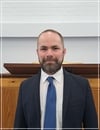
Mr James Gudgeon is the pastor of Ebenezer Baptist Chapel Hastings. Before, he was a missionary in Kenya for 8 years with his wife Elsie and their children.
Pristine Grace functions as a digital library of preaching and teaching from many different men and ministries. I maintain a broad collection for research, study, and listening, and the presence of any preacher or message here should not be taken as a blanket endorsement of every doctrinal position expressed.
I publish my own convictions openly and without hesitation throughout this site and in my own preaching and writing. This archive is not a denominational clearinghouse. My aim in maintaining it is to preserve historic and contemporary preaching, encourage careful study, and above all direct readers and listeners to the person and work of Christ.
Everything that exists is a thought in the mind of God.
Keyboard Shortcuts
View all
For Cole
Try again.
I spent the majority of my adult life building something I didn't know had a name. It started with the Scriptures and a lot of late nights. It ended with one sentence that generates every theological position I hold, from the nature of God to the nature of heaven and hell, without contradiction. One sentence. Thirty chapters. Sixteen appendices. And if you accept the sentence, everything else follows.
Most systematic theologies start with a list of doctrines and work through them one by one. This book starts with an ontological claim - that everything that exists is a thought in the mind of God - and derives everything from that single proposition. This is not a rearrangement of existing theology. This is a paradigm shift. Since Augustine imported Plato's metaphysics into the church in the fourth century, every major system of Christian theology has been built on a foundation the Scriptures never laid. This book identifies that foundation, names it, traces its influence across sixteen centuries, and replaces it with an ontology derived from Scripture alone. If the claim holds, this is the most significant shift in the theological starting point since Augustine. And I believe it holds.
This is not a devotional. This is not a commentary. This is a systematic theology built from the ground up by a computer programmer with no seminary degree, no denominational backing, and no one's permission. It uses the vocabulary of information theory, computer science, and quantum physics to describe realities that traditional theological language has never been able to reach. If you are a scientist who suspects that information is fundamental to reality but can't bring yourself to call it God, this book speaks your language. If you are a sovereign grace believer looking for a system that follows the logic all the way, this book does that. And if you have been told that the sharpest doctrine produces the coldest heart, this book ends with the widest arms you have ever seen in a Reformed theology.
The digital edition is free. The truth doesn't come with a price tag. - Brandan Kraft
Where this book stands in the tradition
4th century BC
Plato
Idealism — forms over particulars
The Republic ethic: “God is not the author of evil”
“Everything that exists is a thought in the mind of God, sustained by His will, authored by His purpose, and held together by personal covenants of love.”

Comments
Your comment has been submitted and is awaiting moderation. Once approved, it will appear on this page.
Be the first to comment!