Bootstrap
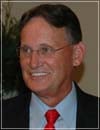
Larry Criss

That You May Know

1 John 5:13
Larry Criss October, 18 2015 Audio
0 Comments
Larry Criss
Larry Criss October, 18 2015

Sermon Transcript

Auto-generated transcript • May contain errors

100%
Our text will be from verse 13. John plainly tells them the reason
he wrote this epistle. And that's the reason I preach
this message to you, and I pray that it will have this blessed,
blessed effect, result, that you may know. John says, these
things that I've written unto you that believe, you that already
believe, on the name of the Son of God that you may know. You
may know. You do believe but that you might
have this sweet assurance that you may know that you have eternal
life. Have now. And that you may believe
on the name of the Son of God. Just continue to believe. If
you believe you have eternal life. Continue to believe. Continue
to behold the Son of God. That you might be assured of
this. This is what my pastor, Brother Don, calls shoe-leather
theology. It has a very practical effect,
does it not? To live by, to walk in day to
day, and to die by, to know whom we have believed, to know this
believer. As John wrote, you have now eternal
life believing on the Son of God. There's nothing. Let's just
mention a couple of benefits of it. There's nothing which
can give a man so much comfort and peace in this life than the
assurance of his saving interest in the Lord Jesus Christ. Nothing
can change that. We don't know what tomorrow holds. We don't know. Oh, but we know
He, Him, who holds tomorrow. And that's where we derive our
comfort and peace from. If I know that the great business
of life, the one issue of my eternal salvation is settled,
O what comfort that affords, and that the great work of salvation
has been accomplished, what peace that brings. Assurance gives
a man a fixed heart, does it not? It sweetens the bitter cup,
and we all have to taste that from time to time. It lightens
every burden, and it smooths the rough places, and it gives
light in the valley of the shadow of death. Assurance enables Job
to worship God. Was he hurting? Of course he
was hurting. Did he feel it? Of course he
felt it. But at the same time, Job said, I know that my Redeemer
liveth. None of this has happened, which
he did not understand. Yet he knew that Christ was yet
upon his throne. Assurance enabled Peter to sleep
in Herod's dungeon. Remember when he was arrested?
thinking that the next day he would be slain, and yet he laid
down and slept. Assurance caused the apostles
to rejoice when they suffered shame and persecution for Christ's
sake. And assurance caused the martyrs
to die like men. Assurance gives a man comfort
and peace in this life. Is that not practical? And nothing
will ever make a man so bold in the cause of Christ as the
assurance of his saving union with Christ. I mean, look at
the apostles themselves, and Peter and James and John and
Paul, Luther, Knox, Edwards, Whitefield. What was the source
of their boldness? What made them so bold and so
sacrificial? Their assurance that they were
one with Christ. There's nothing that will enable
a man to deny himself and seek the glory of God in this world
like his assurance of salvation in Christ Jesus, knowing whom
he has believed. The grace of God, Paul wrote,
the Titus had appeared, teaching us that denying ungodliness and
worldly lust, we should live soberly and righteously in this
present world. And there's nothing. that will
so strengthen a man in the hour of death as the assurance of
his pardon and acceptance before God in Christ Jesus. What other hope is there? What
other hope is there? When it comes that time for me
to depart this world to have the sweet assurance that Christ
is with me as he promised he would be, even when I walk through
the valley of the shadow of death. Paul again wrote, We know. We know that if our earthly house
of this tabernacle were dissolved, we have a building of God, a
house not made with hands, eternal in the heavens. We know that. That's some of the sweet benefits
of having this knowledge of our acceptance before God. Faith
is the root. Assurance is the flower. That poor woman, for an example,
faith is that poor trembling woman who came behind our Lord
in the crowd and touched the hem of his garment. That act
of her reaching out to touch him is a picture of faith. But
assurance, assurance is Stephen standing calmly in the midst
of his own murderers and saying, I see the heavens open and the
Son of God standing at the right hand of God. Faith is that dying
thief crying, Lord, remember me. Remember me. But assurance
is Job setting in the dust, covered with sores, saying, I know that
my Redeemer liveth, and though he slay me, yet will I trust
him. Faith is Peter's drowning cry. Lord, save me. Save me. Assurance is that same man afterwards,
declaring before the council, this is that stone which was
set at nought of you builders, which has become the headstone
of the corner. Neither is there salvation in
any other, for there is none other name." Oh, that's worth
repeating, isn't it? There is none other name under
heaven given among men whereby we must be saved. Faith is the
anxious, trembling voice, Lord, I believe, help thou mine unbelief. Have we not all been there, children
of God? But assurance is the bold challenge
of the confident apostle. Who shall lay anything to the
charge of God's elect? Who is he that condemneth? This is faith. I believe that
Jesus Christ is the Son of God. This is assurance. I know whom
I have believed and am persuaded that he is able to keep that
which I have committed unto him against that day. These things, John says in verse
13 again, have I written unto you that believe. These things.
All that he said in this epistle. What things? those things concerning
the Lord Jesus Christ. You see, for assurance of faith,
John directs them to the sole object of faith. The sole object
of faith. And that is Jesus Christ himself. John was perhaps that other disciple
standing with Andrew that day, being followers, disciples of
John the Baptist at the time. And the Lord walked by. And John
said, Behold the Lamb of God. And they left John the Baptist
and followed Jesus Christ. Perhaps John was that other disciple. And John does just as his teacher
did. He instructs us, or directs us
rather, to behold the only object of faith. The Lord Jesus Christ. He writes about those things
concerning His Son, or rather God's Son, the Son of God. He speaks of His accomplishments. Now let me ask you, brothers
and sisters in Christ, can you really have any assurance, any
comfort arising from your accomplishments? Can you really? Do they not tend
to do the very opposite? Bring you down and say with David,
Oh, why art thou cast down, O my soul? No, John speaks of our
Lord's accomplishments. What he obtained. His work, not
our work. His grace, not our merit. His promises. Know this, John
says over and over again. Look again, if you will, at verse
11 in chapter 5 here. And this is the record. This
is a matter of certainty. This is recorded in heaven. This
is the record that God has given to us eternal life. And where
is this life deposited? From whom does it flow? In whom
does it reside? From whom do sinners receive
this life that John speaks of? And this life is in His Son. It's in His Son. Therefore, John
writes in verse 12, he that have the Son have life, and he that
have not the Son of God have not life. Behold Him, whom to
know, to see, to look by faith to, is life everlasting. Would you be assured of these
things? Behold Him. Behold the Lamb of God. This
is what John reminds them of again. You that believe, know
this. Rest assured of this. Believing
on the Lord Jesus Christ, you have, right now, eternal life. Did you notice the quote by Robert
Hawker in today's bulletin at the top of the page? It says,
and efficacy of Christ's ransom pleads more for his people, for
his redeemed rather, than all their sins plead against them.
Oh, I like that. I like that. That gives this
sinner comfort. That gives me hope. That gives
me peace in the midst of troubled seas. That the blood of Jesus
Christ pleads more than all my sins plead against me. Is that
not practical? Does that not give you something
to walk around in? Shoe leather theology. Is that
not a blessed comfort to every struggling child of God in the
world, our Lord? Here's a promise. Here's a promise
along with the many others. He also promised every child
of God this. In the world ye shall have tribulation. But he didn't stop there. But,
he said, be of good cheer. I have overcome the world. As
John wrote here, this is the victory that overcometh the world,
even our faith. To every tried and tempted believer,
is this not a comfort? To every fallen saint, is this
not a comfort? Believing on the Son of God,
you have eternal life. What a comfort it must have been
to the heart of sinning, fallen David, when the prophet said
to him concerning his sin, Says, you're the man, David. You're
the man. And David cried, oh, I've sinned
against God. I've sinned against thee only,
oh God. But Uriah didn't stop there.
He said, but God. Oh, but God. He's put away your
sin. Your sin's been put away. And
David wrote, oh, how blessed is the man to whom the Lord will
not charge sin. Look again. Look away. Look to
the all-sufficient sacrifice, that one who ever liveth to make
intercessions for us, that one who at this very moment appears
as our advocate in the presence of God for us. And does he plead
our worth? Does he plead our merit? Oh,
there's no hope there. He pleads his own. The very fact
of Him standing in the presence of God for us is testimony to
God's satisfaction with everything His Son did on the behalf of
His people. His very presence there is testimony
of His acceptance before God and of all those in Christ accepted
as well. Look, if you will, here in chapter
2 of 1 John. This is our hope. This is our plea. Here in 1 John
2, verse 1, my little children, these things write unto you that
you sin not. Child of God, strive against
sin. There's no excuse to sin. And
yet we will sin. We do sin. What happens when
a child of God sins? What happens? What happens when
A true believer sins. Is he cast away from God forever? Does he who was once saved become
lost? There are people that teach that.
Saved and lost and saved and lost and born again and again
and again and again. No, no. God doesn't act that
way to his children. And if any man sins, verse 2,
we have an advocate. We have an advocate. We're not
outcasts. We're not disowned. We have an
advocate with the Father. Who is He? Who can represent
me before the Father? Who can plead my cause before
the Father? Who can present me before the
Father? In whom can I be accepted before
a righteous, just, and holy God? We have an advocate. Thank God
we have an advocate. Now, we read that and don't think
a whole lot of it. Oh, but when tempted and fallen
and crying out in anguish and sorrow, oh, I've sinned against
you, oh, my God. What good news it is to hear
we have an advocate and God had put away our sin because of our
advocate. Who is that? Jesus Christ, the
righteous. Jesus Christ, our righteousness.
Is it any wonder? that the Apostle Paul said, in
that day, I want to be found, not what I once was found in,
not my religion, not my observance of God's law. I don't want to
be found in that robe of self-righteousness, because if I am, I'll be cast
out forever. Oh, but in that day, when I'm
ushered into the presence of God Almighty, what's your hope,
Paul? The same hope. that every believing
sinner has, as John wrote here in this epistle. Our hope is
to be found in Him, wrapped up in Him, clothed in the righteousness,
the perfect righteousness of Jesus Christ Himself. This is
what presents us before God without a spot or a blemish or any such
thing, the righteousness of God's own Son. Paul said, I want to
be found in him. John, again in our text, says,
these things have I written unto you that what? Unto you that
work? Oh no. No. No, that doesn't give
assurance. That doesn't give acceptance.
That doesn't bring peace with God. Not the labors of my hands
can fulfill the law's demands. Turn back, if you will, to Romans
chapter 4. We made mention of this a moment ago, quoted a portion
of it. Paul is quoting the 32nd Psalm
of David after Uriah came to him and said, God has put away
your sin. David penned that blessed psalm. But here in Romans chapter
4, verse 4, Now to him that worketh is the reward not reckoned of
grace, but of debt. But to him that worketh not,
that worketh not, that worketh not, I like that, but believeth
on him that justifieth the ungodly, his faith is counted for righteousness. Even as David also described
the blessedness of the man unto whom God imputeth righteousness
without worth, saying, blessed are they whose iniquities are
forgiven and whose sins are covered. Blessed is the man to whom the
Lord will not impute sin. You mean there are people in
this world to whom God will not impute sin? That God does not
charge with sin? Yes, there is. Every believing
sinner. And you know the reason why?
Because he's already charged all their sins to their substitute. They've already been paid for. They've already been atoned for.
That's why God is faithful, but not only faithful, He's just. It's just for God to forgive
all those for whom Christ died. To all those who trust their
own works, they'll hear it depart from me. But to those who believe,
to every believing sinner, God shall say in that day, enter
into the joy prepared for you from the foundation of the world. The believer in Christ goes home justified. Justified. Like that publican in Luke 18. He didn't plead any works. So
unlike that Pharisee who spoke seven times more words than the
poor publican. But they were all his own doings,
his own works. That's what he trusted in his
own righteousness. And our Lord didn't say concerning
him, he's going home justified. Oh, no. No, he was trusting himself. No justification there. Oh, but
to that publican who said, God be propitious to me, the sinner,
Christ said concerning that man, that man, does this describe
you? If you're a child of God, it does. The Lord of glory says,
this man's going home justified. and he shall go through life
justified. And one day he shall leave this
world still justified. Who shall lay anything to the
charge of God's elect, Paul challenged, it is God that's justified. John writes in our text, unto
you that believe, that believe, that trust, that rely on, that
commit to, that roll all the weight of your immortal soul
onto him who loved us and gave himself for us. My hope, we sang
to that tune of the bulletin hymn, to the tune of the solid
rock. My hope is built on nothing less
than Jesus' blood and righteousness. I dare not trust the sweetest
frame. I dare not. Dare not trust the
sweetest frame but wholly lean on Jesus name. On Christ the
solid rock I stand. All of the ground. Everything
except this rock. Jesus Christ himself. This foundation. Everything besides is all sinking
sand. Turn back if you will to Matthew
chapter 7. Matthew chapter 7. Our Lord taught
this very thing. In Matthew chapter 7 verse 24,
he says, therefore, therefore. That takes us back to what he
had already spoken. He said in that day when you
and I, when all men are brought before the presence of the triune
God, he said, many will plead their own works. and say, Lord,
accept us because we did this and that in your name. And he
says, depart from me, I never knew you. Imagine that. Imagine
that. What a thought. These people go right up to the
very throne of God believing, their inner glory, and then they
hear from God himself, depart from me, I never knew you. How
could such a thing happen? And our Lord tells us here, Verse
24, therefore, whosoever heareth these sayings of mine, and doeth
them, I will liken him unto a wise man which built his house upon
a rock. And the rain descended, and the
floods came, and the winds blew, and beat upon that house. But
it didn't fall. It didn't fall. Why? For it was
founded, it was built upon, it rested upon, a rock and everyone
that heareth these sayings of mine and doeth them not shall
be likened unto a foolish man which built his house upon the
sand. And the rain descended and the floods came and the winds
blew and beat upon that house and it fell and great was the
fall of it." Remember what our Lord said? Upon this rock I'll
build my church. himself, Peter, upon the truth
of what you just said, that I am the Christ, the Son of God, upon
this rock, myself, my own person, my merit. My worth, my work,
upon this rock I'll build my church and the gates of hell
shall not prevail against it. Behold, God hath laid in Zion
a cheap cornerstone. And Peter said, unto you that
believe, he is precious, the eternal, immutable, indestructible
rock of ages. Is that not a practical fruit
of believing that and gives that peace that passeth all understanding. Turn if you will to Acts chapter
27 for just a moment. These verses that we'll read
in Acts 27 takes place while Paul is a prisoner on a ship
going to Rome. And a severe storm arises. But
the angel of the Lord appears to Paul and assures him that
everything will be well. that he'll be saved and so will
everyone else on ship with him. Look at verse 22 here in Acts
chapter 27. And now I exhort you to be of
good cheer, for there shall be no loss of any man's life among
you but of the ship. For there stood by me this night
the angel of God, whose I am, and whom I serve, saying, Fear
not, Paul, thou must, this is God's must, thou must be brought
before Caesar, and lo, God hath given thee all them that sail
with thee. Wherefore, sirs, children of
God, hear these words, wherefore, sirs, be of good cheer, For I
believe God. I believe God that it shall be
even as it was told me." That's exactly what John said. To you
that believe, be assured of this. Know this, that you have eternal
life. That brings us to our second
thought. You have eternal life. Underline
that. Highlight that. You have now. Not future, but presently. Have you ever had folks, I have,
tell me these are professing Christians. They say, well, we
really don't know. We really can't know whether
we're saved or not, whether we'll enter heaven or not till after
we die and stand before God. My soul, no wonder such folks
are so miserable, Don. No wonder they exhibit such sadness
and sorrow. They should be. No, no, no. If I thought that I wasn't accepted
in Christ, if I didn't feel that I was believing in Jesus Christ
now, I couldn't sleep tonight. I couldn't sleep tonight. Oh,
no. We know whom we have believed. And this is what we read here.
We read that we might not possibly have, but we now have. We now have. Turn back, if you
will, a page or two here in 1 John chapter 3. Throughout this epistle,
John says, we know, we know, we know. 1 John 3, verse 1. Behold, behold, what manner of
love the Father had bestowed upon us that we should be called
the sons of God. Therefore the world knoweth us
not, because it knew him not. Beloved, now, now, now. We can pitch tent there, can't
we? We can rest there, can't we? Now are we the sons of God? Now. And it does not yet appear
what we shall be, but we know, there he is again using that
word, we know that when he shall appear, we shall be like him,
for we shall see him as he is. Turn back to 1 Peter. 1 Peter
chapter 1. 1 Peter chapter 1 verse 23. Concerning believers, Peter says,
being born again, not of corruptible seed, but of incorruptible, by
the word of God which liveth and abideth forever. For all
flesh is as grass, and all the glory of man is the flower of
grass. The grass withereth, and the flower thereof falleth away.
But the word of the Lord endureth forever, And this is the word
which by the gospel is preached unto you. That doesn't sound
temporary to me. John said, I want you to know
that you that believe that you have eternal life. Eternal life. The life that is in every child
of God is the life of Jesus Christ himself. It flows from Christ
our head. Our head, the fountain of life.
It must be forever. It must be eternal. Turn, if
you will, to John's Gospel, Chapter 4. I just want to read a few
passages here with you concerning this very fact. And this is what
Jesus Christ himself taught over and over again concerning those
who had believed on him. In John, Chapter 4, you know
the context here. He has gone through Samaria deliberately. On purpose. Not as an afterthought, no, purposely. Why? Because he came to seek
and to save the lost. He came to finish the work which
God gave him to do. And one of his sheep is in Samaria,
and he goes there to find her and to save her. But here in
chapter 4, verse 13, Jesus answered and said unto her, who serve
a drink if of this water shall thirst again? This water. all that this world has to offer.
Go to the wells of this world, drink as deep as you like, drink
as often as you like, drink as long and as much as you like,
and you'll not be satisfied. You'll thirst again. You'll thirst
again. Every now and then a celebrity,
as they're called, a famous person, an athlete, a movie star, someone
rich and famous, or commit suicide. And folks say, well, I wonder
why. Why would they do such a thing? They had it all. Why would they
do such a thing? Because they thirst. Thirst and
thirst. Oh, but. Oh, I like these blessed
buts, don't you? These blessed interjections of
God's amazing grace. But, whosoever drinketh of the
water that I shall give him shall never thirst, but the water that
I shall give him shall be in him a well of water springing
up unto everlasting life. That doesn't sound temporary.
Look, if you will, here in John chapter 6. Turn over a few more
pages. John chapter 6. Our Lord says in verse 38, For
I came down from heaven not to do mine own will, but the will
of him that sent me. And this is the Father's will
which hath sent me, that of all which he hath given me I should
lose nothing. That sounds very matter-of-fact,
doesn't it? That doesn't sound iffy at all,
does it? Sounds like the Son of Man knew
what He came to do and that He would do it. I suppose, I'm sure
that's why He cried upon the cross, it is finished, the work
is done. I came down from heaven not to
do my own will but the will of Him that sent me. And this is
the Father's will which is sent me that of all which He had given
me I should lose nothing. Can you imagine? Can you imagine
How hell must laugh in victory if one sheep for whom Christ
died perishes? It would prove Christ is a failure,
and Christ is no failure. Verse 40, and this is the will
of him that sent me, that everyone would seeth the Son, and believeth
on him may have everlasting life, and I will raise him up at the
last day without a doubt. Chapter 10. Chapter 10, here
in John's Gospel, Chapter 10. Again, the great shepherd speaks
with authority, with power, with certainty, without question. Verse 27, my sheep hear my voice,
and I know them, and they follow me, and I give them eternal life. And they shall never perish.
Oh, but what if they fall? They shall never perish. What
if they wander? They shall never perish. What if they sin? There's
no if about it. They shall never perish. Neither shall any man pluck them
out of my hand. My Father, which gave them to
me, is greater than all. And no man is able to pluck them
out of my Father's hand. I and my Father are one. And this life, John said again
in verse 11, this life is in his son. This life, this eternal
life that flows from our glorious head to every member of His body,
to every believer, John says this life is in His Son. And
this being so, this being so, how safe we must be, how safe
we must be, how sure and how Secure. How secure? We can't mess that up. We can't
mess it up. This is what Bruce, I may have
shared this with you not long ago, but Bruce wrote an article,
Bruce Crabtree entitled, I Can't Mess It Up. Jesus has finished
the work. It's already done. I can't mess
that up. My sins have already been punished
and atoned for, so I can't mess that up. I'm in Christ accepted
and complete and sealed into the day of redemption, in Christ
now and in Christ forever, so I can't mess it up. I have all that I need for time
and for eternity in Jesus Christ and I can't mess that up. That brings us to our last point.
Last. John says, I write these things
unto you that believe. that you may know that you have
eternal life and that ye may believe. John, you've already
said they already believe and John said I want you just to
keep on doing that. Just keep on believing. Just keep looking unto Jesus,
keep trusting, keep believing. Keep beholding the Lamb of God. I'm reading now from Isaiah chapter
40. Listen to this. John says, just continue to do
this, child of God. Isaiah 40 verse 26. Lift up your
eyes on high, and behold, who hath created these things that
bringeth out their hosts by number? He calleth them all by names
by the greatness of his might, for that he is strong in power,
not one faileth. Why sayest thou, O Jacob, and
speakest, O Israel, my way is his from the Lord, and my judgment
is passed over from my God? Has thou not known, has thou
not heard, that the everlasting God, the Lord, the creator of
the ends of the earth, fainteth not, neither is weary? There
is no searching of his understanding. He giveth power to the faint.
And to them that have no might, he increases strength. Even the
youth shall faint and be weary, and the young men shall utterly
fall. But they that wait upon the Lord
shall renew their strength. They shall mount up. with wings
as eagles, they shall run and not be weary, and they shall
walk and not faint. What comfort and hope that is. Behold, chapter 42 of Isaiah,
again, behold my servant, the Lord Jesus Christ. God speaks
concerning him and he says, behold my servant whom I uphold, mine
elect and whom my soul delighteth. I have put my spirit upon him. He shall bring forth judgment
to the Gentiles. Not that he'll try, or he might,
he says he shall. He shall not cry, nor lift up,
nor cause his voice to be heard in the street. A bruised reed
shall he not break, and the smoking flax shall he not quench. He
shall bring forth judgment unto truth. And I like this. This
is our Redeemer. This is the object of our faith.
This is that one in whom we have eternal life. Concerning him,
God says, he shall not fail. Oh, I like that. He put away
the sins of all his people and he did not fail. He by himself
purged our sins, and he did not fail. He obtained eternal redemption
for us, and he did not fail. And now he's our advocate with
the Father before the throne of God, and bless God, his intercession
on our behalf shall not fail. He says, my Father has prepared
a place for you, and I will come again and receive you, and he
shall not fail nor be discouraged. He that had begun a good work
in you, child of God, shall perform it into the day, of the Lord
Jesus Christ, what comfort and hope that is. He will bring them
all to glory. Everyone he redeemed, everyone
whose sins he bore away in his own body on the tree shall be
brought to glory. None, not one, shall be lost.
Oh, for grace, for grace to trust him more, to know that we have
eternal life and continue to believe more firmly, more robustly,
in the Son of God. Oh, for grace to trust Him more.
A few weeks ago, I had an appointment with my doctor.
I had a few days before given blood, and they sent it to the
lab and whatever they do, checking for this, that, and other. But
when I sat in his office with him and he looked at the results,
he said, well, Larry, obviously what you're doing is working.
This is good, that's good. I didn't know what all those
things meant, but he just said they were all good. And he said, just
keep doing what you're doing. Eat right, work it out. And I
thought, yeah, right. I'll just keep doing what I'm
doing. And this is what John says. May God grant us grace
to do it. To you that have believed, just
keep doing what you're doing. Just resting in the arms of the
great shepherd. He will keep us. Remember what
Paul said to those elders of the church at Ephesus when he
met them on that isle of Miletus on his way to Jerusalem. He said,
now I commend you to God. This is the comfort of your pastor. This is my comfort concerning
you. And I use Paul's words as my own. Now I commend you to
God and to the word of his grace, which is able to build you up,
to keep you, to uphold you, to secure you, and give you an inheritance
among all those that are sanctified. Mr. and John Newton wrote many
hymns. I suppose the most famous was
Amazing Grace. But he wrote another called Tis
a Point I Long to Know. It has somewhat of a different
strain than that other hymn. It says, Tis a point I long to
know, oft it causes anxious thought. Do I love the Lord or no? Am
I his or am I not? There was another man, a contemporary
of Mr. Newton's, named Daniel Herbert.
And he wrote a hymn of his own in answer to Mr. Newton's question. And he said, what is this point
you long to know? Methinks I hear you say it's
this. I want to know I'm born of God,
an heir of everlasting bliss. Is this the point you long to
know? The point is settled in my view. For if you want to love
your God, it proves he first loved you. So where a want like
this is found, I think I may be bold to say that God has fixed
within thine heart what hell can never take away. That God has fixed within your
heart what hell can never take away. However small thy grace
appears, there's plenty in thy living head. These wants you
feel, my Christian friend, were never found among the dead. These things have I written unto
you that believe on the name of the Son of God, that ye may
know that ye have eternal life, and that ye may believe on the
name of the Son of God. Amen. God bless you.
Larry Criss
About Larry Criss
Larry Criss is Pastor of Fairmont Grace Church located at 3701 Talladega Highway, Sylacauga, Alabama 35150. You may contact him by writing; 2013 Talladega Hwy., Sylacauga, AL 35150; by telephone at 205-368-4714 or by Email at: larrywcriss@mysylacauga.com
Broadcaster:

Comments

0 / 2000 characters
Comments are moderated before appearing.

Be the first to comment!

Joshua

Joshua

Shall we play a game? Ask me about articles, sermons, or theology from our library. I can also help you navigate the site.