Bootstrap
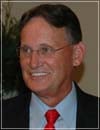
Larry Criss

Dead And Alive

Colossians 3:3
Larry Criss November, 30 2014 Audio
0 Comments
Larry Criss
Larry Criss November, 30 2014

Sermon Transcript

Auto-generated transcript • May contain errors

100%
As we've already mentioned, we
have a rare and blessed privilege today of observing both ordinances
that Christ, the captain of our salvation, our master, gave to
his church that last Passover that he observed with his disciples
before he instituted the Lord's Supper. He did so just hours before he
left that upper room and went to the garden where Judas betrayed
him. And he shortly thereafter became
our Passover. What that pictured, Christ crucified
for us. And we'll observe this ordinances,
we'll partake of it, as our Lord commanded that we do, not with
any trappings of man-made religion, not trying to make it attractive
or appeal to the flesh. I want, prior to observing the
Lord's Supper, go back and change clothes, and put on my clergyman
garb, and try to speak in a different tone than I normally do, or speak
to you in Latin, and say abracadabra, the bread becomes his body, and
the wine literally becomes his blood. That's nonsense. No, it's
bread, unleavened bread. and it's wine. They're symbolic. Our Lord told the woman in John
4, the Samaritan woman, that lady, woman, he said, you worship
you know not what. Those that really worship God,
that truly worship God, worship him in spirit and in truth. God seeketh such to worship him. In true worship, think about
this, in true worship, nothing appeals to the flesh. In true worship, nothing appeals
to the flesh. Whoa, now wait a minute. 90% of what's going on in the churches
around us, everything's geared. I mean everything is geared to
appeal to the flesh. And you're saying that that's
not true worship? That's exactly what I'm saying.
That's what Christ said. Nothing appeals to the flesh.
Our Lord in another place, John 6 said, it is the Spirit, God's
Spirit, that quickeneth, that means that gives life, the flesh. The flesh. Louis, that's your
flesh. That's my flesh. That means all
that we can do, everything that we can do, as religious as we
can act. And I declare Fallen man has
a knack for acting religious, can he? Oh my, he can act so
pious, so pious. And our Lord said, you know what
all man's religious ceremonies, all of that rigmarole, all of
that religious activity, He said, you know what it profits that
man? Nothing. Nothing. My, my. It is the Spirit again,
he said, that quickeneth the flesh, profits nothing. We'll observe the Lord's Supper
as Christ commanded us to observe it, simply and without fanfare. I'll read those few verses every
time we observe the Lord's Table in 1 Corinthians 11. Paul said,
I deliver done to you that which also I received of the Lord Jesus. And simply taking the wine representing
His blood, the bread representing His body, we remember Him. We remember Him that loved us
and gave Himself for us. Likewise, in believers' baptism,
the last thing our Lord said to His disciples before He ascended
back to glory, back to the Father in royal majesty, Go into all
the world and preach the gospel to every creature. What else? Be psychiatrists. Be counselors. Be good businessmen. No. Preach. That's all. You mean when God calls a man
to preach, that's all he does? Well, isn't that a marvel? Yes,
go into all the world and preach the gospel to every creature. He that believeth first and is
baptized shall be saved. And will do so by what baptism truly is. It's a burial. It's a burial. That's why we don't sprinkle
folks with a few drops of water. That's not a burial. We read
it in Romans 6 earlier. We'll read it again in these
first few verses in Colossians 3. That's why it's by immersion. Immersion. You can read certain
theological books and I imagine even in dictionary. In a dictionary's definition
of baptism you'll read that immersion is a mode of baptism. Immersion is one mode of baptism. No it's not. Immersion is baptism. Nothing else truly is baptism
unless that person professing faith in Christ is buried, is
immersed just like our Lord Jesus was. He came to Jordan There
was much water there. It's a burial. Look here in Galatians
chapter 2 verse 12. Galatians 2 and 12. Buried with
him, same thing we read in Romans. Buried with him, that is Christ,
in baptism, wherein also ye are risen with him through the faith
of the operation of God who hath raised him from the dead. in these blessed ordinances. We see especially man's tendency to run from one
extreme to the other. We see that in other areas of
our lives, in politics, men run to the extreme left or the extreme
right? Extremely liberal or conservative? It seems that he's incapable
of keeping a balance, staying centered. But that is especially
true in matters of religion, and especially true concerning
these two ordinances Christ gave to his church. Many teach, many
teach, and it's not just the Catholics. that these are means
of grace. They call them sacraments, right,
Joe? And what they mean by that, that
partaking of the Lord's Supper and baptism are means of grace. teaching that grace is actually
conferred on those who partake of these ordinances. That by
doing so, that some magical way, grace actually is conferred on
them. Absolutely not. Absolutely not. Both are to be observed by those
who have already experienced God's grace. Remember in Acts chapter 2 when
Peter preached unto other disciples and men under conviction of sin
said, what must we do? What shall we do? Remember what
Peter said? Believe on the Lord Jesus Christ. And we read on down in the chapter,
as many as believed were baptized. Not the other way around. They
believed and then as believers they were baptized. This is the
one way we confess to the world and identify with God's people.
This is the scriptural way we profess our faith in Christ by
following Him in believers' baptism. Not walking up an aisle. and
reciting the sinner's prayer. No, we confess our faith in Him
when we enter the watery grave. If Megan Santos, this morning,
or anyone else for that matter, goes into the water and is not
a believer before they do so, has not already experienced God's
grace beforehand, they won't be a believer afterwards. They'll
come out exactly as they went in, an unbeliever, a wet unbeliever,
but still an unbeliever. Turn, if you will, and we'll
come back to the Galatians. Turn, if you will, to 1 Peter
chapter 3. 1 Peter chapter 3. Speaking of baptism, He says
in verse 21, the like figure were unto even baptism doth also
now save us. And Peter tells us exactly what
he means by that and what he doesn't mean by that. Baptism
doth also now save us, not the putting away of the filth of
the flesh, but the answer of a good conscience toward God
by the resurrection of Jesus That's what baptism is a picture
of. Though baptism does not bring
grace, is it therefore unimportant? Of course not. Anything our Lord
commanded cannot be unimportant. He commanded those that believe
on Him to be baptized, as we just read in 1 Peter. It's the
answer of a good conscience toward God. Is that important? Is that
important? How important is it to you, child
of God, to have a clear conscience before God? How important is
it to you to lie down tonight and look back over how you spent
this day? Recalling the things you thought,
the things you said, the things you did. My soul, if you didn't
have your hope in Jesus Christ himself, you'd be a goner. You'd be lost. But you look back
over the day and not denying that in word, in thought, in
actual deed, I've sinned. There's nothing I've done today,
and that's including what I do right now, that's not mixed with
that's not tainted with sin. My soul. Then what hope can I
have? If that be true, my hope is this,
that I am His and He is mine. That my acceptance before God
Almighty does not depend on what I do or what I fail to do, but
it depends upon what Jesus Christ has already done. And you know
what that does? That gives this sinner a good
conscience before God. That allows me, Lester, just
to roll over fluff my pillow and sleep like a baby because
I know, I know that I am His and He is mine and nothing can
separate me from the love of God which is in Christ Jesus,
especially myself. Isn't that a comfort? Yes, that's
important. This is a picture, a symbol of
what has already taken place in a believer. that is baptism,
and identifies them with him from whom and through whom alone
the grace of God comes. Now that's important. That's
important. You've heard me say it many times,
but it's important. And I don't mind repeating myself.
Turn if you will to John's Gospel for just a moment. John's Gospel
chapter 1. John chapter 1. Is anybody interested
in the grace of God. Anybody hungering and thirsting
after real righteousness, anybody in the scriptural sense of the
word thirsty, anybody, anybody here for which the religious
activities, the hoops that religion puts you through have just left
you thirsty, has just left you without a knowledge of God, and
you're not satisfied with it anymore. Oh my soul, I wonder,
is anybody here described in that way? Anybody really wanting
to know God? Larry, Man, you're talking to me. I
went through the hula hoops. Larry did the same thing. I trotted
to altars. So the only altar I find in the
Bible is where they offered animal sacrifices. And Jesus Christ
who is our altar. the fulfillment of all those.
Therefore, they're not necessary anymore. But I trotted up and
said the sinner's prayer, repeat after me. And I repeated after
them again and again and again and again. They got sick of seeing
my face. They thought, we don't know what
to do with him. He's a hard case. He's not making
the decision so simple as we thought it would be. I was thirsty. I wanted to know God. That didn't
give me peace with God. Anybody else in that boat? Listen
to what we read here in John's Gospel, chapter 1, verse 15. John, bear witness of him, that
is John the Baptist, and he cried saying to everybody who came
to see him, this was he of whom I speak. That is Christ. He that cometh after me is preferred
before me. Preferred. He ranks higher than
I is the literal meaning. He ranks higher than I. And John was glad to have it
so. For he was before me. And of his fullness have we all
received in grace for grace. For or because the law was given
by Moses but Grace and truth came by Jesus Christ. Would you experience that true
grace of God? The grace that really does bring
salvation. Grace that gets the job done. Grace that doesn't tease you. Grace that doesn't mock your
thirsty soul and leave you thirsty still. Oh no, but grace that
reaches down to where the need is. Grace that reaches deeper
than the stain has gone and gives you a new heart. Gives you life
in Jesus Christ and speaks to you. saying such sweet words
as this to your conscience, to your heart. Thy sins, mm, thy
sins, Larry Criss, thy sins. which are many, are all forgiven
thee. O my soul, have you heard? Have
you heard what my Savior said to me? My sins are all taken
away. Glory to His name. Anybody longing
for that? Anybody desiring that? Turn,
if you will, to 2 Timothy chapter 1. 2nd Timothy chapter 1. We read
the same thing. 2nd Timothy 1 and verse 8. Paul's
last words, among his last words, before
he was executed for the testimony of
Jesus Christ, he writes to his Beloved Timothy, his son in the
faith. And he says, Be not thou therefore
ashamed of the testimony of our Lord, nor of me, his prisoner.
But be thou partaker of the afflictions of the gospel according to the
power of God, who hath saved us and called us with a holy
calling. Are you looking at this with
me? Not according to our works, not according to our works, not
according to your works or my works, but according to His own
purpose, that is God's purpose, and God's grace which was given
us in Christ Jesus before the world began. Woo, that's a jawbreaker
for the free willers, isn't it? That's a hard nut for them to
crack, isn't it, John? His grace was given us in Christ
before the world began. Look in verse 1 of chapter 2
here in 2 Timothy. Thou therefore, my son, be strong
in the grace that is in Christ Jesus. God's grace is in Him. Now turn back with me to Colossians
chapter 3 and we'll be brief. Here in chapter 3, let's read
the first four verses. Galatians chapter 3. If ye then
be risen with Christ, seek those things which are above, where
Christ setteth on the right hand of God. Set your affections,
your heart, where your treasure is. Set your affections on things
above, not on things on the earth, for you're dead. You're dead,
child of God. And your life is here with Christ
in God. When Christ, who is our life,
shall appear, then shall ye also appear with him. There's that
blessed union again. Then shall ye also appear with
him in glory. Looking at verse 3, it speaks
of being dead and alive. Dead and alive. And it speaks
of the same persons. Being dead and alive. Now we've
all seen those old westerns where the marshal comes out and tacks
a wanted poster up and it says, wanted, dead or alive. We don't care what it takes to
bring him in. Put a bullet in him, it doesn't
matter to us, dead or alive. The text doesn't say that, does
it? It says dead and alive. Believers are both. They're both. You say, Larry, that's contradictory. Only seemingly so. It's a paradox. That means a paradox is a statement
or a proposition that seemingly contradicts itself. But only
seemingly. And so it is here. Believers
are both dead and alive in Christ Jesus. Paul said, I am crucified
with Christ. I died with him. But he didn't
stop there, did he? I am crucified with Christ, nevertheless
I live. I live, and the life which I
live in the flesh, I live by the faith of the Son of God who
loved me and gave himself for me. Martha, He that liveth and
believeth in me, though he were dead, yet shall he live, and
he that believeth in me shall never die. Yes, the believer
is a paradox in so many ways. He is to himself, if to nobody
else. I like what J.C. Philpott wrote
along this line. Let me share a few of his words
with you. The title of this article is
The Company of Two Armies. And he's referring to a verse
in the Song of Solomon where it represents the believer with
two natures at constant warfare, two armies. Philpott wrote, are
you not often a mystery to yourself? You're warm one moment and you're
cold the next. Man, he's got me figured out. You're abasing yourself one half
hour and exalting yourself the following. You're brought down
to nothingness, covered with shame and confusion, on your
knees before you leave your room, filled with pride and self-importance
before you get down the stairs. My soul, the flesh lusteth against
the spirit and the spirit against the flesh. And thus the spirit,
by a process which we may feel but cannot adequately describe,
leads us into the mystery of the two natures, that company
of two armies, perpetually struggling and striving against each other
in the same bosom, so that one man cannot more differ from another
than the same man differs from himself. both dead and alive,
that struggle going on within the same individual. And verse
3 here in Colossians 3 says that very thing, doesn't it? Baptism
is a picture of this very thing, life and death in Christ. Therefore, therefore, Let us
begin with Him. Christ baptism. Yes, Christ in
all things must have the preeminence. That's what Paul said in Galatians
chapter 1. Did he not? Look there in the
first chapter at verse 17. And He is before all things,
that is Christ. And by Him all things consist. He sounds like a mighty God,
doesn't He? He doesn't sound frustrated.
He doesn't sound like that he's ever on the verge of having a
panic attack because things aren't going his way. He always has
his way. Verse 18. And he is the head
of the body, the church, who is the beginning, the firstborn
from the dead, that in all things he might have the preeminence. Now with that in mind, turn to
John's Gospel again, if you will, John chapter 1. Briefly, John
chapter 1, where we read of our Lord's baptism. John knew him. They were cousins. But John says here, I knew him
after the flesh. Oh, but not as he really was.
Who he really was until God revealed that to me. It takes a divine
revelation. It did even for John. But here
in chapter 1 of John's Gospel, verse 29, The next day John seeth
Jesus, that is, John the Baptist, coming unto him, and saith, Behold,
the Lamb of God, which taketh away the sin of the world. This
is he of whom I said, After me cometh a man which is preferred
before me, for he was before me. And look what John says,
And I knew him not. Oh, I knew him as Jesus, but
I didn't know him as the mighty God. the Redeemer, the Savior
of his people. And I knew him not, but that
he should be made manifest to Israel. Therefore am I come baptizing
with water." And John bear record saying, I saw the Spirit. This
is what God said, told John how he would know that this one he
was baptizing was unlike all the others he had baptized. Because
John said, I saw the Spirit descending from heaven like a dove and it
abode upon him. That didn't happen to anybody
else. And also this, and I knew him not, but he that sent me
to baptize with water, the same said unto me, upon whom thou
shalt see the Spirit descending and remaining on him, the same
is he which baptizes with the Holy Ghost. And I saw and bear
record that this is the Son of God. made manifest, verse 31. Christ identifies with his people
as their representative and substitute without Christ fulfilling. Without
Christ fulfilling everything that his baptism pictured and
symbolized, ours would mean nothing at all. His death His burial
and His resurrection is that which gives us hope and life
and salvation full and free. Without Him, John, without Him,
there's no us. Without Him, there's nothing.
Without the bridegroom, there's no bride. There's no bride. Christ said, I have a baptism,
what his water baptism represented. He speaks up here. I have a baptism
to be baptized with, and how am I straightened till it be
accomplished? Except a corn of wheat, he said,
fall into the ground and die, it abideth alone. But if it die,
it bringeth forth much fruit. Without our glorious head being
immersed, overwhelmed, covered up in suffering. Being made sin,
we would never be made the righteousness of God in Him. The church, His
body, cannot exist without Christ, her glorious head. We're not
complete without Him. And He's not complete. Think
about this. And the Lord Jesus Christ is
not complete without us, without his church, his body, his bride. We are so inseparably united
that we're not complete without our glorious head, nor is he
complete without his body, his church, flesh of his flesh and
bone of his bone. Oh, glorious, glorious union.
John Bunyan wrote, O thou son of the blessed, grace stripped
thee of thy glory. Grace brought thee down from
heaven. Grace made thee bear such burdens
of sin, such burdens of curse as are unspeakable. Grace was
in your heart. Grace came bubbling up from thy
bleeding side. Grace was in thy tears. Grace
was in thy prayers. Grace streamed from thy thorn-crowned
brow. Grace came forth with the nails
that pierced thee, with the thorns that pricked thee. Oh, here are
unsearchable riches of grace, grace to make sinners happy,
grace to make angels wonder, and grace to make devils astonished. Hallelujah. What a Savior. Yes, thank God, Christ is all. Christ is all. I am His. The words are comforting to this
sinner's heart. Oh, the truth, a thousand times
more so. I am His. Glory to God. I am His and He is mine. All that He is, all that He did,
all His value, all His virtue, all His merit is mine and I am
His. A few weeks ago, I sat and talked
with a friend who had the misfortune of years attending a church where
he told me every Sunday when he sat there, hungering and thirsting
for the good news of the gospel, all that he ever heard was rules,
rules. and laws. All that pastor ever
did was whip him with the whip of the law. Get your act together. If you don't, you're going to
lose some reward or blah, blah, blah. And he said, Larry, I felt
miserable. I said, well, I'm not surprised.
He said, I thought to myself, man, worship shouldn't be this
way. When God's family comes together,
it should be a time of mourning. It should be a time of rejoicing. When we gather around the table
to remember our glorious redemption by our glorious Redeemer, it's
a celebration, is it not? It's a matter that gives us joy
unspeakable and full of glory. moose parts in his bulletin that
I received from him just yesterday. He had an article along this
line about a certain sect whose motto is, from Galatians chapter
2, touch not, taste not, handle not. Moose says they wrote a
popular hymn, at least popular in their circles, entitled, Touch
Not, Taste Not. Touch Not, Taste Not. Now listen
to this. This is the pledge we take today. Touch Not, Taste Not, while we
are marching on this way. Touch Not, Taste Not, we are
for temperance all the way. Touch Not, Taste Not, this is
our pledge today. Oh, my soul. And the refrain
goes like this. Marching, marching, neath the
temperance banner, singing, singing, shout aloud, Hosanna. Touch not,
taste not, see it on our banner, this is our pledge today. And
Moose said there were several verses that not only speak of
not touching alcoholic beverages, but will touch not, taste not
certain foods, like pork, or shellfish, shellfish. Will touch not, taste not tobacco
or drinks containing caffeine. Woo! Get that away from me. And
Paul says right here in Colossians 2, he's not advocating that thing. He says, don't you be into subjection
to people who teach you that. Touch not, taste not is not godly,
is not spiritual. That's the commandments of men.
That's a part of that real worship of man's religious tradition.
Paul says, don't you believe it. Don't you believe it. And thank God We do not. We do not. You remember again
when our Lord will not turn there, but when he came to John, in
Matthew's account, he came to John to be baptized. Then cometh
Jesus unto him to be baptized. My, my, my. And remembering what
that pictured, what that represented. Why was he baptized? He had no
sin to confess. The answer he gave to John. John
said, you should be baptizing me. and you come to me to baptize
you. Remember what our Lord said,
suffer it to be so now, John. Allow it to be so now, John,
for thus it becometh us to what? To fulfill all righteousness. John, this is a picture of what
I'm going to do for my people. I'm going to enter in one time
I'm going to be made sin. The billows of the wrath of a
holy God are going to roll over my head. I'm going to be immersed
in suffering for my people, but then I'm going to arise because
I will justify them. God will likewise raise me from
the dead. John, let's do it. And his baptism
was a picture of that great work which he came to do and which
he afterwards did do. It pictures his death as our
substitute, slain under the wrath of God, buried, yes, but rising
again from the dead. And you know why? We already
said so. Why was he risen from the dead? Because he accomplished our justification. being raised again, Romans 4,
because of our justification. Oh, behold him. Then cometh Jesus
to be baptized. And what is that picture? What
is that picture? Jesus comes from Nazareth to
Jordan. Seventy miles he walked. And he goes down into the water,
the God-man. my substitute, my representative,
my high priest, my advocate with the Father, my all in all. And he does so picturing this,
he shall save his people from their sins. Oh, then cometh Jesus
unto Jordan to be baptized. Behold, when the fullness of
the time was come, God sent forth his Son, made it a woman, made
under the law, to redeem them that were under the law. Then
cometh Jesus to be baptized. I come in the volume of the book
it is written of me, O God, to do thy will. And he did. He did it all. And our baptism He has identified
himself with us and ours identifies us with him. That's what we do
in baptism. We identify with him. Now listen. It's our public confession of
faith in Christ. Our faith in Christ. Identifying
ourselves with Christ and his church. You remember what Ruth
said to Naomi? When Naomi said, why don't you
do like my other daughter-in-law and go away? You remember what
Ruth said to her? And they lifted up their voice
and wept again. And she said, this is Ruth to
Naomi. Behold, thy sister-in-law is
gone back unto her people. This is Naomi, rather, speaking
to Ruth. And she says, why don't you do
the same? and gone back to her gods, returned thou after thy
sister-in-law. And Ruth said, Entreat me not
to leave thee, nor to return from following after thee. For
whither thou goest, I will go, and whither thou lodgest, I will
lodge. Thy people shall be my people,
and thy God shall be my God." Megan, that's what you're saying
this morning. That's what every believer has said. when they
entered the waters of baptism. Our confession of baptism is
our commitment to Christ and His glory and His church. And as we see baptism administered
today, let each of us pray that God will give us a renewed determination
to live as our profession, our commitment, and our baptism was
saying. Paul wrote As Christ suffered without the
gate, let us therefore go unto Him. Let us go unto Him. Let us go unto Him bearing His
reproach. Let us turn our back upon this
world and its enticements and let us turn our back upon its
religion and come out of her and be ye separate, saith the
Lord. Let us keep in remembrance the
confession of our baptism where we promised by His grace,
faithfulness to live for Him, to His honor, His glory, and
the good of His church, by which we are identified with in that
act. Paul said, God forbid that I
should glory, saving the cross of our Lord Jesus Christ, by
whom the world is crucified unto me, and I unto the world. Last of all, turn with me to
1 John chapter 3. The day is approaching without
question. John speaks of it here, in which
Christ will again identify himself with his people. Father, I want
them where I'm at. All those you gave me, all those
I redeemed, everyone that the Holy Spirit calls, I want them
with me where I'm at. And oh, he won't be ashamed. He won't be ashamed to gather
us around the throne of God and say, Father, these are my brethren. These are my brethren. They're all here, Father. They're
all here with me. And we'll not be ashamed to be
identified with Him. 1 John chapter 3, Behold, what
manner of love the Father hath bestowed upon us, that we should
be called the sons of God. Therefore the world knoweth us
not. Well, that's all right, because
it knew him not. Beloved, now are we the sons
of God, and it doth not yet appear what we shall be, but we know
that when he shall appear, we shall be like him, for we shall
see him as he is. And every man that hath this
hope in him purifieth himself, even as he is pure. He shall appear, and we shall
appear with him. an everlasting, ever-living,
ever-loving union of Christ and His Church. Heaven and earth
may fade and flee, firstborn light in gloom decline, but while
God and I shall be, I am His,
Larry Criss
About Larry Criss
Larry Criss is Pastor of Fairmont Grace Church located at 3701 Talladega Highway, Sylacauga, Alabama 35150. You may contact him by writing; 2013 Talladega Hwy., Sylacauga, AL 35150; by telephone at 205-368-4714 or by Email at: larrywcriss@mysylacauga.com
Broadcaster:

Comments

0 / 2000 characters
Comments are moderated before appearing.

Be the first to comment!

Joshua

Joshua

Shall we play a game? Ask me about articles, sermons, or theology from our library. I can also help you navigate the site.