Bootstrap
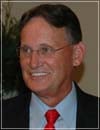
Larry Criss

The People Stood Beholding

Luke 23:23
Larry Criss October, 7 2012 Audio
0 Comments
Larry Criss
Larry Criss October, 7 2012

Sermon Transcript

Auto-generated transcript • May contain errors

100%
In Luke's Gospel, chapter 23,
we like to read, begin reading at verse 23. Read verses 23 through
25 and then skip down to verse 33. Luke 23, verse 23. And they
were instant with loud voices requiring that he might be crucified. And
the voices of them and of the chief priests prevailed. And
Pilate gave sentence that it should be as they required. And
he released unto them him that for sedition and murder was cast
into prison, whom they had desired, but he delivered Jesus to their
will. There's a depth of meaning in
those words. He delivered Jesus to their will. And we see what their will was. If you, so to speak, they exercised
their free will. Free as dictated by the depravity
of their own hearts. They hated him without a cause. And now they're given opportunity.
to vent all of that hatred on the Son of God. Verse 33. And when they were come to the
place which is called Calvary, there they crucified him and
the malefactors, the two thieves, one on the right hand and the
other on the left. Then said Jesus, Father, forgive
them, for they know not what they do. And they parted his
raiment and cast lots. through dice. And the people
stood beholding. And the rulers also with them
derided him, saying, he saved others. Let him save himself,
if he be Christ, the chosen of God. And the soldiers also mocked
him, coming to him and offering him vinegar, and saying, if thou
be the king of the Jews, save thyself. And his superscription
also was written over him in letters of Greek and Latin and
Hebrew, this is the king of the Jews. And one of the male factors
which were hanged railed on him saying, if thou be Christ, save
thyself and us. Look again at verse 33. And when
they come to the place which is called Calvary, Calvary, Matthew
told us that it's Golgotha. Golgotha, the word means the
place of a skull. It's a mount just outside of
Jerusalem. It was a place of public execution,
either by stoning the death or by crucifixion. Often, most often,
it was reserved for the execution of slaves or the vilest of criminals. It was against the law that a
Roman citizen could be crucified. It was such a horrible death
that no Roman, no matter what his crime might have been, would
ever be crucified. And the bodies of these people,
just to show how they were considered to be the vilest of the vile. They weren't even completely
buried. Usually, where they were executed,
stoned or crucified, they were buried there on Golgotha and
just barely covered up. So in time, in a short time,
Their bones would be seen all over the mountain. That's why
it's called the place of the skull. This day, this day that
we read of, that they came to Golgotha, there are thousands
of people there. There's thousands of people gathered
at Jerusalem this day because it's the Passover. It's the Passover,
one of the three great Jewish holidays, and they were commanded
to come to Jerusalem and observe the Passover. There are thousands
of people there. Mount Moriah, that's where the
temple's set. It wasn't far from Golgotha. and that's where the sacrifice
would be made. That's where the high priest
would go into the most holy place and offer the blood of the Passover
lamb. In chapter 22, verse 7, we read
this. Then came the day of unleavened
bread when the Passover must be killed. And you remember what
Paul wrote in 1 Corinthians 5? Even Christ our Passover is sacrificed
for us. We read again, verses 23 through
25, to show what the will of man
is apart from God's grace. And their will is this, crucify,
crucify. In Matthew chapter 27, we're
told that the rulers, the elders, the chief priests, had instructed
the crowd, when Pilate comes out, because this was a custom,
the governor every time, at this time of the year, as a favor
to the Jews, he would have released a criminal, whoever they chose. So the rulers knew this would
happen. So they said to the crowd, they
mingled among the crowd and said, now, when Pilate comes out, as
he usually does at this time of the year, and ask us what
prisoner we want released. Who do we want him to set free? Don't ask for Barabbas. Barabbas
was a notorious prisoner. They knew of him. They said,
don't ask for Him. When given the opportunity, shout
out. Shout out. Drown out any other
voice to the contrary and shout out, give us Barabbas. Give us Him. And crucify Jesus. Destroy Jesus is what we read
in Matthew chapter 27. Cry for Barabbas and destroy
Jesus is how Matthew records it. Destroy him. Do away with him completely.
We don't want even a trace of his memory left behind. We don't
want nothing about him left behind. We want him destroyed. We want him and everything he
taught, everything he claimed, we want it obliviated off the
face of the earth. Destroy Jesus. Just four days
before this, just four days, he'd entered Jerusalem for the
last time. Luke tells us about it in chapter
19. And his disciples lay their garments in his path as he comes
riding into Jerusalem. And they cry out, Hosanna! Blessed is he that cometh in
the name of the Lord. And the Pharisees said, Do you
hear what they're saying? Tell them to be quiet. And our
Lord said, Oh, no. If they hold their peace, the
rocks will cry out. That was just four days before. And now, now on Mount Calvary,
there's not one cry of Hosanna. There's not one cry of glory
to his name. Oh, no. There's mockings and
cursings and humiliation. They've already spit upon him,
scourged him, first at the high priest's house. They drug him
from Gethsemane to the house of the high priest. And he said,
are you the son of God the high priest demanded? And he said,
thou sayest. That was our Lord's reply. The
same as saying, yes, what you say is so, I am. And in mock
humility and ignatiation, the high priest rinses his garments
and says, we don't need any more witnesses. We've heard him out
of his own mouth. He says he's the Son of God.
What say you? And they said, he's worthy to
die. Destroying. Oh, but before it's daylight
and they take him to Pilate, they begin to make sport of him. They blindfold him and beat him. Beat him mercilessly. Blindfold
him. And they say, hey, prophet, who's
beating you? You're a prophet. Tell us who's
beating you. And they bowed the knee before
him and mocked him. These are the chief priests and
the rulers and the elders and the scribes and the Pharisees,
the religious leaders of the people. And then at daylight, they take
him and drag him to Pilate's hall. Pilate hears that he's
of Herod's jurisdiction, so he commands him to be taken to Herod.
Let Herod deal with this. And you remember what Herod did.
Look at chapter, or verse 11 of chapter 23. And Herod with
his men of war, his men of war, set him at naught, that is our
Lord, and mocked him, and arrayed him in a gorgeous robe, and sent
him again to Pilate. And after he comes to Pilate,
The third time, Pallet asked, what shall I do with Jesus? And
they say, crucify him. And we read that he's delivered
to the whole band of soldiers, at least, as we said, 500 men. And they, too, mock him and beat
him and spit covers him. where they cleared their filthy
throats and spit in the face of the Son of God. And you know
what the result of that was. Listen while I read you a verse
from Isaiah chapter 52, verse 14. As many as were astounded at
thee, his visage was so marred more than any man, and his form
more than the sons of men. He was unrecognizable. They had so beat him. He was
unrecognizable, covered in his own blood, thorns pressed into
his skull, bleeding from head to foot, and covered in the spittle
of the soldiers and the religious leaders. His vigils were so marred
more than any man. In Isaiah 53, maybe now we can
appreciate more of the words of the prophet there. He is despised
and rejected of men, a man of sorrows and acquainted with grief,
and we hid as it were our faces from him." Can't look at him. Can't bear the sight. He was
despised and we esteemed him not. And when they were come
to the place which is called Calvary, there they crucified
him. There's nothing in Scripture
more important, more profound, more wondrous than this. And at the same time, more comforting
to the believer than what's recorded here. Our Lord's sufferings as
our substitute. Our substitute. His birth, oh,
what an occasion. His birth is recorded by Matthew
and Luke, but His death, His death's recorded by all four
Gospels. Nothing on earth has ever happened. John, nothing on earth ever happened
compared to this and never will. Everything before this time and
after this time pointed to that. Prior to, it pointed forward. Afterwards, it pointed back to. Everything revolves around this. Christ himself said so. He said,
I, if I be lifted up. He was talking about his crucifixion.
If I be lifted up, I will draw all men unto me." Everyone, everyone. Just a few hours before this,
before he went to the garden where he was arrested, where
he was betrayed, he told his disciples, verily, verily, truthfully,
I say unto you, this night you shall weep and lament, but the
world will rejoice." And that's exactly what happened, didn't
it, on Mount Calvary? I mean, if you read all four
accounts by the Gospel writers, Matthew, Mark, Luke, and John,
you'll see it was a carnival atmosphere. It was a party. As we said, there were thousands
of people in Jerusalem at this time, the time of the Passover. And while they were there, while
these thousands of people were there, Christ is being crucified. So they gather on Mount Calvary
and they mock the Son of God as he dies. They have a party. Again, verse 23, they were instant
with loud voices requiring that he might be crucified. Oh, but there was a voice, there
was a voice greater than those voices. There was a voice long before
they cried requiring his death. There was that voice that said,
let there be light that had required the death of
the Son of God. That voice long before this cried,
awake, O sword, against my shepherd. This is God speaking. Awake,
O sword, against my shepherd, and against the man that is my
fellow, saith the Lord of hosts. Smite the shepherd. God himself required the death
of the Son of God. Being made sin. Now we stand
here with the multitude beholding Him as we read. The people, in
verse 35, stood beholding. and we can see the physical sufferings. We can understand something about
that. We can study crucifixion and
realize what a horrible death it was, but that's not what they
were talking about when they described, or rather referred
to the unknown suffering of Christ. That was the travail of his soul. How do you enter into, Louis? How do you describe? How can
you understand Christ himself, who did no sin, knew no sin,
in whom was no sin, being made sin? Not being treated as a sinner,
but we're told he was actually made sin itself. That's what we're told in 2 Corinthians
5 and 21. Awake, O sword, against the shepherd,
against my fellow. Smite the shepherd. Turn, if
you will, to Psalm 22. We'll read a few verses there
to illustrate this. And these are the very words spoken
by our Lord and the enemies of our Lord at the cross on Golgotha
that day. We'll not read them all. But
just a few. Look at verse 1 of Psalm 22. My God, my God, why hast thou
forsaken me? The exact words. Why art thou
so far from helping me and from the words of my roaring? Oh my
God! This is our Savior speaking to
his God. That one who he said before,
He's with me. He told the disciples, tonight
is rift and you'll all forsake me. The shepherd will be left
alone. But the Father is with me. The Father is always with
me. I always do those things that
please the Father, but not now. Not now. When He's made sin, and the darkness
that covered the earth pictured that, the anguish of soul that
he was passing through, forsaken of God. He cried out, My God,
why hast thou forsaken me? Verse 2, Oh my God, I cry in
the daytime, but thou hearest not. You won't answer me. You won't
hear me. And in the night season, I am
not silent. Why? Why? Verse 4, Our fathers trusted
in thee, they trusted, and thou didst deliver them. You helped
them. They cried unto thee and they
were delivered. They trusted in thee and were
not confounded, but I'm a worm. This is Christ speaking. I'm
a worm and no man. I am a reproach of men and despised
of the people. All they that see me laugh me
to scorn. They shoot out the lip. They
shake the head saying he trusted on the Lord that he should deliver
him. Let him deliver him seeing he delighted in him. Verse 11, be not far from me,
for trouble is near, for there is none to help. Many bulls have
come past me, strong bulls of Bashan have beset me round. Verse 3 gives the reason why,
but thou art holy. That's speaking of God. Christ says, but thou art holy,
and thou that inhabitest the praises of Israel. But thou art
holy. Back in Luke 23, we read in verse
35, and the people stood beholding. The people stood beholding. Verse
48, And the people came together to that site, beholding the things
which were done, smote their breast, and returned. And his
acquaintance and the women that followed him from Galilee stood
afar off, beholding these things. They stood beholding. Beholding him of whom Gabriel
said, Joseph, call him Jesus. He'll save his people from their
sin. Beholding that one whom the Father
sent into the world, and he replied to the Father, I come to do thy
will, O my God. The people stood beholding. What did they see? Looking through
their eyes, what did they see? What did they behold? And more,
what do you see? And what do I see? The soldiers
looking through their eyes, what do they see? Beholding the Son
of God. Matthew says, speaking of the
soldiers, setting down, they watched him there. They're the closest to the cross. They have probably been spattered
during the beatings they gave him, the scourging, the blood
from the scourging, the spikes being driven through his wrist,
and feet, they've probably been spattered with his blood. And
you know what they did? You know what they did? While
the Son of God was dying for the sins of his people, you know
what these soldiers did? They played a game. Imagine that. They played a game at the very
foot of the cross. They rolled dice to see who would
get his garment. The death of Christ meant nothing
to them. Nothing. Paul wrote concerning
this. Paul says, it's the only grounds
on which I glory. God forbids that I glory in anything
or anyone Anything else but this. I can
park right here and I can glory all of I want. All I want. All
the days of my life and throughout eternity. Here's the grounds
on which I can glory that shall never be exhausted. that shall
never grow old, that shall never fail, that shall never lose its
luster. God forbid that I should glory
save in the cross of my Lord Jesus Christ. He said, I'm determined to know
nothing save Jesus Christ and Him crucified. That was that
preacher's attitude toward the cross of Jesus Christ. So sad
to say that in most places today, preachers are doing just what
these soldiers did. They're just playing games, Todd. Pews are packed with people that
have immortal souls that when a few days are come, they're
going to be ushered in the presence of God Almighty and the man is
standing up there entertaining them, acting like a clown. a motivational speaker, a political
platform, playing games. And then on the Mount, you have
the rulers, too, don't you? The chief priests, the scribes,
the elders, the Pharisees, they're there. They wouldn't have missed
this for the world, would they? Oh, this is what they wanted.
This is what they plotted. This is the only thing that would
satisfy them. Oh, they were there, and they're
easy to recognize, aren't they? The Pharisees, they're easy to
spot. They stand out because they dress
different. The border of their garment is
enlarged, so everybody will notice. The phylactery, the little leather
pouches that had little strips of a verse of the law written
that they wore, they made them big, too, so everybody would
notice. who they are. Our Lord said, they like to stand
on street corners and pray and be heard of men. They've got
their reward. But he also said this to the
multitude, to the people, beware of the leaven of the Pharisees,
which is hypocrisy. And that last week, just prior
to this, he said, woe unto you, scribes and Pharisees, you're
hypocrites. You're hypocrites. God knows
your heart. And there they are, mocking the
Son of God. Come down from the cross, prophet,
king, God's son. Come on down and we'll believe
you. Can you imagine that? Has anyone
in history ever suffered as Christ suffered? Can you imagine at
a public execution of any man, no matter what his crime was,
and this man did nothing wrong? Can you imagine him being treated
like this, Lord? Well, we wouldn't stand for it.
It's inhumane. But not the Son of God, not Christ. They told him, we don't need
you. We know who our Father is. We're not like you. You don't
know who your Father is. Our father is Abraham. We don't
need you. They wanted their religious traditions,
but not Christ. They hated him. And when they
look, that's what they see. They see the end of that one
who seemed for a while a threat to their religious traditions. Does that apply to today? Absolutely. Folks say, I don't need Christ. I've got my decision. I've got
my baptism. You don't know how much I know.
I can recite scripture. I don't need to bow to the Son
of God. Paul said in Romans 10, they
go about to establish their own righteousness and they don't
need Him. Look at verse 39 again. There's
the thief. What does he say? What does he
say? One of the male factors which
are hanged railed on him saying, if thou be the Christ, save thyself
and us. But the other... But the other... But... Both are getting what they deserve. Both are going to stand before
God. But the other... I read that, but the other, and
I ask myself, who made me to differ from the other? And he says, Lord, Remember me. Remember me. It doesn't matter if anybody
else here remembers me or not. If you remember me, all will
be well. Remember me when you come into
thy kingdom. Oh, he was soon to discover Not
only would the Lord remember him, He had loved him with an
everlasting love. For him, he was enduring what
he was on the cross. For him, he was being made sin. For him, he entered into that
covenant with the Father before the world was ever created. For
him, he came and lived and died and ascended and took him to
glory with him when he did. The day you shall be with me
in paradise, O but the other. But this other thief, verse 39,
what did he see? Save thyself and us. And I guarantee you the emphasis
was on the us, himself, and not Christ. And that's how many think
of Christ. That's how they sing. This thief
looked at him and said, well, what have I got to lose? If it's
so, save thyself and me too. Me too. He looked over and said
to himself, oh, here's a fire escape out of hell. And doesn't
that sound familiar? Doesn't that sound familiar?
But it's not so. It's not so, is it? He's not
a fire escape out of hell for nobody. And he's not their doormat
into heaven. Nobody. No. You know who He is? Does it sound like He's either
of those things? Listen. God has highly exalted
Him and given Him a name above every name. At the name of Jesus,
King Jesus, every knee is going to bow. Does that sound like
a fire escape or a doormat? Oh, no. Oh, let's turn away from
these. Let's turn away because verse
49 tells us there were a few others on the mount that day
beholding him. A few. Oh, let's look at him
through their eyes. They're the minority and they're
easy to detect. They stand out too, not like
the Pharisees, not for those reasons. They stand out because
they're the only ones The only ones out of the thousands gathered
there, these few scattered here and there, are the only ones
that are not mocking, that are not laughing, are not telling
jokes. They're weeping and mourning
at the sight of the Lord Jesus Christ. Yes, they're confused. Yes, they're brokenhearted. Oh,
but they love Him. They love him. There's Mary, John tells us. John's Gospel, chapter 19. There
Mary stands, leaning, leaning up on John. She can hardly stand. She is so brokenhearted. Mary, his mother, looking through
her eyes, She remembers a little over 33
years before, Gabriel coming to her and said, you're going
to have a son. That holy thing that will be
conceived in you is the Son of God. He's God. That baby that you're
going to give birth to, He's God. He called his name Jesus, Mary.
He shall be great. After that, her and Joseph take
him to the temple. And Simeon comes in and takes
the babe out of her arms and says, oh, I'm looking at God's
salvation. This is God's salvation. Let
me die. And he looked at Mary and said,
this child is set for the fall and rising again of many in Israel. And a sign that she'll be spoken
against. And he said, a sword is going
to pierce your heart also. As she looks up, And he looks
down at her and he says to John, or says to Mary, woman, behold
thy son. Speaking of John. And he says
to John, man, behold thy mother. And John took Mary home to take
care of her from that day until she died. Let me ask you this question.
Standing there on the mount again, what do you say? And what do
I say? We know what they saw, what they
thought they saw, most of them, and people today. Well, what
do you say? Standing there beholding him,
By God's grace, by God's grace, the same grace given to that
thief that said, remember me. The same grace. I see this. I believe this. God made him
to be sin for me that knew no sin. And if that's true, Lord,
I'm made the righteousness of God in him. If one's true, the
other's true. I'm accepted and to be loved. And standing there, standing
there, when God allows me to do it, when God stops me and
gets my eyes off of so many other distractions. When he allows
me to come before him and consider what took place here, standing
there and looking at him, I sing, oh, near the cross, a trembling soul, love and mercy
found me. There the bright and morning
star sheds its beams around me. I hear there God's saying concerning
me. I stand there and God Almighty,
who himself said, smite the shepherd, a Waco sword against the shepherd. I also hear him say, deliver
his soul. deliver his soul from going down
to the pit. Larry Criss is not going down
to the pit. Larry Criss is not going to get
what he deserves because I've found a ransom. I'm going to
give him everything my son deserves. I'm going to clothe him in the
righteousness of my son. I'm going to bring him into my
own presence. Oh my soul. And I exclaimed with
John, Behold! Behold! Larry, behold! What manner of love the Father
had bestowed upon me that I should be called a son of God. Standing there, I behold this. Mercy and truth meeting together
and righteousness and peace kissing each other. God being just and
justifying this sinner. Standing there. Standing there. I also hear that question put
forth to me. Is it nothing to you? All you that pass by, behold
and see, is there any sufferings like my sufferings? Is it nothing
to you? And to most of these here, except
a few, it was nothing. But he asked me, is it nothing
to you? And at one time, that's exactly
what it was. It was nothing to me. Oh, but now. But. But now. He loved me and gave himself
for me. Jesus paid it all. Last of all, look at verse 46. And when Jesus had cried with
a loud voice, he said, Father, into thy hands I commend my spirit. And having said thus, he gave
up the ghost. When Jesus had cried with a loud
voice, and we know what he said, before he said, Father, into
thy hands I commend my spirit, he cried out, it is finished.
It is finished. And he bowed his head and gave
up the ghost. Father, into thy hands I command
my spirit. He who said, I'm the resurrection
and the life. He who said, Lazarus, come forth.
Young man, arise. Maid, I say unto thee, arise.
And they came forth. He said, even as the Father hath
life in himself, so he has given to the Son to have life in himself
and given him authority. He dies. He dies. And the crowd begins to disperse.
The soldiers break the legs of the two thieves so they couldn't
pull up and breathe, and they fell and suffocated. They came to do it to Christ,
but it wasn't necessary. He'd laid down his life, so they
just pierced his heart with a spear. The crowd begins to disperse.
The soldiers go back to Pilate's hold. The chief priests and the
Pharisees go back to the temple, because after all, this is a
holy day. This is a holy day. And they're thinking, it's all
over. That's the end of him. We've destroyed Jesus. Oh, they
forgot, he said, destroy this temple. And in three days, I'll
raise it up again. And he did. He did. Everyone
on Mount Calvary that day that stood there beholding Him have
stood before Him again. The soldiers were told they shall
look on Him whom they have pierced. The Pharisees, the chief priests,
they've all stood before Him again. And so will you. And so will I. Every knee shall
bow and tongue confess that he's the Lord to the glory of God
the Father. And I trust and pray that we
have by his grace already done that, have already bowed, have
already confessed every day. He's the Christ, the son of the
living God. And one day, one day, it'll be
our delight to stand before him again. to see that one who loved
us and gave himself for us and cast down our crowns at his feet and say, hallelujah, thou art
worthy. Amen.
Larry Criss
About Larry Criss
Larry Criss is Pastor of Fairmont Grace Church located at 3701 Talladega Highway, Sylacauga, Alabama 35150. You may contact him by writing; 2013 Talladega Hwy., Sylacauga, AL 35150; by telephone at 205-368-4714 or by Email at: larrywcriss@mysylacauga.com
Broadcaster:

Comments

0 / 2000 characters
Comments are moderated before appearing.

Be the first to comment!

Joshua

Joshua

Shall we play a game? Ask me about articles, sermons, or theology from our library. I can also help you navigate the site.