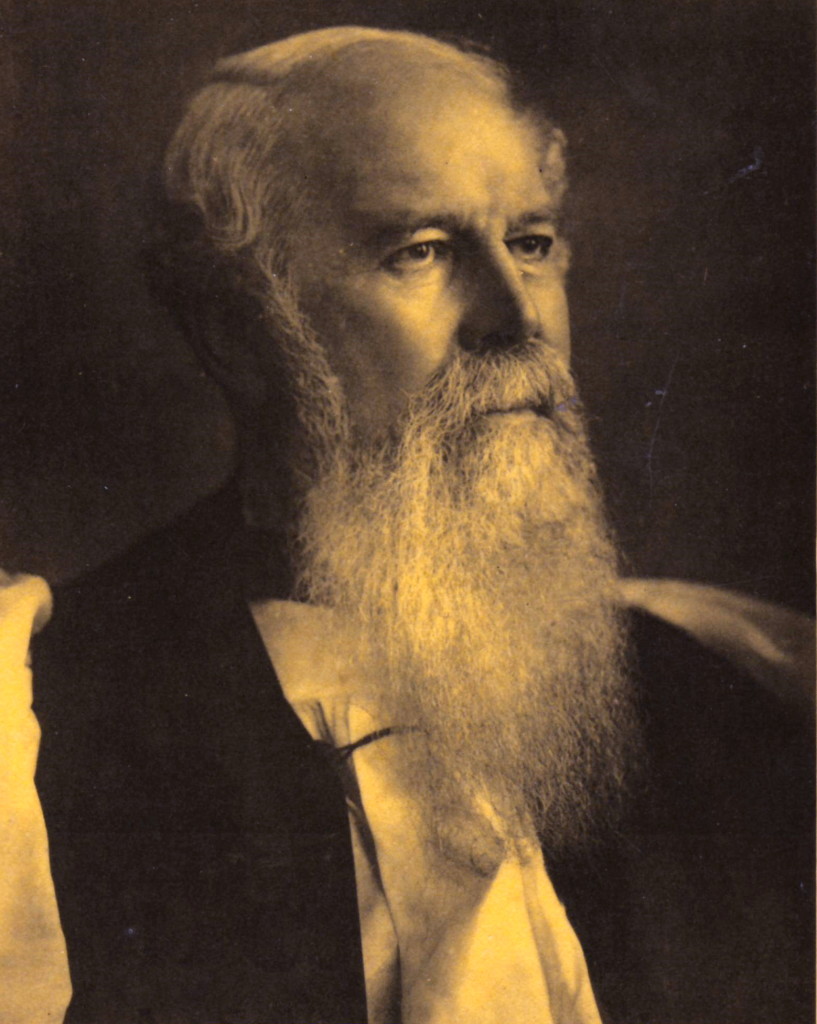
The article "Expository Thoughts on Matthew 9:27-38" by J.C. Ryle explores several theological lessons regarding faith, Christ’s compassion, and the necessity of prayer in the believer’s life. Ryle emphasizes that genuine faith can emerge from unexpected places, illustrated by the blind men who recognized Jesus as the Messiah despite their lack of physical sight, reflecting a Reformed understanding of grace transcending human conditions (e.g., Ephesians 2:8-9). He argues that Jesus, as the healer, embodies both empathy and authority over sickness, which should comfort believers amid suffering, and highlights Christ's compassion for lost souls and the urgency for Christians to reflect His concern. Ryle underscores the critical responsibility of believers to pray for laborers in the harvest, aligning with the Reformed emphasis on God’s sovereignty in salvation and the necessity of divine action in evangelism (Matthew 9:38). This serves as a call to action for Christians to cultivate compassion and prioritize prayer in their spiritual duties.
Key Quotes
“Grace is stronger than circumstances. The life of religion does not depend merely upon outward advantages.”
“Happy are they who hear His voice and let Him in.”
“Do we feel tenderly concerned about their souls? Do we deeply pity their spiritual destitution?”
“If we would do good to the world our first duty is to pray.”
What does the Bible say about faith in Christ?
The Bible emphasizes that faith in Christ can arise even in unexpected circumstances, as shown by the blind men in Matthew 9:27-38.
Matthew 9:27-38
Why is Jesus concerned about the sick?
Jesus has deep compassion for the sick, as He witnessed and experienced every form of suffering during His ministry.
Matthew 9:27-38
How can Christians respond to spiritual neglect in the world?
Christians are called to recognize the spiritual need around them and respond with compassion and a commitment to prayer.
Matthew 9:36-38, 1 Corinthians 2:16
There are four lessons in this passage, which deserve close attention. Let us mark them each in succession.
Let us mark, in the first place, that strong faith in Christ may sometimes be found where it might least have been expected. Who would have thought that two blind men would have called our Lord the "Son of David?" They could not, of course, have seen the miracles that He did. They could only know Him by common report. But the eyes of their understanding were enlightened, if their bodily eyes were dark. They saw the truth which Scribes and Pharisees could not see. They saw that Jesus of Nazareth was the Messiah. They believed that He was able to heal them.
An example like this shows us, that we must never despair of any one's salvation, merely because he lives in a position unfavorable to his soul. Grace is stronger than circumstances. The life of religion does not depend merely upon outward advantages. The Holy Spirit can give faith, and keep faith in active exercise without book-learning, without money, and with scanty means of grace. Without the Holy Spirit a man may know all mysteries, and live in the full blaze of the Gospel, and yet be lost. We shall see many strange sights at the last day. Poor cottagers will be found to have believed in the Son of David, while rich men, full of university learning, will prove to have lived and died like the Pharisees, in hardened unbelief. Many that are last will be first, and the first last. (Matt. 20:16.)
Let us mark, in the next place, that our Lord Jesus Christ has had great experience of disease and sickness. He "went about all the cities and villages" doing good.
He was an eye-witness of all the ills that flesh is heir to. He saw ailments of every kind, sort, and description. He was brought in contact with every form of bodily suffering. None were too loathsome for Him to attend to. None were too frightful for Him to cure. He was a healer of every "sickness and every disease."
There is much comfort to be drawn from this fact. We are each dwelling in a poor frail body. We never know what quantity of suffering we may have to watch, as we sit by the bedside of dear relations and friends. We never know what racking complaint we ourselves may have to submit to, before we lie down and die. But let us arm ourselves betimes with the precious thought that Jesus is specially fitted to be the sick man's friend. That great high-priest to whom we must apply for pardon and peace with God, is eminently qualified to sympathize with an aching body, as well as to heal an ailing conscience. The eyes of Him who is King of kings used often to look with pity on the diseased. The world cares little for the sick, and often keeps aloof from them. But the Lord Jesus cares specially for the sick. He is the first to visit them, and say, "I stand at the door and knock." Happy are they who hear His voice, and let Him in!
Let us mark, in the next place, our Lord's tender concern for neglected souls. "He saw multitudes" of people when He was on earth, scattered about "like sheep having no shepherd," and He was moved with compassion. He saw them neglected by those who, for the time, ought to have been teachers. He saw them ignorant, hopeless, helpless, dying, and unfit to die. The sight moved Him to deep pity. That loving heart could not see such things, and not feel.
Now what are our feelings when we see such a sight? This is the question that should arise in our minds. There are many such to be seen on every side.
There are millions of idolaters and heathen on earth—millions of deluded Muhammadans—millions of superstitious Roman Catholics. There are thousands of unsaved Protestants near our own doors. Do we feel tenderly concerned about their souls? Do we deeply pity their spiritual destitution? Do we long to see that destitution relieved? These are serious inquiries, and ought to be answered. It is easy to sneer at missions to the heathen, and those who work for them. But the man who does not feel for the souls of all unconverted people, can surely not have "the mind of Christ." (1 Cor. 2:16.)
Let us mark, in the last place, that there is a solemn duty incumbent on all Christians, who would do good to the unconverted part of the world. They are to pray for more men to be raised up to work for the conversion of souls. It seems as if it was to be a daily part of our prayers. "Pray therefore that the Lord of the harvest will send forth laborers into his harvest."
If we know anything of prayer, let us make it a point of conscience never to forget this solemn charge of our Lord's. Let us settle it in our minds, that it is one of the surest ways of doing good, and stemming evil. Personal working for souls is good. Giving money is good. But praying is best of all. By prayer we reach Him without whom work and money are alike in vain. We obtain the aid of the Holy Spirit. Money can hire workers. Universities can give learning. Congregations may elect. Bishops may ordain. But the Holy Spirit alone can make ministers of the Gospel, and raise up lay workmen in the spiritual harvest, who need not be ashamed. Never, never may we forget that if we would do good to the world, our first duty is to pray!

Comments
Your comment has been submitted and is awaiting moderation. Once approved, it will appear on this page.
Be the first to comment!