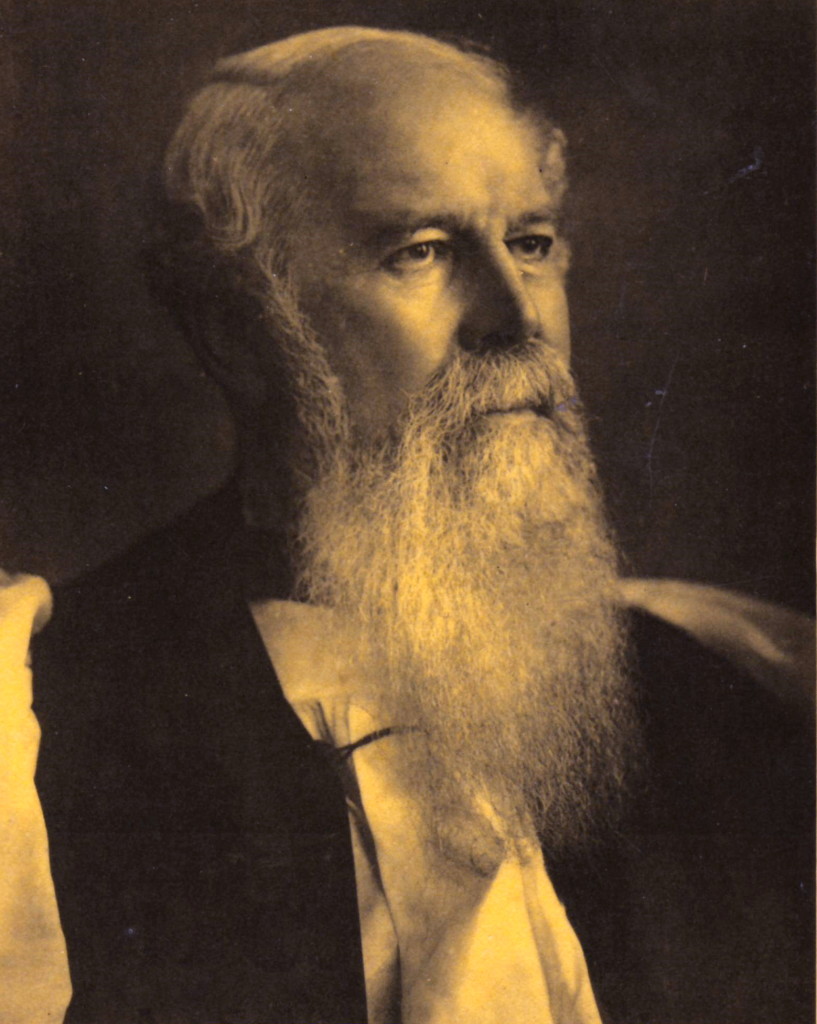
The article by J.C. Ryle on Mark 3:13-21 addresses the theological significance of the apostles' appointment and the necessity of conversion in the ministry. Ryle emphasizes that many of the apostles, such as Peter, Andrew, James, and John, were converted before their ordination, underscoring the Reformed doctrine that church leaders must be regenerate individuals to effectively communicate the Gospel. He supports his arguments with Scripture references like 1 John 1:3, which stresses the importance of communion with Christ, and 1 Corinthians 1:17, highlighting the primacy of preaching over other ministerial duties. The practical takeaway is a call for strict discernment regarding the spiritual qualifications of ministers, asserting that an unconverted minister is unfit for service and can harm the Church’s mission. This insistence on genuine conversion reflects the Reformed understanding of the necessity of a personal relationship with Christ for effective ministry.
Key Quotes
“It ought to be the same with all ministers of the Gospel—they ought to be men who have been first called by the Spirit before they are set apart for the great work of teaching others.”
“An unconverted minister is utterly unfit for his office.”
“A faithful minister... must strive to be known as the comforter, the counselor, the peacemaker, the helper and the friend of all.”
“The things of the Spirit are always foolishness to the natural man.”
What does the Bible say about the calling of the apostles?
The Bible describes how Jesus appointed the twelve apostles, emphasizing their prior calling and conversion.
Moreover, the distinct role of the apostles is highlighted, showing that they were to be with Christ, preach the Gospel, heal the sick, and cast out demons. These responsibilities demonstrate the nature of their office and underline the need for ministers today to be models of Christ's character who commit themselves to fervent preaching, genuine compassion, and diligent resistance against evil. The failure to prioritize a true calling can lead to disastrous consequences for both the ministers and the congregations they serve.
Mark 3:13-21
How do we know that ministers should be converted before ordained?
The Bible indicates that apostles were converted before their ordination, setting a precedent for ministers today.
J.C. Ryle emphasizes that it is a grave mistake for individuals to enter ministry without a genuine faith experience. Parents or others who encourage unconverted individuals to pursue ordination do a disservice, as it leads to unfaithfulness in service and misrepresentation of God's truth. True ministry is rooted in personal experience of grace, which is essential for authentic spiritual leadership. Therefore, the call to ministry must always follow a clear and personal encounter with Christ through conversion.
Mark 3:13-21
Why is the role of preaching important for ministers?
Preaching is paramount because it is the principal duty of ministers, surpassing even the administration of sacraments.
An unpreaching minister, according to Ryle, is of little use to the church. Such a minister is compared to a ‘lampless lighthouse’—offering no guidance or illumination to those in darkness. Thus, preaching must take priority over other duties, and it should be approached with reverence and urgency. Ministers are tasked with declaring the messages they have received through their spiritual encounters and studies, ensuring that God's Word is central to all church activities. This insistence on preaching is rooted in the recognition that the Gospel is the power of God for salvation (Romans 1:16).
1 Corinthians 1:17, Romans 1:16
The beginning of this passage describes the appointment of the twelve apostles. It is an event in our Lord's earthly ministry, which should always be read with deep interest. What a vast amount of benefit these few men have conferred on the world! The names of a few Jewish fishermen are known and loved by millions all over the globe, while the names of many kings and rich men are lost and forgotten. It is they who do good to souls who are had "in everlasting remembrance." (Psalm 112:6.)
Let us notice in these verses, how many of the twelve who are here named, had been called to be disciples before they were ordained apostles.
There are six, at least, out of the number, whose first call to follow Christ is specially recorded. These six are Peter and Andrew, James and John, Philip and Matthew. In short, there can be little doubt that eleven of our Lord's apostles were converted before they were ordained.
It ought to be the same with all ministers of the Gospel. They ought to be men who have been first called by the Spirit, before they are set apart for the great work of teaching others. The rule should be the same with them as with the apostles—"first converted, then ordained."
It is impossible to overrate the importance of this to the interests of true religion. Bishops and presbyteries can never be too strict and particular in the enquiries they make about the spiritual character of candidates for orders. An unconverted minister is utterly unfit for his office. How can he speak experimentally of that grace which he has never tasted himself? How can he commend that Savior to his people whom he himself only knows by name?
How can he urge on souls the need of that conversion and new birth, which he himself has not experienced? Miserably mistaken are those parents who persuade their sons to become clergymen, in order to obtain a good living, or follow a respectable profession! What is it but persuading them to say what is not true, and to take the Lord's name in vain? None do such injury to the cause of Christianity, as unconverted, worldly ministers. They are a support to the infidel, a joy to the devil, and an offence to God.
Let us notice, in the second place, the nature of the office to which the apostles were ordained. They were to "be with Christ." They were to be "sent forth to preach." They were to have "power to heal sicknesses." They were to "cast out devils."
These four points deserve attention. They contain much instruction. Our Lord's twelve apostles, beyond doubt, were a distinct order of men. They had no successors when they died. Strictly and literally speaking, there is no such thing as apostolical succession. No man can be really called a "successor of the apostles," unless he can work miracles, and teach infallibly, as they did. But still, in saying this, we must not forget, that in many things the apostles were intended to be patterns and models for all ministers of the Gospel. Bearing this in mind, we may draw most useful lessons from this passage, as to the duties of a faithful minister.
Like the apostles, the faithful minister ought to keep up close communion with Christ. He should be much "with Him." His fellowship should be "with the Son." (1 John 1:3.) He should abide in Him. He should be separate from the world, and daily sit, like Mary, at Jesus' feet, and hear His word. He should study Him, copy Him, drink into His Spirit, and walk in His steps. He should strive to be able to say, when he enters the pulpit, "that which we have seen and heard declare we unto you." (1 John 1:3.)
Like the apostles, the faithful minister ought to be a preacher. This must ever be his principal work, and receive the greatest part of his thoughts. He must place it above the administration of the sacraments. (1 Cor. 1:17.) He must exalt it above the reading of forms. An unpreaching minister is of little use to the church of Christ. He is a lampless light-house, a silent trumpeter, a sleeping watchman, a painted fire.
Like the apostles, the faithful minister must labor to do good in every way. Though he cannot heal the sick, he must seek to alleviate sorrow, and to increase happiness among all with whom he has to do. He must strive to be known as the comforter, the counselor, the peacemaker, the helper, and the friend of all. Men should know him, not as one who rules and domineers, but as one who is "their servant for Jesus' sake." (2 Cor. 4:5.)
Like the apostles, the faithful minister must oppose every work of the devil. Though not called now to cast out evil spirits from the body, he must be ever ready to resist the devil's devices, and to denounce his snares for the soul. He must expose the tendency of races, theaters, balls, gambling, drunkenness, Sabbath-profanation, and sensual gratifications. Every age has its own peculiar temptations. Many are the devices of Satan. But whatever be the direction in which the devil is most busy, there ought the minister to be, ready to confront and withstand him.
How great is the responsibility of ministers! How heavy their work, if they do their duty! How much they need the prayers of all praying people, in order to support and strengthen their hands! No wonder that Paul says so often to the churches, "Pray for us."
Let us notice, in the last place, how our Lord Jesus Christ's zeal was misunderstood. We are told that they "went out to lay hold of him, for they said, he is beside himself."
There is nothing in this fact that need surprise us. The prophet who came to anoint Jehu was called a "mad fellow." (2 Kings 9:11.) Festus told Paul that he was "mad." Few things show the corruption of human nature more clearly, than man's inability to understand zeal in religion. Zeal about money, or science, or war, or commerce, or business, is intelligible to the world. But zeal about religion is too often reckoned foolishness, fanaticism, and the sign of a weak mind. If a man injures his health by study, or excessive attention to business, no fault is found—"He is a diligent man." But if he wears himself out with preaching, or spends his whole time in doing good to souls, the cry is raised, "He is an enthusiast and righteous over-much." The world is not altered. The "things of the Spirit" are always "foolishness to the natural man." (1 Cor. 2:14.)
Let it not shake our faith, if we have to drink of the same cup as our blessed Lord. Hard as it may be to flesh and blood to be misunderstood by our relations, we must recollect it is no new thing. Let us call to mind our Lord's words, "He that loves father and mother more than me is not worthy of me." Jesus knows the bitterness of our trials, Jesus feels for us. Jesus will give us help.
Let us bear patiently the unreasonableness of unconverted men, even as our Lord did. Let us pity their blindness and lack of knowledge, and not love them one whit the less. Above all, let us pray that God would change their hearts.
Who can tell but the very persons who now try to turn us away from Christ, may one day become new creatures, see all things differently, and follow Christ themselves?

Comments
Your comment has been submitted and is awaiting moderation. Once approved, it will appear on this page.
Be the first to comment!