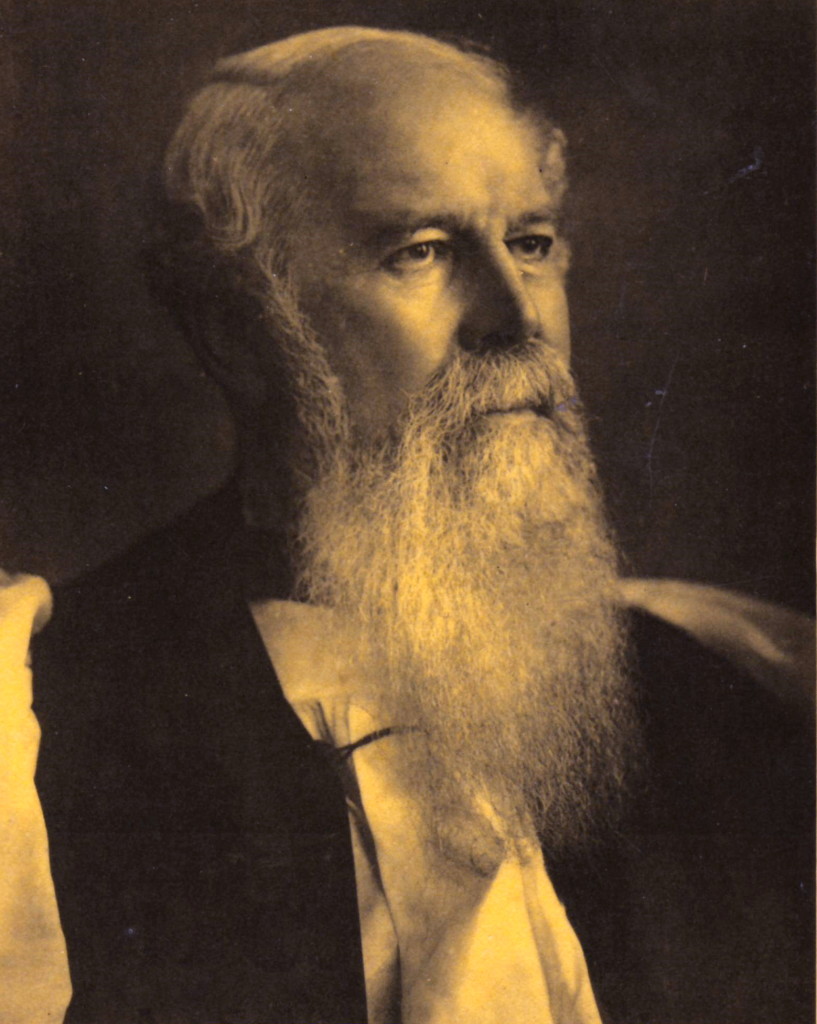
The main theological topic addressed in J.C. Ryle's article on Mark 11:22-26 is the nature and significance of faith, particularly in the context of prayer and forgiveness. Ryle argues that genuine faith enables believers to overcome significant challenges and should be a defining characteristic of their prayers. He emphasizes the necessity of aligning one’s requests with God’s will and notes that faith, while related to justifying faith, serves a broader purpose in a believer’s life, demonstrating confidence in God’s character and promises. Ryle supports his points by referencing James 1:6 and Hebrews 11, noting that effective prayer arises from both faith and a forgiving spirit, reinforcing the importance of relational integrity as a criterion for divine acceptance of prayers. He concludes that a lack of forgiveness can hinder one’s prayers and thus suggests that cultivating a forgiving heart is essential for experiencing God’s grace and answering prayers.
Key Quotes
“Faith shall enable a man to accomplish works and overcome difficulties as great and formidable as the removing of a mountain and casting it into the sea.”
“We cannot really feel the sinfulness of the sins we ask to have pardoned if we cherish malice towards our fellow men.”
“The value of our prayers depends exceedingly on the state of mind in which we offer them.”
“Let us resolve to amend our ways in this matter. Let us determine by God's grace to forgive even as we hope to be forgiven.”
What does the Bible say about faith?
The Bible emphasizes that faith is crucial for overcoming difficulties and receiving answers to prayer, as seen in Mark 11:22-26.
Moreover, faith is intricately linked to justification, though distinct in operation. Justifying faith is that trust in Christ’s atonement that grants peace with God, while the faith discussed in Mark speaks of a more general trust that believers place in God's promises. This faith fosters a deeper relationship with God, guiding believers in their walk with Christ, and is essential for spiritual growth and understanding of God's character. As believers cultivate their faith, they gain strength in various aspects of their lives, including peace, hope, and resilience in the face of trials.
Mark 11:22-26, James 1:6
How do we know that forgiveness is important for Christians?
Forgiveness is essential for Christians, as demonstrated by Jesus' teaching that prayers are not heard without a forgiving heart (Mark 11:25).
This is not merely a suggestion but a fundamental requirement for true Christian living. Jesus links the act of forgiveness with our own reception of divine mercy, highlighting the necessity of embodying a forgiving spirit. The Lord's Prayer further reinforces this concept, wherein we petition God to forgive us our sins as we forgive those who sin against us. This reciprocal relationship serves as a daily reminder of the grace we have received and the grace we are called to extend to others. By embracing forgiveness, we reflect the character of Christ and align our hearts with His, thus nurturing our spiritual growth and community harmony.
Mark 11:25, Matthew 6:12
Why is faith important for Christians?
Faith is vital for Christians as it underpins their hope, joy, and obedience in service to Christ (Mark 11:22-26).
Moreover, the act of believing is not limited to justifying faith that brings us into a relationship with God, but also extends into a daily reliance on His sovereignty and goodness. The relationship between faith and obedience is paramount; as each believer grows in faith, they become more equipped to serve and glorify God. Regularly seeking growth in faith through prayer, scripture study, and community encourages believers to embrace the fullness of life offered through Christ. Thus, cultivating faith is essential for overall spiritual well-being and productive living.
Mark 11:22-26, Hebrews 11
Let us learn from these words of our Lord Jesus Christ, the immense importance of faith.
This is a lesson which our Lord teaches first by a proverbial saying. Faith shall enable a man to accomplish works, and overcome difficulties, as great and formidable as the "removing of a mountain, and casting it into the sea." Afterwards the lesson is impressed upon us still further, by a general exhortation to exercise faith when we pray. "What things soever you desire, when you pray, believe that you receive them, and you shall have them." This promise must of course be taken with a reasonable qualification. It assumes that a believer will ask things which are not sinful, and which are in accordance with the will of God. When He asks such things, he may confidently believe that his prayer will be answered. To use the words of James, "Let him ask in faith, nothing wavering." (James 1:6.)
The faith here commended must be distinguished from that faith which is essential to justification. In principle undoubtedly all true faith is one and the same. It is always trust or belief. But in the object and operations of faith, there are diversities, which it is useful to understand. Justifying faith is that act of the soul by which a man lays hold on Christ, and has peace with God.
Its special object is the atonement for sin which Jesus made on the cross. The faith spoken of in the passage now before us is a grace of more general signification, the fruit and companion of justifying faith, but still not to be confounded with it. It is rather a general confidence in God's power, wisdom, and goodwill towards believers. And its special objects are the promises, the word, and the character of God in Christ.
Confidence in God's power and will to help every believer in Christ, and in the truth of every word that God has spoken, is the grand secret of success and prosperity in our religion. In fact, it is the very root of saving Christianity. "By it the elders obtained a good report." "He that comes unto God must believe that He is, and that He is a rewarder of those who diligently seek Him." To know the full worth of it in the sight of God, we should often study the eleventh chapter of the Epistle to the Hebrews.
Do we desire to grow in grace, and in the knowledge of our Lord Jesus Christ? Do we wish to make progress in our religion, and become strong Christians, and not mere babes in spiritual things? Then let us pray daily for more faith, and watch our faith with most jealous watchfulness. Here is the corner-stone of our religion. A flaw or weakness here will affect the whole condition of our inner man. According to our faith will be the degree of our peace, our hope, our joy, our decision in Christ's service, our boldness in confession, our strength in work, our patience in trial, our resignation in trouble, our sensible comfort in prayer. All, all will hinge on the proportion of our faith. Happy are they who know how to rest their whole weight continually on a covenant God, and to walk by faith, not by sight. "He that believes shall not make haste." (Isaiah. 28:16.)
Let us learn, for another thing, from these verses, the absolute necessity of a forgiving spirit towards others. This lesson is here taught us in a striking way. There is no immediate connection between the importance of faith, of which our Lord had just been speaking, and the subject of forgiving injuries. But the connecting link is prayer. First we are told that faith is essential to the success of our prayers. But then it is added, no prayers can be heard which do not come from a forgiving heart. "When you stand praying, forgive, if you have ought against any, that your Father also which is in heaven may forgive you your trespasses."
The value of our prayers, we can all understand, depends exceedingly on the state of mind in which we offer them. But the point before us is one which receives far less attention than it deserves. Our prayers must not only be earnest, fervent, and sincere, and in the name of Christ. They must contain one more ingredient besides. They must come from a forgiving heart. We have no right to look for mercy, if we are not ready to extend mercy to our brethren. We cannot really feel the sinfulness of the sins we ask to have pardoned if we cherish malice towards our fellow men. We must have the heart of a brother toward our neighbor on earth, if we wish God to be our Father in heaven. We must not flatter ourselves that we have the Spirit of adoption if we cannot bear and forbear.
This is a heart-searching subject. The quantity of malice, bitterness, and party spirit among Christians is fearfully great. No wonder that so many prayers seem to be thrown away and unheard. It is a subject which ought to come home to all classes of Christians. All have not equal gifts of knowledge and utterance in their approaches to God. But all can forgive their fellow-men. It is a subject which our Lord Jesus Christ has taken special pains to impress on our minds. He has given it a prominent place in that pattern of prayers, the Lord's prayer. We are all familiar from our infancy with the words, "forgive us our trespasses as we forgive them that trespass against us." Well would it be for many, if they would consider what those words mean!
Let us leave the passage with serious self-inquiry. Do we know what it is to be of a forgiving spirit? Can we forgive the injuries that we receive from time to time in this evil world? Can we pass over a transgression and pardon an offence? if not, where is our Christianity? If not, why should we wonder that our souls do not prosper? Let us resolve to amend our ways in this matter. Let us determine by God's grace to forgive, even as we hope to be forgiven. This is the nearest approach we can make to the mind of Christ Jesus. This is the character which is most suitable to a poor sinful child of Adam. God's free forgiveness of sins is our highest privilege in this world. God's free forgiveness will be our only title to eternal life in the world to come. Then let us be forgiving during the few years that we are here upon earth.

Comments
Your comment has been submitted and is awaiting moderation. Once approved, it will appear on this page.
Be the first to comment!