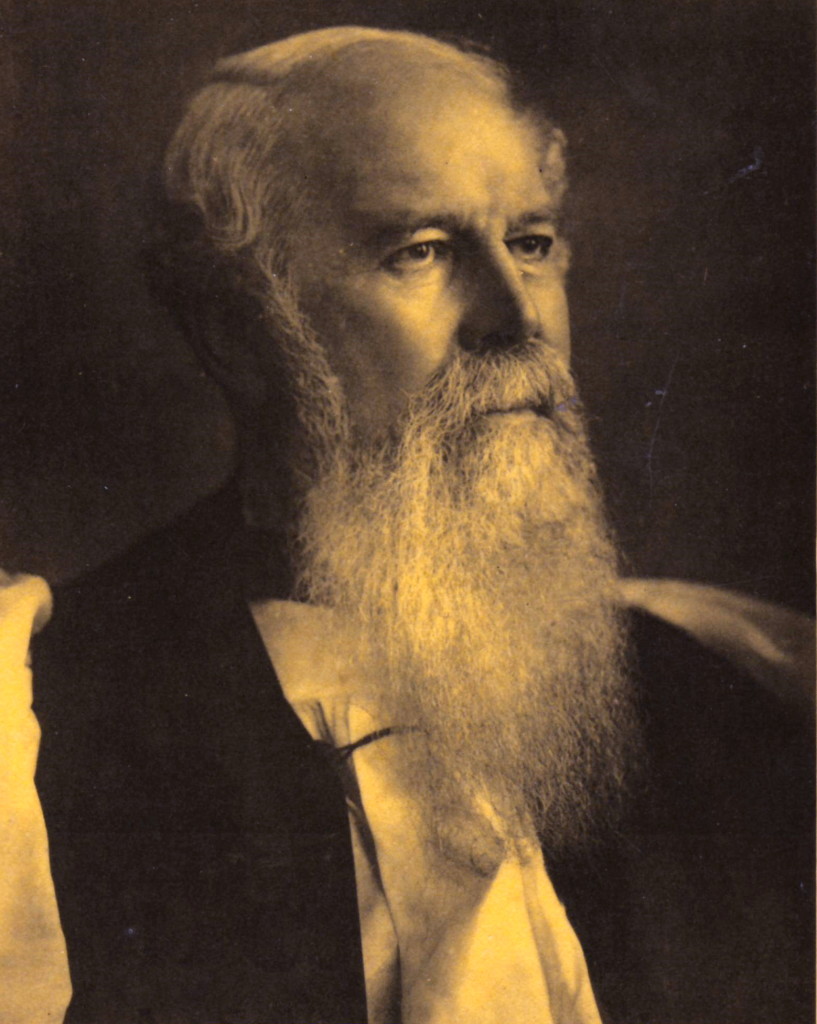
The theological focus of J.C. Ryle's exposition on John 5:40-47 primarily revolves around the rejection of Jesus Christ by the Jewish leadership, emphasizing human unwillingness to come to Christ for salvation. Ryle argues that the crux of unbelief lies not in God's decree or limitations of Christ’s redemptive work but in man's innate refusal, often stemming from pride, love of sin, and desire for worldly approval. He supports this contention with Scripture references, including John 3:19, which highlights the preference of darkness over light, and Matthew 23:37, where Jesus expresses a desire to gather the disbelieving Jews. The practical significance of Ryle's teachings underscores the importance of sincerity and honesty in one's faith, recognizing that true belief requires a heartfelt desire for God's honor above all else.
Key Quotes
“You will not come to me that you might have life. These words are a golden sentence which ought to be engraved in our memories and treasured up in our minds.”
“The unconverted are what they are because they have no will to be better.”
“True faith does not depend merely on the state of man's head and understanding but on the state of his heart.”
“Had you believed Moses you would have believed me—for he wrote of me.”
What does the Bible say about coming to Christ for salvation?
The Bible emphasizes that the lack of will to come to Christ for salvation is what ultimately leads many to be lost.
John 5:40, 1 John 5:11
How do we know that Christ's redemptive work is sufficient?
Scripture asserts that Christ's atonement is sufficient for all mankind, leaving no one excluded from the opportunity for salvation.
Romans 8:32
Why is sincerity important in seeking true faith?
Sincerity is crucial in faith; without a genuine desire for God's praise, true belief cannot flourish.
John 5:44
What does Jesus say about Moses and the Old Testament?
Jesus affirms that Moses wrote the Old Testament, emphasizing its authenticity and divine inspiration.
John 5:46-47
This passage concludes our Lord Jesus Christ's wondrous defense of His own divine mission. It is a conclusion worthy of the defense, full of heart-searching appeals to the consciences of His enemies, and rich in deep truths. A mighty sermon is followed by a mighty application.
Let us mark, in this passage, the reason why many souls are lost. The Lord Jesus says to the unbelieving Jews—"You will not come to me that you might have life."
These words are a golden sentence, which ought to be engraved in our memories, and treasured up in our minds. It is lack of will to come to Christ for salvation that will be found, at last, to have shut the many out of heaven. It is not men's sins. All manner of sin may be forgiven. It is not any decree of God. We are not told in the Bible of any whom God has only created to be destroyed. It is not any limit in Christ's work of redemption. He has paid a price sufficient for all mankind. It is something far more than this. It is man's own innate unwillingness to come to Christ, repent, and believe. Either from pride, or laziness, or love of sin, or love of the world, the many have no mind, or wish, or heart, or desire to seek life in Christ. "God has given to us eternal life, and this life is in his Son." (1 John 5:11.) But men stand still, and will not stir hand or foot to get life. And this is the whole reason why many of the lost are not saved.
This is a painful and solemn truth, but one that we can never know too well. It contains a first principle in Christian theology. Thousands, in every age, are constantly laboring to shift the blame of their condition from off themselves.
They talk of their inability to change. They tell you complacently, that they cannot help being what they are! They know, undeniably, that they are wrong, but they cannot be different! It will not do. Such talk will not stand the test of the Word of Christ before us. The unconverted are what they are because they have no will to be better. "Light has come into the world, and men love darkness rather than light." (John 3:19.) The words of the Lord Jesus will silence many—"I would have gathered you, and you would not be gathered." (Matt. 23:37.)
Let us mark, secondly, in this passage, one principal cause of unbelief. The Lord Jesus says to the Jews, "How can you believe which receive honor one of another, and seek not the honor that comes of God only?" He meant by that saying, that they were not honest in their religion. With all their apparent desire to hear and learn, they cared more in reality for pleasing man than God. In this state of mind they were never likely to believe.
A deep principle is contained in this saying of our Lord's, and one that deserves special attention. True faith does not depend merely on the state of man's head and understanding, but on the state of his heart. His mind may be convinced. His conscience may be pierced. But so long as there is anything the man is secretly loving more than God, there will be no true faith. The man himself may be puzzled, and wonder why he does not believe. He does not see that he is like a child sitting on the lid of his box, and wishing to open it, but not considering that his own weight keeps it shut. Let a man make sure that he honestly and really desires first the praise of God. It is the lack of an honest heart which makes many stick fast in their false religion all their days, and die at length without peace. Those who complain that they hear, and approve, and assent, but make no progress, and cannot get any hold on Christ, should ask themselves this simple question—"Am I honest? Am I sincere? Do I really desire first the praise of God?"
Let us mark, lastly, in this passage, the manner in which Christ speaks of MOSES. He says to the Jews, "Had you believed Moses you would have believed me—for he wrote of me."
These words demand our special attention in these latter days. That there really was such a person as Moses—that he really was the author of the writings commonly ascribed to him—on both these points our Lord's testimony is distinct. "He wrote of me." Can we suppose for a moment that our Lord was only accommodating Himself to the prejudices and traditions of His hearers, and that He spoke of Moses as a writer, though He knew in His heart that Moses never wrote at all? Such an idea is profane. It would make out our Lord to have been dishonest. Can we suppose for a moment that our Lord was ignorant about Moses, and did not know the wonderful discoveries which learned men, falsely so called, have made in the nineteenth century?
Such an idea is ridiculous blasphemy. To imagine the Lord Jesus speaking ignorantly in such a chapter as the one before us, is to strike at the root of all Christianity. There is but one conclusion about the matter. There was such a person as Moses. The writings commonly ascribed to him were written by him. The facts recorded in them are worthy of all credit. Our Lord's testimony is an unanswerable argument. The skeptical writers against Moses and the Pentateuch have greatly erred.
Let us beware of handling the Old Testament irreverently, and allowing our minds to doubt the truth of any part of it, because of alleged difficulties. The simple fact that the writers of the New Testament continually refer to the Old Testament, and speak even of the most miraculous events recorded in it as undoubtedly true, should silence our doubts. Is it at all likely, probable, or credible, that we of the nineteenth century are better informed about Moses than Jesus and His Apostles? God forbid that we should think so! Then let us stand fast, and not doubt that every word in the Old Testament, as well as in the New, was given by inspiration of God.

Comments
Your comment has been submitted and is awaiting moderation. Once approved, it will appear on this page.
Be the first to comment!