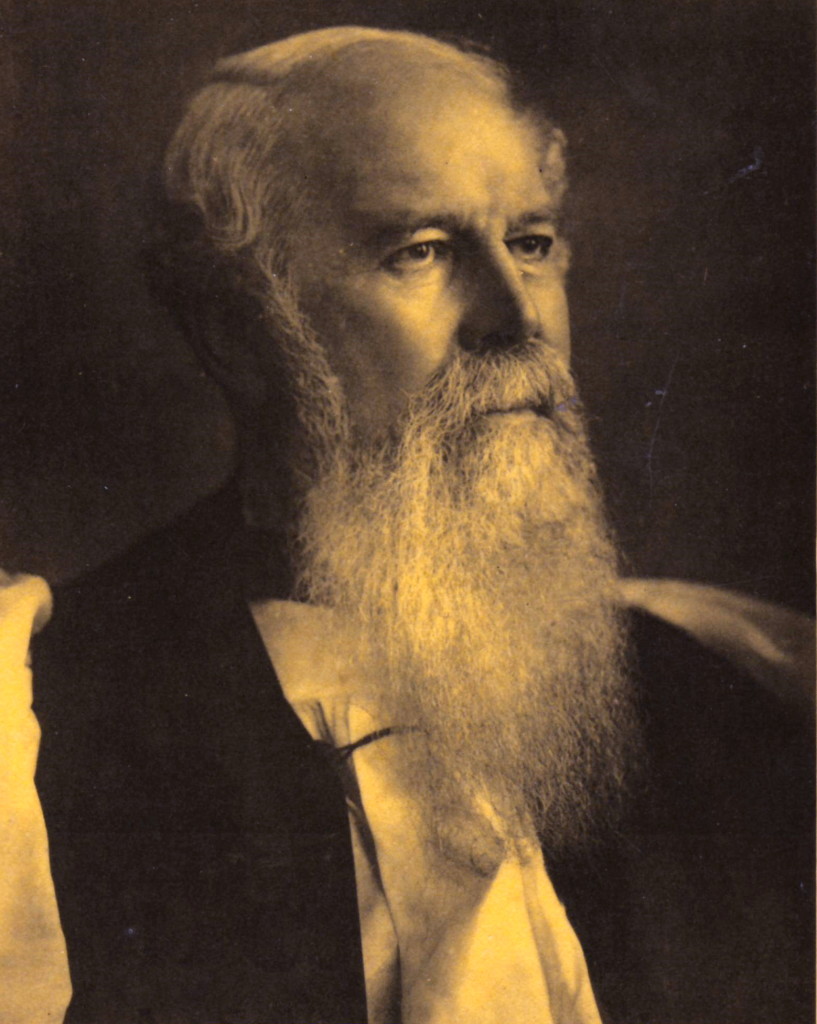
The article by J.C. Ryle addresses the theological significance of Christ’s resurrection, as illustrated through the account of Lazarus being raised from the dead in John 12:1-11. Ryle argues that the physical reality of Lazarus's resurrection serves as a compelling testament to the authenticity of Christ's own resurrection, providing proof that believers can rely upon. He cites Luke 24:42 to emphasize the tangible, corporeal nature of Jesus’ post-resurrection appearances. The doctrinal significance is profound, affirming the assurance of believers in their own resurrection and the reliability of Christ as Mediator. Ryle also explores themes of love and devotion to Christ through Mary’s anointing of Jesus, contrasting it with the unbelief and hardness found in figures like Judas Iscariot and the chief priests, thus highlighting the ongoing struggle between faith and skepticism.
Key Quotes
“He that is not convinced by such evidence as this may as well say that he is determined to believe nothing at all.”
“A cold heart and a stingy hand will generally go together.”
“Let us thank God if we know anything of faith and can say with all our sense of weakness and infirmity, I believe.”
“Then let him that thinks he stands take heed lest he fall.”
What does the Bible say about the resurrection of Lazarus?
The Bible presents the resurrection of Lazarus as a powerful proof of Jesus' authority over death, displayed in John 12:1-11.
John 12:1-11
How do we know the resurrection of Christ is true?
The truth of Christ's resurrection is supported by multiple witnesses and parallels to Lazarus' resurrection, as noted in the Gospel accounts.
Luke 24:42, John 12:1-11
Why is the resurrection of Christ important for Christians?
The resurrection of Christ is essential for Christians as it confirms Jesus' divinity and the promise of eternal life for believers.
1 Corinthians 15:20-22, John 12:1-11
What does Mary’s anointing of Jesus symbolize?
Mary’s anointing of Jesus symbolizes deep love and gratitude towards Christ for His sacrificial love and miracles.
John 12:1-11
The chapter we have now begun finishes a most important division of John's Gospel. Our Lord's public addresses to the unbelieving Jews of Jerusalem are here brought to an end. After this chapter, John records nothing but what was said in private to the disciples.
We see, for one thing, in this passage, what abounding proofs exist of the truth of our Lord's greatest miracles.
We read of a supper at Bethany, where Lazarus "sat at the table" among the guests—Lazarus, who had been publicly raised from the dead, after lying four days in the grave. No one could pretend to say that his resurrection was a mere optical delusion, and that the eyes of the bystanders must have been deceived by a spirit or vision. Here was the very same Lazarus, after several weeks, sitting among his fellow-men with a real material body, and eating and drinking real material food. It is hard to understand what stronger evidence of a fact could be supplied. He that is not convinced by such evidence as this may as well say that he is determined to believe nothing at all.
It is a comfortable thought, that the very same proofs which exist about the resurrection of Lazarus are the proofs which surround that still mightier fact, the resurrection of Christ from the dead. Was Lazarus seen for several weeks by the people of Bethany, going in and coming out among them? So was the Lord Jesus seen by His disciples. Did Lazarus take material food before the eyes of his friends? So did the Lord Jesus eat and drink before His ascension. No one, in his sober senses, who saw Jesus take "broiled fish," and eat it before several witnesses, would doubt that He had a real body. (Luke 24:42.)
We shall do well to remember this. In an age of abounding unbelief and scepticism, we shall find that the resurrection of Christ will bear any weight that we can lay upon it. Just as He placed beyond reasonable doubt the rising again of a beloved disciple within two miles of Jerusalem, so in a very few weeks He placed beyond doubt His own victory over the grave. If we believe that Lazarus rose again, we need not doubt that Jesus rose again also. If we believe that Jesus rose again, we need not doubt the truth of His Messiahship, the reality of His acceptance as our Mediator, and the certainty of our own resurrection. Christ has risen indeed, and wicked men may well tremble.
Christ has risen from the dead, and believers may well rejoice.
We see, for another thing, in this passage, what unkindness and discouragement Christ's friends sometimes meet with from man.
We read that, at the supper in Bethany, Mary, the sister of Lazarus, anointed the feet of Jesus with precious ointment, and wiped them with the hair of her head. Nor was this ointment poured on with a niggardly hand. She did it so liberally and profusely that "the house was filled with the odor of the ointment." She did it under the influence of a heart full of love and gratitude. She thought nothing too great and good to bestow on such a Savior. Sitting at His feet in days gone by, and hearing His words, she had found peace for her conscience, and pardon for her sins. At this very moment she saw Lazarus, alive and well, sitting by her Master's side—her own brother Lazarus, whom He had brought back to her from the grave. Greatly loved, she thought she could not show too much love in return. Having freely received, she freely gave.
But there were some present who found fault with Mary's conduct, and blamed her as guilty of wasteful extravagance. One especially, an apostle, a man of whom better things might have been expected, declared openly that the ointment would have been better employed if it had been sold, and the price "given to the poor." The heart which could conceive such thoughts must have had low views of the dignity of Christ's person, and still lower views of our obligations to Him. A cold heart and a stingy hand will generally go together.
There are only too many professing Christians of a like spirit in the present day. Myriads of baptized people cannot understand zeal of any sort, for the honor of Christ. Tell them of any vast outlay of money to push trade or to advance the cause of science, and they approve of it as right and wise. Tell them of any expense incurred for the preaching of the Gospel at home or abroad, for spreading God's Word, for extending the knowledge of Christ on earth, and they tell you plainly that they think it waste. They never give a farthing to such objects as these, and count those people fools who do. Worst of all, they often cover over their own backwardness to help purely Christian objects, by a pretended concern for the poor at home. Yet they find it convenient to forget the well known fact that those who do most for the cause of Christ are precisely those who do most for the poor.
We must never allow ourselves to be moved from "patient continuance in well-doing," by the unkind remarks of such people. It is vain to expect a man to do much for Christ, when he has no sense of debt to Christ. We must pity the blindness of our unkind critics, and work on. He who pleaded the cause of loving Mary, and said, "Let her alone," is sitting at the right hand of God, and keeps a book of remembrance. A day is soon coming when a wondering world will see that every cup of cold water given for Christ's sake, as well as every box of precious ointment, was recorded in heaven, and has its rewards. In that great day those who thought that anyone could give too much to Christ will find they had better never have been born.
We see, lastly, in this passage, what desperate hardness and unbelief there is in the heart of man.
Unbelief appears in the chief priests, who "consulted that they might put Lazarus to death." They could not deny the fact of his having been raised again. Living, and moving, and eating, and drinking within two miles of Jerusalem, after lying four days in the grave, Lazarus was a witness to the truth of Christ's Messiahship, whom they could not possibly answer or put to silence. Yet these proud men would not give way. They would rather commit a murder than throw down the arms of rebellion, and confess themselves in the wrong. No wonder that the Lord Jesus in a certain place "marveled" at unbelief. Well might He say, in a well-known parable, "If they believe not Moses and the Prophets, neither will they be persuaded though one rose from the dead." (Mark 6:6; Luke 16:31.)
Hardness appears in Judas Iscariot, who, after being a chosen Apostle, and a preacher of the kingdom of heaven, turns out at last a thief and a traitor. So long as the world stands this unhappy man will be a lasting proof of the depth of human corruption. That anyone could follow Christ as a disciple for three years, see all His miracles, hear all His teaching, receive at His hand repeated kindnesses, be counted an Apostle, and yet prove rotten at heart in the end, all this at first sight appears incredible and impossible! Yet the case of Judas shows plainly that the thing can be. Few things, perhaps, are so little realized as the extent of what desperate hardness and unbelief there is in the heart of man.
Let us thank God if we know anything of faith, and can say, with all our sense of weakness and infirmity, "I believe." Let us pray that our faith may be real, true, genuine, and sincere, and not a mere temporary impression, like the morning cloud and the early dew. Not least, let us watch and pray against the love of the world. It ruined one who basked in the full sunshine of privileges, and heard Christ Himself teaching every day. Then "let him that thinks he stands take heed lest he fall." (1 Cor. 10:12.)

Comments
Your comment has been submitted and is awaiting moderation. Once approved, it will appear on this page.
Be the first to comment!