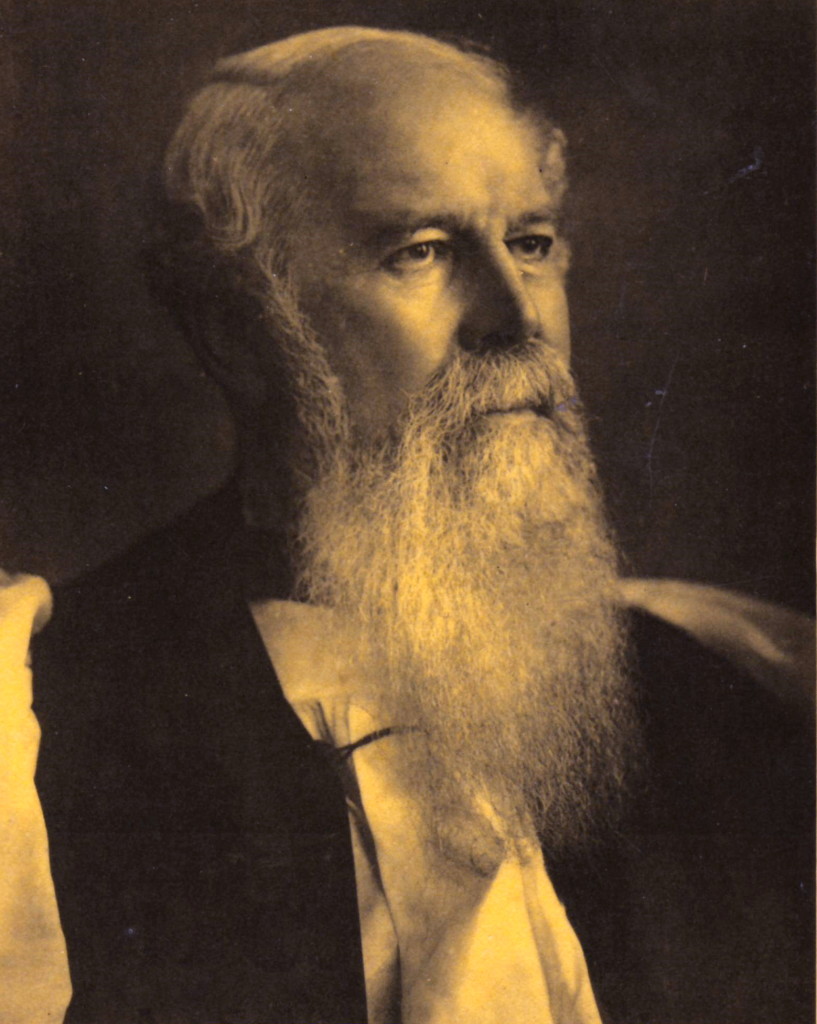
J.C. Ryle's exposition on John 20:1-10 primarily addresses the resurrection of Jesus Christ and its profound significance for believers. He emphasizes that the resurrection is foundational to the Christian faith, asserting that it confirms Christ’s sacrificial death for sin and validates the promise of justification. Ryle illustrates this through the example of Mary Magdalene, whose extraordinary love for Christ is depicted as a response to her own deep sense of sinfulness and gratitude for His grace (Luke 8:2). He argues that true appreciation of one’s debt to Christ compels fervent service and zeal in promoting His cause, contrasting this with the lukewarmness that stems from a low perception of sin. Ryle further observes the different temperaments among believers, as exemplified by Peter and John, highlighting that diversity within the Church is a reflection of God's design. Finally, he notes that ignorance can exist alongside genuine faith, demonstrating that a right heart is more important than extensive theological knowledge. This exposition encourages believers to cultivate both understanding of their sinfulness and a deep appreciation for Christ’s grace to foster active faith.
Key Quotes
“The whole of saving Christianity hinges on the two facts that Christ died for our sins and rose again for our justification.”
“She was last at His cross and first at His grave.”
“Where sin is not felt at all nothing is done...”
“The flowers in the Lord's garden are not all of one color and one scent though they are all planted by one Spirit.”
What does the Bible say about Christ's resurrection?
The Bible affirms that Christ's resurrection is vital for justification, as emphasized in John 20:1-10.
John 20:1-10, 1 Corinthians 15:17
How do we know the resurrection of Christ is true?
The resurrection is validated by eyewitness accounts and its pivotal role in scripture, particularly in the Gospels.
John 20:9, Matthew 28:5-7, Acts 1:3
Why is Christ's resurrection important for Christians?
Christ's resurrection is essential for salvation and signifies victory over sin and death.
Romans 4:25, 1 Corinthians 15:20-22, 2 Corinthians 5:14-15
The chapter we have now begun takes us from Christ's death to Christ's resurrection. Like Matthew, Mark, and Luke, John dwells on these two great events with peculiar fullness and particularity. And we need not wonder. The whole of saving Christianity hinges on the two facts, that Christ died for our sins, and rose again for our justification. The chapter before our eyes deserves special attention. Of all the four evangelists, none supplies such deeply interesting evidence of the resurrection, as the disciple whom Jesus loved.
We are taught in the passage before us, that those who love Christ most are those who have received most benefit from him.
The first whom John names among those who came to Christ's sepulcher, is Mary Magdalene. The history of this faithful woman, no doubt, is hidden in much obscurity. A vast amount of needless ridicule has been heaped upon her memory, as if she was once an habitual sinner against the seventh commandment. Yet there is literally no evidence whatever that she was anything of the kind! But we are distinctly told that she was one out of whom the Lord had cast "seven devils" (Mark 16:9; Luke 8:2)—one who had been subjected in a peculiar way to Satan's possession—and one whose gratitude to our Lord for deliverance was a gratitude that knew no bounds. In short, of all our Lord's followers on earth, none seem to have loved Him so much as Mary Magdalene. None felt that they owed so much to Christ. None felt so strongly that there was nothing too great to do for Christ. Hence, as Andrews beautifully puts it—"She was last at His cross, and first at His grave. She stayed longest there, and was soonest here. She could not rest until she was up to seek Him. She sought Him while it was yet dark, even before she had light to seek Him by." In a word, having received much, she loved much; and loving much, she did much, in order to prove the reality of her love.
The case before us throws broad and clear light on a question, which ought to be deeply interesting to every true-hearted servant of Christ. How is it that many who profess and call themselves Christians, do so little for the Savior whose name they bear? How is it that many, whose faith and grace it would be uncharitable to deny, work so little, give so little, say so little, take so little pains, to promote Christ's cause, and bring glory to Christ in the world?
These questions admit of only one answer. It is a low sense of debt and obligation to Christ, which is the account of the whole matter. Where sin is not felt at all, nothing is done; and where sin is little felt, little is done. The man who is deeply conscious of his own guilt and corruption, and deeply convinced that without the death and intercession of Christ he would sink deservedly into the lowest hell, this is the man who will spend and be spent for Jesus, and think that he can never do enough to show forth His praise. Let us daily pray that we may see the sinfulness of sin, and the amazing grace of Christ, more clearly and distinctly. Then, and then only, shall we cease to be cool, and lukewarm, and slovenly in our work for Jesus. Then, and then only, shall we understand such burning zeal as that of Mary; and comprehend what Paul meant when he said, "The love of Christ constrains us; because we thus judge that if One died for all, then were all dead—and that He died for all, that they which live should not henceforth live unto themselves, but unto Him which died for them, and rose again." (2 Cor. 5:14, 15.)
We are taught, secondly, in these verses, that there are widely different temperaments in different believers.
This is a point which is curiously brought out in the conduct of Peter and John, when Mary Magdalene told them that the Lord's body was gone. We are told that they both ran to the sepulcher; but John, the disciple whom Jesus loved, outran Peter, and reached the empty grave first. Then comes out the difference between the two men. John, of the two more gentle, quiet, tender, reserved, retiring, deep-feeling, stooped down and looked in, but went no further. Peter, more hot, and zealous, and impulsive, and fervent, and forward, cannot be content without going down into the sepulcher, and actually seeing with his own eyes. Both, we may be sure, were deeply attached to our Lord. The hearts of both, at this critical juncture, were full of hopes, and fears, and anxieties, and expectations, all tangled together. Yet each behaves in his own characteristic fashion. We need not doubt that these things were intentionally written for our learning.
Let us learn, from the case before us, to make allowances for wide varieties in the inward character of believers. To do so will save us much trouble in the journey of life, and prevent many an uncharitable thought. Let us not judge brethren harshly, and set them down in a low place, because they do not see or feel things exactly as we see and feel, and because things do not affect or strike them just as they affect and strike us. The flowers in the Lord's garden are not all of one color and one scent, though they are all planted by one Spirit.
The subjects of His kingdom are not all exactly of one tone and temperament, though they all love the same Savior, and are written in the same book of life. The Church of Christ has some in its ranks who are like Peter, and some who are like John; and a place for all, and a work for all to do. Let us love all who love Christ in sincerity, and thank God that they love Him at all. The great thing is to love Jesus.
We are taught, finally, in these verses, that there may be much ignorance even in true believers.
This is a point which is brought out here with singular force and distinctness. John himself, the writer of this Gospel, records of himself and his companion Peter, "As yet they knew not the Scripture, that He must rise again from the dead." How truly incredible this seems! For three long years these two leading Apostles had heard our Lord speak of His own resurrection as a fact, and yet they had not understood Him. Again and again He had staked the truth of His Messiahship on His rising from the dead, and yet they had never taken in His meaning. We little realize the power over the mind which is exercised by wrong teaching in childhood, and by early prejudices imbibed in our youth. Surely the Christian minister has little right to complain of ignorance among his hearers, when he marks the ignorance of Peter and John, under the teaching of Christ Himself.
After all we must remember that true grace, and not head knowledge, is the one thing needful. We are in the hands of a merciful and compassionate Savior, who passes by and pardons much ignorance, when He sees "a heart right in the sight of God." Some things indeed we must know, and without knowing them we cannot be saved. Our own sinfulness and guilt, the office of Christ as a Savior, the necessity of repentance and faith—such things as these are essential to salvation. But he that knows these things may, in other respects, be a very ignorant man. In fact, the extent to which one man may have grace together with much ignorance, and another may have much knowledge and yet no grace, is one of the greatest mysteries in religion, and one which the last day alone will unfold. Let us then seek knowledge, and be ashamed of ignorance. But above all let us make sure that, like Peter and John, we have grace and right hearts.

Comments
Your comment has been submitted and is awaiting moderation. Once approved, it will appear on this page.
Be the first to comment!