Bootstrap
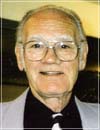
Scott Richardson

The Burnt Offering

Leviticus 1:4-5
Scott Richardson July, 7 1996 Audio
0 Comments

Sermon Transcript

Auto-generated transcript • May contain errors

100%
Turn with me this morning to
the first chapter of the book of Leviticus, and the fourth and fifth verse. Leviticus, chapter one. the fourth and fifth verse. But
let us start at the first verse. As we read together, the Lord called unto Moses. He called unto Moses, please God, to make known His will, his purpose, and his
desire is through the mouths of men called unto Moses. Raised up Moses. All of us know
the story of Moses. Great man, wasn't he? A great
man who loved God. He called him the meekest man
upon the face of the earth. called unto Moses, and spake
unto him, as one man speaks to another man." Out of the tabernacle of the
congregation, this is what he had to say. He said, Speak unto
the children of Israel. Say unto them, If any man of
you bring an offering unto the Lord, Ye shall bring your offering
of the cattle, even of the herd and of the flock." If His offering be a burnt sacrifice
of the herd, and that'll be what we're talking about this morning,
is the burnt offering. There's four or five offerings,
peace offering, meal offering, and so forth, but this here in particular is the
burnt offering. If his offering be a burnt offering,
a burnt sacrifice of the herd, let him offer a male without
blemish. He shall offer it of his own
voluntary will. at the door of the tabernacle,
which is the only place under the economy of Moses that during
the establishment of the tabernacle,
the only place that an offering could be made was at the door
of the Lord. At the door of the tabernacle
of the congregation before the Lord, that was the Lord's dwelling
place, and he shall put his hand upon the head of the burnt offering, and it shall be accepted for
him to make atonement for him. And he shall kill the bullock
before the Lord, and the priest Aaron's son shall bring the blood,
and sprinkle the blood round about upon the altar that is
by the door of the tabernacle of the congregation." Well, what I have to say this
morning, I'm just going to make a couple shots, and I want to
make them good. I want to be like my grandson. He told me the other day, When
he does something in a positive way, he uses this expression,
I nailed it. He shoots a basketball and it
goes through, he said, I nailed one. Come out there the other day
with his BB gun, and he and his dad was going
out there in the woods to see if they could find him a chip
bunk to shoot at. And so when they come back, I
said, do you see any chipmunks, Drew? He said, no, we didn't
see any. He said, Josie, that's their
dog. She'd seen them before we did,
and she'd chase them away. I said, well, what did you shoot
at? She said, I thought I'd seen one. I said, there's something
black down there. His dad said, well, that was
just a stump. just a piece of wood. Yeah, he
said, but if it had been a chipmunk, he said, I'd have nailed it. Well, that's with me. I'm just
going to make two or three shots, but shots I make, I want to nail
them. Kind of like the little boy that
we're kind of having. They used to do these things
in families. Don't do it anymore, I don't
think. Some families do, I suppose. They gather around on Saturday
night and get the family around to read the Bible and pray. And a little boy, he prayed. He said in his prayer, he said,
Lord, help the preacher to say something
tomorrow morning that I can understand. So I'm hoping that I can say
something this morning that we'll all understand, and I can nail
it down. Well, first off, this particular
passage of Scripture that I read to you and tried to emphasize,
verse 4 and 5, says that there are two things that are vital
and essential of the ceremonial law in regard to the sacrifices,
and both of them are mentioned in the text. Let me say it again
now. Two things essential. in the
sacrifices of the ceremonial law. Two things. And both of
them are mentioned in the text. Number one is this. The individual involved in bringing voluntarily a sacrifice
to the door of the tabernacle of the Lord. He must put his
hand upon the head of the burnt offering. That's the first thing. He's got to put his hand upon
the head of the victim that's about to be sacrificed. And the
second thing that is essential, He shall kill the bullock before
the Lord. He's got to put his hand upon
the head of the sacrifice, and he's got to kill that sacrifice
before the Lord. Now, the appropriation by the offerer
and the debt of the offering are fitly or inseparably joined
together. Neither of them can be overlooked. In chapter 1 here, in verse 8, Chapter 3, verse 2. He says the same thing. It says
in verse 2 of chapter 3, "...and he," that's the offerer, I said
this is essential, "...he shall lay his hand upon the head of
his offering, and kill him." at the door of the tabernacle
of the congregation." Verse 8 of the same chapter, "...and he
shall lay his hand upon the head of his offering, and kill it
before the tabernacle of the congregation." Now in chapter
4 and verse 4, And he shall bring the bullock
unto the door of the tabernacle of the congregation, and shall
lay his hand upon the bullock's head, and kill the bullock before
the Lord." Now, in verse 15 of that same chapter, "...and the elders of the congregation,"
shall lay their hands upon the head of the bullock before the
Lord, and the bullock shall be killed before the Lord." And
verse 24 of the same chapter, "...and he shall lay his hand
upon the head of the goat, and kill it in the place where they
kill the burnt offering before the Lord." It is a sin offering. Now, all through the book of
Leviticus here, the laying on of the hand and the killing of
the victim are mentioned in an immediate connection, mentioned
together, joined together, fitly framed together. He shall lay
his hand upon the head of the burnt Now, we've established
that. The Scriptures establish that
the soul that voluntarily brings a sacrifice before the
Lord must lay his hand upon the sacrifice. and he must kill the
sacrifice. But there's a whole lot that
goes on before you arrive at this point. Now, before he reaches
this point, the person who presents the offering, the bullock, has
to make a selection of the animals. He has to find the animal that
he's going to bring to present before the Lord. And it will
not be easy for him to find the right animal. Not any animal
will do. The animal that he finds shall
be a male, without blemish. It's got to be an animal without
blemish. When I say without blemish, I
mean it cannot be lame, it cannot be bruised, it cannot have any
fault or blemish in or of itself. And it must be of a certain age. And for this reason, a careful
examination must be made. So there is a lot of work that's
put into this prior to the time that you bring the animal to the door of the congregation
or to the door of the tabernacle, before you lay your hand upon
its head. There's a lot of preparation
that takes place. You've got to find the right
animal. Now, the Lord would not accept
then, nor will He now, except a sacrifice that's lame, broken,
bruised, deficient in any of its parts. He wouldn't do it
then, and he won't do it now. He requires an offering without
spot. That's what God requires. Without
blemish, without spot, without bruise, without fault, that's
what He requires. So this man who brings it, He scrutinizes. He observes. He walks around His sacrifice. He looks underneath. He looks
in His eyes. He looks in His hide, His skin. He looks Him all over real good,
not just one time, maybe two or three times, for fear that
He might miss something, because if He misses something, and brings
this victim, this offering, to the altar of God, and a blemish
is detected, automatically he's disqualified. So there's got
to be a whole lot of careful examination on the part of the
offerer concerning his offering. Now, I want you and I here this
morning who seek reconciliation with God, who seek reconciliation
with God. We need to be reconciled unto
God. Now, every member of Adam's race
needs to be reconciled unto God, but not all members of Adam's
race seek to be reconciled unto God. A lot of people, they could
care less. The world is full of people right
now, right now, this minute, right now, who do not give a
hoot or a holler as to be reconciled with God. They are indifferent,
unconcerned, spend their life in a tale that is well told,
but have no consideration of God or no consideration of their
own soul. I am speaking this morning to
those of us who seek reconciliation with God. If we seek reconciliation
with God, our seeking Even that is of God. It's not of our own
making, because if left to ourselves, we would never seek God. Does
not the Bible say that there's none seeketh after God? No, not one. But if we are in
that sacred group that seeks reconciliation with God, I call
upon us to consider whether the Lord Jesus Christ be such an
atoning sacrifice as we need and as God will accept. Is He? Now, if there's any of
you under the sound of my voice here this morning, if there is
any of you that know of any other atonement for sin, then I say
unto you, I say examine it well. And if you examine it well, as this Jew or Israelite who
went out to his herd, if you will examine it as he examined
his, I'll guarantee you that you will find a flaw and fault
in that one that you think is fit for an atonement. But concerning
the Lamb of God, concerning God's Christ, concerning Him, the Lord
Jesus Christ, the Lamb of God, I have no question this morning. that you may search and test
and try, and you will not find any blemish in him. I guarantee that. If there were
any fault in him, either of excess or of deficiency, then you might
refuse him. You might say, I've examined
him. I reject him. I found a fault in him. You,
if you could find it, you might refuse him. But since there is
nothing of that nature in him, then I pray you and I pray me
that I immediately receive him. as my atonement and my covering
for my sins. If you will look at Him, look
at Him in His deity, look at Him in His Godhead, you know
my favorite expression is that He is as much God as if He was
never man, and as much man as if He was never God. God and man in one person. If you look at his Godhead and
you look at his manhood, if you look at his life, if you look
at his suffering, if you look at his death, if you look at
his acts, you can find him holy without blemish and undefiled. And you'll be forced to say,
at the conclusion of search in him is no sin, no blemish
in him. Oh, no. He had no acquaintance
with sin. After you have well examined
his blessed person and his blessed character, if you arrive at this
conclusion, and this is the conclusion that I've arrived at, that he
is a fit and acceptable sacrifice for you to present before God,
then good. Receive him as your atonement. It's wonderful to me. and glorious thing to me, that
we're not like the Jew of old, have to go out and find us an
offering, have to go out in our field and find a bullock, supply
a bullock for an offering. That's the way the Jews had to
do. That's the way this man had to do. He said, if his offering
be a If His offering be a burnt sacrifice of the herd, let Him
offer a male without blemish. He had to go out and supply a
male bullock without blemish. But you and I, you and I, listen
to me now, God has provided Himself a sacrifice, a sacrifice you
don't have to bring. God has already provided a sacrifice
for Himself. Let me read this to you over
in the book of Genesis here, if I can find it real quick. Just thought of it. Genesis chapter 22. Now, this
is what I'm talking about. I said it's a wonderful thing
now that you don't have to find a sacrifice like the Jew who
had to supply the bullock. God has provided Himself a sacrifice
by which you may bring to Him. You don't have to go out and
find Him. God has provided Himself a sacrifice which He'll accept. Now listen to this. Isaac, verse
7, Isaac spake unto Abraham his father, and he said, My father?
And the father answered his son and said, Here I am, my son.
And he said, Behold, the fire, the wood, But where's the lamb
for a burnt offering? Where's the lamb? I see the fire.
I see the altar here. I see the wood. We've got to
have a sacrifice. Where's the lamb? Now, listen
to what it says here. Abraham said, Son, God will provide
Himself a lamb. God has provided Himself a Lamb
that He'll accept. And that Lamb is the Lamb of
God that taketh away the sin of the world. No blemish in that
Lamb that God has provided. Oh, the beauty of it is that
God will accept what He provides. God first brings to you, so you don't have to repeat the
examination. You see, he's already been examined. The Lord Jesus Christ has passed
the test, both by the hands of men and by the hands of the devil. They looked him over. from the time He was born until
the time they took Him to the tree and they examined Him inside
and outside the best that they could. And they found no fault in Him. The Bible says they found nothing
in Him. He's already been tried. and he's already been tested,
the Lamb of God. But now listen to me, there's
something else here. There's another thing apart from
the sacrifice here. We know by what we've read and
what we've said thus far, God demands the sacrifice. The Jew
had to go get one, had to be without blemish, fault, had to
be perfect before the Lord, before God accepted. I said you and I who seek to
be reconciled unto God, we have a sacrifice. We seek
to be reconciled, we have a sacrifice. God provided Himself a sacrifice,
and that's the Lord Jesus Christ. They looked him over, tried and
tested and found no fault in him. But there's one thing that
you and I got to do. What's that? We got to lay our
hands upon the head of this sacrifice. God's provided himself a sacrifice. We got to lay our hands upon
his head. Got to do it. You've got to lay your hands
upon the head of the sacrifice provided. To the Jew, it was
a sacrifice to be killed. To you, it's a sacrifice already
offered, and this you are to recognize as your own. The sacrifice
that God provided has already been offered. in the person of
the Lord Jesus Christ. And you've got to identify with
it. If you're ever to be saved, if I'm ever to be saved from the guilt, shame, and the
punishment that's due me as a sinner, I've got to lay my hand on the
head of the sacrifice. Now, he that laid his hand upon
the head of the sacrifice was making a confession. He made a confession when he
laid... There's that animal. Laurie looked
him over. He reached over there and he
put his hand upon the head of that victim that was about to
be killed. Our victim that God's provided
is already killed. He's already offered. That fellow
there's got to put his hand upon him, and we've got to put our
hand upon the victim that's already offered, the Lord Jesus Christ.
Now, he makes a confession of his sins when he lays his hand
upon the head of the sacrifice. Now, it doesn't make any difference
to me what kind of an offering That is, to be brought by the
Jews, there was always a mention of sin which implied or expressed
in no uncertain terms that the sacrifice here was a sacrifice
of sweet savor, a sweet-smelling sacrifice unto God. The bullock
there was a sweet savour unto God. They were saying that this
has a sweet smell to the nostrils of God. Why then did this Jew
bring a sweet-smelling sacrifice or offering unto God? Why? I'll tell you why. Because he
knew, and he felt that in and of himself, he was not a sweet
savor. He was not a sweet-smelling sacrifice
in and of himself. If he was, if he thought that
he was, why would he bring another one? He knew that he was guilty.
He knew that he was a sinner. He knew that he wasn't a sweet-smelling
Savior unto God. He knew that. And so he brought
one that would be this bullock without fault, without blemish,
spotless. The Lord Jesus Christ is that
way, sweet Savior unto God. When I receive the Lord Jesus
Christ to be my righteousness, it's my confession of sin. For what I'm saying is, when
I receive Him, when I lay my hand on Him as a confession of
my sin and of need of a righteousness, I wouldn't do it if I had a righteousness. But I confess that I have no
righteousness. I confess that I'm not a sweet-smelling
saver unto God. I need one. So I identify with
the bullock. I identify with the Lord Jesus
Christ. I lay my hand upon Him. The woman who had that blood
problem, that issue of blood. She identified with him. She's
in this big crowd of people, and she couldn't get to him.
She knew if she could get to him and just touch him, everything
would be all right. And so, she was so intense about
this, she didn't say, Would you kindly
move over so I can get through?" But she pressed into that crowd,
indicative of force. She made her way in and could
barely, barely see it. And she stuck her hand through
the crowd, and she barely touched And when she touched him, virtue
came from that touch from the Lord Jesus Christ, and she was
instantly healed. And the Lord said, I felt virtue
going from me. Who touched me? She identified
with me. We got to identify with Him.
If you would have him for your atonement, whom God has appointed
to be his sacrifice, God will provide himself a lamb. You must come to him confessing
your sin. You must touch the Lord, and
it must be the touch of one who is conscious of his guilt. and of his sin. You say, well, I'm not conscious
of being a sinner. There ain't no hope for you. Christ only saves sinners. He
came to seek and to save sinners. You say you're clean and undefiled? Well, then He's not for you.
You have your own righteousness. You stand on it. He's for sinners. He's for sinners. And when you
reach out and touch the sacrifice of the Lord Jesus Christ, it
must be a touch of one who's conscious of who He is. He's a sinner. Guilty. Guilty before God. He belongs
not to you unless you're a sinner. Think of it. He belongs not to
you unless you're a sinner. Anybody here this morning refuse
to make a confession of his guilt? The medicine is only prepared
for the sick. You're not sick, but this has
got nothing for you. Why would a righteousness be
provided for the innocent? You're not innocent. You think
you are, but you're not. You're guilty. You're guilty,
and there'll be no relief for your soul until you touch Him
whom God has provided for Himself a sacrifice. And you must touch
Him with a touch. It causes you to be conscious
of who you are. Wayward, you wandered. On the
way back, reconciliation is through Him whom God has provided. It's the hungry that shall be filled with good
things. It's the thirsty. You'll have
his thirst quenched. If you're clean and undefiled,
well, no hope for you. No hope for you. The person here, he shall offer it of his own
voluntary will. That person who brings the bullock,
this is what he's saying. He's saying, I cannot of myself
keep the law of God. That's what he's saying. His
conscience has been pricked. And he says to God, through this
sacrifice, he said, I cannot keep the law of God, or I cannot
make atonement for my past sins, and I cannot make atonement for
my presence. And he says, neither can I have
hope through future obedience to become acceptable with God. That's what he's saying. I make
no promises. I can't, in myself, do anything. So I bring this sacrifice because
I cannot become acceptable without it. And neither can you. Neither can I. I can't become
acceptable with God without an acceptable sacrifice. And I know of no other acceptable
sacrifice. As a matter of fact, I'll be
very positive in saying that there is no other name given
among men under heaven whereby we might be saved except the
name of God's Lamb whom God provided and whom God provides, he will
accept. So I bring this sacrifice because
I cannot become acceptable without it. I'm accepted. You remember
what the Bible, Paul preached and preached on this, accepted
in the beloved, accepted in the sacrifice, accepted in the substitute,
accepted in the Lamb of God. Ah, listen, one time in the church, the Sunday school
group gathered there, several boys and several girls, and it was read by the teacher from the Scriptures, or she quoted
the Scripture, or he, I don't know, he or she, that the Lord Jesus Christ is
precious. They said, He's precious. He's
precious. And so the teacher, she said,
Can any of you tell me what precious means? And nobody said a word. They
thought about it for a good while. And after a bit, one of them,
Little boy. He said, my daddy said the other
night, he said, mother is precious. What would we do without her? And that will shed some light
on him. He's precious. And what would you do without
him? Huh? What would you do without
him? There's no hope to be found outside
of Him. He in His own body bore our sins
upon the tree. I know this about myself that I'd be lost forever if He
didn't save me. I couldn't save myself. I have
no merit, I have no strength, and I have no righteousness.
But I find merit and righteousness and strength in Him whom to know
is life eternal. When we receive Him who God provides, He accepts us because He cannot refuse His
Son. When we receive the atonement
made in person in the Word of the Lord Jesus, God cannot but
accept us because He cannot refuse to accept His Son. Boy, that's precious to my heart. He who has become our covering,
our shield, our holy place, our hiding place,
covered in the sacrifice which God has provided. is involved in what I'm saying. And the last thing that I want
to say, I haven't got time to say everything that I intended
to say, just make one more comment here. When that offerer comes
and lays his head upon this poor creature, it's a confession of
punishment. as well as a confession of identification,
a confession of punishment. He puts his head upon this poor
bullock. He knows this bullock must die. He knows that. He then acknowledges,
by knowing what the fate is of this bullock, he then acknowledges
that He himself deserves this death. What's going to happen
to this bullock is what I deserve. That's what he's saying. When
that victim, when that bullock, when his throat is cut, that's
the way they killed him. Cut their throats. Sharp knives. Stuck it and they knew where
to do it. And the blood just gushed forth
from that bullock. And that bullock fell into the
dust, struggling, kicking. And the blood just kept pouring
out. You ever shoot a deer? I never
shot one yet that I wasn't ashamed of after I shot it. I see that poor deer still kicking
as I'm walking through the snow or the brush, kicking and struggling
in the dust. You know what I'm talking about.
The offerer, when he sees him struggling there in the dust,
kicking and bleeding, the offerer confesses right then, this is
what I deserve. Hadn't been too long ago. My dog. Got down under that pine tree
where I live there. Got to carrying on barking and
barking and barking. Couldn't get her to leave. Wasn't
even daylight yet. I went in the house and got the
light and went out there and wandered around under that tree.
Look, and I couldn't say a thing. I said, come on, pup, let's quit.
Give it up. Nothin' there. Let's go home.
Come on, let's go, let's go. Wouldn't go. Shined the light
up, and there was a coon up in the tree. Big ol' coon. Eyes just shinin'
up with that light. It wasn't botherin' nobody. Except
that dog. Well, you know, you hear about
the coons havin' What is that? Rabies. I thought, well, if that
coon comes down out of there and the dog and him gets into
a fight, he'll bite that dog, and the dog will get rabies and
lose the dog. So I didn't know what to do,
so I waited until daylight, and the coon moved on up the tree.
So I didn't have a gun that would, I used to have a shot, I had
a shot. Well, I didn't even have the shot, and I had a high-powered
rifle, and I didn't want to shoot that thing. up there, you know. So I called Mitch and I said,
bring your rifle and come over there's a coon up a tree, we
want to shoot him out of there. We couldn't, went there and we
couldn't, Mitch come, we couldn't find him, so we got the ladder
and get up on the roof of the house. We looked and we looked. Mitch
said, I finally see him. I said, can you get him? Yeah,
I think I can. Alright. He shot once. I hit him. We seen him move. After a bit he shot again. He
fell. Two or three limbs down. Pine trees got a lot of limbs.
He kept holding on to them. He kept shooting me. He finally
fell out of there. Hit the ground. When he hit the ground he began
to whimper. Whine. You ever hear a wounded animal
whine? Martha heard it in the house. She was in the house.
And she heard that whine. I felt so sorry for that coon.
I heard him whine. When that, when that offer, when he killed, cut that, cut
that bullock's throat. And the bullock fell. And the
blood gushed out. Kicked in struggle! I think of
that coon who whined. And that offer set his whining
and shedding of his blood. That's mine. I deserve that!
That's what I deserve. Huh? Oh, listen to me. He confesses that that's what
he deserves. He owns. He owns that the death
from Almighty God's hand was due him. That's what he owns.
That death's due me. Oh, listen. We confess that we
can't deliver ourselves. and have so sinned so as to deserve
all this damnation and deserve the curse of God. It's only then that we're going
to lean on Him. I hope this morning, you can see what I'm talking
about, that I have nailed what I've sinned. I've got to have
a sacrifice. You've got to have it. You've
got to touch it. You've got to own that your conscience
has been smitten and pierced by the Spirit of God. And you've
found out that you're guilty. And there's nothing that will
pacify your conscience except that sacrifice. meaning on Jesus. Well, I'll
be like Old Westmacauld. I'll quit there. And then tonight,
I'm going to tell you about the second thing. He shall kill the
boy. All this other, all the scrutinizing
and careful observation and examination prior to That's all of that. It don't mean anything until
the blood's been shed.
Scott Richardson
About Scott Richardson
Scott Richardson (1923-2010) served as pastor of Katy Baptist Church in Fairmont, West Virginia.
Broadcaster:

Comments

0 / 2000 characters
Comments are moderated before appearing.

Be the first to comment!

Joshua

Joshua

Shall we play a game? Ask me about articles, sermons, or theology from our library. I can also help you navigate the site.