Bootstrap
Scott Richardson

Is The Law Sin

Romans 7:1-7
Scott Richardson June, 30 1996 Audio
0 Comments

Sermon Transcript

Auto-generated transcript • May contain errors

100%
Turn with me to the book of Romans
chapter 7. Just a few remarks here this
evening concerning what is the transcript of the mind of God. Is it half law or half grace? Is it all law? apart from grace,
what is it? Let us pray. Father, thank you
for enabling us to be here, giving us that desire, O Lord, to meet and to
think about Thee. what thou hast done for us in
him. O Lord, we are mindful of our
inabilities, of our inbred sin. We are mindful, Father, that
at our best state we are altogether vanity. We are as nothing. In Him we have all, and we have everything
in Him. And Father, as we come before
you here this evening, we acknowledge that there's no good thing in
us, in ourselves, or anything pertains to ourselves, but all the riches that we have
and ever will have is to be found in Him, the blessed Son of God,
our dear Savior. We thank you that you sent Him,
and we thank you that He accomplished that for which you sent Him to
do. And He finished the work, and
the question has been settled once and for all. the shedding
of his blood. Bless these who gather, and enable
me, Father, to speak forth the words of truth that might glorify
thee, and comfort and strengthen the believer, and convict him,
Father, who is yet on the outside of thy kingdom. We pray Thee,
Father, to show mercy. In Jesus' name, Amen. Paul here, in this 7th chapter,
says, at the result, in this 7th chapter
and the 7th verse, the 7th verse is the result of the 6 verses
that proceeds the seven. It starts out by saying, I speak
to them that know the law, how that the law hath dominion over
a man as long as he lives. What he is saying is, when a
man dies, if he dies in Christ, becomes married to another, to
the Lord Jesus Christ, who is raised from the dead. Then he
goes on and says, But now we are delivered from the law, that
being dead wherein we were held, that we should serve in newness
of spirit, not in the oldness of the letter. What shall we
say then? Is the law sin? God forbid! I had not known sin, but by the
law. For I had not known lust, except
the law had said, Thou shalt not Now, the law, as I understand
the law, the ten words that was delivered by God to Moses on the fire at Mount,
those ten words, those ten commandments, the moral law of God. The law
sets forth what a man ought to be. I think that's the objective
of the law. It sets forth what the law ought
to be, and the grace of God exhibits or displays what God is. The law sets forth what a man
ought to be. He ought to love God with all
his heart and all his mind and all his strength and all his
soul. He ought to do that. That's what he ought to do. So we say then that the law sets
forth what man ought to be, and grace displays or exhibits what
God is. Now, the question arises, how
can a sinner, like myself, like you, how can a sinner ever be
saved by a system that's made up of half law and half grace? It's impossible. You cannot be
saved by a system which is half law and half grace. It must be
all grace or all law, one of the two. There cannot be a mixture
of the two. They are divorced and have been
divorced in eternity past. The law has been said by some
folks. A lot of people that are a whole
lot smarter than I am hold to this view. And I probably would
hold to this same view if it were not for the grace of God,
if it was not for God revealing to me the truth in regard to
what the law is. Many very devout religious scholars,
they say that The law is the transcript of the mind of God. And that sounds good, doesn't
it? Man ought to love God with all his heart and all his mind
and all his soul and all his strength and love his neighbor
as himself and so forth. That sounds good, doesn't it?
That sounds, well, maybe that's right. Maybe this is the mind
of God. If we want to know what God is,
look at God's law. I say that sounds good, but that
definition is very defective. Were we to call it a transcript
of the mind of God as to what a man ought to be, we'd be nearer
the truth. If I'm to regard the law, the
Ten Commandments, as the transcript of the mind of God, then I must
ask this question. Now, if I'm to regard it as such,
the question arises in my heart, is there nothing in the mind
of God save thou shalt and thou shalt not? Is that all there
are to God and in God's mind? That's what's in the law. The
law says this, do and live. Your life depends on doing. And
if you offend in one point, you've offended in all. Now, the law
is the transcript of the mind of God as to what a man ought
to be. But it's not a transcript of
the mind of God. See, because there's more in
the mind and the heart of God than Thou shalt, and thou shalt
not. Is there no grace? Is there no
mercy? Is there no lovingkindness? All
of this we know is in God, but you can't find it in the law.
There's no love, no mercy, no grace in the law of God. Is God not
to manifest what He is and who He is? Is He not to tell out
the deep secrets of that love which dwells and lives in His
bosom, in His heart? Is there nothing in the divine
character of God Almighty but divine, strict, stern requirements? Is that all there is to God? Were that so, we'd have to say
that God is law, not God is love. But we know that God is love.
It doesn't say God is law. God is love. Bless the name of
God. There's more in His heart that
ever could be wrapped up in the Ten Commandments that was spoken
there on the fiery mount given to Moses. More in God than that. There's grace and mercy. lovingkindness
in God. Now, if I want to see what God
is, if I really have been brought to the place enlightened by the
Spirit of God, in light of the demands of the law, and I want
to find out what God really is, who He really is, and what His
character is, then I've got to look to the Lord Jesus Christ. God is to be revealed in the
face of Christ, which means in the person of Christ. The Bible
says the law was given by Moses, but grace and truth came by the
Lord Jesus Christ. Certainly there is absolute truth
in the law. I'm not denying that, that there's
not a thing wrong with the law. The law is holy and good. It came, its source was the lips
of God. It has to be good. But I'll tell
you this, the truth that's in that law is the truth as to what
man ought to be. That's the truth, what man ought
to be. Now, like everything else that
comes from God, certainly the law was perfect. As far as the
law went, it was perfect. But that object, was not by any
means to unfold, to reveal in the light of guilty sinners the
nature and the character of God. That wasn't the objective of
the law. There was no grace and no mercy
in the law. And the Bible says, he that despised
Moses' law died without mercy. It also says, Cursed is everyone
that continueth not in all things that are written in the book
of the law to do them. This was not grace. The law was
not the place to look for grace. You don't look to Mount Sinai
where the law was given for grace. You look at the cross. You look
at the Lord Jesus Christ for grace in the law. God sets forth what a man ought
to be and pronounces him or pronounces on him a curse if he's not what
God tells him he ought to be. Is that right? Curses him if
he doesn't comply with the full intent and letter of the law.
Oh, yes. If I want to see what God is
like, I might. I must look to the Lord Jesus
Christ. Nowhere else. No need to look
to Mount Sinai. Nothing there to help me. Just
curse me, that's all. But when a man who is conscious, has a little
consciousness of the sense of his guilt, if he has a little
of it, This is what he finds when he looks at himself in the
light of the law, in the light of the strict and stern requirements
of the law. This is what he finds out when
he looks at the law or looks at himself in the light of the
law. This is what he finds out, that he is actually the thing
which the law condemns. That's what he finds out. Well, how does he get life? By
the law. He's got to have life. You see,
the law proposes life and righteousness as the end to be obtained by
keeping it. That's what it sets out. It says
if you keep this law, you will live if you keep the law. But
it proves at the outset that we, you and I, are in the state
of death and condemnation. Because as we view the law, as
we view ourselves in light of the law, we find we're guilty. We've sinned against God. We
don't have to go past the first commandment. We've lived 25 years
in this world, 18 years, 12 years, whatever it was, whereby God
and His mercy was pleased to visit us, and we never kept the
first commandment, not one time. And, blessed be God, we haven't
kept it as of yet. Good thing we have one who kept
it for us. Good thing we have a substitute stood in our stead
and place and room and yielded to the strict requirements
of the law and performed every jot and every tittle of them. See, we want the very thing at
the beginning, which the law proposes to be gained at the
end of it. In order to do what the law requires,
I've got to have life. I'm dead in trespasses and in
sin. In order to do, then, what the law requires, I must have
life. And in order to be what the law
requires, I must have righteousness. Now, if I have not one and the
other, then God pronounces a curse upon me. What'll I do? Well, listen to
me. The fact is, I don't have either
one of them. I don't have life or I don't have righteousness.
The question is, what am I to do? Find out what the law came
to do. The law came to set forth the
sinfulness of sin, the exceeding sinfulness of sin. Now, listen
to me. If I measure a crooked wall with
a perfect plumb line, What does that reveal? It reveals the crookedness
of the wall. But it does not remove the crookedness
of the wall. That's what it reveals. Now,
if I take a light, flashlight, a lantern, high-powered candle,
if I take that out on a dark night, it will reveal all the
difficulties and the hindrances of the way wherein I walk. It reveals the holes and the
pitfalls that I might fall and stumble over. That's what the
light reveals. But the light does not remove
them. Okay? Now, the plumb line, and
the light does not create the evil which they point out, so
they neither create nor do they remove the evil. So it is with the law of God. The law does not create evil
in a man's heart, neither does the law remove it, but with one
hundred percent accuracy, it reveals unto our hearts what
sin is. Well, we go back to that seventh
verse. What shall we say then? Is the
law sin? Paul answers the question and
says, God forbid. The law is not sin. The law is
good and holy and pure. The law didn't create evil in
us. The law points out and reveals that evil in us. It doesn't create
it in us, nor does it remove it. It points it out. That's the objective of the law,
to show forth the sinfulness of sin. Now, Paul says here,
God forbid, no, nay, I'd not known sin, I wouldn't have known
sin, but by the law. For I had not known lust, except
the law had said, Thou shalt not covet. Now, he does not say
that he would not have had lust. He did not say that he did not
have sin. He did not say that he did not
have lust. He says he had not known it. See? He was in the dark about
it until the law came, until the candle of the Almighty God
shined into his heart and revealed that lust. See? He wouldn't have known it apart
from the law. That's the objective of the law,
to slay us, to kill us, to reveal to us the awfulness of our state
and our condition. Now, when a man is under the
powerful action of the Word of Truth, in regard to himself and his
condition and his state, And if God the Spirit reveals
to him his hopelessness to keep this law, which reveals
to him what he is, didn't create it and doesn't remove it, but
it reveals to him what he is, then that shuts his mouth. And
he cannot argue with God then, you see. The only thing he can
do is that he can take his place as a guilty sinner. I could say it this way and still
be right. All he can do is take his place
as a sinner. It goes without saying that the
sinner is guilty. If he's a sinner, he's guilty.
If he's a member of Adam's race, he's guilty. He's fallen. He
fell in his first father. He fell in Adam. His guilt is in Adam. And now,
from the time he was born, he went astray from his mother's
womb. speaking lies and hypocrisy,
hating the light, loving evil. But if he'll take his place as
the sinner, guilty, guilty sinner before God, hopeless, helpless,
what am I going to do? The law of all makes this demand
upon me. I've already broken them a million
times. What am I going to do? I'm helpless. I'm hopeless. Half
law and half grace can't save me. It's got to be all law or
all grace. If it's all law, I've got to
keep all of it. And if I fail in one point, I'm
guilty of breaking it all. So I'm shut up. I'm shut up.
I may not want to say I'm guilty. I may not want to say I feel
like I'm a sinner. But that don't change the unalterable
truth of who you are. That's who you are. Whether you
feel it, whether you're a greater sinner as I was or not, you're
still a sinner. and you're a hateful thing in
the eyes of God. God's angry with the sinner every day. Every
day. You've got to be reconciled.
The only way you can be reconciled is if the law points out to you
your discrepancies in your condition, in your body of death, and you
flee. As a guilty sinner, you flee. You flee. Take your place. If you take
your place as a sinner, God, in the exercise of the grace
of God, takes his place as a Savior, and then every question is settled. Every question that arises is
settled in the substitute. What does the substitute do?
Well, let me say this then. When a righteous God and a guilty
sinner. If you can find a guilty sinner,
you've got something to tell him. But it's hard to find a
guilty sinner. I'll tell you why. I'll tell
you why that a guilty sinner is sacred. It's because God's
made him that way. You find a guilty sinner, you've
found one that God has made guilty. Revealed unto him. Revealed unto
him by his law, the exceeding sinfulness of his sin. And he's
pronounced the curse and condemnation upon himself. He said, I'm guilty.
God made him a sinner. And they're sacred things. Not
many of them are they. Not many of them. In light of
the world's population, there's not many guilty sinners. There's
people who make mistakes. There's people who are doing
the best they can, whose people would like to do better, but
lots of them, but they don't. But they'll not take their place
as a guilty sinner, hopeless and helpless within themselves
to produce anything apart from filthy rags and dead works. But
I'm saying, When a righteous God, a righteous and holy God,
and a guilty sinner meet on a blood-stained platform, I'm telling you, all
settled. All settled. Every charge that
the law has against him has been settled and he's subdued. He's
blood-washed. All settled forever. settled
in such a way as to perfectly glorify God and eternally save
the guilty sinner forever. You see, God must be true, and
every man proved a liar. And if He ever proves you to be a
liar, then you'll as quick as you can, you'll acknowledge
that God's right what He said about you. And He's provided
a Savior in the substitute, the Lord Jesus, to meet all your
needs as a sinner. And He settles the question of
sin forever. and it'll never be brought up.
Isn't that you? Is it raining out? I thought
I heard something. Listen to this. Settle forever, eternally settle,
the question of sin. This is too good to be true. If it was said by a man, it would
be too good to be true. But this is said by God, who
cannot lie. You can count on Him. It's a
blessed thing to be able to count on God. Unbelieving as we are,
when times of crisis come and we seek to solve our own problems
rather than to rest and say, I'm counting on God. God's with
me, I'm counting on Him. Regardless of how long it takes,
I'm counting on God. That's a blessed thing, isn't
it? Listen, it's the only hope I've got in Christ. And I'm a
terrible sinner, a terrible sinner. Not proud. I've got nothing.
that I can go back to and put my finger on and say, well, I'm
proud of that. Not a single solitary thing.
And I'm not saying that trying to be humble. God knows there
ain't a humble ounce of meat in my body. I'm saying the only thing that
sees me through and will see me through when that dark hour
comes is that I can count on God. I can count on Him. He won't fail me. He won't fail
me. He never has, He never will.
And when the ruined, guilty sinner, hopeless in himself, sees his
helplessness in light of the stern request of the law of God,
stern commands of the law of God, when he sees that, and takes
his place as a sinner on that blood-stained platform. When he and God meet on that
blood-stained platform, all is settled in regard to sin. All
is settled in regard to God being glorified. And our sins are gone. And the question of sin God will
never raise it again. It's been raised once and charged
to our substitute, and it will never be raised again. You may
raise it against me, and I may raise it against you, but God
will never raise it against him for whom Christ died. Now listen
to me. You can count on God. He won't go back on His word.
It's forever settled. Can you rest in Him? You can
count on God. You know who you're counting
on now? You're counting on yourself. You're trying the best you can
to live like a Christian. And you may have a lot of the
outward garments of a Christian. You may have more the attributes
that most Christians do. But if you have not taken your place as a sinner,
a sinner, and met with God on that bloodstained You can't count on God. You can
just go on through life counting on yourself, hoping you'll do
better. But you won't do no better. You
won't do no better. Take my word for it. You won't
do no better. You'll just get worse. The only
hope is to believe in Him. Let us stand and believe.
Scott Richardson
About Scott Richardson
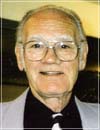
Scott Richardson (1923-2010) served as pastor of Katy Baptist Church in Fairmont, West Virginia.
Broadcaster:

Comments

0 / 2000 characters
Comments are moderated before appearing.

Be the first to comment!

Joshua

Joshua

Shall we play a game? Ask me about articles, sermons, or theology from our library. I can also help you navigate the site.