Bootstrap
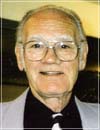
Scott Richardson

Divisions Among The Brethren

1 Corinthians 1:1-10
Scott Richardson May, 22 1977 Audio
0 Comments

Sermon Transcript

Auto-generated transcript • May contain errors

100%
This is the first chapter of
the book of 1 Corinthians. 1 Corinthians chapter 1. We'll begin reading verse number
1. Paul called to be an apostle
of Jesus Christ through the will of God, and so thin is our brother. Unto the church of God which
is at Corinth, to them that are sanctified in Christ Jesus, call
to be saints with all that in every place. Call upon the name
of Jesus Christ our Lord, both theirs and ours. The letter is
not just addressed to the Church of Coleraine, but it's kind of
a universal application here. It takes on a universal application
in its address to all men to call upon the name of the Lord,
both theirs and ours. So, it's not specifically confined
to that particular church. It says, Grace be unto you and
peace from God our Father and from the Lord Jesus Christ. I
thank God always on your behalf for the grace of God which is
given you by Jesus Christ, that in everything you are enriched
by him in all utterance and all knowledge, even as the testimony
of Christ was confirmed in you. so that ye come behind in no
gift, waiting for the coming of our Lord Jesus Christ. Who
shall also confirm you unto the end, that ye may be blameless
in the day of our Lord Jesus Christ? God is faithful by whom
ye were called into the fellowship of his Son, Jesus Christ our
Lord. Now, I beseech you, brethren,
by the name of our Lord Jesus Christ, that you all speak the
same thing, that there be no divisions among you, that you
be perfectly joined together in the same mind and in the same
judgment. Now, the purpose brought about
the letter of Paul to the Corinthians had to do with some divisions.
disunity as this 10th verse indicates. There were some problems in that particular congregation. As there is in all congregations,
some time or the other, we have difficulties. Some may be doctrinal
difficulties which are, I think, probably the worst or it may
be some disciplinary problem that involves one or two or three
or maybe even kinsmen. And if we're not of the same
mind, the same judgment, why it can cause a lot of heartbreak
and a lot of discontentment. And here in this particular instance, personalities were involved.
There were men with different gifts who were instrumental in
the leadership of this congregation, Peter and Paul, and Apollos in
particular, three men. widely differed in personality. Paulus was a very gifted man,
a son of thunder, very eloquent, articulate. Apostle Paul, very
warm, instructive, very deep in doctrinal discourses, certainly
one who had an intimate and acquaintance with the truth of God, not that
the others didn't, but Paul seemed to be more so. And, of course,
there was Peter, very widely different in personality than
the other two, most men, very forceful. Because of these personalities,
some of the church said, well, we're of Paul, and some said
we're of Peter, and some said we're of Apollos, and some said
we're of Christ. And so there was a disunity here. They weren't perfectly
joined together. One united under one head. Christ is the head of the church.
We are members in that body, but Christ is the head, and we
drive our strength and support to him. All rules and regulations
of any particular church or churches come from the head of the church.
The church has no right to legislate new rules, new regulations. Our
responsibility is to execute the rules and regulations that
have been set forth by the head of the Church, the Lord Jesus,
and we're bound. We're bound by the Word of God
and by the love of Christ to adhere to the truth incorporated
in the scriptures here pertaining to practice, pertaining to service,
pertaining to Christianity. And we can't be running off after
uh... press personality well it goes on now he said he
said he tells me that i have a seat in the name of the lord
that you speak the same thing speak the same thing and that
uh... there'd be no divisions among
you perfectly joined together in the same mind and the same
judgment. There are four things there that
pertains to this unity. Speak the same thing, be of the
same mind, same judgment, and so forth. Well, in 11th verse
it says, "...for it hath been declared unto me of you." Now,
it's been told to me. of you, my brethren, by them
which are of the house of Chloe." The people there, the church
there in the house of Chloe, I assume that this was a church,
and they have told me some things in regard to you, that they are
contentions among you. Now, this I say, that every one
of you, saith I am of Paul, and I am of Apollos, and I of Cephas,
of Peter, and I of Christ." There's the division right there. There's
the division. You wouldn't think that they
would have division like that just shortly after the ascension of
the Lord Jesus Christ, and still have as their instructors, their
preachers, their leaders, the apostles who had been with the
Savior all these many years. And the great apostle Paul had
been their teacher and instructor. You wouldn't think they'd have
any problems, but they had problems, personality problems. I'm of
Apollos, I'm of Paul, I'm of Cephas, and I'm of Christ. So
Paul, in order to refute the In order to refute the error
and the division, ask them a question. And he says, Is Christ divided? Is Christ divided? Was Paul crucified
for you? Or were ye baptized in the name
of Paul? Ask them a question there in
regard to their hope. That has to do with a man's hope
there. Was Paul crucified for you? See, one other place Paul said, he
said that there's no other foundation which can be laid than that which
is already made, and that foundation is Christ. You can't build on
any other foundation. Paul baptized for you? If so,
you're building on another foundation. Now, that's one of the great
problems of our day. Great problems among religionists
in our day is they build upon other foundations. Now, there's
a great majority of people in the world that build upon the
papal decree. The Roman Catholics build upon
the decrees of the Pope. They build upon what the Pope
says, what he doesn't say. I was talking to a fellow here
recently about, he was telling me, he volunteered his information.
I didn't ask him for it. He told me that he was a Roman
Catholic and he said that his wife died and he said, I'm married
again. And he said, the woman I married
had been married twice previous to our marriage. And he said, so Roman Catholics
renounced that marriage, or the marriage that we have here. And he said, I'm able to go to
church and we're welcome to attend church, but he said, we cannot
participate in any of the sacraments. And, of course, the sacraments
in the Roman Catholic Church are the means whereby we receive
the grace of God. That's what they say. They say
that you receive the grace of God through the Lord's Supper,
and through baptism, and through marriage, and through all of
these. There are seven or eight sacraments in the Roman Catholic
Church, and all of them are the means of grace, so that Roman
Catholics say, so if you're deprived, of these means of grace, you're
without hope. And so you see, there's many
people, many, thousands and thousands of people in our day, in our
generation, are building upon—was Paul crucified for you?—upon
another foundation. And there can be no other foundation.
No other foundation except this one foundation, and that's Christ.
That's what Paul tells these people who are divided. going
after Cephas, going after Apollos, going after Paul. He said, Is
Christ divided? Was Paul crucified for you? Building
on the wrong foundation. There's a lot of people in the
world that build upon the light of natural conscience and renounce
the value of the blood of Christ, have nothing to do with him.
But it's the line of natural conscience that they follow.
They build it upon another foundation. That's not what Peter believed,
although he's part of this discussion here, but he didn't believe in
that. Then in the 16th chapter of the book of Matthew, when
the Lord spoke to him and asked Peter, whom do men say that I
am? He said, some men say that you're
Elias, some say you're Jeremiah, and some say something else,
some of the prophets. Well, he said, Whom do you say
that I am? And he said, Thou art the Christ. That's what I say. I say you
are the Christ, the Son of the living God. And Jesus said, You
say right, Peter. Blessed art thou, Peter, son
of Bar-Jonah. For flesh and blood hath not
revealed this unto thee, but my Father which is in heaven. He's revealed this unto thee.
And he said, And upon this rock, I will build my church, and the
gates of hell shall not prevail against it. Upon this rock. What
rock? That rock Peter said, Thou art
the Christ, the Son of the living God. That's the rock. That's the foundation that men
are to build upon. Men are not to build upon repentance, Lots of people build
upon that foundation, repentance. They feel it because they trust
in their repentance. And if a man trusts in his repentance,
he's building upon his repentance, and that's a false foundation.
That's not the foundation that will hold up when the storms
of life come. That's like these people here,
building, dividing, building upon other foundations. Was Paul
crucified for you? I'm reminded of this repentance
business, confession of sin. People think that—lots of people,
hundreds and thousands of people believe that because they have
repented. I've repented of my sins. And
they have confidence in their repentance and feel that their
repentance has something to do with their relationship to God.
somehow. They build upon that repentance.
They make restitution. They go to great lengths to make
restitutions for past error in their life. Go to families and say, Well, I've wronged you in
years gone by, and I want to right that wrong. Or, I've defrauded
you of Let me make that good. I'm a Christian now. Now, I'm
not saying those things are not right or anything. I'm saying that when put in the
wrong perspective and a man starts to build upon his repentance
because he did this and because he did that, he's building upon
the wrong foundation. You see? He's going to miss out. A man can't repent of all of
his sins. That is, make restitution for all of his sins. He can repent
of them, but his mind can be changed, his attitude can be
changed, but he can't make restitution for all of his sins. He can't
do it. So, you've got to get away from this business of building
upon repentance. A lot of sins you forgot about,
a lot of sins I forgot about, sins in the past that we've committed,
bad and evil and vile sins. People think the only sin that
is to be condemned is the outward act, that is, murder or some
viciousness that has come to the front and we've committed
some terrible crime against society. But listen, some of the most
terrible, terrible sins that can be committed are sins of
the mind. sins of the mind that we've committed
years and years ago, and we've forgotten about those sins. We
could not remember those sins if our life depended upon it.
But yet those sins were terrible, terrible sins that we committed
against God and against society, in our minds, you see. So you
can't repent. It's an impossibility. It's an
impossibility to make restitution for all of your sins. You can't
do it. You can't build upon repentance.
You can't even build upon the confession of sin. You can't
build upon anything except Christ. You can't do it. Now, Peter here
that said, Thou art the Christ, the Son of the living God, he
built upon, his confidence was upon that foundation that was
laid in another place in Peter's preaching, there in the first
part of the book of Acts. Peter said that there is no other
name given under heaven. among men, whereby men must be
saved, except the name of Jesus." Now, what he was saying there,
there's no other foundation. No other foundation. You can't build upon repentance.
You can't build upon visible ordinances of the Church, the
Lord's Suffering, baptism, and external privileges. You can't
build upon those things and expect to be right, have the right relationship
with God. You can't do it. That's what's
involved here. That's what's involved when Paul
said, Did Paul crucify it for you? Paul couldn't pay our sin
debt. Nobody can pay our sin debt except
Christ. Nobody. He's the sinner's Savior. If the sinner's ever saved, it's
got to be by him, the Lord Jesus Christ. He alone can save the
sinner. He alone can honor and magnify
the law of God. He alone can live the perfect
and righteous life that the sinner needs to live in order to gain
acceptance with God. It's Christ and Christ alone.
It's not me. It's not my... Some people think,
you know, when you talk about... you say, well, I know that things
is right, and I know that I'm right with God, and there's no
fear of dying. And if I die tomorrow, I know
that the angels of God will escort me into glory. People sometimes
misunderstand language like that, and they say, well, it sounds
to me like there's boast and brag in that. No, brethren, people
are misunderstood. when they understand people like
that and feel that there's boast and brag there. There's brag
there, yes. There's boast there. But not
of yourself. Not of yourself. I brag on Him.
I brag on Him. I boast of Christ, not of me. I have no righteousness. He does,
though. I boast of His righteousness. If I'm ever to go to heaven when
I die, if I'm ever to go to be with the Lord when I die, it'll
be because of Christ! It'll be because he paid that
which was due me. I didn't pay it. I didn't pay
it. I didn't pay the price that God
demanded for my sins, which is death, but he did. He did. He paid it. Now for me to say,
well, I don't know whether I'll ever make it or not. I'm doing
the best I can. And I'm just hoping that I can
live long enough and work long enough and cry long enough and
pray long enough and give long enough that somehow God will
be merciful to me in the end. Well, that's not salvation. That's
not salvation. That's a dishonor to God. That's
a dishonor to Christ. That's saying that you don't
believe that Christ did all he said he did. I believe that he
did all that he said he did. He said he died and the sinner
sinned. He said that, and I come to see by the grace of God and
the revelation of the Spirit of God that I'm the poor sinner
for whom Christ died. So I've got nothing to brag about.
I brag on Him. I boast of His doing. His dying. It's Christ that satisfied
everything that God's law had against me. It's Him. I point
men to Him. I don't point men to me. I don't
point men to themselves. I say, look to Him. He died. He suffered. He bled. He was
buried. He rose again. He ever lived.
Look to Him. Can you see in Him a Savior?
Don't look to yourself. Don't build on another foundation.
Look to Christ. You say, well, God demands absolute
right. That's right, He does. I haven't
got it. I haven't got it, but He does.
He has it. He has it. He's got everything
that the sinner needs. He's got a perfect righteousness. Some people believe that the
death of the Lord Jesus Christ being attributed to us makes
us righteous. No, it doesn't make us righteous.
He's righteous. It doesn't make us righteous.
The righteousness of God imputed to us does not make us righteous. It declares us to be righteous
in Him. My righteousness is in him. I've
got no righteousness. As far as righteousness that
would somehow tend to justify any sinner before God, the best
saint that ever lived doesn't have that much righteousness.
That is, that would tend to justify before God in light of God's
law, in light of God's claim. But he does. He does. Christ does. He has it. I don't
have it. He doesn't make me righteous.
He declared me to be righteous on the basis of who He is. Give
it to me. Freely. Just give it to me. Now,
for me to say He didn't do it would be to impugn the wisdom
and the honor and the love of Christ as doing this dying, and
I just won't do that. I brag on Him. I brag on Christ. I'm bragging on me. I'm bragging
on Christ. You see what I'm talking about?
Don't build on anything else except Christ. Paul wasn't crucified
for these poor people at Corinth. Neither was Cephas. Neither was
Apollos. Christ. Christ. Be of the same
mind, Paul said. Well, it goes on. He said, I thank God that I baptized
none of you. save Crispus and Gaius. I only baptized two of you. There
may be some more that I don't remember, but that's the only
two that I remember that I baptized, lest any should say that I baptized
them in my own name. That's one reason why I didn't
baptize them. People go around and say, well, he baptized them
in his own name. Well, I didn't do that. I baptized
also the household of Stephanas. Besides, I don't know whether
I baptized any other or not. I don't know. I didn't count
my baptisms. Boy, that's hard on a lot of
these, a lot of preachers nowadays. They don't count them. You know,
they count them. A fellow on the radio I was listening to
here not too long ago, and he said, now listen. He kind of
tickled me. He said, now listen. He said,
this is a work of faith. I said, it's a work of faith,
whatever that is. He didn't know. and by what definition
that he tried to give, I certainly didn't know. But he said it's
a work of faith. It's a work of faith. He said, you want to
send some money in to help me? I said, I appreciate it. I'll
take it. It's tax deductible and all of
that. We're registered with the government.
Pick, rig, or roll. Anyhow, he said, we'll send you
some We'll send you some literature. I'll send you some books if you'll
send me an offering." And he said, and I'll also include my
yearly report. I'll include my yearly report.
You know what he's saying? He said, I'll tell you what all
I've done last year. I've been doing a whole lot for
God. I've been doing a whole lot for God, and I want you to
know about it. I want you to know about it.
I'm going to announce this over the radio and got a television
program going to announce it on the television. But I want
everybody to know what I'm doing for God. See, I kept a report
down from this time last year until right now. Everything that
I've done, every time I went to the hospital, I wrote it down.
Every time I talked to anybody, I wrote it down. Every time I
did this and did that, I wrote it down. I've got a complete
report here, a great big portfolio of facts and figures, and you
can have it. You can have it. And I'll tell
you how great I am. Now, that's about what a man's
saying. I'll tell you how great I am. It'll tell you that, boy,
you ought to rub shoulders with me and see what I'm doing for
God. Paul, listen, in light of that,
and this is now old Paul's on. He said, I baptized Stephanas
and his household, and he said, I might have baptized some others.
I don't even remember. I don't remember. I don't keep
no record. Don't keep any record. Too busy. Paul was too busy serving the
Lord to keep a record. in order to show off and show,
well, just wasn't none of that in Paul. Anyhow, he said, anyhow,
talking about, see, talking about this foundation, anyhow, he said,
Jesus Christ didn't send me to baptize. He said, for Christ
sent me not to baptize. He said, that's not my primary
purpose. God didn't call me to baptize. God didn't call me to socialize. God didn't call me to be a teacher. God didn't call me to hold hands. God called me, He said, to preach
Christ. That's what I do. I preach Christ.
I brag on Him. Wherever I go, He said, I boast
and I brag on Jesus Christ. He didn't send me to baptize,
but to preach Christ. And He said, listen now, He said,
I preach Christ. He said, not with the wisdom
of words. Not with the wisdom of words. That's hard on some
of this generation that aspires to be preachers.
The first thing they do is tell you about what Jonathan Edwards
said, and John Gill said, and what the Latin translation is,
and what the Woolgate translation is, Greek has to say about it and
what a Hebrew has to say about it and all of that. Paul said,
God called me to preach Jesus Christ, not with the wisdom of
words. No. No, he said, not with the
wisdom of words, lest the cross of Christ should be made of none
effect. For the preaching of the cross,
is foolishness to them that perish. For the preaching of the cross
to them that perish, foolishness. It's foolishness to them that
perish. But unto us which are saved is the power of God. Foolishness. My own testimony is this. For years, for years, What little
I ever heard of God in the Bible and the Lord Jesus Christ was
foolishness to me. It was just foolishness to me. People could talk about Christ.
They could talk about God. I remember going to Sunday school
when I was a boy. Didn't go much, but when I went,
I can vividly remember an old man who taught the Sunday school
class. A young boy's Sunday school class
of about fourteen, fifteen, sixteen-year-old boys, and I remember that he
used to talk about the sufferings of Christ, and he just cried.
He was way up in his seventies, seventy-five, eighty years old,
and he just cried. And I couldn't understand why
he cried every time he tried to teach us understanding. I
couldn't understand it. I felt sorry for him. Why did
he cry? I know now. I know now. foolishness to me then. Now is
the power of God. I know why I cry. So do you. So do you. He says, For it is
written, I will destroy the wisdom of the wise, and bring to nothing
the understanding of the proof. Where is the wise? Where is the
scribe? Where is the disputer of this
world? Hath not God made foolish the
wisdom of this world? For after that, in the wisdom
of God, the world by wisdom knew not God. And it still doesn't
know God by wisdom, and it'll never know God by wisdom. Never
will. To know God is by the revelation
of the Holy Spirit through the foolishness of preaching. Not
foolish preaching, but the foolishness of preaching. by wisdom knew not God. It pleased
God by the foolishness of preaching to save them that believed." The Jews require a sign, the
Greeks seek after wisdom. But we preach Christ crucified.
Under the Jews, a stumbling block, and under the Greeks, foolishness.
That's the way it is. I told you about people building
upon other foundations. I mean, in light of conscience,
the Papists built on this. Church of Christ people build
upon baptism and church membership. Some of the Baptist people that
I know of build upon denominationalism and secetarianism, so forth. Foolishness, too, foolishness. or the Jews require sign, the
Greeks have. But we preach Christ crucified. That's all we preach,
Paul said. And it's a stumbling block under
the Jews, and he says it's foolishness under the Greeks. And that's
the way it is right this very day. Christ crucified is foolishness
under this world. It's foolishness under me, foolishness
under you, until God revealed himself to you and made the cross
of Christ praise to your heart. And then it becomes different. Word took on meaning, and you
began to understand some things that the Bible said. That unto
them which are called, both Jews and Greeks, Christ, the power
of God, and the wisdom of God. For the foolishness of God is
wiser than men, and the weakness of God is stronger than men.
If you see your calling, brethren, how that not many wise men after
the flesh, not many mighty, not many noble, are called. Not many wise men after the flesh.
Not many mighty men. Not many noble or called ones. But, oh, thank God for them buts. Did you ever notice them in the
Bible? But. But. Let me read one to
you there. In light of this, I'll read this
one directly, but let me read this one. But. Listen to this
now. It says this, it says, Among
whom also we all had our conversation in times past in the lusts of
our flesh, fulfilling the desires of the flesh and of the mind,
and were by nature the children of wrath, even as others. But
God, who is rich in mercy for his great love wherewith he loved
us, even when we were dead, in sins hath quickened us together
with Christ, by grace are ye saved. But God, see, but God,
they make a difference. See your calling, brethren. Not
many wise men, not many noble, not many mighty are called but
God. They have chosen the foolish
things of the world to confound the wise. God chosen the weak things of
the world to confound the things which are mighty. And the base things of the world,
and the things which are despised, hath God chosen, yea, and things
which are not, to bring to naught things that are. Why, Paul? Why has God done all this? Why
has God chosen base things, things that are despised and insignificant
people, people of no reputation, people that have no wisdom of
their own, people that have no riches or honor. Why has God
chosen these poor, poor sinners? Why? Why has he passed over the
rich and the mighty and the powerful? Why, Paul? That no flesh should
glory in his presence. That's the answer. What foundation
are you and I building on this evening? I hope it's Christ. I hope every
one of us, under the sound of my voice, you're building on
that foundation. No flesh should glory in his
presence. He said, but of him are ye in Christ Jesus, who of
God is made unto us wisdom and righteousness and sanctification
and redemption, that according as it's written, He that glorieth,
let him glory in the Lord. May the Lord help us. May the
Lord add His choices and blessings upon this chapter. I confess
to you this evening, I had an outline that I was going to preach
from this evening. I was going to preach, and I
misplaced that outline. I looked all through my Bible
and I couldn't find my notes. I don't know what I've done with
it. So I had to preach from the first
chapter of the book of 1 Corinthians. I trust that it's been profitable
just reading those verses and making those few meager comments
for the honor and glory of our God.
Scott Richardson
About Scott Richardson
Scott Richardson (1923-2010) served as pastor of Katy Baptist Church in Fairmont, West Virginia.
Broadcaster:

Comments

0 / 2000 characters
Comments are moderated before appearing.

Be the first to comment!

Joshua

Joshua

Shall we play a game? Ask me about articles, sermons, or theology from our library. I can also help you navigate the site.