Bootstrap
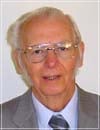
Bill McDaniel

Two Foundations

Matthew 7:21-28
Bill McDaniel December, 28 2014 Video & Audio
0 Comments

Sermon Transcript

Auto-generated transcript • May contain errors

100%
Now, the question is this morning
whether one builds upon the sand or builds upon the rock, and
it makes all the difference in the world, not only in their
life here, but in the life in the world that is to come. Here's
our text, verse 21, Matthew 7. Not everyone that saith unto
me, Lord, Lord, shall enter into the kingdom of heaven. but he that doeth the will of
my Father which is in heaven. Many will say to me in that day,
Lord, Lord, have we not prophesied in thy name, and in thy name
cast out devils, and in thy name done many wonderful works? Then will I profess unto them,
I never knew you, depart from me ye that were iniquity. Therefore, whosoever heareth
these sayings of mine and doeth them, I will liken him unto a
wise man which built his house upon a rock. And the rain descended,
the floods came, the winds blew, and beat upon that house, and
it fell not, for it was founded upon a rock. And everyone that
heareth these sayings of mine, and doeth them not, shall be
likened unto a foolish man which built his house upon the sand. And the rain descended, and the
floods came, and the winds blew, and beat upon that house, and
it fell, and great was the fall of it. And it came to pass, when
Jesus had ended these sayings, the people were astonished at
his doctrine, for he taught them as one having authority and not
as the scribes. Now, as to the context, and for
the purpose of getting our contextual bearing here in this passage
of the scripture, we learned that it is the closing exhortation
of what we know as the Sermon on the Mount, and is probably
among the longest of our Lord's recorded discourses that we find
anywhere the scripture during his earthly ministry. In fact,
in the study of this, I learned a new word this week that I had
not been familiar with. That word is peroration, which
refers to the formal closing of or the sealing up of a speech
or a talk or a sermon where it might be summed up and application
made. And that's what we have here
in verse 24 through verse 29. Our Lord sums up the Sermon on
the Mount. We read in Matthew chapter 5
verse 1 and verse 2 that a multitude had gathered together. And when
they were gathered, the Lord retreated or went a ways upon
a mountain and made ready there. And his disciples came and were
with him. And he began to teach them. He
taught all of them that were gathered there. Some have called
the Sermon on the Mount the manifesto of the kingdom of our great king. A manifesto being the publication
of the intent and the purposes of a group or person and laying
out the guiding principles and directives of a certain movement
or interest. And in this great public discourse
that our Lord is bringing to an end, He sets forth what would
be the way of those who became a follower of Him. If any would follow Him, here
are those principles that are engulfed upon them. For the first
time, the Lord lays out here what someone has called the great
leading principles of his kingdom." While we're on this line of thinking
and thinking about this, Let me share with you, if I might,
another thought from another man named John Brown. He said this about our passage
and our text today, quote, I apprehend that the great design of our
Lord in this discourse was to show the Jew by an indication
in particular what he meant when he called on them to repent and
to become of another mind. This, he said, if I mistake not,
is the true key of this discourse." Now the larger part of the body
of the Jew, just like the larger part of the body of Christianity
today, held many false views of the person of Christ and of
his kingdom. They held to perversions of the
law. They had crept in and enshrined
in their teaching the opinion and the tradition of men. And
that's seen in the section in Matthew chapter 5 and verse 21
through verse 48, and the formula there that we read several times
is this. You have heard it said by them
of old time, but I say unto you. You have heard it said by the
scribes and the teacher of old time, but I, on the other hand,
the Son of Man, the Son of God, the Lord Jesus Christ, the Messiah,
I say unto you thus and so. They had gone strictly by the
outward precept and they had worshipped informalism rather
than in spirituality and admitting all kind of the traditions of
men and generally had made the word of God of none effect by
their tradition and opinion. And in the sermon here on the
Mount, the Lord sets forth the spirituality of religion under
the kingdom of Messiah. And many matters are dealt with
We don't have the time to look at them except quickly, but there
is that contrast between Phariseeism and Christianity, and that's
what stands out in our mind and our attention in this great discourse
of our blessed Lord. But then we fast forward to the
closing application that the Lord makes of what he calls These
sayings of mine, these things that I have said, literally these
words, my words, as if to give the importance of these words
to him as the speaker. what he had said unto them. After
all, in Matthew 7 and verse 29, he taught them as one having
authority and not as the scribes. His teaching was different. His
teaching had more depth. more body to it than they had
ever imagined. In fact, some said of our Lord,
never did a man speak like this. John chapter 7 and verse 46. His word was with power. Luke chapter 4 and verse 32 now
compared to the dead empty rhetoric of the scribe and the Pharisee
and as they spoke generally they quoted scripture and the law
and yet they're teaching a never match that of the one who was
the Word and is the Word of God. It is said that the scribes in
their teaching mostly quoted the scribes and others that had
gone before them. But Christ spake in His own authority. He speaks as one having come
directly from God. So if we might, let's consider
again the end of our text and look at verse 28 and verse 29
again. And it came to pass, when Jesus
had ended these sayings, that the people were astonished at
his doctrine. For he taught them as having
authority, and not as the scribe and the Pharisee. Now we should
know, these are the words of Matthew. These words are the
words of the writer of the gospel. This is his explanatory comment
as to the effect that the Lord's teaching had on the hearers. He gives us a fact. that when
the Lord had spoken and had ended his teaching, and the people
began to reflect upon what he had said and what they had heard
from the Lord, as opposed to their usual Sabbath day fare,
from the scribes and the prontificators of Judaism, they were astonished. They were amazed. We would call
it spellbound. They sat literally spellbound
at what they heard the Lord saying unto them. A.T. Robertson, in
his word study and pictures in the New Testament, wrote that
the verb literally means that they were struck out of themselves
when they heard and thought upon what the Lord had said. They
were out of themselves at the differences between the teaching
of the Lord and the teaching of the scribes. that they were
used to. Now, as for the scribe, the scribes
would not often express any kind of teaching unless they quoted
someone they considered to have been an authority. They could
be heard to say, the ancients say so and so. The ancients taught
this or they taught that. As today, we often hear preachers
say, our creed and our confession teaches us so and so. Say our creed, say our confession. Our tradition is such and such. Our catechism says this or that
or the other. The Lord, however, on the other
hand, often rebutted the teaching of the ancient. As when he said,
you have heard it said by them of old time, but I say unto you. And he would at times say unto
them as he taught. Verily, verily, I say unto you."
We must catch that. I, the Son of God, the person
who had come in the flesh, the Word of the Lord, speaking in
His own name and by His own authority. I say unto you. It comes back to He taught them
as having authority, and he spoke with authority. There was an
authority about the teaching and the doctrines of his word
that came with a force of authority as they fell upon the ear of
the people. How many ways can we say it?
He spoke with authority, and we see it contrasted with a teaching
of the scribe. One described the teaching of
the scribe in these words, and I'm quoting, never passing a
hair's breadth beyond the carefully watched boundary line of commentary
and precedent full of balanced inference and orthodox hesitancy
and impossible literalism and intricate with legal pettiness,"
unquote. That one describes the teaching
of those who were the teachers of Israel. Now, not much has
changed about that except the teacher. Little talks and little
speeches are given, loud hollering, shouting, and stomping. Our ignorant
babblings are sent forth in many of the pulpits of our day, loud
shouting, perfect diction is used. Still, little is said that
edifies the soul or that glorifies the God of heaven and his blessed
son. Or how many preachers quote from
the philosopher or the poet or the humanist rather than thus
saith the word of our great God. So, in regard to his teaching
with authority, we ought to notice this. back in verse 21 through
23 that we read. The Lord declares himself to
be the judge of the professions of such as say, Lord, Lord, and
claim to do wonderful works in his name and for his cause, and
that he will at last cast them out as being false. and not being
His, and not knowing them at all. Now taking the text from
verse 24, where the Lord connects the hearing and the doing, and
He contrasts those who hear and do with those who hear and do
not. And we got to pick that up. With
those that hear and do. They hear and they obey, others
hear and they do not. Benjamin Keech put it, the Lord
uses and quote, express similitude, unquote. As the Lord wants to
illustrate the connection between the hearing and the doing of
these sayings of mine and doing them on the one hand and not
doing them on the other. So his image is very clear. His image is that of a person
building a house with the emphasis being upon the foundation, as
seen in the two that are mentioned. Sand on the one hand, and a rock
on the other hand. For one hearer also keeps or
does the word, he is the one that is likened unto a wise man,
not just a man, but a wise man who builds his house upon the
rock. Now the other who hears the same
word and does not keep it, is then likened to a foolish man
who built his house upon the sand, so that when the floods
came and the winds blew upon it, the ruin of his house was
great. Luke 6 and 49 tells us it was
great. The ruin was great. While the
house built upon the rock endured the storm, survived all that
came against it, and it lasted. And the question is why? The answer is, verse 25, because
it was founded upon a rock. Luke's account is this Luke 6
and verse 48. He digged deep and laid the foundation
on a rock. Not just a rock on the surface,
but digged it deep and found a rock and laid the foundation
up on it, removing all the loose sand and the dirt and the debris
and the mush that he might get at a solid bottom upon which
to build his house. Now this is the picture that
we have here in the Lord's wonderful similitude. And then the questions
become, what is prefigured then by each part of the similitude
that the Lord has used? For example, What answers to
the foundation of rock? What is it that answers to the
rock foundation? And what is the house, this house
that is being built, and what answers to the wind, the rain,
the storm, and such like that destroyed one house and not another? And how is it that they hear? How is it? In what sense do they
hear? Now, let's start with the question
of the foundation upon which the house will be built. The rock or the sand? We look
at the rock. As we know, the strength and
the durability of any building or structure is not the wall
or the roof, it is the foundation. That the strength and the durability
is found first and foremost in the sort of foundation that is
laid under the building. You see that connection in verse
24. Whosoever hears these sayings
of mine and keeps them, note the emphasis upon two words,
hears, does, or keeps them. Here's these sayings of mine. and does these sayings of mine. I then will liken him, he is
like, he is to be compared to a wise man, a prudent man, who
built his house upon a rock, having digged deep for the foundation. Thus the foundation is or are
the sayings of our Lord Jesus Christ. It is the word, it is
the saying, it is the teaching, it is the doctrine of Christ.
It is more than the bare words. It is the words understood and
opened up and applied under the heart and put into practice and
the true and unfailing words of Christ. Not vain speculation. not conjecture, not public opinion,
and not social approval, and not human reasoning, and not
the traditions of religion, but one called the true and faithful
sayings of God, the word of the Lord, which abides forever and
cannot fail, Matthew 24, 35. Heaven and earth shall pass away,
but my words shall not pass away." Quoted also in Mark chapter 13,
31 and Luke 21 and 33. The Psalmist wrote in Psalm 119, and verse 89, forever, O Lord,
thy word is settled in the heaven. God's word. It is a foundation
which cannot be broken up. It is a foundation that cannot
be shaken. It will stand, it will abide
forever and forever. And to the believer, it is the
foundation of the building of his life and of his character,
and it is the guide of life unto the believer. Now on the exhortation,
the Lord says, whosoever hears and does these sayings of mine,
let us remember. In Romans 2 and verse 13, not
the doer, not the hearers of the law are justified, but the
doers of the law. James 1 verse 22. Be doers of
the word and not hearers only, deceiving yourself. To hear only
is to deceive. To hear only and let it slip
away is to be deceived. But now let's speak of the house. that is mentioned in these verses
of the scripture, in the Lord's similitude. And ask the question,
what is this house? This house is built upon a rock. It is upon a foundation for the
house, which are the foundation for the house are the sayings
of the Lord Jesus Christ. But what corresponds to the house
in the similitude of our Lord? For it is not a literal house
built of wood or mortar or brick or such like. But consider, if
you would, Psalm 127 and verse 1. Now, various commentators have
described this house as being the profession of a disciple,
discipleship, the character cultivated under the influence of the word
of God. And I think it can hardly be
overemphasized that the emphasis does not stop at hearing, but
of doing. And that is the important thing.
For this is the fault of the second hearer in verse 26 and
27. He hears and yet he does not. If you'd like, flip back with
me to the fifth chapter of this book of Matthew and verse 17
through verse 20. Think not that I am come to destroy
the law or the prophet. I am not come to destroy, but
to fulfill. For verily I say unto you, till
heaven and earth pass, one jot or one tittle shall not in any
wise pass from the law till all be fulfilled. Whosoever, therefore,
shall break one of these least commandments, and teach men so,
he shall be called least in the kingdom of heaven. But whosoever
shall do and teach, the same shall be called great in the
kingdom of heaven, listen to this, for I say unto you that
except your righteousness exceed the righteousness of the scribes
and of the Pharisees, ye shall in no case enter into the kingdom
of heaven or of God. especially verse 20. Now the
Pharisees were generally the standard in Judaism. They usually were the leading
ones in religion. They were the strictest sect
of all, Paul says. He was a member of that. They
were the most religious of all of them. They were considered
the most pious of all of the sect of the Jew. They're the
ones who prayed, fasted, tied, prayed on the street corner,
great a great trumpet before they put their ties in the offering,
they kept the washings. And yet the Lord rejects the
pharisaical righteousness that is unable to save because it
consisted in strictly outward, empty observances, done more
for self-glorification, therefore, a filthy stench in the nostrils
of God Almighty. But this house, what is it?"
Gill wrote, and I'm quoting him, true believer is a builder, and
the house that he builds is his own soul, character, and the
salvation of it." Now, it is not just those who say, Lord,
Lord, that enter into the kingdom, but he that does the will of
the Father, which is in heaven. And neither is it sufficient
to have an empty profession. Now, there are a lot of people
who say, Lord, Lord, yes, I'm a Christian, but they never attend
church or read the Bible or have the fruits thereof. It is not
an empty profession, and it is not a great work that will save
them apart from an embrace of the truth as it is in the Word
of God and in Christ Jesus, our blessed Lord. So the true believer
builds his house, that is, he builds his life, his hope, his
character, his very soul, his trust on the person and the word
of the Lord Jesus Christ. It all stands upon the word of
our Lord. He knows that an empty profession
is worthless. That faith without works is dead. That Lord, Lord without obedience
is hypocrisy. Why call me Lord, Lord and do
not the things which I say? Luke chapter 6 and verse 46. Now as an example, when the Jews
claim to be the children of Abraham, The Lord reminded them that their
actions toward the one whom Abraham saw and rejoiced to see his day
was at variance with the father of them that believe. You see
all this in the 8th chapter of the Gospel of John and verse
33 to verse 40 and again in verse 56 through 59 of the Gospel of
John chapter 8. The Jews would say, we're Abraham's
seed. And upon that and that alone,
they expected to receive the favor of God and enter into blessedness. But it went no further. We be
Abraham's seed. But they did not the works of
Abraham that he did, and they did not put their faith in that
one that Abraham saw and believed. Again, said the Lord in John
chapter 8 and verse 47, he that is of God hears God's words. You hear not, because you're
not of God. And then the durability of this
house in Matthew 8 and verse 25, as we look at it there. Now, there are two things that
threaten a house as to sudden destruction. Mostly, or mainly,
there are two things that bring down houses. Number one is fire. It can consume and consume very
quickly. And the other one is floods and
tornadoes and raging rivers and winds and earthquakes and things
of that sort, which people today call Mother Nature, what some
call the forces of nature. Now, as to the house on the rock,
see four things in verse 25 about it. Number one, the rains descended. They fell. They came down. Number
two, the flood swept around it. The river and the current beat
up against it. Number three, the winds blew. And number four, they beat upon
that house. They beat upon it with great
force, strength, and fury. But it stood. It was not destroyed. It remained, and that for one
reason only. It was founded upon the rock. It had a strong and a sure and
an unshakable foundation. And I really like the way that
John Brown wrote about this, that this house corresponds to
that spiritual character formed under the influence of the word
of God and the sayings of Christ, including both the formed character
formed by this truth and the hope that is cherished because
of that which is spoken and the word of our God. Consider, if
you might, and compare the case of Abraham and the impact that
it had when he believed God. He both believed and he acted
upon what God said. His life and his character was
based upon the words, the covenant, and the promises of God unto
him, and enduring In due time, Abraham received the promises
that God had given. Now the only sure foundation
for the Christian profession is the person and the word of
God. Christ our blessed and wonderful
Lord. We can never separate this kingdom
from the word of the King. His subjects are to keep his
word. His subjects are to abide by
his precept. They are both hearers and doers. John 8 31. If you continue in my word, then
are you my disciples indeed. They build it not except upon
the word of the Lord, which is solid like a rock, and will bear
up the house and keep it in safety in a time of storm, for the word
of God, being the rock and the foundation, endures forever. But then we have another kind
of hearer here, and let's look at him. Another kind of hearer
and another kind of builder. Now, the first one is called
wise. This one is called foolish. The first building upon the rock,
this one building upon the sand. Now, this is a contrast that
is often made in the scripture. particularly in Proverbs, and
that is the foolish man and the wise man. And they're so often
contrasted in the scripture. Matthew 25, the foolish and the
wise virgin. Some with oil in their lamps,
some without oil in their lamp. Those without oil missed the
marriage, the coming of the bridegroom, and were shut out. Now, this
second hearer heard the same things as the first. And that's
an amazing thing. In the same congregation they
were, heard the same thing at the same time from the same person. He was a hearer, but he was not
a doer. He was a forgetful hearer, as
James describes one, James 1, 22 through 25. He looks in a
mirror, he beholds himself, he goes away, he forgets the image,
and he forgot what he saw. And yet, this man, the second
one, built his house. He built his house, and his foundation,
maybe look at upon the sand in verse 26. And verse 27, that
which the obedient hearer's house withstood actually destroyed
this person's house absolutely and completely. It was not just
damaged so that it might be repaired again. It was not partially broken
to where it could be rebuilt. and then habitable again. It would not only fail, but great
was the fall of it." Now the image or the picture that we
have here is so clear and it burns into our mind. It is a
flooding rain, a downpour, and the river overflowing and rushing
out of its bank and crashing and fast-crashing against the
house and the foundation, eating away at the house, but particularly
at the foundation, eroding the unstable sand while the winds
above pounded upon the body and the roof of the house until it
came apart and it lay in shambles, washed away, scattered about,
all of it gone, reduced to rubble and nothing more, because it
was built upon the sand. Spurgeon wrote, the chief defect
was the foundation, adding this, quote, His fundamentals were
wrong, unquote. In Luke chapter 6 and 49, a man
without a foundation built a house upon the earth in that account. Again, what is represented, however,
by this house? For it was not a literal house
again, but every person is a builder. And every person that lives and
passes through the world is a building. Building that which corresponds
unto a house in the simile. There are only two foundations. Number one, the rock. Number
two, the sand or the bare earth. Their house is their manner of
life. Their house is their character.
It is the principles that they espouse. It is their hope. It
is what they hope and what they trust in. And as Brown put it,
This building shatters forth either the character which he
culminates or the hope which he cherishes, unquote. One or
the other or perhaps both. And the majority do not base
these upon the sayings of Christ or the word of the Lord. They're
not hearing the word of God. even if they attend church now
or regularly. They're not hearing the Word
of God. And apart from Christ and apart from the Word of God,
any building is a building. Any character you build, any
hope you cherish or espouse is built upon the sand and is as
if it were built of wood and hay and stubble. Now there are
many that imagine that because they acknowledge Christ, that
there is and was a person Christ, and because they believe that
he exists and even that he died upon the tree, that their house
is sound and that they will be saved. They imagine that because
they believe in Christ, and believe there was a Christ, one who died,
that they shall be saved. Even though they live worldly,
seldom go to church, or hear and love the precepts of Christ,
and they do not follow the Lord, their house will fall according
to our Lord. Now, there are many in the world,
some outside of Christianity even, many who build upon Buddha,
many million who build upon Allah, many who build their life and
character upon Confucius, or who build their houses upon philosophy,
or secular humanism, if you will, and others build theirs upon
the doctrine of Arminianism, which is nothing more than religious
humanism. When Arminianism is stripped
down, It is nothing more than religious humanism. These houses
will not stand. They're not upon the rock. They
are upon the sand. They will fall in the time that
the storm sweeps and beats against them. Now, these things that
we have said are particularly and especially relevant and pertinent
to that generation of Jews to whom our Lord appeared who put
all the emphasis on the outward, upon rituals and upon days and
season and such like, and such, I'm sad to tell you, are also
rampant in Christendom even today. Empty professions, but great
outward pomp and show. Little practical godliness and
little building upon the word of God. May I say in closing,
a time is coming when houses and lives that are built upon
the sand will fall apart, will be destroyed. and will come to
nothing. They will be swept away for all
of their confession and all of their outward shows and pomp
and such like. It will fall. It will be swept
away when the storms of God beat upon it. How deceived are they
who build upon the sand, that is, who hear the word of God
and do not take it to heart and do not live by it and do not
build upon it. How deceived are those who say,
Lord, Lord, and do not the things that our Lord said. We have a
great lesson here. They that hear these sayings
of mine and do them are like that wise man who builds upon
the rock which will stand, while the one who hears and does not
is the foolish man who just throws his down upon the sand, and it
is destroyed in the time of the judgment and the great storms
that come and beat upon it.

Comments

0 / 2000 characters
Comments are moderated before appearing.

Be the first to comment!

Joshua

Joshua

Shall we play a game? Ask me about articles, sermons, or theology from our library. I can also help you navigate the site.