Bootstrap
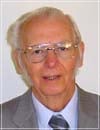
Bill McDaniel

Blessedness of Forgiveness

Psalm 32:1-2; Romans 4:7-8
Bill McDaniel April, 15 2012 Video & Audio
0 Comments

Sermon Transcript

Auto-generated transcript • May contain errors

100%
First of all, from the psalm,
chapter 32, verse 1 and 2. Blessed is he whose transgression
is forgiven, whose sin is covered. Blessed is the man unto whom
the Lord imputes not iniquity, and in whose spirit there is
no guile. Paul quotes that in Romans chapter
4 and verse 7 and verse 8, saying, Blessed are they whose iniquities
are forgiven and whose sins are covered. Blessed is the man to
whom the Lord will not impute sin. Now, it may well be when
we think of this blessedness, of this great beatitude that
we have read this morning, that it is worthy of being placed
among all of the great act and all of the great beatitudes of
the Scripture, particularly those that were spoken by our Lord. When blessings are reckoned up,
when they are counted, enumerated, and contemplated, when divine
blessings are fought upon by our heart and our mind, then
it may be that we may be well to advance this one to the very
head of the class or of the list. Here we may have what we call
the blessing of blessing. Paul speaks, for example, in
Ephesians 1 and verse 3, of God the Father of our Lord Jesus
Christ, who hath blessed us with all spiritual blessings in heavenly
places in Christ. I was reading some time back,
the story is told concerning Martin Luther. that upon a certain
occasion, when some young ministerial students were gathered about
him and were allowed, as it were, to pick his brain, someone asked
him which psalm he favored, which one was a great blessing to him,
and which meant much unto him out of the psalm. Luther replied,
strangely, the Pauline psalms. or the ones that are the great
blessing unto him. And he named them the 32nd, the
51st psalm, the 130th psalm, and the 143rd psalm out of them. Because, he said, like Pauline
theology, They taught the free forgiveness of sin apart from
the works of the law and the imputation of righteousness unto
the people of God, not based upon any of their works, not
based upon any of their merit. Robert Leighton, another commentator
of old, continued, as did many others, that this 32nd Psalm
that we have taken our text from this morning was sung upon the
day of expiation in Israel, that when Israel celebrated the expiation
day, the removal and the putting away of sin, that they sung from
this psalm. Notice the psalm, if you will,
that it opens with a declaration of blessedness. pronouncing blessed
a certain people, pronouncing blessedness upon certain ones. First of all, for a certain person
and thing. Secondly, for the author of the
blessing, which is the Lord God Himself. Now, if we count, it
is the second psalm that begins pronouncing a blessing upon certain
people. Remember Psalm 1 and verse 1? Blessed is the man that walks
not in the counsel of the ungodly, that stands not in the way of
sinners, and that sits not in the seat of the scornful. that does not join in with them
in any of these things. Now before we delve out into
our psalm and the great blessing that is mentioned here, the pardon
of sin, let's consider the wealth of descriptive words that we
have here that are used in the first two verses of this 32nd
psalm. First, the words used to describe
the depravity and the wickedness and the sinfulness of the human
family, what one called his multi-faceted sinnership, quote unquote. his sinnership, his state by
birth and by nature, and the cause of his alienation from
God and the need that he have forgiveness pronounced upon him. First of all, Rather, secondly,
we want to notice the words used to describe the great blessing
that God bestows. First of all, the words used
to describe man's depravity is listed under four heads in these
two verses that we have read. A, we meet with the word transgression. This is the word Pesah, which
means to pass over into a forbidden territory or cross over a forbidden
boundary. It means to break out. It means
literally to trespass, to go over or across a boundary and
to invade into foreign and forbidden territory. We often see signs
in our day, no trespassing. It means do not come upon that
property or cross over that bound. Now, to trespass, whether it
be national, moral, or religious, is to go where one is forbidden
to go and has no right to go. Then we notice, be another word. That is the word sin. Sin here,
Hebrew word, means or describes the missing the mark. That's when one aims at a target
and the arrow goes off course and the mark is missed. as an arrow veers to one side
or to the other and misses the mark at which it was aimed. The Scripture said that all have
done this, that all have sinned, that all have come short of the
glory of God. All have missed the mark. It
is not to come up to the mark or to strike or to hit the mark. And then C, we have the word
iniquity also used in these two verses. Avron, perversity, what
is morally perverted. is the chief meaning of this
word. It is one who has turned out
of the way, turned out of the way completely. One who is off
a proper course that they ought to be following. It is a distortion. It is contrary to justness when
one has committed iniquity. And then D, we notice the word
guile. Guile, remissness is one of the
meanings of the word. It is from the word to betray
or from the word to deceive. It includes treachery. It includes
fraud. It includes And this is the meaning
of the word. Now note, this puts us in thought
of the confession of David when he had sinned with Bathsheba
as it is recorded in Psalm 51 and verses 1 through 3. We'll
not turn there to read, but David used some of the same expression. He mentioned my transgression,
mine iniquity, my sin, which is ever before me. And you can
see this again in Exodus chapter 34 and verse 7. But then, that
behind us, Secondly, let's notice the words that are used here
to describe the great blessing that the psalmist is speaking
of and is bringing before us. Here are the words. A. Forgiven. Erased are our sins. They are gone. They are taken
away. They are removed. They are remitted. Now, such remission is a result
of expiation. Our Lord has died for our sin
to expiate them or to take them away. Expiation is the removal
of sin, and the Lord did that in his death. But then B, we
have another word, and it is the word covered. Blessed is
the man whose sin is covered. It is put under a cover. It is out of sight. It is concealed. It means that
it is hidden. and is not open unto sight."
Now, this word is frequently used, particularly in the Old
Testament. In Genesis chapter 7, verse 19
and 20, you have the word when the Scripture said, and the flood
covered the mountain. It covered them. They were under
it. They were out of sight. You have it in Genesis 9 and
verse 23, when Shem and Japheth took a garment and covered the
nakedness of their father. That's the same word that we
have here in Psalm chapter 32. they covered the nakedness of
their father. In Exodus 24 and verse 15 and
16, we read of the cloud that covered the mount in that great
example. 1 Kings 1.1, when David was covered
with clothes and when old and feeble. You have it in Isaiah
6 and verse 2, when the seraphims before the holiness of God covered
their faces as they were in the presence of the Lord. So we know
that sin can only, must only be covered in a proper way. All false coverings will fail. As when Adam and Eve covered
themselves with fig leaves, trying to hide themselves from the presence
of God in the garden. In Genesis chapter 3 and verse
7. Proverbs 28, 13. He that covers
his sin shall not prosper. Whatever use for covering beside
the blood and death of Christ He shall not prosper. Now, there's
a great difference in the many ways that men and God take to
cover the sin of men. God only covers sin, hides it,
puts it away by the blood of the everlasting covenant. in free grace and absolute mercy."
What a contrary remedy to so many people pursue, attempting
to fashion some kind of a cover for their sin so that they will
not be exposed or not be found out. Cain buried Abel trying
to cover up his sin of murder. But the righteous blood of Abel
cried out unto God even from the ground. You see that in Genesis
chapter 4. We remember and we'll be reminded
soon that David sought to cover his sin by making Uriah drunk. in 2 Samuel chapter 12 and other
ways as well. Joseph's brothers would cover
their sin with lies and deceits about what they had done under
their brother. Genesis chapter 37 is a record
of that. But I think of all the coverings
that men seek to fashion for their sin, the worst of all is
self-righteousness. The self-righteous hypocrite
who seeks to cover their sin with a thin veneer of religious
works and law-keeping and golden rule keeping and those sort of
things. Now, we notice something else,
see. Their sins are not imputed. Blessed is the man unto whom
the Lord imputes not iniquity. It is not reckoned to his account. It is not put upon the record
against him. It is not entered into the ledger
standing there against him. Paul makes use of the text in
Psalms chapter 32 in his great defense of free justification
there in Romans chapter 4 and verse 6 through verse 8. In fact,
in Romans 4, Paul cites two Old Testament passages of the Scripture
for proof of justification by faith. The first one is in Romans
4, verses 1 through 3, and it involves the case and example, the experience
of Abraham that he had with God. And in Romans 4, this is the
predominant truth that Paul uses for justification by faith. But there's a second Old Testament
reference that Paul uses in Romans chapter 4, and it's from this
testimony of David in the 32nd Psalm, and you'll find it in
Romans 4 and verses 6 through verse 8. The passage quoted from
David, the 32nd Psalm, Paul makes an accessory, actually, to the
case of Abraham, and he uses it as a further confirmation
of Romans 4 and verse 3. Abraham believed God and it was
reckoned unto him for righteousness. But then look at verse 6, Romans
4, even as David also. Not only did Moses write that
Abraham believed God and was justified in righteousness imputed
unto him, but David carried it a little bit further. Also speaking
of it, Paul said, and that would be in Psalm 32, verses 1 and
2. He says, even as David also In addition to what Moses had
written, David also described the blessedness of the man unto
whom God imputes righteousness apart from works. You will notice
in verse 6, Romans 4 verse 6 is Paul's application of the Davidic
text. That is, the scriptures say Abraham
was pronounced righteous apart from works. And David also gave
a description of this blessedness when he described the blessedness
of the man. the extreme blessedness of the
person whose iniquities are forgiven, whose sins are covered, and further
bless the man to whom God will not impute sin. Verse 9, Romans 4, raises a good
question when he asks, this blessedness then, upon the circumcision only,
that is, the Jew, or upon the uncircumcision also, that is,
the Gentile. This blessedness here consists
of two gracious acts of God toward the elect sinner. Number one,
pardon of sin, remission and forgiveness. And number two,
the non-imputation of sin to that individual that is so blessed. You will note that in Romans
4, 6 through 8, Paul makes three references to this blessedness
which David declared. Here they are. Number one in
verse 6, the blessedness of the man who has righteousness imputed
to him without works. Number two, look in verse seven,
blessed are they whose sins are covered. And then number three
is in verse eight, blessed is the man to whose account the
Lord will not reckon or put or impute sin. Not charge it to
them, not put it upon their account, not hold him a debtor to answer
for those sins. Now before we move on, note two
things in Romans 4 verses. Number one, there is the imputation
of righteousness. No salvation apart from that.
Number two, there is the non-imputation of sin. These two things go together
to make up the whole. These are a double blessing,
if we may say. Now, let's note some things concerning
the forgiveness of sin. First of all, let's speak of
the need of forgiveness. Why must sin be forgiven and
covered and expiated? and put away and not imputed. Well, because all have sinned
and come short of the glory of God. We all are sinners in the
sight of God. We all have broken God's law. We all have transgressed His
commandments. Therefore, what is to be done
concerning sin once it has been committed by an individual? Once I have sinned, how then
will I ever be free from the due penalty of that sin that
I have committed? Will sins just disappear with
time or with age? Will they fade away on their
own after a time? Will God simply overlook them
and forget them, let them go unpunished and unrequited. The scripture is clear. He will
by no means clear the guilty. Exodus 3 and verse 7, that is,
without a proper satisfaction and expiation. Sin is odious
and offensive unto God. And there are only two options
that lay before our holy God and sovereign concerning sin. A, to leave all to perish in
their sin and endure the awful, awful ruin. Leave men in their
sin without a remedy. Or second, The option of our
sovereign God is to provide a satisfaction, to have His Son make expiation
and forgive and pardon and cover the sin of whomsoever He would. To forgive sin, let me say this
clearly, is God's sovereign prerogative. To be Unforgiveness. Unforgiveness is sure condemnation,
except our sins be put away. Now, the second thing that we
would make, not only is there a need because we're sinners,
but secondly, only God can forgive sin. No one but God can say unto
us, Thy sins are forgiven. By the way, I think that proves
the deity of Jesus when He said to people, Thy sin be forgiven
thee. The preacher cannot. The high
angels of God cannot forgive our sin. The priest or the rabbi
cannot forgive our sin. One cannot forgive the sin of
another. One cannot absolve the sin of
another or those of his own. Gil wrote this, and I'm quoting,
it belongs to him and none other, that is, to forgive sin. Isaiah wrote, chapter 43, verse
25, I, I am he that blots out by transgression. Daniel 9 and verse
9, to the Lord our God belongs mercy and forgiveness. And that text in Mark chapter
2 and verse 7, who can forgive sin but God only, is a truth
but was used by the Pharisees there to deny the deity of our
Lord. There is one lawgiver, said James,
who is able to save and to destroy. Only God can forgive sin because,
number one, sin is first and foremost against God. Number two, sin is the transgression
of the law and the command of God. Therefore, only God can
forgive our sin. Now granted, we may forgive each
other an offense, a personal offense against us of some kind,
but we cannot forgive one of their sin against God. Only God
can measure the demerit of sin. Only God can know the satisfaction
that is needed and that must be had. And only God through
Christ can provide the proper ground for the forgiveness of
sin, putting them away. Thirdly, next let us consider
the ground of forgiveness. upon what terms or principles
or upon what ground does God forgive the sin of any? Now, as to the forgiveness of
sin, A, the primary or moving cause of the forgiveness of sin
is the sovereign mercy and good pleasure of our God. And as Gil wrote, neither man's
misery nor man's merit hath any part in the forgiveness of sin. Then be the ground of forgiveness
that which is just with God to forgive sin Is the death the
blood that Christ shed upon the cross? The death and blood of
our Lord, His propitiation, His bearing the sins of His people. For God will not forgive sin
without a proper satisfaction. God lay all the sins that would
ever be forgiven, all the sins of the elect, He laid them upon
Christ. He made him to be sin for us,
2 Corinthians chapter 5. And then he condemned sin in
the flesh, Romans 8 and verse 3. He commanded the sword of
justice to arise and to smite his fellow, Zechariah chapter
13 and verse 7. Thus Paul writes in Ephesians
1 and verse 7, in whom we have redemption. even the forgiveness
of sin. Notice the connection. In whom,
that is Christ, we have redemption, even the forgiveness of sin. That's repeated again in a companion
passage in Colossians chapter 1 and verse 14. That is, in Christ, in His beloved,
in whom we were chosen before the foundation of the world. Now, three things go together
here in this great matter of the blessedness of forgiveness. Number one, there is redemption. Now, redemption ransom ransoming
is literally purchasing. It is purchasing by the payment
of a price. That's redemption, to pay the
price. Secondly, The price was the precious
blood of our Lord and Savior, Jesus Christ. He paid a ransom. He gave a redemption. The redemption
price was blood, not animal blood. but the blood of the Son of God. And thirdly, we notice the fruit
of the ransom, the redemption, the forgiveness of sin. Here is the result of that redemption. Both we have in Christ. redemption or ransoming, ransomed
by a price which is not silver and it's not gold. 1 Peter 1
and verse 18, you were redeemed with the precious blood of the
Lamb of God as a lamb without spot and without blemish. making
him the fulfillment of the Old Testament lamb who was not to
have any outward physical blemish. This is the blessed fruit of
the ransom, because the price is paid, because his blood is
shed, and shed definitely. For remember, the atonement or
the blood is that that makes an atonement for the soul. Leviticus
17 and verse 11, there is forgiveness of sin, full free saving forgiveness
of sin. Sins are remitted. upon the merit
of the blood of our blessed Lord. God remits our sins upon the
blessedness and the price of the ransom that our Lord paid. He sends them away, never to
return again upon the ransomed soul. And this sending away is
typically seen in Leviticus 16 on the Day of Atonement when
they made that Day of Atonement. The scapegoat. The scapegoat
bore the sins of the people typically. And a fit man carried that scapegoat
away into the wilderness. Leviticus 16, 21 and 22. And the Scripture said, into
a land not inhabited. the high priest would confess
the sin of the people over the head of the scapegoat as he pressed
down, as if he pressed their sins typically upon him. And then a fit man would take
that scapegoat and lead him away into a land not inhabited. And the congregation could stand
there and see that man as he went further and further with
the scapegoat until he was but a spot in the distance and then
disappeared completely over the horizon and out of sight, signifying
that their sins were gone and were taken away, which literally
actually happened in the Lord Jesus Christ. Let's notice now
some terminology of the Scripture. Psalms 103 and verse 12. How far are our sins removed? The psalmist said, as far as
the east is from the west, so far has he removed our transgression. Micah the prophet said, I believe
it's in chapter 7 and verse 19, that He cast all their sins into
the depths of the sea, cast their sins away, freely forgiving,
because a proper sacrifice was in the offing. Said he cast them
into the depths of the sea. I once had a preacher friend
who said that then God put up a sign that said no fishing. The depths of the sea, out of
sight, gone. Isaiah said 43 and 25, I blot
out thy transgression, will not remember thy sin." Isaiah 44
and 22, I have blotted out thy transgression. In the book of
Acts, in some of the sermons of the apostles, they preach
that forgiveness was by and in Jesus Christ. To the Jews they
preach that. who trusted in the sacrifices
that their priest would make at the temple. Acts 5.31, Peter
said, Him has God exalted to be a prince and a Savior, to
give repentance to Israel and forgiveness of sin. Acts 13 and
38, The speaker is Paul, be it known unto you that through this
man, that is who, in verse 36, God raised from the dead without
seeing any corruption, through this man is preached unto you
the forgiveness of sin. In Acts 26 and verse 18, that
they may receive forgiveness of sin and an inheritance. Now, let us speak a little bit
upon the manifestation of the pardon and of forgiveness. For this blessing is in some
way manifested, is it not, unto the recipients of this divine
forgiveness. In other words, Can we not know
that our sins are pardoned, believe that our sins are pardoned upon
the credit of the word of our God? If so, How can one be assured
of this great blessing and stand guiltless, that is, as to condemnation
before God? How may they be assuredly convinced
of their non-condemnatory status before a just and a holy God? Now it asks the question, does
God remit sin without a witness of it? Will God remit sin and
give no witness of it at all? Number one, the gospel declares
freely the forgiveness of sin. This is the good news. Christ
bore our sin. It is taken away. It is remembered
against us no more. Christ died to secure the forgiveness
of our sin. This is the glorious Glorious
message that we have to preach of Christ and of the gospel. He shall save His people from
their sin. Matthew chapter 1 and verse 21. Secondly, we go further. The
Word of God. Old and New Testament declares
that God forgives sin. The psalmist said, chapter 130
and verse 4, there is forgiveness with thee. There is forgiveness
with God. This follows the observation
made in that chapter in the third verse. If thou, O Lord, should
mark iniquity, who should stand? My Lord, if everyone were marked
down and a just accounting required of each and every one, if they
should be allowed to stack up and then demand of any a literal
accounting of them, who could stand? Who could answer that
charge? Who could pay that debt? If God
should do that, if thou should mark iniquity, O Lord, who should
stand? I think the meaning is something
after this order, O Lord, if you should justly, quickly punish
every transgression, who is there that would be able to endure
that or be able to stand that or be able to continue in life? And then thirdly, Faith in Christ
includes the assurance that our sins are forgiven. That is a justifying of us, that
He has justified us. He has sent our sins away, just
as in Isaiah chapter 1 and verse 18. Though our sins be as scarlet,
though they be red, as red can be, like crimson, they shall
be white as snow, they shall be as wool. He says to penitent
sinners, Thy sins be forgiven thee, Matthew chapter 9 and verse
2. To the woman in John 8 and verse
11, Neither do I condemn thee. These are the words of our blessed
Lord and Savior. Now the final point today, the
fourth point, is this blessed remission of sin is by the Spirit
and grace of God applied to the conscience. Maybe not in the
same measure to each and every one. Maybe not to the same measure
to the same one. in one time period or another,
but the conscience which before did nothing but accuse, the conscience
before which felt nothing but guilt because of our sin, now
sweetly is able to repose in the blood of our Lord and Savior
Jesus Christ. It rests. It finds its peace
like that dove. It finds a place for the sole
of its feet in the blood and the death of our Lord and Savior
Jesus Christ. Yes, it is applied unto us when
God, by His internal work, brings our conscience to a settled peace
about our state before God. Or sure, there are things that
at times disturb it and trouble it, as it were, but yet is the
work of grace continuous? There is that peace that if our
heart condemns us not, then have we peace with God. Now, we must
not have a false peace, for that will fail every person in the
hour of death, if not sooner. We must have that sweet and true
peace that comes by the blood of Christ, the grace of God,
and saving faith in our Lord and in our Savior. So who is
blessed? Blessed is the person whose sins
are forgiven, blessed is the person unto whom the Lord will
not impute iniquity. Blessed, blessed, blessed the
forgiveness of sin. When they are taken away, taken
away by Jesus in the cross and taken away by experience and
grace and faith in our regeneration then our conversion unto God,
how sweet it is to hear thy sins, which were many, are forgiven. Thank God for the blessing of
the forgiveness of sin. 1 John said, If we confess our
sins, Christians believe, He is faithful and just to forgive
us of our sins. And the blood of Christ continually,
it's in the continual sense, continually is cleansing. Thank God for that forgiveness.

Comments

0 / 2000 characters
Comments are moderated before appearing.

Be the first to comment!

Joshua

Joshua

Shall we play a game? Ask me about articles, sermons, or theology from our library. I can also help you navigate the site.