Bootstrap
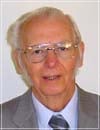
Bill McDaniel

The Faith of God's Elect

Titus 1:1-3
Bill McDaniel November, 20 2011 Video & Audio
0 Comments
Saving faith is unique to God's elect. Faith involves knowledge of the truth, and a complete reliance on Christ for salvation.

Sermon Transcript

Auto-generated transcript • May contain errors

100%
This is another one of the pastoral
epistles, Titus 1, 1 through 3. Paul, a servant of God and
an apostle of Jesus Christ, listen, according to the faith of God's
elect and the acknowledging of the truth which is after godliness. in hope of eternal life, which
God, that cannot lie, promised before the world began, but hath
in due times manifested His Word through preaching, which is committed
unto me according to the commandment of God our Savior." And again,
those words in verse 1, according to the faith of God's elect. Now again, we have that grand
doctrine of election in our sights this evening. And again, it is
Paul who brings it before us. And again, it is the connection
between his ministry and the salvation or conversion of the
elect. For notice, in saluting and here
in greeting Titus, it much resembles what Paul wrote saying, in Timothy,
saying in Titus 1.1, an apostle of Jesus Christ according to
the faith of God's elect. Now, some might be content to
say, all that Paul is talking about here, all that he has in
his mind, is that he has one and the same faith with all other
of the elect of God, all other believers." In other words, that
he is not discussing the common faith here in this particular
place, nor is he discussing his personal faith in this particular
place, or that is to become an apostle through the faith of
God's elect. That is, he is not saying that
he became an apostle because he was brought to faith or to
believe in the Lord Jesus Christ. Now, I only mention that because
there are so many today who will do anything in their power to
weaken or to destroy or twist election in some other way rather
than the absolute sovereignty of God. Now, they will go to
any length to sneak free will into the doctrine of election. Any way, any attempt they can
to get free will to have a part and a say in the election of
sinners. Thus, it is best to understand
Paul here as saying that his apostleship was meant by the
command of God to be exercised with one object in mind. one object that we are looking
at this evening, and that is to bring the elect to a saving
knowledge of Jesus Christ as He is set forth in the Gospel. Knowing, Paul said, that it pleased
God by the foolishness of preaching to save those that believe, 1
Corinthians 1 and verse 21. And did not the Lord pray? Our
own blessed Lord, on the eve of His crucifixion, that great
prayer recorded in the 17th chapter of the Gospel of John, and He
said in the 20th verse of that chapter that He prayed for those
who would believe on Him through their word, or through the word
of those that he had gathered, his apostle. And besides, Paul
said in Titus 1 and verse 3, that there was committed unto
him the word of preaching. He had a commission from God,
he had a commission from Onhi, a commission according to the
commandment of God, our Savior, and it pertained to election
and faith. It pertained to the elect and
it pertained to bringing them to the knowledge of Christ. Again,
hear Paul in Ephesians chapter 3 and verse 2. He tells the Ephesian
believers, and particularly the Gentiles there among them, and
I should add believing Gentiles, He says unto them, ye have heard
of the dispensation of the grace of God which was given to me
for you." Unquote. You have heard of that. That
he, the apostle of the Gentiles, and he declares that in Romans
chapter 11, 13. 1 Timothy 2 verse 7, he calls
himself an apostle and a teacher of the Gentiles. Again in 2 Timothy
chapter 1 and verse 11, he had a calling, a commission from
God and from Christ to preach the gospel of grace and particularly
to the Gentile and to oversee their admission into the Christian
church or into the gospel or into the covenant with God. Now
let's look at that word dispensation for a moment or two in Ephesians
chapter 3 and verse 2. In 1 Corinthians 9 17, he says
it again, a dispensation of the gospel is committed unto me. Now this word, by my count, is
found some eight times in our New Testament, that is in the
King James Version, of the New Testament, three times I see
that it is translated stewardship, and that is a very good translation
of the word. Stewardship in Luke chapter 16,
verse 2, verse 3, and again in verse 4. Four times in the King
James it is translated dispensation. And here they are, 1 Corinthians
9, 17, Ephesians 1.10, 3.2, and Colossians 1.25. One time it is translated in
1 Timothy 1.4 by edifying. Why that translation, I don't
know. But it could well have been rendered
stewardship as well. Now the point is the word from
which these words are translated eight times in our New Testament
actually have the meaning of one who is a steward, one who
has a stewardship, one who oversees or has the oversight or has the
management of a household or an estate of another. or one
who administer the property of or for other. And that's generally
the meaning of that word. Therefore, when we see the word
translated in King James as dispensation, It does not refer to a particular
period of time, but to the administration of an estate or property or household,
for it would not be sound doctrine to have Paul to say, I am manager
or steward of an epoch or a period of time. It would not be surprising
if we should read of some saying to Paul exactly what was said
to Moses in number 16 And verse 3, as the people rose up against
him, they began to resent him, and they confronted Moses to
his very face, and they said unto him, You take too much upon
you. And so they challenged Moses,
they defied his commission, which he had received from God, they
wanted equal authority with him, they even challenged the Lord
on one occasion when they said to Jesus, now by what authority
are you doing these things? Paul is adamant. He was selected,
ordained to be an apostle of God unto the Gentile. He was a chosen vessel of the
Lord to administer the gospel and his commission or his calling
was in regard, he said here, to the faith of God's elect. From our text we see some premises
that are very clearly set forth. There are four, five, or six
of them. Let's look at them real quickly
and be on our way. First of all, there is an election
of some. We repeat that from this morning.
God's elect is in verse 1. Secondly, there is a faith that
is unique unto them. the faith of God's elect. They have a unique faith and
it is a common faith as far as the elect are concerned, the
faith of God's elect. Thirdly, their faith is fed and
is drawn forth through the ministry of the gospel. Fourthly, this
faith is fixed upon the hope of eternal life everlasting spiritual
life. And fifthly, we notice, this
eternal life, says Paul, was promised unto them before the
foundation of the world. And sixthly, we see, the promiser
is God, the one who cannot lie, the unlying God, the one for
whom it is impossible for Him to lie. Hebrews 6 and verse 18,
He cannot deny Himself, 2 Timothy 2 and verse 13. Then seventhly,
what was promised before the world was manifested in due time. The promise of God was brought
to fruition in His own due and in His own chosen time. Now we've
clearly shown that there is election, that some but not all, that some
of the human family but not each and every one of them R.E.A. having been chosen in Christ
before the ages. And Paul speaks of a faith that
is unique to them, the faith of God's elect. Now it ought
to be the desire of every professing child of God, of every single
believer, to check the faith which they profess, whether it
be the faith of God's elect. Paul exhorts them to do that
in 2 Corinthians chapter 13 and verse 5. Examine yourself whether
you be in the faith. Prove your own self. All faith ought to be tried and
will be tried. We saw a week or so ago in a
message from Micah chapter 6 and verse 6 through verse 8 the first
question of concern to an alarmed or an awakened or a convicted
sinner about the welfare of their soul ought to be, what will God
accept? I am a sinner, what will God
accept? What does God require? The questions
in the scripture are, what must I do? What is the way of salvation? How shall my soul be saved? Me being a sinner in the sight
of God. Once one has entered upon a profession
of faith in Christ, the great question becomes then, is my
faith sound? Is my faith the faith of God's
elect? Can it withstand those things,
those troubles and setbacks that are appointed to try the faith
of God's elect? Can it survive when it is scrutinized
in the light of Scripture, when it is tested in some way or other. I took this question from John
Owen in his treatise called Evidences of the Faith of God's Elect. You have access to it. It'll
be on volume five and page 405, quote, what are the principal
acts and operations of faith that will evidence its truth
and sincerity in the midst of all temptation and storms that
may befall believers in this world, unquote. Now suppose we
ask the question, how to sum up the essence of the faith of
God's elect? What do we find as the, quote,
main ingredient, unquote, of the faith of God's elect? What do they believe? exactly what have they believed? What persuasion has the grace
of God put in their hearts? What do they think of Christ
and the salvation that is in Him? I should like to give you
a special quote I came across of wherein consists the main
essence or substance of the faith of God's elect. Quote, The faith
of God's elect consists in embracing, approving of God's way of saving
sinners by the mediation of Jesus Christ, relying thereon with
a renunciation of all other ways pretending unto salvation." Therein
is a summation of the faith of God's elect. In other words,
the faith of God's elect has eyes and ears only for Christ
and only for the gospel. I like to say it, this true faith
of the elect will spy out Christ in a room full of impostors. If a room is full of impostors,
the true faith of God's elect will spy out Christ, who stands
head and shoulders above all of them. It hears the sweet,
sweet voice of Christ in the gospel. When it is preached,
it is, as to them, the voice of Christ. My sheep hear my voice
and they follow me. And I like to think and to say
the essence of the faith of God's elect is summed up in that great
confession of the Apostle Peter, you'll find it in Matthew chapter
16 and 16, here is what Peter answered the Lord. Thou art the
Christ, the Son of the living God. Nothing beyond or less than
that is the faith of those to whom the Heavenly Father has
made the revelation of Christ. Again, it was Peter in John chapter
6 and verse 68 and 69, when again he said, quote, you have the
words of eternal life. We believe and are sure that
thou art the Christ, the Son of the living God. He said to
the Lord, where else could we go? To whom could we go? For
you are this. Now the Lord told Peter, it is
the Father that has revealed these things unto you. It is
the Father that hath persuaded you of this. Flesh and blood
hath not persuaded you of this, but my Father is in heaven."
So each professor, each one who professes the Lord Jesus Christ,
ought to give themselves this task. What think ye of Christ,
O my soul? And have an answer returned unto
it. What is God's way? What is God's
method of saving sinners? And to prove of the death and
the blood of our Lord, as the method of saving sinners. Which,
as Paul tells us, is through vicarious substitution and special
atonement, by making satisfaction to the justice of God, and then
by a double imputation. Our sins imputed to Christ, His
righteousness reciprocally imputed unto those that are the elect. So we look within and we say,
Art thou content, O my soul, to cast away all other props
and all other crutches and all other ceremonies and be done
with all other religious rituals and rest only? upon the Lord
Jesus Christ. One writer I read framed the
question this way, will you commit the eternal welfare of your soul
to the grace of God in Christ so that you make no attempt or
have no desire to be saved in any other way This is the faith
of God's elect expressed by Paul in 2 Timothy 1 verse 12. I know whom I have believed,
and I am persuaded that he is able to keep that which I have
committed unto him or literally entrusted unto him against that
day. We're getting back to Titus 1.
and something that Paul said in connection with the faith
of God's elect. And it is found in the last half
of verse 1. To the faith of God's elect,
and he adds, and or for, the acknowledgement of the truth
which is after godliness. That his work as an apostle is
according or in accordance with the faith of God's elect. Then
he gives us a fuller illustration of what is involved in the faith
of God's elect. and that this faith involves
knowledge. Now let's get that. I want to
say it again. This faith of God's elect involves
knowledge. Some see it in the Greek as full
knowledge. Full knowledge it would be. The
point and connection is there. Faith and knowledge are mutual
kin in the faith of God's elect. There is no true faith without
true knowledge, but where there is one, there will be the other
as well. I suspect that many Armenians
are simply content to let faith stand alone. We hear them talk
and it doesn't seem as if they believe that knowledge and revelation
is necessary to having faith in the Lord Jesus Christ, that
it is not to them a necessary element of faith, of God's elect,
You know, I've heard them say, you don't need to know anything.
You don't have to know a thing in order to be saved. But Isaiah
53 verse 11 has a wonderful statement in it when it speaks of the Lord's
righteous servant and said, by His knowledge, Shall my righteous
servant justify many? I take that to mean by bringing
them to the knowledge of himself, by revealing himself and his
word unto them. The truth acknowledged is the
gospel, the truth as it is in the Lord Jesus Christ. We grant
there is a notional knowledge. We grant that to be true. People
hear things and They have a knowledge of that and remember it and quote
it, but real knowledge that combines with the faith of God's elect
brings the reality down into the heart, so that it is not
just a notional belief or a notional knowledge, but that it is one
that is real and intimate down into the heart. And it is knowledge
with understanding. That's a part of the faith of
God's elect. So that as Thomas Goodwin, an
old Puritan preacher put it, spiritual knowledge is a main
thing in the work of grace, when the eyes of our understanding
are opened by the power of Almighty God. For the heart follows knowledge
and understanding. It acts upon knowledge and acts
upon understanding. You see how Paul prayed for the
saints that were at Ephesus? I'm turning to Ephesians. It's
in chapter 1. I want to read a couple of verses,
whether you turn or just listen is your choice. But in Ephesians
1, 17 and verse 18, Paul said he prayed gave thanks and prayed, verse
17, that the God of our Lord Jesus Christ, the Father of glory,
will give unto you the spirit of wisdom and revelation in the
knowledge of Him, the eyes of your understanding being enlightened,
that you may know what is the hope of His calling and what
the riches of the glory of His inheritance in the saints. Now,
look at the last part of Titus 1 and 1, and the connection that
is made. The faith of God's elect includes
the acknowledging of the truth. Now look at the last part, which
is after godliness. Now that's very important. Faith
and knowledge, this faith of God's elect, when they have knowledge
and when they have understanding, it has a sanctifying influence
upon the elect of God. The fruit of faith and knowledge
is holiness. As Paul says here, godliness
flows from, or sanctification, flows from faith and from knowledge. Godliness is piety. It means to be devout. It is
the practice of piety in one's religious life. The belief and
practice to which one is guided by the acknowledging of the truth
in Christ. Now, godliness, Paul uses this
word some ten times in the three pastoral epistles I counted in
the concordant. And again in 1 Timothy 6 and
verse 3, he mentions the wholesome words of our Lord Jesus Christ
and the doctrine which is according to godliness. A lot of people
say, well, if I believed in that saved by grace and once saved,
always saved, I'd just live all like I wanted to. But the influence
of it is to godliness. So that Paul said, whosoever
has the faith of God's elect and acknowledges the truth as
it is in Jesus Christ, Thomas Taylor wrote, that heart is framed
unto godliness, unquote. That heart is framed unto godliness. Now godliness is not achieved
by a code of strict asceticism. That is, godliness is not attained
by punishing or depriving the body or the flesh. Not by denying
it proper food and drink, as some have done. Not by cutting
or slashing the flesh. Not by eating spoiled food, as
the old Catholic monks used to do in the monastery. Not neglecting
the body, Paul says in Colossians 2 and 23. It's not made up of
touch-nots, taste-nots, and handle-not. Nor is it in outward form. 2 Timothy 3 and verse 5. Some have the form of godliness,
but not the power thereof. Paul contends that truth and
knowledge, the faith of God's elect, promotes godliness and
the right worship of God. Calvin wrote something on this
text, quote, the only legitimate commendation of a doctrine is
that it instructs in the reverence and fear of God, unquote. Then Paul continues his thought
in the second verse of Titus 1, in hope of eternal life. And it fits what goes before.
The faith of God's elect, the acknowledging of the truth, which
is after God in it, includes in it the hope or the expectation
of eternal or everlasting life. So that religion, Christianity,
The faith of God's elect is not restricted to this life or to
this world only. When comparing what Paul writes
to Timothy, then to Titus, we see in many things he instructs
them alike on many matters. While telling Titus that his
apostleship had in its eye the proclamation and the realization
of eternal life, So he tells Timothy, 2 Timothy 1 and 1, Paul,
an apostle of Jesus Christ by the will of God according to
the promise of life which is in Christ Jesus. Now let's look
at the word hope. In hope of eternal life. It's a prominent one in the New
Testament, especially is it a factor in salvation. It is a part of
the faith of God's elect. Paul tells us in Romans 8, 24
and 25, that while waiting for the manifestation of our adoption,
while groaning within ourselves, he says this, saved by hope,
or saved in hope. Not hoping that we will be saved,
but having hope and expectation of eternal life through Christ.
And that hope is like an anchor to the soul. That hope is to
the soul what an anchor is unto the ship. It is the confident
expectation that was an anchor to Abraham as he waited low those
years for God's promise to be fulfilled. Romans 4 verse 18.
whose faith is defined by his attitude. And that is when there
seemed to be no hope of Abraham begetting the Son and becoming
a father of many nations. Long it seemed that that hope
had passed him by. And that in the light of the
fact that the bodies of both Abraham and Sarah were procreatively
dead before God ever fulfilled the promise. Yet against hope,
he hoped. In spite of the circumstances,
he still had confidence in the word and the promise of God. For faith and hope went hand
in hand in the life of the great patriarch. For because he had
faith, he had hope and believed in the promise of God. And the
object of both faith and hope was the promise and the word
of God. God had promised. And God cannot
lie. Even so, those who have the faith
of God's elect, as Abraham hoped, have or live in the hope, the
expectation of eternal life. And in verse 2 of our text, Paul
expands upon the stability of this eternal life. For notice
the antecedent of which which is eternal life, and the object
is God. So we have eternal life, which
God, who cannot lie, promised before the world began. And here
another New Testament word of importance comes before us. when
it comes to salvation, that is the word promise. Oh, you ought
to make a study of that word. The promise of God. The promises
of our great God. The one who promised. The one
whose promise Abraham steadfastly held by. And then you know what
it said? He patiently endured, he obtained,
the promise, for eternal life is by promise. There is a double
foundation for this eternal life. Number one, the stability of
it. God is the promiser. And Paul
throws in this, who cannot lie. And God, who cannot lie, promised. Then secondly, we notice the
antiquity of the promise of God before the world, before the
ages, before time. Now again, Paul tells Timothy
and Titus essentially the same thing. What God promised and
purposed, He in due time has manifested or brought to pass. We have it here in Titus 1, 2
and 3. in 2 Timothy 1, 9 and 10. Eternal life, which He promised
before the world began, but hath manifested in these last times. What a great passage is that
to Timothy in 2 Timothy 1, 9 and 10. Promised, given in Christ
before the world. Grace. Thus Paul said, God has
manifested his word through preaching and the gospel of Christ, for
which he received a commission from God to preach the gospel
abroad, that it might be made manifest by the appearing of
Jesus Christ in the flesh and his death upon the cross. And
he brought life and immortality to light through the gospel. That's what Paul said to these
young preachers. He brought life and immortality
to light, revealed in the gospel, declared there. Thus Paul saying,
I'm a servant of God, I'm an apostle of Christ. according
to the faith of God's elect and the acknowledging of the truth.
And as we saw this morning, that they may also obtain that great
salvation with eternal glory. Now the doctrine of election
is the very heart of the gospel. Who can preach the gospel who
doesn't preach election? Who can preach the salvation
of God who doesn't preach election? It just cannot be done. It is
a glorious doctrine. and God has his elect, for them
Christ died, them the Spirit regenerates, and they are called
and converted by God's work, usually through the work of the
ministry. Thank God for this wonderful
truth, knowing, beloved, your election of God.

Comments

0 / 2000 characters
Comments are moderated before appearing.

Be the first to comment!

Joshua

Joshua

Shall we play a game? Ask me about articles, sermons, or theology from our library. I can also help you navigate the site.