Bootstrap
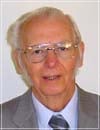
Bill McDaniel

Jesus: The Smitten Shepherd

Zechariah 13:7
Bill McDaniel November, 8 2009 Audio
0 Comments

Sermon Transcript

Auto-generated transcript • May contain errors

100%
Reading first of all that great
text from Zechariah, we have our Lord before us in this place
in verse 7, and it has to do with His death and the manner
of death that He would die. Awake, O sword, against My shepherd,
and against the man that is My fellow, saith the Lord of hosts. smite the shepherd, and the sheep
shall be scattered, and I will turn mine hand upon the little
ones." Now I'm reading Matthew 26 and verse 31, and I think
I'd like to put verse 32 with it also. Then said Jesus unto
them on the eve of his death, All ye shall be offended because
of me this night. For it is written, I will smite
the shepherd, and the sheep of the flock shall be scattered
abroad. But after that I am risen again,
I will go before you into Galilee." Now, in Zechariah 13 and 7, awake,
O sword, against my shepherd and against my fellow. When one looks at the book of
Zechariah, we learn immediately that there are several texts
here that would yield us a series of sermons from the prophecy
of Zechariah wherein we can clearly see that they are prophecies
of Christ our Lord. For it is the testimony of the
Son of God, of the apostles themselves, and for the Scriptures at large,
that there are many references and many prophecies pertaining
to our Lord to be found in the Old Testament Scripture. That
they, like John 5 and verse 39, they are testifiers of Christ. They testify of Me," said the
Lord. They bear witness of Me. What Moses has written bears
witness of Me. That according to Luke chapter
24 and verse 27 and 44, there were many things that were written
up in the prophet in Moses and in the Psalms that had to do
with the Lord Jesus Christ and must be fulfilled in His death. In John 1.45, some of the earliest
disciples took and understood Jesus to be that One that Moses
and the prophets had foretold. In Acts 8.32-35, Philip preached
Christ to the Ethiopian eunuch from the text
in Isaiah 53, verse 7 and verse 8. He preached unto him Christ
from what Isaiah had written. Paul in Thessalonica in Acts
17, verses 1 through 3, preached Christ from the Old Testament
Scripture. That the death and the resurrection
of Christ was in exact and minute harmony with the Old Testament
prophecy and the Scripture. Now, as with Zechariah 13 and
verse 7, we are upon sound footing in using it as a Christological
text, since, as we have read, the Lord applies it to Himself
in Matthew 26 and verse 31. The Lord Himself takes this text
to be about Him. Before we come to that text,
let's consider a short summation of the person and the ministry
of the prophet Zechariah. It is always interesting to know
the times in which they lived, who were their contemporaries,
the situation that existed in their particular time. Well,
concerning Zechariah, it is believed that he began his ministry as
a very young man. Chapter 2 and verse 4, that he
came to Jerusalem with Zerubbabel after the Babylonian captivity
had ended, and that Zechariah was a contemporary of the prophet
Haggai, who moved the people to rebuild the temple again. And that the times of these prophecies
of Haggai and of Zechariah was after the return from the Babylonian
captivity. And as John Gill put it, the
design of these prophecies was to stir them up to rebuild the
temple and to re-establish the purity of the worship of God,
as well as to rekindle again afresh anew their expectation
of Messiah. To quote John Gill, quote, the
book consists of various visions and prophecies reflecting to
him the times of the gospel." For example, in Zechariah 9 and
verse 9, it foretold that unusual, marvelous event that the Lord
would enter Jerusalem riding upon the coal, the foal of an
ass. And you have it fulfilled in
the book of Matthew 21, And in John chapter 12, exactly as Zechariah
had predicted, Zechariah 11 verses 12 and verse 13 spoke of the
30 pieces of silver by which our Lord would be sold and betrayed. You have it in Matthew 27, 9
and 10. And that 30 pieces of silver bought the potter's field to
bury strangers in. In Zechariah 12 and verse 10,
you have that prophecy of looking upon one whom they had pierced. And that's John 19 and verse
37. Now, the present text as well,
in chapter 13 and verse 7, which the Lord applies to Himself,
does so shortly before the hour of His death that He did in the
presence of His band of disciples apply this passage of Scripture
to Himself. Now before we dive in to the
deep end of the pool, let's make a point concerning the several
ways and relationships between Christ and the people of Christ
as set forth in the Scripture. Such as, these are several of
the ways that the relation between Christ and His people are put
out for us in metaphor or in symbol. Such as, He is the head
and they are the members. Christ is the head of His people
and the head of the church and they are the members. Again,
He is the life giving vine, having deep root, and they are the branches,
receiving their nourishment and their strength from the vine,
or the root, or the stalk, and giving their strength. He is
the foundation. They are the living stones that
are built upon that foundation and that are set in the temple.
Finally, He is portrayed as the groom and they are portrayed
as His bride. Now, all of these are metaphors
and symbolic representation to express the intimate union and
the connection between Christ and His people. Then, in addition
to that, there is that frequent metaphor both in the Old Testament
and the New Testament that Christ is the shepherd and we, his people,
are the sheep of his pasture. It is not a thing to be denied
that the Lord's Word does oftentimes use the metaphor or the symbol
of shepherd and of sheep. As for example, that beloved
and often quoted 23rd Psalm, the Lord is my shepherd. He puts me in
green pasture. He guides me beside still waters. His rod and His staff for my
protection. They comfort me. We read in Psalm
100 and verse 3, we are His people and the sheep of His pasture. Isaiah likened the human race
to sheep. Sheep that have gone astray. Isaiah 56 and verse 3. Gone astray and in great danger
of death and destruction. And how God in the Old Testament
rebukes the false teachers and leaders and shepherds, the overseers
of the people of God. those who claim to be and are
supposed to be, but are indeed wolves in sheaved clothing. He rebukes them strongly and
again and again. For example, Isaiah 56 and verse
11. Shepherds that cannot understand,
they look after or unto their own way every one for his gain. They do not look out for the
good and the welfare of the sheep or the people, but themselves. Jeremiah 50 and verse 6, My people
have been lost sheep. Their shepherds have caused them
to go astray. Can you imagine? Led astray by
the very shepherds that were commissioned to keep them in
the way. Ezekiel weighs in heavily upon
this matter. Ezekiel 34 and verse 2, he says
there, Son of Man, prophesy against the shepherds of Israel. And he says again, Woe to the
shepherds of Israel that do feed themselves. Not the sheep, but
they feed themselves. So we must get at our text for
today with that in the back of our mind. Now, this text might
seem obscure and brought in abruptly if it were not for the words
of the Lord on the eve of His death that this was a prophecy
concerning Him. That is, Sanctius, a man named
Sanctius said, we have this verse expounded by the very best expositor,
Jesus Christ, and applied specifically to Himself." Now we have a sword
in the text. Awake, O sword! And as Hinkstenberg, a German
writer, observed, the sword in this place is both personified,
that is, it is spoken to, it is as if it could receive, and
does receive a command. Now the sword is a metaphorical
symbol of authority and of judgment and is and can be an instrument
of death. And this sword is given a command. It is sent upon a specific and
a unique errand. Now the sword also is a symbol
of judicial power. We read in Romans 13, verse 1
through 6, of the magistrate, and particularly in the fourth
verse, Paul says, He bears not the sword in vain, for he is
the minister of God to good, a revenger to execute wrath upon
him that does evil. Again, it is used in a way of
a metaphor in Luke chapter 2, And verse 35, when Mary is told
that a sword would pierce through her own soul also. It would not be made, however,
of glittering steel. It would pierce not her flesh,
but her soul. But in that soul, a spear or
a sword would pierce her, which speaks of the agony. that would
come upon her, no doubt, in seeing that which was born of her, that
child that she bore in His agony and shame and suffering upon
the cross. But in Zechariah 13 and 7, our
text, we have a sword, a sword which answereth only to God. None other can give it a command,
and it obeyed. It lies still at the command
of any other except by Almighty God. It stays in its sheath and
goes not forth except by the command of Almighty God. I would like to repeat, it answers
to none but God. None other can command it. It will slumber and are awakened
as God gives it a command. It knows only the voice of God. This sword recognizes only the
voice of God. Now, let's consider another case
where the sword, or a sword, is personified and is spoken
to as if it had ears to hear. Jeremiah 47. And verse 6 and
7, there is kind of an opposite command or desire for the sword. This chapter, that would be chapter
47 of Jeremiah, contains a prophecy. And that prophecy concerns great
destruction that would be sent against the Philistine, the enemy
of the people of God and others. The destruction is likened to
overflowing water, or a flood. This destruction came actually
by the hand of the Chaldeans, and yet is called the sword of
the Lord. You have that interesting again
in Isaiah chapter 10 and verse 5, where God said, or the prophet
said, Assyria is called the rod of My anger. In other words,
God would use them as a rod of His anger against the people. And their staff in their hand
is My indignation. For they were the instrument
of God to inflict punishment. But here, here's Jeremiah 47
and verse 6, O thou sword of the Lord, how long ere, or literally
before, You are quiet. Put up, or the margin has it,
gather thyself into thy scabbard. Rest and be still. How long,
O sword, ere that is done? How long till your rampage is
at an end? How long until you are quiet
and take a rest? But in verse 7, saying, How can
it be quiet seeing the Lord had given it a charge against Ascalon
and against the seashore? There has He appointed it." There
again, a sword. But back to Zechariah 13 and
verse 7. It is a command from God Almighty
to the sword to go. To go and to smite. to go and
to smite Christ unto death, which is confirmed in Matthew 26 and
verse 31. Now, the sword is God's avenging
wrath, or His judgment, or His justice against our sin-bearer,
the Lord's Christ, so that the target of the sword is the great
shepherd of the sheep. and has a dual role if we look
at it in our text. He is both. Number one, my shepherd,
says God. My shepherd. Oh yes, the shepherd
of the people. But he is my shepherd, saith
the Lord, in that I have appointed him and ordained him in that
he does my work towards my people. Secondly though, look, my fellow. And we want to park here and
suck some sweet nectar out of this flower. The man that is
my fellow. Now it says in verse 7, against
my shepherd and against the man my fellow. But these are not
two separate personages that are in view here. They are one
and the same. He is both a shepherd and is
God's fellow. The same both in one and at the
same time. But let's consider them separately
before we consider them together. Number one, my shepherd. The sword is commanded to go
and to smite my shepherd. Isaiah 40 and verse 11 speaks
of one who, shall feed his flock like a shepherd, gather the lambs
with his own arm, carry them in his bosom, and gently lead
those that are with young." And the Lord referred to Himself
as the Good Shepherd. John chapter 10 verse 11 and
again in verse 14. And New Testament Scripture refers
to our Lord under the capacity of a shepherd. For example, He
is called the chief shepherd in 1 Peter 5 and verse 4. Again, that great shepherd of
the sheep in Hebrews 13 and verse 20. Even as the shepherd and
the bishop of your soul, 1 Peter 2, And verse 25, He is the shepherd
that oversees and watches out for your soul. But there is a
second designation here in Zechariah 13 and verse 7. Let's say it
again. The man that is my fellow. Or some of those words are in
italic. It is literally the man my fellow. You might find this word translated,
fella, in the King James Version of the Scripture. In others,
you might find it translated as companion or associate in
other versions of the Scripture. This will make an interesting
word study when we look at what is involved. The Hebrew word
here literally means to associate with, to be a companion, to be
a comrade or a kindred man one unto the other. In other places,
you will find the word translated neighbor. Leviticus 6 and 2,
19 and 15, and 24 and 19. All of those places, this same
Hebrew word is translated neighbor. Those knowledgeable
in the Hebrew contend, number one, that the word only appears
in the first five books of the Bible. The books of Moses or
the Pentateuch. And number two, that the meaning
of the word is always meant to indicate the very nearest relation
that is possible. Nearness of kin is the meaning
of the word. And when it is translated neighbor,
it is used to illustrate how grievous a sin it is to lie to
or injure a neighbor because both have a common origin. But the common thread in all
of these places where the word appears in the Pentateuch, that
is, the first five books of the Bible, is this. It always expresses
the closest relationship between one person and another. That's
its meaning. The closeness of one unto another. Humanly speaking, and as Hinstingberg
wrote, not only does it denote the closest possible relation,
but one which cannot be arbitrarily formed. That is, it is one that
cannot be formed by the will of any person. It cannot be done
randomly, or by the will, or the whim, or the fancy. And the
reason is, it comes by birth and continues even if it be against
one's will. In that you can't say, never,
that your brother is no longer your brother. Now you may say,
I have nothing to do with my brother on account of such and
such, but you can never say that your brother is no longer your
brother because it is a relationship that was established by nature
or by natural law. Thus, when the Messiah, the Lord,
the Christ, is called the Fellow of Jehovah, the one to be smitten,
it denotes one who shares the very closest relationship or
union possible, and one who is called the man that is my fellow,
yet is not a common man, not a common man from the stock of
Adam, and not just a man, not a mere man, But the man that
is my fellow, and God is speaking. The man that is my fellow, or
companion, or close associate. The man that is my fellow. We read in the New Testament,
even the man Jesus Christ. 1 Timothy 2 and verse 5. For the word fellow speaks of
the divine nature. And the word man speaks of the
incarnation of the One who is eternally one with the Father,
the One who assumed the body prepared for Him, Hebrews 10
and verse 5, and was God manifest in the flesh, 1 Timothy 3 and
verse 16. And when the eternal Companion
of Jehovah God had been made of a woman and made under the
law. And when the hour was come, then
there was given this command to the sword to awaken, to stir
itself, to arise from its rest, to leave its scalper or its holster
and go on a mission. And that mission to execute judgment,
to find its intended target and victim. and to spare none, but
to inflict as needed. And its target, what is it? Who is it? It is the shepherd. My shepherd. It is the man that
is my fellow. Now the command under the sword
is twofold as we look at it. Number one, awake. Arise. Become alert. Make ready. Be at attention. And number two,
go smite the shepherd. Not just threaten, but actually
smite. Not just rattle the saber at
him or before him, but actually smite. And smite not a glancing,
easy blow. And not just a temporary wound,
but deal a death blow to my shepherd and my fellow." So that the sword,
in doing that, is acting in full authority of God, and is not
acting against rogue shepherds, nor even against the straying,
disobedient, sinful sheep, but against the Great Shepherd Himself. God the Father, Smoke God the
Son, would no less atone for our sins. and that He did. He spared him not, Romans 8.32,
when our Savior, God's Son, was on the cross and it is time to
call in the dead. God spared him not. Does this
raise a question in our mind? Does it seem to be a contradiction
between the requirement of God's law forbidding one to inflict
injury upon a near of kin. All through the Pentateuch that
is taught not to do harm to one near of kin. And yet it is God,
the nearest of kin to Christ, that sends the sword to smite
His own shepherd and His own fellow. This allows us to make
two points that we dare not miss. Number one, that God The great
lawgiver is above his law and is the only one who is. As for example, he is not bound
to worship another. None has authority to bind him
under the law of worshiping another. And number two, more to be considered,
how lofty and how glorious must be the intended purpose of God
in sending the sword to smite his shepherd and his fellow.
In disregard of a law which was to be followed strictly by men,
was to be reckoned sacred among them, so we ask what great goal,
aim, or purpose is behind this unique arrangement? What could
move God to send forth the sword against His own darling one? Has He found in Him some imperfection? Has He found Him in anything
disobedient? Is there aught in Him that is
worthy of death?" And we say, nay, God forbid, perish the thought,
may it never be. Why then is He smitten? Why is
the sword set against Him that it might smite Him? Why is this
Holy One yonder upon the cross? And why, as Isaiah said, is His
visage more marred than any of the sons of men? And is far more
than the sons of men, Isaiah 52 and verse 14, Why has it pleased
the Father to bruise Him and to put Him to grief and has made
His soul an offering for sin? As Isaiah 53 and 10 said, that
is to ask, why is the sword of wrath and the sword of justice
so fully unsheathed against Jehovah's fellow? That with great determination. Ah yes, God has made our sins
to light upon Him. He has put our sins upon Him
who knew no sin, that He might be made sin for us. And when all the sins of all
of the elect were to meet and to light upon Him, when officially
and actually those sins were imputed to Him, then the sword
of the Lord is aroused from its scalper and is loosed. And loosed in awful fury and
justed." It is as a flaming sword. It pierced the holy and righteous
soul of the Lord's fellow as he suffered at the cross. Back
in the garden, he perceived it and he told his little flock,
Matthew 26, 31, What was written of the prophet Zechariah was
about to be fulfilled. The shepherd smitten and the
sheep would be scattered. Then in the garden, he said,
my soul is exceedingly sorrowful unto death. Matthew 26, 38, Mark
14, and verse 34. But on the cross, when on the
cross He said, My God, My God, why
hast Thou forsaken Me? Matthew 27, verse 46, Mark 15,
and verse 34. It was on the cross as our Lord
was there and the sword was piercing that sin was more fully laid
upon Him. And the curse seized Him It was
there on the cross that our tech in Zechariah 13 and 7 had its
fullest fulfillment. The sword is plunged into the
soul, as we might say, all the way up to the hat or to the handle. Not just a prick of the point,
not a shallow wound, but the sword is thrust deep into the
soul of our righteous substitute to smite him unto death. The Puritan Thomas Goodwin made
the point concerning the Lord, saying, My God, my God, why hast
Thou forsaken me? That we were in and through the
sin of Adam cut off, separated from God in the sense that we
had no peaceful fellowship or loving fellowship with Him? Even
so, said the Puritan Goodwin, when Christ came to the death
of the cross, quote, there was as near a cutting off of Christ
from God as there could possibly be, unquote. Now let me say that
again. We don't misunderstand and fall
into blasphemy. that in His death upon the cross
there was as near a cutting off of Christ from God as there could
possibly be. And not a cutting off, but as
near as possible. Not cut off, that's impossible. And as much as need be for our
atonement and salvation, sufficiently as need be that our sin might
be justly punished and atonement might be made, that while He
was suffering unto death in our stead upon that cross, nothing,
absolutely nothing was done to mitigate the pain of His body
or to comfort the agony of His soul. Neither friend nor angel
came with any relief when the temptation was finished by Satan. Angels ministered unto our Lord
in His hunger, Matthew 4 and 11 and Mark 1.13. Even in the agony of the garden,
we read, an angel came and strengthened Him in Luke 22 and 43. But on the cross, on the cross
at Golgotha, once the time was come for the sword to go forth
and smite him. God the righteous judge punished
his only begotten Son, his shepherd and his fellow, and spared him
not, as we read in Romans 8.32. He did not spare him the death
of the cross, and he did not even lighten the strokes because
They were falling upon His own beloved Son. And though it was
impossible for the Son and for the Father to be severed, yet
God did nothing to relieve the pain and the agony of His Son
while He is bearing our sin on the cross. In other words, He
let justice be fully satisfied. He let the curse be fully endured. He let sin have its full and
just dessert. In fact, it was God that punished
sin and He did it in His own Son. It was not the devil. It was God Almighty that made
a righteous atonement. It was not the devil nor the
fallen angel. It was not apostate men that
smoked the sun. in the sense of this great sword. The soldiers smote him with canes,
yet God had the sword to smite him. And while a soldier thrust
a spear into his side, it was the just and holy God that sent
the sword into his very soul. This was by covenant arrangement
made before the world began. The Son Not only gave His back
to the smiters and His cheeks to those that plucked out the
hair. Isaiah 15, verse 6, He gave His
soul to the sword. He gave His soul unto the avenging
justice of God. Oh, awake, O sword, against My
shepherd and against the man that is My fellow. the shepherd. And that means unto death. Now, in closing, let me ask you
a question. Would you know what God thinks
of sin? Would you know the best way to
gauge the heinousness of sin? I bet a lot of folks would say,
why, in hell, of course. Or others might say, driving
our first parents out of the garden. Or others might say,
the great flood. Or others might say, Sodom and
Gomorrah. But I say to you, the greatest
place to get a proper view of sin and of the evil of sin is
yonder at the cross, where God required the death not of a sinner,
not of an apostate, but the death of His only Holy Son. as a way to punish sin and save
the sinner, God said to the sword, go, smite My shepherd, smite
the man that is My fellow. Yes, the sword that had long
slumbered. And I think there's something
interesting in connection with this. In Romans 3, 24 and 25,
I won't read it, but sins passed through the forbearance of God
is the subject. Something interesting there.
this sword that had long slumbered, now is called, arise, awaken,
leave thy scabbard, go on a mission, and smite the man that is my
fellow." The sword has been awakened against our Lord. The sword has
been awakened against our Lord once, and the sword will never
be awakened against our Lord again. And thank God that it
cannot be awakened in final destruction to those that our Lord died for
at the cross. His death is sufficient atonement
for all of the elect. And God has provided that in
the death of His very own Son. He has been smitten, God's shepherd,
God's fellow. God's nearest one has been smitten
for our sin. And let us be thankful to God
for that great provision.

Comments

0 / 2000 characters
Comments are moderated before appearing.

Be the first to comment!

Joshua

Joshua

Shall we play a game? Ask me about articles, sermons, or theology from our library. I can also help you navigate the site.