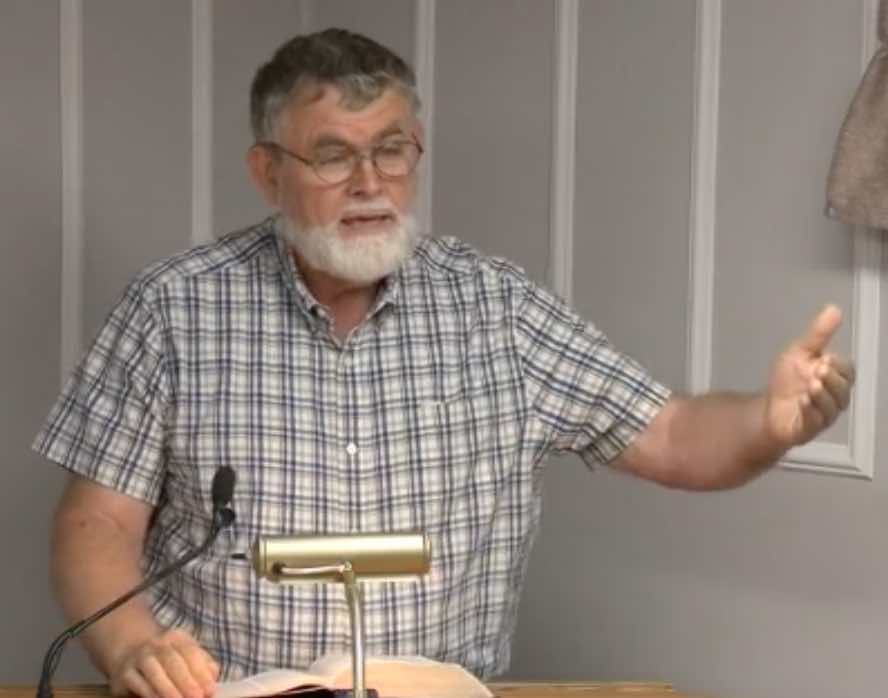
In his sermon titled "The Rich Young Man" based on Mark 10:13-31, Mike McInnis addresses the theological doctrine of salvation and the necessity of humility in entering the Kingdom of God. He illustrates this through the encounter between Jesus and the rich young ruler, emphasizing that external compliance with the law is insufficient for salvation. McInnis cites the passage where Jesus instructs the young man to sell all his possessions and follow Him, positing that true discipleship requires a complete relinquishing of worldly trust, particularly in riches. Key Scripture passages discussed include Mark 10:15, which highlights the need for a childlike humility, and Mark 10:27, emphasizing that salvation is wholly a work of God's grace, stating that "with men it is impossible, but not with God." The sermon underscores the practical importance of understanding human inability and the necessity of divine intervention in the salvation process, a hallmark of Reformed theology.
Key Quotes
“Except we become as little children, we cannot enter the kingdom of God because we must be brought to a place of humility before Almighty God.”
“He wasn’t saying it is possible for the camel to go through this eye of the needle... He was teaching, look, you cannot be saved by the activity of the flesh.”
“Without the Lord, brethren, you’ll perish. He alone is the Savior.”
“What can a man do to gain the love of the Lord? Nothing in the world. But does that mean we tell men don’t do anything? No. We tell men, seek the Lord while he may be found.”
The Rich Young Man question's eternal life and is challenged by Jesus to sell his possessions and follow Him, highlighting the challenge of wealth in salvation.
The Rich Young Man's encounter with Jesus as recounted in Mark 10:17-27 illustrates significant truths about salvation and the nature of true discipleship. Initially, he asks Jesus what he must do to inherit eternal life, demonstrating a common belief in the necessity of personal effort for salvation. Jesus replies by referencing the commandments, to which the young man asserts he has kept all from his youth. However, Jesus reveals his lack of understanding by highlighting the one thing he lacks—releasing his trust in riches. This points to the fundamental truth that true acceptance of Christ requires a heart detached from material possessions and a spirit that acknowledges complete dependence on God for salvation.
Furthermore, Jesus' admonition that it is easier for a camel to go through the eye of a needle than for a rich man to enter the kingdom challenges the notion that wealth equates to divine favor. The disciples, astonished by this, inquire who then can be saved, prompting Jesus' statement that what is impossible with man is possible with God. This emphasizes the sovereign grace of God in salvation, wherein only through His mercy and intervention can anyone inherit eternal life.
Mark 10:13-31
Salvation by grace alone is affirmed through scripture, which teaches that apart from God's grace, no one can be saved.
The doctrine of salvation by grace alone is foundational to the Reformed faith and derives from a thorough examination of Scripture. In Ephesians 2:8-9, Paul explicitly states, 'For by grace you have been saved through faith, and that not of yourselves; it is the gift of God, not of works, lest anyone should boast.' This establishes that salvation is not earned through human effort or merit, but is a divine gift from God.
Additionally, the encounter with the Rich Young Man demonstrates this principle vividly. Despite his apparent adherence to the law, he was sent away sorrowful because he was unable to relinquish his wealth. This reflects the heart's need for transformation that only God's grace can provide. The disciples' astonished reaction serves to underscore the impossibility of salvation through human works, further solidifying the truth that it is by God's grace alone that anyone can be brought into His kingdom. As articulated in Romans 11:6, 'And if by grace, then it is no longer of works; otherwise grace is no longer grace.' Thus, it is essential to recognize and affirm that salvation is wholly dependent on God's sovereign grace.
Ephesians 2:8-9, Romans 11:6
Humility is essential for Christians as it aligns with the teaching of Jesus, who emphasized that one must be like a child to enter the kingdom of God.
Humility holds a vital place within the Christian faith, as it reflects the true posture of the heart required to enter the kingdom of God. Jesus teaches in Mark 10:15 that, 'Whoever does not receive the kingdom of God like a child shall not enter it.' This statement highlights the necessity of childlike faith and humility, whereby one acknowledges their unworthiness and total dependence upon God's grace.
Being humble before God is integral because it confronts the natural human inclination toward self-reliance and pride. Throughout Scripture, we see that the proud are resisted by God, while the humble are given grace (James 4:6). The Rich Young Man epitomizes the struggle against pride, as he could not see beyond his own self-righteousness and possessions to follow Christ truly. Humility allows believers to recognize their sinful state and understand their need for a Savior, making it a foundational aspect of genuine faith. As we cultivate humility, we align ourselves with the divine purpose, allowing God's grace to work in us and through us as we grow in Christ-likeness.
Mark 10:15, James 4:6
Comments
Your comment has been submitted and is awaiting moderation. Once approved, it will appear on this page.
Be the first to comment!
