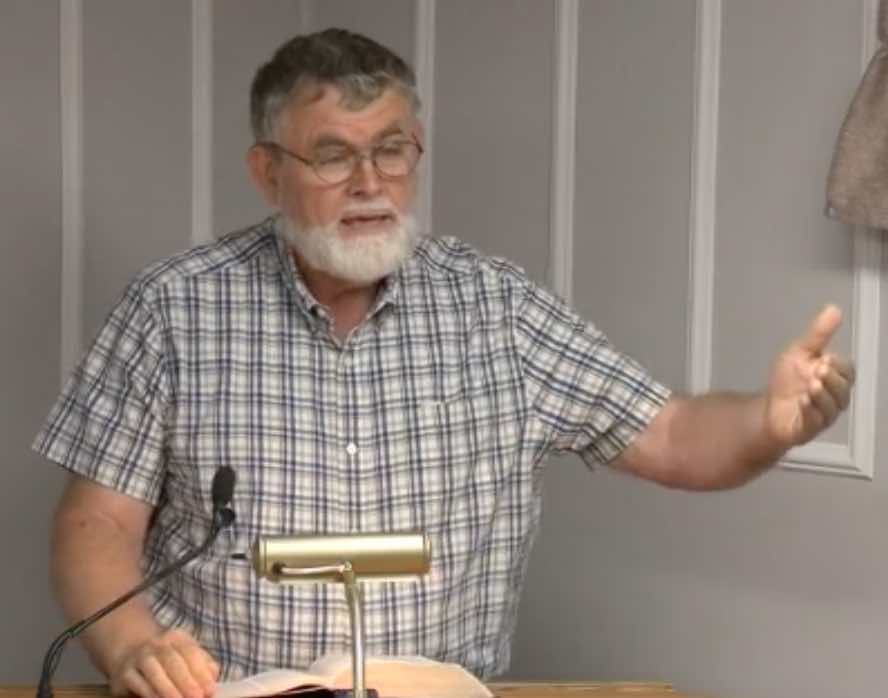
In this sermon, Mike McInnis addresses the theological topic of the church as the “house of God” and emphasizes the necessity of obedience to Christ's precepts within the local assembly. He argues that declaring the mystery of godliness is fundamental, affirming that any deviation from the doctrine centered on Christ’s sufficiency as priest and king amounts to false prophecy. Supporting his argument, he references 1 Timothy 3:15 regarding the church as the pillar and ground of truth, and 1 Peter 2:5 about believers as living stones building a spiritual house. The sermon encourages believers to recognize their communal responsibility in assembling together, as true love for one another is essential for a genuine expression of the church, delineating the significance of fellowship and sound doctrine in sustaining the church as a witness to the world.
Key Quotes
“To preach any other message is to prove oneself to be a false prophet, and to embrace any message other than that which centers in the all-sufficiency of Christ as priest and king is to deny the very foundation upon which the church of the Lord Jesus Christ firmly rests.”
“A local assembly cannot be rightly called the church where there is an absence of that exercise [of teaching the Word]. Sound doctrine, which exalts only Christ, is the very basis upon which it must stand.”
“A man cannot be walking in the truth if he has no regard for the assembly of the saints.”
“By this shall all men know that ye are my disciples, if ye have love one to another.”
The Bible describes the local church as the assembly of God's people, the house of God, where Christ is the head.
The local church, as described in Scripture, is not a physical structure but the assembly of God's people gathered in His name. In 1 Timothy 3:15, Paul refers to it as the 'house of God,' emphasizing the importance of mutual love and sound doctrine. The church exists to declare the truth centered on Christ, which means that teaching anything else not only undermines God's foundation but also misrepresents the nature of His body. In Matthew 18:20, Jesus assures us that where two or three gather in His name, He is present among them, highlighting the significance of the assembly itself as a living testament to God's truth.
1 Timothy 3:15, Matthew 18:20
The Bible asserts that Christ is the head of the church, which is His body, and all members serve under His authority.
Scripture clearly establishes that Christ, as the cornerstone, becomes the foundation of the church. Ephesians 1:22-23 articulates that God has put all things under Christ's feet and made Him head over all things for the church, which is His body. This metaphor illustrates the deep interconnection between Christ and His followers; just as a head gives direction and life to the body, so does Christ govern and sustain the church. Furthermore, in Colossians 1:18, it states that He is the beginning, the firstborn from the dead, making Him supreme in all things. This divine authority reinforces the vital need for every member of the church to honor and submit to His leadership.
Ephesians 1:22-23, Colossians 1:18
Love is essential for Christians as it reflects their relationship with Christ and unites them within the church.
In the context of the church, love serves as the foundational bond that unites believers together. Jesus teaches in John 13:35 that 'by this, all men will know that you are My disciples if you have love for one another.' This love is not merely an emotional feeling but a commitment to serve and edify one another actively. The Apostle Paul emphasizes the need for love to permeate all interactions within the body of Christ, as seen in Romans 12:10, urging believers to 'be kindly affectioned one to another with brotherly love.' Such a spirit cultivates a community marked by mutual respect and encouragement, creating an environment where each member can flourish in their faith and witness.
John 13:35, Romans 12:10
The church as the pillar and ground of the truth signifies its role in upholding and proclaiming the gospel.
Paul's description of the church as the 'pillar and ground of the truth' in 1 Timothy 3:15 highlights its vital role in safeguarding and promoting the core tenets of the Christian faith. This metaphor conveys that the church is not only a place for gathering but also a divine institution tasked with upholding the doctrines of grace as revealed in Scripture. The 'pillar' suggests a structural support to hold up the truth, while 'ground' indicates a firm foundation upon which believers stand. Therefore, the church must dedicate itself to sound teaching and proper living according to biblical principles to effectively fulfill its mission. Without this commitment, the church risks compromising its role and diluting the gospel message.
1 Timothy 3:15
Comments
Your comment has been submitted and is awaiting moderation. Once approved, it will appear on this page.
Be the first to comment!
