Bootstrap
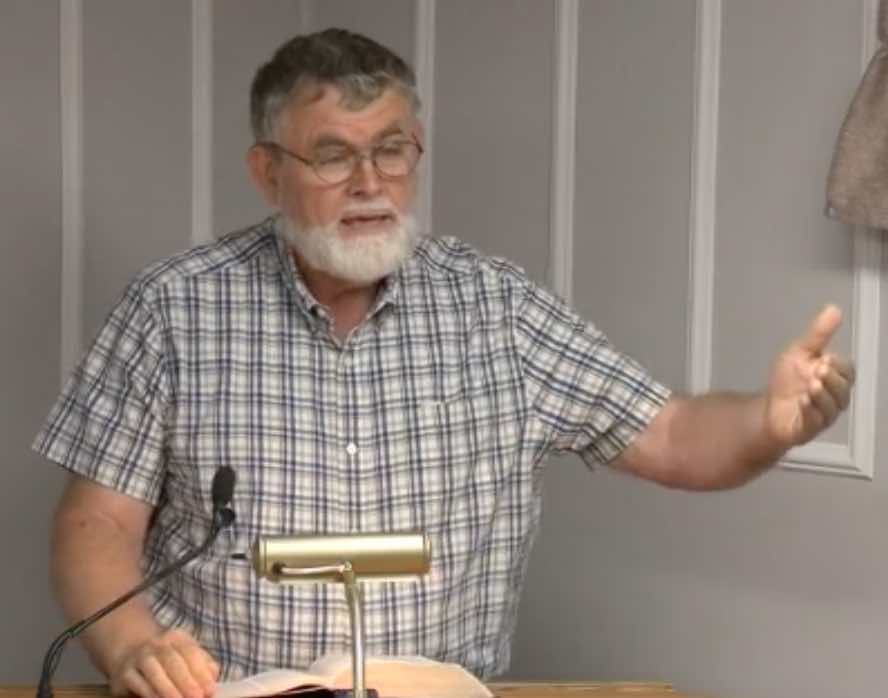
Mike McInnis

God Judgeth The Righteous

Psalm 7
Mike McInnis April, 15 2018 Audio
0 Comments
Christ In The Psalms
What does the Bible say about God's judgment?

The Bible teaches that God judges the righteous and is angry with the wicked every day, as affirmed in Psalm 7.

Psalm 7 makes it clear that God is not only the judge of the righteous, but He is also just in His anger towards the wicked. The psalmist acknowledges God’s role in ensuring that justice is upheld. In verse 11, it states that 'God judgeth the righteous, and God is angry with the wicked every day.' This confirms the biblical truth that God's judgment is real and certain, emphasizing that His justice, while accompanied by mercy, does not overlook sin. The justice of God is rooted in His holy nature, ensuring that every action is held accountable, whether for good or ill.

Psalm 7:11

How do we know God is just?

The justice of God is evident in His consistent judgment of the wicked and the salvation of the upright in heart, as stated in Psalm 7.

God's justice is foundational to His character and can be seen throughout Scripture. Psalm 7 highlights a clear distinction in God's treatment of the righteous and the wicked. He is portrayed as the one who 'trieth the hearts and reins,' indicating His intimate knowledge of humanity's true nature. Furthermore, verse 9 calls for the wickedness of the wicked to come to an end while establishing the just. This dual action of judgment and justification reveals God's unwavering commitment to righteousness and truth. His actions toward individuals are consistently aligned with His nature, embodying justice that is both certain and unyielding, ultimately pointing to the cross where Jesus bore the penalty for our sin while satisfying divine justice.

Psalm 7:9

Why is God's mercy significant?

God's mercy is significant because it offers grace and repentance to the wicked, allowing them to turn from sin and receive forgiveness.

The mercy of God stands in striking contrast to His justice, as highlighted in Psalm 7. While God is angry with the wicked, His mercy remains readily available for those willing to turn from their sins. This truth is underlined in verse 12, where it states that God's anger holds back as long as there is an opportunity for repentance. Such mercy is vital for believers, as it provides the hope of redemption. Furthermore, understanding that mercy is given 'to whom I will show mercy' reinforces the sovereignty of God in salvation. This mercy is not a license to sin, but rather an invitation to come humbly and seek forgiveness, highlighting God's loving nature in the face of human sinfulness.

Psalm 7:12

Sermon Transcript

Auto-generated transcript • May contain errors

100%
Psalm 7, and the title of this psalm is
the Shigion of David, which he sang unto the Lord concerning
the words of Cush the Benjamite. And, of course, we are not certain
of all of these meanings of these words, the
Shigion of David, which he sang. I'm not 100% sure, as are really
none of the supposed scholars that study these things, and
there are different opinions about it, which leads me to believe
nobody really knows. But it probably has something
to do with the construction of the psalm, which of course is
a song, and which he sang unto the Lord concerning the words
of Cush the Benjamite." Now, there is debate about who Cush
the Benjamite is. Of course, David had many enemies,
and several of them were of the house of Benjamin. I think most
likely, The two that this could be, I think most likely, the
Cush, the Benjamites, is either speaking of Saul, whose father
was named Kish, and it was sometimes a practice to call the son by
the father's name, and so it could be speaking of Saul. But
I think more likely it's speaking of Shimei. who was, I don't know
if you remember who Shimei was, but when David was fleeing from the presence
of Absalom, Shimei was up on the rocks where David was coming
by, and he cursed David. And he spoke harsh things against
David. And he was of the house of Benjamin
and of the tribe of Saul and related to Kish. And so could
be speaking about Shimei, I think probably that's who this is speaking
of, but we don't really know that. So it's interesting that Shimei was one whom David said,
let him curse. He said, because the Lord has
judged me. He said the Lord gave him that cursing. And the Lord
did ordain those things that Shimei did. But it is also interesting
to note that one of David's last requests was not to let old Or
not David, but Solomon's request was not to let Shimei live. And he was destroyed as all the
enemies of the Lord are, even though those works that they
perform, they perform for the purpose of fulfilling the purpose
of God. Judas is a good example of the
same thing. I mean, the Lord said, You know,
it's an ordained thing that he should do what he's going to
do, but woe be unto him who does it. It would have been better
if he had not been born. And so, you know, those things cause
us to pause and consider the glory of God, and it causes those
who are in rebellion against God to magnify their rebellion. They say, well, that ain't right. Whatever God ordains to be right
is right, whether you like it or you don't. It doesn't make
any difference about that. And you know, until a man comes
to that place where he is willing to bow down before God and give
God glory regardless of what transpires, he's not really worshipping
God, he's worshipping his thought about who God is. And so it is. So we see here, of course, the
words of David, This is the prayer of the Lord Jesus Christ. O Lord
my God, in Thee do I put my trust. Save me from all them that persecute
me, and deliver me, lest He tear my soul like a lion, rending
it in pieces while there is none to deliver. Oh Lord my God, if
I have done this, if there be iniquity in my hands, if I have
rewarded evil unto him that was at peace with me, yea, I have
delivered him that without cause is mine enemy. Let the enemy
persecute my soul and take it, yea, let him tread down my life
upon the earth and lay mine honor in the dust. Selah. Arise, O
Lord, in thine anger. Lift up thyself because of the
rage of mine enemies, and await for me to the judgment that thou
hast commanded. So shall the congregation of
the people come past thee about. For their sakes, therefore, return
thou on high. The Lord shall judge the people.
Judge me, O Lord, according to my righteousness and according
to mine integrity that is in me. Oh, let the wickedness of
the wicked come to an end, but establish the just, for the righteous
God trieth the hearts and reins. My defense is of God, which saveth
the upright in heart. God judgeth the righteous, and
God is angry with the wicked every day. If he turn not, he
will whet his sword. He hath bent his bow, and made
it ready. He hath also prepared for him
the instruments of death. He ordained his arrows against
the persecutors. Behold, he prevaileth with iniquity,
and hath conceived mischief, and brought forth falsehood.
He made a pit, and digged it, and is fallen into the ditch
which he made. His mischief shall return upon
his own head, and his violent dealing shall come down upon
his own pate. I will praise the Lord according
to his righteousness, and will sing praise to the name of the
Lord Most High." Now, one of the wonders and amazements that
we have, considering the Lord Jesus Christ as He walked among
men as a man, and was tempted in all points like as we are,
and underwent the same range of emotions that every man does. He had the same weaknesses in
the flesh that every man has. And yet, the Scripture says He
was without sin. And we see him here crying out
to be delivered from those that persecuted him. But yet, the purpose for which
he came was to be persecuted, but you see, he had to undergo
those persecutions. They were real. They weren't
imagined. Like some people imagine that
God predestines things and then somehow or other stuff just happens
and the things that God predestines don't really individually take
place. But no, every individual action
that God ordains to occur must occur. Every one. The footprints
that an ant leaves on its way from one side of the ant bed
to the other is ordained by God. Now, you can say that's silly
if you want to, but then that's because you haven't considered
what it is for God to be God. I mean, He's in control of all
things. There's nothing outside the realm
of His design. Stuff doesn't just happen, it
happens because He ordains it to occur. Now, again, the rebels
against God, they don't like that idea. They'll fight you
tooth and toenail with that. They'll call you all kinds of
names and they'll tell you you're this and you're that and that's
stupid and all this. But in order to worship God as
God, we must recognize that He is God. He said, I am God and
there is none like me. I make peace and I create evil. I, the Lord, do all these things.
I kill and I make alive. and who can deliver out of my
hand. He is the Lord. But yet in the amazement of amazements,
and how can it be? How can it possibly be? Yet He
came and walked among men as a man, and He underwent the same
concerns that every man undergoes. And we see Him here, O Lord my
God, in Thee do I put my trust. Save me from all them that persecute
me and deliver me." He called upon His Father because He knew
that His Father was the only one that could deliver Him. He
had perfect faith. And deliver me, lest He tear
my soul like a lion, rending it in pieces while there is none
to deliver. He had the fears that come upon
men. They gathered up around me. They
are going to destroy me. He underwent those things. While
there's none to deliver, sometimes it seems that in the midst of
our troubles, that the hand of the Lord is far off from us,
does it not? I mean, you know, when you're
really concerned about something and there's not a thing in the
world you can do about it, and you fall on your face and cry
out to God to do something about it, and you don't see anything
happening, what do you feel like? I'm forsaken. Nobody doesn't
even care. I mean, I'm just hung out here
on a limb. Well, that's a natural part of
being a man. Because you see, the Lord would
have us to trust Him. If a man sees something, that's
not faith, is it? It's the evidence of things not
seen. And so it is that the Lord Jesus Christ underwent those
very things rending it in pieces while there is none to deliver.
But he knew who his deliverer was, did he not? Even on the
one hand, when he said, in one breath, well, there is nobody
to deliver me, yet he knew there was somebody to deliver him,
but he knew it was only him who could do it. O Lord my God, if
I have done this, if there be iniquity in my hands, if I have
rewarded evil unto him that was at peace with me, yea, I have
delivered him that without cause is mine enemy, then let these
things come upon me." Now, if this is not the prayer of
the Lord Jesus Christ, it's the prayer of a very presumptuous
man, is it not? Because there's only one man
who ever lived who could have prayed this prayer. Otherwise,
he wouldn't be telling the truth, would he? Especially not David. He says, if I have rewarded evil
unto him that was at peace with me, what did he do to Uriah?
I mean, Uriah was doing everything he could to serve David. What did David do? Had him killed. So it couldn't
be David. Now David penned these words,
and he penned these words in a prophetic fashion in which
the Lord... Now David may have felt those things, but I'm telling
you this, The only one who could truly pray this prayer would
be the Lord Jesus Christ because He never lifted up His soul unto
vanity. He never swore deceitfully. He
never did anything but good to those that He came in contact
with. He never hurt anybody because
it was not in Him to do so. Oh Lord my God, if I had done
this, if there had been iniquity in my hands, if I had rewarded
evil unto Him that was at peace with me, If I've delivered him
without cause, then let this come upon me." Now here is a
recognition of the fact that he had glory in the justice of
God. He said, if these things be true,
then destroy me. Let these things come upon me.
Let this come upon my head. But you see, he also understood
and knew that that was going to take place, did he not? Isn't
that an amazing thing that he would actually pray for the very
punishment to come upon him in order to uphold the justice of
God when he did no sin of his own, yet taking upon himself
our sin? He gladly took that and said,
if I have committed iniquity, let thy judgment fall upon me. Now how did he have Iniquity
upon him only one way. He had none of his own, so why
did he have to have iniquity? Because he gladly took our sin
upon himself. He became a sinner for us. Take it. Yea, let him tread down
my life upon the earth and lay mine honor in the dust. Is that
not what occurred? Was the Lord not brought to shame?
Was he not forsaken by all who should have stood with him? Selah. So let it be. Arise, O Lord,
in thine anger. Lift up thyself because of the
rage of mine enemies, and await for me to judgment thy has commanded. So shall the congregation of
the people come past thee about. For their sakes, therefore, return
thou on high. The Lord shall judge the people.
Now see, he knows that the judgment of God is sure. Now I think if
one thing is missing, if you could narrow it down to one thing,
of course, that's missing from, by and large, the message that
is declared across the land in the name of Christianity, it
is this one thing that the justice of God is sure. Now he may show
mercy. He is full of mercy. And He may
show mercy. But He said, I will show mercy
to whom I will show mercy. But He will show justice to all
men. You can be certain of this, that
God will be just. And whatever He said He would
do, He would do. And if He says, the soul that
sinneth shall die, you can be sure that that is going to occur. And the Lord Jesus Christ did
come to exalt the justice of God because He came that He might
be both just and the justifier. You see, we needed the justifier
because we could not justify ourselves. And was it not that
someone else did justify us, how could we stand before God
as just? Now we all like to think of whatever
we do as just. I mean, isn't it a true thing
that every one of us can come up with the argument to satisfy
justice in our own mind? Even when we are wrong as we
can be, we can tell ourselves, I was right. Huh? And woe be to the man that tries
to tell us different. But you see, the Lord Jesus Christ,
He didn't try to mitigate. He wasn't even guilty of any
sin of His own, but taking upon ourselves our sin, He said, let
the justice of God come upon those who are guilty. So shall the congregation of
the people come past thee about, for their sakes thou return thou
on high. For the Lord shall judge the
people. Judge me. O Lord, according to my righteousness
and according to my integrity that is in me." Now who could
have prayed such prayers then? Would you pray a prayer like
that, Brother Al? I mean, would you come before the Lord and
say, judge me, O Lord, according to my righteousness? Would any
man who has ever been acquainted with the simpleness of his own
heart ever come before the Lord and say such a thing as that?
I don't believe so. I mean, plenty of people do come
there doing that. But I'm saying if they had any
understanding of who God is and who they are, they wouldn't come
there. And so this has to be the prayer of the Lord Jesus
Christ. We said, according to my righteousness
and according to my integrity that's in me. So you see, the
Lord Jesus Christ, while He was at one in the same moment the
most righteous man that ever lived, He was identically at
the same moment the most sinful man that ever lived. Now that's a glory beyond the
human capability to receive, is it not? How a man can be judged
as a sinner when he has no sin? And be one who is integrity,
full of integrity? And that's the Lord Jesus Christ. Judge me according to my integrity.
Because you see, it was His integrity that he came with into the presence
of the Lord is his integrity, that he stands in that place
in the present time at the right hand of the Father with his integrity,
because without integrity he could not have entered there. But in whose behalf is he pleading
that the Lord judge him for his integrity? Did he just want to
set forth his own integrity? No, he did that for his own people's
sake that he might be both just and the justifier. Oh, let the wickedness of the
wicked come to an end, but establish the just. For the righteous God
trieth the hearts and reins. You see, the Lord trieth the
hearts of men. And whether they know what they
are, the Lord knows what they are. And it is the mercy of God
when the Lord shows you a little glimpse of what He sees you as. Oh, when a man thinks that he
is righteous in his own self and in his own actions, he is
on the cusp of destruction. I mean, he is right on the precipice.
When a man gets to thinking of how just and justified he is
in his own self, He's right on the verge of destruction because
he goes on to say in verse 11, God judges the righteous and
God is angry with the wicked every day. He's angry with the
wicked every day. Not just sometimes. He doesn't
have good days and bad days. You know, sometimes we let people
slide with things one day, and then we get mad at them the next
day for doing the same thing. But God is not like that. He
is angry with the wicked every day. My defense is of God, which saveth
the upright in heart. You see, the Lord Jesus Christ
knew that His only defender was God Himself. And yet at the same
time, he was willing to undergo the justice meted out for sinners
at the hand of the same One. Oh, what a glory! God judgeth
the righteous, and God is angry with the wicked every day. But
listen to this. Think about this. He is angry
with the wicked every day if he turn not. He could have just left that
out, couldn't He? He could have just said, God's anger with the
wicked, He will whet His sword if men at it bow and made it
ready. But you see, God, who is rich in mercy, who has demonstrated
that in the giving of His only begotten Son for the sin of sinners just like you and I,
that God will display His mercy readily. And he says to the wicked,
those who, the scripture says, are angry with the wicked every
day, and yet he said, if he turn not. Oh, there's mercy. There's mercy in the Lord for
those that turn. Now, dear brethren, I'm sure
that a man cannot turn on his own. I'm positive of that. It
will have to be the mercy of God that causes a man to turn,
but oh, what a sweet thing it is to be reminded that He does
cause men to turn. The psalmist said, Thy people
shall be willing in the day of thy power. Oh, what tender mercies
that God would demonstrate to men when He gives them the gift
of repentance and causes them to turn. that hath his sword
that is wedded and ready. And the Scripture says that their
foot shall slide in due time, yet he is full of mercy and ready
to receive the repenting sinner. If he turn not, he hath also
prepared for him the instruments of death, and ordained his arrows
against the persecutors. A man cannot escape from the
destruction that waiteth at noonday. Destruction certain, judgment
of sin will not be mitigated in any way. Behold, he travaileth
with iniquity, and hath conceived mischief, and brought forth falsehood."
Now he is speaking about those that will go on in their way.
I think he specifically, in David's case here, is speaking about
Shimei. And Shimei, of course, is typical
of men who sit by and curse God, and they take His name in vain. consideration of His glory, and
they just go on in their own way to complete disregard of
Him. And He said He made a pit and
digged it, and He's fallen into the ditch which He made. Now
tell me what man on the earth can ever raise an accusing finger
to God and say, You didn't treat me right. Who can do that? Nobody, because you see, every
man on the face of the earth will one day have to confess
that God has shown mercy to him every day of his life, that He
has fed him, He's clothed him, He's given him life, the blessings
beyond anything he could have imagined, far beyond his worth,
but we've made a pit. We dug it. Nobody dug it for
us. We dug it ourselves. And we're
falling into the ditch which we made. You remember old Heyman? He fell into the ditch which
he dug, didn't he? Oh, he built that gallows that
he was going to have Mordecai hung on. And what happened? He
wound up and was hung. on the same gallows that he bent.
And so it is that the way of the Lord will not be turned aside. It will not be overturned. He
made a pit and digged it, and fallen into the ditch which he
made, his mischief shall return upon his own head, and his violent
dealings shall come down on his own pate. And that's exactly
what happened, was it not? The Lord destroyed him. I think it
was Joab or Abner, one of them. Solomon said, go fall upon him, don't let him
come back to his house. And he died at the hands of the
king. His violent dealing came down
on His own pate. Those curses that He spoke out
against David came back to haunt Him. And they were His destruction. And then it says in verse 17,
I will praise the Lord according to His righteousness and will
sing praise to the name of the Most High God. Now a lot of people
won't praise God for His justice. They'll praise God for His mercy
and His love and all these nice, sweet things, you know. And they'll
smile and tell folks that, you know, it's a great day to be
alive and just, you know, do all these things and think well
of yourself and all of that kind of stuff to make you feel better. But you know, there's only one
thing that makes the children of God feel better. I believe
it's a true thing. There's only one way that a man
who's convinced that he's a sinner before God and desiring a Savior, there's
only one thing that can make him happy. And that is to be
found praising the Lord for His mercy and His kindness. And that's
what happens here in the end. I will praise the Lord according
to His righteousness. Now what was the righteousness?
Remember, this is the Lord Jesus Christ. He says, I'll praise
the Lord for His righteousness. Because you see, He came as a
sin offering, came as a sin substitute. And for the joy that was set
before Him, for the joy that was set before
Him, He did these things. He shall see of the travail of
his soul and be satisfied." This is the evidence of it. He said,
thank God for His righteousness, for His judgment. That brought
judgment upon me as I stood in the place of those whom I love
and I bore their sin. Thank God for the justice. You
see, when we come into the presence of God, we will not come there
hoping that He will show mercy to us. No, if on the judgment
day, and I don't know how all these things work out, I'll let
somebody else figure that out, but I'm just in the picture. When we come before Him on judgment
day, you better not be coming there hoping for mercy, because
there will be no mercy on judgment day, only justice. There's no mercy in the court
of law. The court of law knows what one thing does it not, and
that is to mete out the law and the justice that is set forth
by that law. And that is the only thing that
will occur on the day of judgment, is justice. Even as the hymn writer said,
five bleeding wounds he bears, received on Calvary. They pour
effectual prayers. They strongly plead for me. Dear
brethren, the only basis upon which any child of God has to
stand before Almighty God in the day of judgment is justice. Payment God cannot twice demand. First at my bleeding surety's
hand, and then again at mine. Oh, if Jesus Christ died, for
our sin. If He put it away as far as east
is from the west, then, dear brethren, we have nothing to
fear in standing before the Judge, because He will do right. He
will do according to His justice. And He will cast away none whom
the Lord Jesus Christ has brought in. All that the Father giveth
me shall come to me. and him that cometh to me I will
in no wise cast out. I will praise the Lord according
to His righteousness, and will sing praise to the name of the
Lord Most High." He is worthy to be praised. Oh, that the Lord
might give us a heart and mind to praise Him today, to praise
Him for His justice, to praise Him for His mercy, to praise
Him for His continual help to the weak and beggarly sons and
daughters whom He has called by His grace. He has given a
mind and heart to magnify His name, to delight in Him. There
is no other name under heaven given among men whereby we must
be saved. No other name than the name of
Jesus, the righteous.
Mike McInnis
About Mike McInnis
Mike McInnis is an elder at Grace Chapel in O'Brien Florida. He is also editor of the Grace Gazette.
Broadcaster:

Comments

0 / 2000 characters
Comments are moderated before appearing.

Be the first to comment!

Joshua

Joshua

Shall we play a game? Ask me about articles, sermons, or theology from our library. I can also help you navigate the site.