Bootstrap
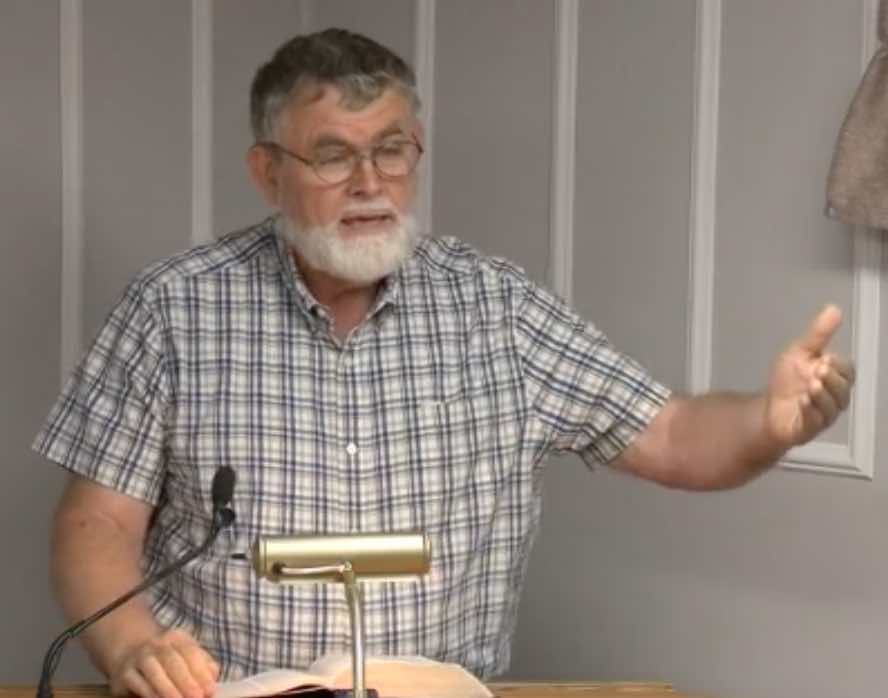
Mike McInnis

A Psalm For The Afflicted

Psalm 6
Mike McInnis April, 1 2018 Audio
0 Comments
Christ In The Psalms
What does the Bible say about chastisement from God?

The Bible teaches that God chastens His children for their profit and to guide them in the right path.

In Scripture, particularly in Hebrews, it is stated that the Lord chastens His children for their profit, rather than simply as punishment. This chastening is akin to teaching, aimed at guiding them into a proper course of life. The chastening may come through trials and tribulations, but its purpose is to refine and instruct God's people, helping them to understand their weaknesses and redirecting them towards dependence on Him. The understanding of God's chastisement offers believers assurance that despite hardships, they are under His careful guidance.

Hebrews 12:6, Psalm 6

How do we know that God hears our prayers?

God assures us through Scripture that He hears our supplications and will receive our prayers.

The confidence that God hears our prayers is rooted in His promises in Scripture. Psalm 6 illustrates a believer's plea to God, affirming that the Lord has heard his weeping and supplication. This reassurance is echoed in many other passages where God promises to listen to those who call upon Him in faith. The assurance that God, in His mercy and grace, receives the prayers of His people is a cornerstone of trust in the relationship between God and the believer. Furthermore, 1 John 5:14 affirms that if we ask anything according to His will, He hears us.

Psalm 6:9, 1 John 5:14

Why is weakness important for Christians?

Weakness drives believers to reliance on Christ and His strength.

Weakness is fundamentally significant for Christians as it leads them to understand their dependence on Christ. When we acknowledge our weaknesses, it reflects the truth that we are not self-sufficient and need divine help. In Psalm 6, the writer cries out for mercy in recognition of his frailty. This notion is echoed throughout Scripture where human weakness allows God's strength to be made perfect. The Apostle Paul even famously stated that in his weakness, God's power is displayed. Ultimately, acknowledging our weakness enables believers to experience deeper faith, humility, and reliance on God's grace.

Psalm 6:2, 2 Corinthians 12:9

What is the purpose of sorrow in a Christian's life?

Sorrow serves to draw believers closer to Christ and deepen their faith.

The purpose of sorrow in a Christian's life is multifaceted but fundamentally serves to redirect their focus and reliance upon Christ. In Psalm 6, the expression of deep sorrow is not just for lamenting but as a catalyst for calling upon the Lord for help. Sorrow acts as a divine tool to remind believers of their need for grace and healing. It is through these experiences of grief and pain that Christians often discover new depths of compassion, understanding, and reliance on God's promises. Furthermore, it teaches believers to uphold hope and trust in God's ultimate plan, assuring them that suffering is not in vain but produces a harvest of righteousness.

Psalm 6:2, Romans 5:3-5

Sermon Transcript

Auto-generated transcript • May contain errors

100%
We're looking at Psalm 6. O Lord,
rebuke me not in thine anger, neither chasten me in thy hot
displeasure. Have mercy upon me, O Lord, for
I am weak. O Lord, heal me, for my bones
are vexed. My soul is also sore vexed, but
thou, O Lord, how long? Return, O Lord, deliver my soul. O save me for thy mercy's sake. For in death there is no remembrance
of thee, In the grave who shall give thee thanks? I am weary
with my groaning, All the night make I my bed to swim, I water
my couch with tears. Mine eye is consumed because
of grief, It waxeth old because of all mine enemies. Depart from
me, all ye workers of iniquity, For the Lord hath heard the voice
of my weeping, The Lord hath heard my supplication. The Lord
will receive my prayer. Let all mine enemies be ashamed
and sore vexed. Let them return and be ashamed
suddenly." This word chastening could be what I believe the Scripture
means when it speaks about chastening. The sons of God, the Scripture
says, if a man is a son of God, that he will be chastened. And
that's the thing that the Lord will do with his children. Well,
what is it that the Lord does to his children? Is the Lord
just out here causing them pain because they did something wrong?
I mean, is He bringing trouble on us because we didn't do something?
Or He wanted us to do something and we didn't do it? I mean,
is that the picture the Scripture would lead us to believe? Or
is it that the Lord teaches His children? If you look through
the Scriptures, you will find that this word that is used for
chastening is often used for teaching. It does mean that the
Lord is constantly engaged with His children. I believe it says in the book
of Hebrews, our fathers they chastened us according to their
pleasure, but the Lord for our profit. Now, the Lord does all
the things that He does with His children for the purpose
of leading them in the proper path. And He brings troubles
into our path not on account of something we have done or
should have done and didn't do, but He brings troubles into our
path to guide us into the proper way. Just like I was sharing
there a moment ago about the chastening that is brought about
when you have to deal with aggravating people. Because the Lord would
teach you what an aggravating person is. And He would teach
you then to look in the mirror and see yourself to be exactly
that way. So the Lord is constantly teaching
His people. And the Lord in this prayer,
and of course David in this prayer, nobody wants the Lord to be angry
with them. I mean, even the Lord Jesus Christ
as a man when He hung on Calvary's cross and He intended and purposed
to do so, yet as a man He underwent the anger of the Lord, the wrath
of God poured out upon Him so that we might not have that wrath
poured out upon Him. But how did He react to that? He said, My God, My God, why
hast Thou forsaken Me? So you see, he underwent and
felt and knew exactly what it was to be a man under the wrath
of God. And no man wants to be in that
position. I mean, even when your parents
told you, they said, now I'm giving you this whipping for
your own good. Now everybody wants what's good
for them, don't they? But I can't ever think of a whipping
that I was glad to get. And that's the way it is with most
of the lessons that we learn in life. You know, we wanted
things to work out like we wanted them to work out. And we didn't
want them not to work out the way we didn't want them to work
out. But the Lord often causes things not to work out like we
want them to work out. And we didn't like that. I mean,
a man's a liar if he says he likes all the things that go
haywire in his life. But yet, by the grace of God,
as He leads us and teaches us, we can look at those things and
say, thank you, Lord. You know, what a mess I would
have made of things had it not been this way. You know, when a man is in the
midst of the battle, he can't be concerned about philosophy. Philosophy is not a great thing.
you know, knee-deep in alligators. I mean, somebody can be telling
you everything is going to be alright, but when the alligators
are snapping at your feet, you are trying to fight the alligators.
And so it is. That is the place. It says, O
Lord, rebuke me not in thine anger, neither chasten me in
thy hot displeasure. Because, you know, oftentimes
we feel that the Lord is removed from us. And we don't want that. I mean, we want constantly to
be walking with the Lord in green pastures, do we not, and everything
besides still waters. Everything is calm and nice and
good. But the fact of the matter is
that our days are not spent like that as a general rule. Now,
He does bring us to walk besides still waters. And he does do
that, but it's not always and it's not every moment because
we wouldn't appreciate those times if it wasn't for the other
times. And so we see, I believe, the
anguish of heart of the Lord Jesus Christ as He walked among
men as a man and He underwent and He knows what it is to be
tempted in all points like as we are. He knows the feelings. He can be touched with the feelings
of our infirmities because He understands exactly the ways
of a man. Have mercy upon me, O Lord, for
I am weak. Now, when I think of the Lord
Jesus Christ, it is hard for me to think of Him as being weak.
But the Scripture says He became weak for our sake. Surely He hath borne our griefs
and carried our sorrows. Now, when a man is bowed down
under great sorrow, he is not strong, is he? I mean, can a
man be walking in great sorrow and still be strong? No, he's
not strong. He may be upheld by the Lord,
but he's weak. Because sorrow is designed to
make men weak. Because sorrow is designed to
drive men to Christ. I mean, that's the purpose of
sorrows in our life, is to cause us to call out to Him. The Lord
Jesus understands that. Have mercy upon me, O Lord, for
I am weak. O Lord, heal me, for my bones
are vexed. My bones are out of joint. We
read in Psalm 22 this very same concept. My bones are out of
joint. I'm sore, worked. My bones are
vexed. My soul is also sore vexed. I'm
hurt. But thou, Lord, how long? O Lord,
hear me. A man who has never prayed and
wondered if the Lord was ever going to hear him has probably
never really prayed. You know? I mean, a fellow that
just prays and everything just falls into place every time and
everything works out is probably not being chastened very much
or exercised by the things of God. My soul is also sore, but
thou, O Lord, how long, how long, dear Lord, will it be?" I mean,
does not the man who is seeking the Lord, desiring the Lord,
I mean, he wants the presence of the Lord, but he does not
necessarily always feel the Lord's presence. Return, O Lord. Deliver my soul. O save me for
Thy mercy's sake. Now when the Lord prayed, O save
me for thy mercy's sake, He was praying that prayer for our sake.
See, every prayer that He prayed, He prayed in our behalf. He underwent
these things not for His own sake, not for His own self except
insofar as He ministered unto us because He was touched with
the feeling of our infirmities. For in death there is no remembrance
of thee, in the grave who shall give thee thanks." Now you know
death is, the Lord told Adam that in the day he ate this tree
of the knowledge of good and evil, he would die. And death
is the antithesis of the Lord. Now the Lord ordained death,
the Lord made death. Death comes because the Lord
brings it. Now some people get all shocked
if you said that, but he said, Behold, I kill and I make alive. I the Lord do all these things.
He is the one who designed death for the purpose, and it is the
antithesis of the life that is in Him. He lives. And men don't
have that life. We have the seed of death within
us, and we are dead men apart from the life that He gives.
And so, in death there is no remembrance of Thee. That is,
in the way that man is going, there is nothing that he has
to look forward to in himself. You know, it doesn't matter how
great a man is, or how much of a pillar of the community he
may be, or how many good deeds he may have done, death will
bring an end to all of that in this life. I mean, we will be
shown to be exactly what we are when we lie cold and still. And there's no praises coming
from the lips of a dead man. He can't do it. There is none. And so death is not the thing
we desire. Now, we may desire to be rid
of these earthly bodies, and there is a, you know, as Paul
said, who shall deliver me from the body of this death? And the
older that we get and the further we go down the road and all of
the various heartaches and troubles that invade our life, It is not
uncommon to hear an older person who has had many illnesses and
has troubles and what not in their life in later years to
say, well, I am ready to go. Sometimes they may not even know
the Lord, but they are just ready to be rid of this old body of
clay. But I am telling you that in
death this roads all men, and there is nothing in death That
is helpful to men, except as the Lord uses it as an avenue
to bring us out of these old carnal bodies, and He changes
us into that which is perfect. For in death there is no remembrance
of thee. Dead men don't praise the Lord. That's why the Lord said, Let
the dead bear their dead. He said, men are going to die.
I mean, when you go by the cemetery, you won't hear any praises coming
out unto the Lord. Now, one day I believe you may. You know, when the day of the
resurrection, when the Lord brings His people forth from the grave,
I believe there will be shouts of joy and praise unto the Lord.
But you won't hear anything because the dead don't do anything. They
don't praise God. And who can delight in that? I mean, are you looking forward
to laying in the grave? You're telling a lie if you said
you did. No, you're not. No man can look forward to that. The only reason that we consider
death to be a blessing is that we understand that the Lord is
pleased to raise His people unto life because it's in life that
men praise God, not in death. I am weary with my groanings.
All night I make my bed to swim. I water my couch with my tears. My eye is consumed because of
grief. It waxeth old because of all
mine enemies." Think of the griefs and heartaches and troubles that
the Lord underwent. Now you know all of us like for
people to approve of what we are doing,
do they not? And especially if we know that
what we're doing is for their benefit. And think of this, the
Lord Jesus, when He walked among men, He came in order to benefit
men. That was the reason that He came. He came to do good, and yet He
was rejected. And who was He rejected for?
I mean, He made men. He made them to be just exactly
like they are. But he says, I am weary with
my groaning. All night I make my bed to swim,
I water my couch with my tears. Now, he was acquainted with grief. He bore our sorrows. He suffered
in our behalf. And he was consumed, he says,
my eye is consumed because of grief. It waxeth old because
of all my enemies. His eyes, he says, they are dried
up. I can't see. I'm being overcome
by the tears that flow from my eyes. It waxes old because of
all my enemies. You know, it doesn't make any
difference how strong a man may be if he has enough enemies. They're going to make him weak. They're going to bring him down.
When I was a kid, I guess I just had a kind of
a cruel streak, but I used to like to play with ants, but I
would like to catch these old big red ants. Yeah, they're called
red velvet ants. We called them cow killers. And
you don't see many of those around anymore, but used to when I was
a kid, they was all over the place. And I used to like to
catch one of them and put him in an ant stirrup ant bed and
then drop him in there. And of course he was way bigger
than all those ants. And he could have beat a bunch
of them, but they always won because there was more of them
than there was for him to be able to fight. And you see, the
Lord Jesus Christ, He did indeed triumph over all His enemies,
but He felt the sting of every one of them. Now He triumphed. He brought captivity captive.
He destroyed His enemies. But don't think for a moment
that He did not feel the pain that they inflicted. as He was
rejected of men. Even those whom He loved, even
His own disciples didn't stand up for Him. Have you ever thought
about that? I mean, here He is before this
Sanhedrin, before Pilate, not a voice in the crowd, not one,
and they were there. Peter and John were there. They didn't say anything. And I believe, you know, he said,
I was wounded in the house of my friends. Those whom I walked with, those
whom I taught, those who expressed their love to me and I expressed
my love to them, they abandoned me. The Lord Jesus
Christ knows what it is to suffer at the hands of men. Not just
physical suffering. Now that's the thing that's played
up in the minds of most, you know, times when you talk about
the crucifixion and people talk about how gory it was and all
that stuff, and that's all true. But dear brethren, know this,
that the greatest sufferings that Christ underwent did not
come from the nails driven into His hands. They didn't come from
the crown of thorns that was put on His head. But the greatest
sufferings that Christ underwent was in bearing our sins and carrying
our sorrows as He felt every pain and every pain and every
rejection and every heartache that possibly man could ever
know. And he waxed old because of his
enemies. Depart from me, all you workers
of iniquity, for the Lord has heard the voice of my weeping.
Now isn't that what he said to the Pharisees? He said that not
everyone that saith unto me, Lord, Lord, shall enter into
the kingdom of heaven, but he that doeth the will of my Father
which is in heaven. He said, For there be many in
that day who shall say unto me, Lord, Lord, did we not do many
wonderful things in thy name? And he said, He shall say unto
them, Depart from me, I never knew you, ye that work iniquity. And so he says here, depart from
me, all you workers of iniquity. Now we think of iniquity as being
Hitler, Jeffrey Dahmer. Those are iniquitous people. That's iniquity. Terrible sin. But how did the Lord describe
it? He said, when you saw me hungry, and you turn me away."
And you see, those that think of their own righteousness, they
look at their good deeds and they say, well, we've done all
these things. That's what they said. They said, well, Lord,
when did we not do these things? We've done good things. He said,
when you did not do it to one of the least of these, my brethren,
you did not love my people. You see, the workers of iniquity
are those who are set against the people of God. They are set
against the way of God. They may do many good things.
The world is full of people that do good deeds, good things, oftentimes
maybe even put into shame those that profess the name of Christ.
That doesn't change the iniquity that the Lord sees in them if
it is not that which is done for the glory of Christ. See,
nothing is pleasing in the Lord's eyes that is not of Christ. It
doesn't make a difference how good it is. It doesn't make how
you design or think of it. See, I look at the things some
people do and I just think, well, this is great, you know, the
Lord will take consideration of that. But then when I get
to seeing what the Scripture says, I say, well, no, He won't
take any notice of it at all. Because if it's not done for
the glory of Christ, for the benefit of God's people, then
it's of no use. And it is that which the Lord
said was iniquity. The Lord hath heard the voice
of my weeping. The Lord hath heard my supplication.
The Lord will receive my prayer. He will. Why? Because if you
ask anything in His name, He heareth you. And the Lord Jesus
Christ, He didn't come in the name of another, did He? He came
in His own name. And the Lord said to him, Ask
of me and I will give thee. the heathen for thine inheritance.
The Lord has heard the prayer of the Lord Jesus Christ. Let
all mine enemies be ashamed and sore vexed. Let them return and
be ashamed suddenly. That is, let their judgment come
upon them swiftly. And surely that is the thing
the Lord would desire. Now men don't like to think of
that aspect of the Lord. The Lord came into the world
to perform two things. To bring justice to those whom
He underwent their sentence of death, and to destroy those for
whom He did not. And He has accomplished both.
He said, I speak unto them in parables, that seeing they may
see not, and hearing they may hear not, but to those to whom
it is given they shall see. And so it is, dear brethren,
the Lord has hid these things from the wise and the prudent
and revealed them unto babes. Now, who is sufficient for that?
Who among us can say, oh, well, we deserve to know, or we had
the inside track, or we were taught these things from a child,
or whatever? And that is the reason the Lord
showed them to us. No, dear brethren, it is the
grace of God. It is the mercy of God. And we see that mercy displayed
right here in this psalm. He said, the Lord has heard my
prayer. He said, I pray not for the world, but for them which
thou hast given me out of the world. Thine they were, and thou
hast given them to me. Let all mine enemies be ashamed,
and so avenge. Let them return and be ashamed
suddenly. And I believe that that suddenness
is when men look upon Christ. And they fall upon their faces
and recognize that He is the Lord of glory. That He is indeed
that One who is worthy to be praised.
Mike McInnis
About Mike McInnis
Mike McInnis is an elder at Grace Chapel in O'Brien Florida. He is also editor of the Grace Gazette.
Broadcaster:

Comments

0 / 2000 characters
Comments are moderated before appearing.

Be the first to comment!

Joshua

Joshua

Shall we play a game? Ask me about articles, sermons, or theology from our library. I can also help you navigate the site.