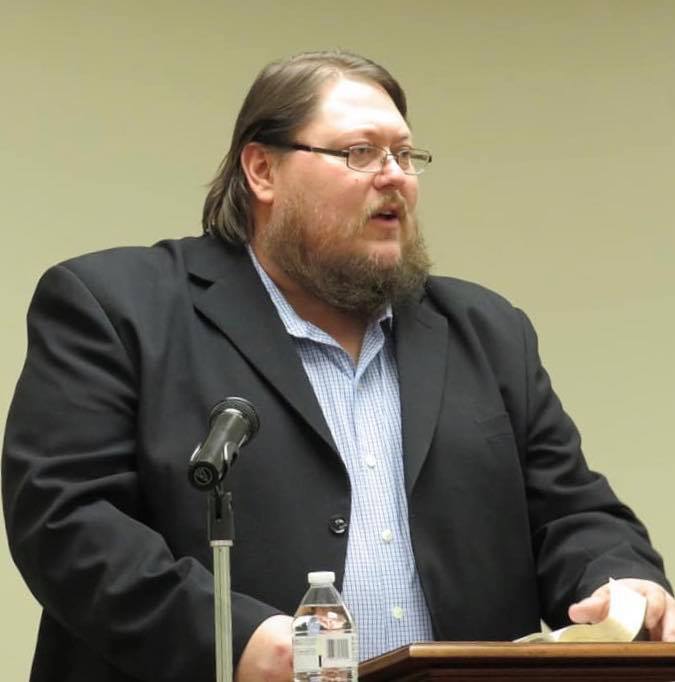
In the sermon titled "Polity of the Church Pt. 1," Mikal Smith addresses the doctrine of church polity, emphasizing the local church's structure and governance under the headship of Jesus Christ. He argues that the authority given to the church is not self-originated but derives from Christ, who is the sole lawgiver and head. Smith supports this by referencing Matthew 28, where Jesus commissions the church, as well as Ephesians 1, which describes Christ as head over all things to the church. He explains that the church's governance, which is congregational in nature, operates under the Holy Spirit's guidance, countering misconceptions that such a structure leads to chaos. The practical significance lies in affirming that the local church, as a bodily representation of Christ on earth, is tasked with carrying out the Great Commission and should rely on the Holy Spirit for unity and decision-making.
Key Quotes
“He has been given all authority over the church in all things. Okay, there are some things that we look to Christ for...because if we are going to be the executors or the governors of the Kingdom of God, we need to know what God's word says about everything.”
“While we've been given authority, delegated authority, as the church, that authority is under the headship of Jesus Christ. He is the one who makes the rules.”
“The commission of the church...goes to the local church. It's the church's responsibility to carry out the commission.”
“How Christ governs over His church is through the work of the Holy Spirit.”
The Bible teaches that the church's commission is to make disciples, baptize them, and teach them all things commanded by Christ (Matthew 28:19-20).
According to Matthew 28, Jesus commissions His disciples to go and make disciples of all nations. This command encompasses a three-fold responsibility: first, to make disciples; second, to baptize them; and third, to teach them all things that Christ commanded. This commission is directed specifically to the local church, not individual believers or parachurch organizations. It emphasizes the church's authority and responsibility to carry out the Great Commission under the headship of Christ, ensuring that faithful obedience is maintained throughout the church's ministry until the end of the age.
Matthew 28:19-20
The doctrine of sovereign grace is confirmed through Scripture, particularly in Jesus' teachings in the Gospels (John 3, 6, 10).
The doctrine of sovereign grace is grounded in the teachings of Scripture, especially as articulated by Christ. In the early chapters of the Gospel of John, Jesus speaks of election, predestination, and the concept of being born again as a sovereign act of God. This underscores the Reformed understanding that salvation is initiated by God's sovereign will rather than human choice. The Bible shows that God's grace is irresistible and His purposes in salvation are never thwarted, fully aligning with the principles of the Five Points of Dordrecht which include unconditional election and particular redemption.
John 3:3, John 6:37, John 10:16
Church polity is crucial as it governs how the church operates under Christ's authority, ensuring proper functioning and unity among believers.
Church polity, or the government of the church, is essential for Christians because it reflects the order and authority established by Christ over His church. A proper understanding of polity emphasizes that the local church operates under the headship of Jesus, who delegates authority to the congregation through Scripture and the Holy Spirit. This structure prevents chaos and enables unity, as all decisions made are guided by the principles laid out in God's Word. The church's governance is not left to individual whims but operates through collective agreement under the lordship of Christ, pointing to the importance of biblical leadership and spiritual guidance.
Ephesians 1:22-23, Matthew 16:18
The Bible teaches that the church is a local, visible assembly, instituted by Christ (Matthew 16:18).
Scripture defines the church as a local, visible assembly of believers who gather for worship, fellowship, and ministry. This is evident in Christ's declaration in Matthew 16, where He speaks of building His church upon the rock. The nature of the church is deeply rooted in its local manifestation rather than a universal, invisible body. The local church is essential for carrying out the Great Commission, with members actively participating in the sacraments and teachings that shape their spiritual lives together. This visible assembly is meant to reflect the body of Christ, wherein each member contributes to the whole, promoting accountability and spiritual growth within the community.
Matthew 16:18
Comments
Your comment has been submitted and is awaiting moderation. Once approved, it will appear on this page.
Be the first to comment!
