Bootstrap
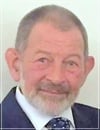
Daniel Parks

The Priest Who Sat Down

Daniel Parks May, 17 2026 Video & Audio
0 Comments

Sermon Transcript

Auto-generated transcript • May contain errors

100%
Good morning. Invite your attention to Hebrews chapter 11. Pardon me, Hebrews chapter 10. Verse 11. God willing, we will look at the subject of. The priest who sat down. While you locate your text, Hebrews 10. Verse 11, let me tell you a story. When I was here a couple of years ago. One of the members of this church. Mentioned the message I had preached. He had heard me preach. Quite a few years earlier.

He did not remember the text. He did not remember the title, but he did remember certain salient points in the message. And as he enumerated them, I remembered which message it was. And he said, if you come back to College Grove, preach that message if you have liberty to do so. Well, I am always blessed when someone says, preach a message you preached already, and I'm honored to honor that request today to look at this subject of the priest who sat down. We're looking at a priest.

A priest was one of the three mediatorial offices in God's When we speak of a mediator, we speak of one who stands between two parties, ascertaining that peace is maintained between them, or representing one to the other, or the other to the one. The scripture says there is one mediator between God and men, the man Christ Jesus, more precisely, the God-man Christ Jesus.

For his title, Christ, indicates his deity as the Son of God of the same essence, of the same nature, though two in persons. He is God, but in his incarnation, He took on our humanity. He therefore is the man, Christ Jesus. Christ indicates his deity. The name Jesus indicates his humanity, for he will save his people from their sins.

That's the mediator. This one mediator between God and men has three offices as a mediator, prophet, priest, king. As a prophet, he represents God to the people. For when God speaks to his people, he does not come down and go to every one of them. No, he sends someone to represent him, a prophet. That is why a prophet would preface his words with, thus says Jehovah. This is not my opinion. This is not my doctrine. God has spoken. I am his spokesman. Thus says Jehovah. We find many prophets in the Old Testament. Noah. Moses, Elijah, Elisha, Isaiah, Jeremiah, Malachi, the last prophet of the Old Testament.

And then there was that prophet who came and stood on the threshold between the Old and the New Testaments, John the Baptist, with one foot in the Old That's the last Old Testament prophet, and one foot in the New Testament, that's the first gospel preacher.

Who's our prophet now? The scripture declares that God, in former time, in various ways, spoken to the people by the prophets, has seen these last days. spoken unto us by his son, Jesus Christ. Jesus Christ is the final prophet from God. We, therefore, are not deceived in the following, Muhammad, Joseph Smith, Ellen G. White, or anyone else claiming to be. the prophet from God. Jesus Christ is our prophet.

He speaks for God unto us. Second mediatorial office is that of the priest. Now the prophet represents God to the people. The priest represents the people to God. He does it with intercessory prayers. He does it particularly in offerings and sacrifices for the sins of the people.

In Old Testament days, there were many of these priests, beginning with Aaron, the high priest, But the final priest is Jesus Christ. I'm going to come back to that directly. Let me tell you about the third mediatorial officer. He's the king. Who is this king?

The king in God's kingdom sits on the throne of God's kingdom. representing God and ruling over the people in the place of God, to say that His laws are enforced, judgment and justice are administered, and to say that God's people have their needs met and protected from their enemies.

In the Old Testament, In an embryonic sense, Moses was a king, a king in gesturing. His successor, Joshua, was like a king over Israel and the judges of the Old Testament days. And then came the day when the Lord put kings on his throne like David and Solomon and their successors. But in this day, who is the king over God's kingdom? It is the King of kings and the Lord of lords, Jesus Christ.

Jehovah said, I put him on my throne, established his throne in Zion. So these are the three mediatorial offices. Prophet, representing God to the people. Priest, representing the people to God. The king, representing God on the throne of his people, protecting them and providing for them.

But now we come to the book of Hebrews, 10th chapter, Verse 11, and I'm going to continue what I started a moment ago with regards to Jesus Christ being the final priest from God. Look in verse number 11 of chapter 10, and I want you to consider that virtually every word in this passage is pregnant with meaning. Consider. And every priest stands, that word's important. Well, of course it is, but I'm emphasizing it to you.

Every priest stands ministering daily. and offering repeatedly the same sacrifices, which can never take away sins. But, I love it when God says but. When God says but, you better pay attention But this man, after he had offered one sacrifice for sins, forever sat down at the right hand of God. From that time waiting till his enemies were made his footstool, why did he sit down? for by one offering he has perfected forever those who are being sanctified. Here's the priest who sat down. Let us consider this priest the only priest representing God's people unto him. the only priest who sat down in the place of his ministry.

Let us consider here, first of all, the contrast between every priest on the one hand, many of them, many priests One priest. Consider the contrast. Many priests back in that day. One priest in these last days. What do we consider here? Well, first consider that they were many, but he's only one. How many? Thousands. Of the high priests, Aaron was the first. He was put into his office in the year 1414 BC. The Jewish historian Flavius Josephus, who kept intricate details and knew his subject very well, says there were 83 high priests between Aaron and the wars of the Jewish sedition in 70 A.D. But until the time of Aaron up to Christ, about 60 high priests,

60. He gives their names.

However, these priests, the high priests had assistance and substitute priests. Zacharias, for example, father of John the Baptist, ministering in his course over the years from 1440 BC until 30 AD at the death of Jesus Christ. Thousands of priests ministering daily But here in Jesus Christ, one priest, all by himself, in a class by himself. Consider also that they sacrificed day after day, after week, after year, after century, Years and years for a millennium and a half. They're doing their sacrifices every day. Same sacrifices. This man. Made one sacrifice. Only one sacrifice. On only one day. Where was that sacrifice? in that tabernacle not made with hands, represented on this earth by an altar.

That altar is on Mount Calvary. And on Mount Calvary, on that altar, there is a lamb who will take away the sins of the world. Not only is there a lamb on that altar, there's a priest whose name is Jesus Christ. And there at that altar, he is the altar, he is the lamb, he is the priest. And he made only one sacrifice in his entire priestly ministry. They offered repeatedly the same sacrifices. He offers only one day only.

Now let me emphasize, the days in which they made their sacrifices. As I said earlier, they began in 1440 BC. They go until Jesus made his sacrifice, 30 AD. with the exception of the 70 years of the Babylonian captivity. Folks, you can do the arithmetic. They made daily sacrifices for 1,404 years, more than 512,000 days. Half a million days they made their sacrifices.

And did it day after day after day. And they could not stop doing so. He, in one day, made a sacrifice and it was done. It's over. Their sins or their sacrifices never took away a single solitary sin, but his did. They sacrificed faithfully, just like God told them to do so. They were precise in what they did, diligent in the performance of their ministries, And yet their sacrifices never took away a single solitary sin.

Why is that? The scripture says it is not possible that the blood of bulls and goats could take away sins. Why? Because bulls and goats and lambs and sacrificial animals are not of the same nature as the sinners. Oh, they can represent the good offering, but all those animals that were slain could never take away sins.

But this priest makes one sacrifice, and the sacrifice is himself And he himself is the altar. And when he makes his sacrifice, he says it is finished. And Jehovah says, yes, it is. Their sins and their iniquities and their lawless deeds, I will remember. No more. No more. where remission of these is, there is no longer an offering for sin.

Therefore, any priest today who makes a sacrifice in a mass at an altar, what he's doing is denying that Jesus Christ did it once for all. Furthermore, they repeated the same sacrifices day after day and year after year. His one sacrifice never needs repeating. Have you ever considered how many sacrifices there were? You can find them in the book of numbers. Let me just give you a brief summary.

Every day, two lambs. At sunrise, a lamb is sacrificed. At sunset, a lamb is sacrificed. On every weekly Sabbath, two additional lambs. Every new moon, the beginning of the month, two bulls. one ram, seven lambs, one goat. During the seven days of Passover every year, 14 bulls, seven rams, 49 lambs, and at least one goat. Every Feast of Weeks every year, two bulls, one ram, seven lambs. Every Feast of Trumpets, every year, one bull, one ram, seven lambs. Every Day of Atonement, every year, one bull, one ram, seven lambs. During the eight days of the Feast of Tabernacles, 71 bulls, 15 rams, 105 lambs, and eight goats. That's every year. Every year. That's a total of 1,016 lambs, 91 bulls, 26 rams, 13 goats. 1,146 animals slain every year. Oh, I take that back. That's only the beginning. That wasn't all. Those were the national sacrifices.

What about the personal sacrifices? Birth offerings, peace offerings, sin offerings, trespass offerings, offerings at the purification of a woman, offerings at the cleansing of a leper, offerings at the consecration of a priest, offerings following a discharge from the body. and the offering of the red heifer. These were personal. That means that when you committed a certain sin, you bring your sacrificial animal to the priest.

He makes a sacrifice for you. And there's a few hundred thousand of these Israelites. Now, I want you to see this. That priest. goes to his altar every morning at sunrise. He sacrifices the lamb for the morning sacrifice. Can he go home? No, because here you come with your offering. Here you come with your offering. Here you come with your offering. And he's going to be at that altar all day long, offering sacrifices. He and his assistants and those who will substitute in his place, minishing in his place.

Folks, if you'll do the arithmetic on this, I think you'll find that there were a few million of these animals slain And never was a single solitary sin taken away. No, not one. Until this priest came, the man, Christ Jesus, made one sacrifice for sin, and it is never to be repeated. Never to be repeated. God told him to sit down. He did not sit down on the job, but he sat down and completed the job, never to go back to that work again. It's done. It's done. Consider the fact that He says, it's finished. He meant exactly what he said. It is done.

And he sat down. He is the only priest who sat down. He is the only priest who had a place to sit down. And that was at God's throne. Come sit on my throne. I'll make your enemies to be at footstool. Okay, that's the introduction to the message. Now the message, which is short, by the way. Five points. I'll be short, I promise.

First, the occasion when he sat down. Verse 12. But he, after he had offered one sacrifice for sins forever, sat down. When did he sit down? Immediately. Having made one sacrifice for sins, finished forever is his sacrifice. And that's the occasion when he sat down. Come, sit down.

That's why his body was laid to rest. That's why he could say to that thief who was crucified with him, today you will be with me in paradise, and today you will see me on my throne. Because having in his spirit, made that sacrifice in the tabernacle not made with hands. Jehovah the Father said, come here, son, sit down on my throne. I'll make your enemies to be your footstool.

That's when he sat down, having made one sacrifice for sins forever. The reason why he sat down, for by one offering, he has perfected forever. those who are being sanctified. One offering, consider, perfected. Well, that never happened in the Old Testament. Even on the Day of Atonement, when the blood of the covenant was shed and offered on the mercy seat, The priest would come out and say, atonement has been made. God is satisfied. Now that may be true, but why does my conscience still smite me? Why does my conscience still tell me that there's sin So God said, well, come back and we'll do it again next year on the Day of Atonement.

But when this man made a sacrifice, he perfected those who are being sanctified. My conscience is clear. My conscience is clean. Because this man made a perfect sacrifice. I have a perfect redemption, a perfect righteousness, a perfect holiness, a perfect godliness. All through that sacrifice that he made, he perfected forever those who were being sanctified. The law made nothing perfect.

But in this man, there is no longer a reminder of sin. Someone came to a pastor one day and said, I feel so sorry about some sin I did many, many years ago. And yes, all of us have done some terrible thing in the past that maybe still plagues us. Well, get it out of your mind, OK? All right. So you have done something dastardly in the past, something terrible. Don't come to God and remind him of it, because he's already forgotten about it. Their sins I will remember no more through Jesus Christ. Consider now the place where Jesus sat down. At the right hand of God. At the right hand of God. Come with me for a moment.

Let's go back to that tabernacle. where that priest is ministering before God. Walk through the gate of that tabernacle. It's a linen fence enclosing an area. Walk through that gate and approach the tent, the tabernacle. What do you see? You see an altar of bronze. You see a labor filled with water because this priest is washing his hands all day long. Walk into the tent, what do you see? On your right, a table of showbread. On your left, the lamp stand with seven lamps on it. In front of you, an incense altar making smoke and a sweet incense unto the Lord.

Walk through the second veil. In your imagination, what do you see? An Ark of the Covenant, over which is the mercy seat, over which are the cherubim with their wings stretched across. Now let's walk back out outside again. Consider what you saw, an altar, a laver, a table, a lamp stand, an incense altar, and a mercy seat.

That priest is going to be there from sunup to sundown with his assistants helping him. I have just described to you every piece of furniture in that place. Notice what was not mentioned. In the tabernacle, where strenuous activity is done all day long, there's not a chair. There's not a bench. There's not even a three-legged stool. Not even the simplest place for a man to sit. Why? He's not permitted to. His work is never done. But this man, Jesus Christ, having made one sacrifice for sins, where does he sit? Not on a bench. Not on a three-legged stool. Not even in a comfortable chair.

God said, come sit on my throne. My throne. You're going to rule and reign over my people. That's where he sat down. How long will he sit? That's the fourth consideration. Forever. Forever. He will never go back to his altar. He will never make another sacrifice. He forever sat down. The only priest who deserved to sit down and the only priest who will never get back up to offer another sacrifice for sins forever. Fifth final point, the expectation of Christ while He sits, from that time waiting till His enemies are made His footstool, for He must reign till He has put all enemies under His feet. He's going to sit there, ruling and reigning.

He came as a prophet. He faithfully spoken to us the word of God. We do not need another prophet. As our priest, he made one sacrifice for sins forever. We seek no other priest. because God himself let it be known at the very moment Jesus Christ said it is finished on Mount Calvary.

There is a priest, another priest, a short distance away inside the wall of Jerusalem. He's in the very temple complex. He is preparing a sacred animal to be sacrificed. At the very moment, Jesus says it is finished. That priest is getting ready to make his sacrifice in the temple. and to take the blood into the holy place on the day of Passover. When Jesus says it is finished and that priest is ready to make his sacrifice, something marvelous happened.

The scripture says that at the temple The veil of the temple was torn in two, from top to bottom, not from bottom to top, from top to bottom. If it had been torn from bottom to top, we might have wondered what man did that. But this veil was torn from top to bottom as though God reached down, grabbed hold of that veil and tore it in two and said, don't come back into this place anymore. Do not come back.

A sacrifice has been made on Calvary that suits me once for all. Well, those priests took needle and thread and mended that veil that God had torn in two by their own works, through their own will. They mended it, put it back up, and continued for another 40 years making those sacrifices. The writer of the Hebrews declares it, Every priest stands daily.

They're still there, well no, they're not still there. So in 70 A.D., the Lord just took their whole temple away. No sacrifices have been made by a Jewish priest since 70 A.D. However, well in thousands of places all around us this morning, A priest, in his mass, in his sacrifice, has sacrificed once again the body and the blood of Jesus Christ.

Blasphemous, isn't it? Blasphemous! For by one offering, he has perfected forever them who are sanctified and sat down. Now, you need a priest. You need a priest. You cannot make an offering for your own sins. God will not accept it. This priest made an offering, the only offering God accepts. Come to this priest. If you have never done so before, come to this priest now. Consider that His sacrifice satisfied God. It should satisfy you. But consider this also. He will either be your priest or you will be his footstool. Which will it be? I say to you, come to Christ right now. This one priest who satisfied God should be satisfactory to you and trust in Him.
Daniel Parks
About Daniel Parks
Daniel E. “Moose” Parks is pastor of Sovereign Grace Church, 1000 7th Avenue South, Great Falls, Montana 59405. Call/text: 931.637-5684. Email: MooseParks@aol.com.

Comments

0 / 2000 characters
Comments are moderated before appearing.

Be the first to comment!

Joshua

Joshua

Shall we play a game? Ask me about articles, sermons, or theology from our library. I can also help you navigate the site.

0:00 0:00