Bootstrap
Larry Criss

Our Sovereign God

Revelation 19:6
Larry Criss January, 6 2013 Audio
0 Comments
Larry Criss
Larry Criss January, 6 2013

Sermon Transcript

Auto-generated transcript • May contain errors

100%
Back in Revelation chapter 19,
we want to go back there for a moment or two. In verse 6, the multitude, the
redeemed that we see throughout this book, God's chosen, redeemed
ones, all brought to glory, they all unite with one voice and
in one heart, they say, hallelujah, verse 6, hallelujah, for the
Lord God omnipotent reigneth. The title of my message is Our
Sovereign God. This fact of God's sovereignty
is the basis of their rejoicing. It's the foundation of their
worship. Therefore, they say in verse
7, in light of the fact that God is sovereign, omnipotent,
reigneth, sits upon His throne always, they said, let us be
glad. Let us be glad and rejoice in that fact and give honor to
Him. You find that repeated throughout
the book of Revelation, indeed throughout the entire Word of
God. I could have went to any book
of the Bible and taken a text, any chapter of any book of the
Bible, and taken a text on this subject, Our Sovereign God. From the very first verse, in
the very first book of the Bible, we're told this. We're told,
in the beginning, God did. God created the heavens
and the earth. God never attempts. God never
tries. That's what I do, Lord. That's
what you do. We attempt and try and often
fail, but not God. Turn back, if you will, in Revelation
to chapter 7. The same thing is said here.
Revelation 7 verse 15. And the seventh angel sounded,
and there was great voices in heaven saying, The kingdom of
this world are become the kingdoms of our Lord and His Christ, and
He shall reign forever and ever. And the four and twenty elders
which sat before God on their seats fell upon their faces and
worshipped God, saying, We give thee thanks, O Lord God Almighty,
which art, and wast, and art to come, because thou hast taken
to thee great power, and hast reigned." He always does. And then turn, if you will, back
to chapter 1. Our Lord describes this concerning
Himself when He appeared unto John. At verse 8, look what we're
told here, our Lord's own words. He says, I'm Alpha and Omega,
the beginning and the end. saith the Lord, which is, and
which was, and which is to come, the Almighty." God's sovereignty
could be defined by that word that's contained within the word
sovereignty. And of course, it's the word
reign, which we just read in those several examples in Revelation. R-E-I-G-N. As my pastor, I still
refer to him as my pastor, still consider him my pastor, Mr. Fortner, he sometimes has made
the expression during introducing a message, can we put this in
shoe leather? And what he means by that, does
it have any practical application? Is there a benefit to this teaching
that gets down where I live in this world? Does this truth have
any shoe-leather use that is God's sovereignty? Does it have
any everyday value to the souls and for the comfort of God's
people? Is there any practical benefit
to it? And of course you know that the
answer is yes. Or as some people have said,
and I've heard this said, and I don't agree with it in any
way, it's a doctrine that's just too high for us. It's just beyond
us. In a very large sense, that's
so. Every doctrine, every attribute
of our great God is beyond us, but still there is enough for
us to realize that God Almighty, according to His own testimony,
according to the testimony of the triune God, according to
the testimony in every book of God's Word, we have this written
on every page, the Lord God omnipotent reigneth. With us, it's not a
matter of speculation. We know it so. What could be
more comforting to God's people than this? As Abraham found out,
we read in Romans chapter 4 concerning Abraham that he was persuaded,
he was convinced that whatever God promised, whatever it was,
no matter what it was, because Abraham knew who God was. God had revealed himself to Abraham. God called Abraham out of an
adulterous country, an adulterous family, out of the land of Ur
in Chaldea, and he called him out. And Abraham looked for a
city whose builder and maker was God. And of every promise
that God made to Abraham, he was persuaded because of the
one who made the promise that what he had promised he was also
able to perform, if for whatever reason. God is unable to make
good on His promises, even one of them, Lord. Even one. Even
one promise of God should fail, then what good are they? What
good are they? If God is not able to perform
what He promised, then what good are they? Abraham's persuasion
explains his conduct. He believed God. As pilgrims
and strangers making our journey through this world, what is more
assuring to our souls? What brings peace to our hearts
more than this hearing what the psalmist exclaimed, what David
declared, and he was a man who experienced many trials, many
heartaches, and he said this, our God is in the heavens. When
he was mockingly asked the question, David, where is your God now? Where is he at now? David, by
the grace of God, answered, but our God is in the heavens, and
he hath done whatsoever he hath pleased. He hath done, David
said, not he's tried to do, he hath done whatsoever. whatsoever, not some things,
but all things whatsoever he hath pleased." Turn, if you will,
back to Isaiah chapter 43. In the book of Isaiah, we find
this throughout, throughout this book. God declaring himself to
be exactly what he is, absolutely sovereign, always on the throne. In Isaiah chapter 43, look at
verse 1. But now, thus saith the Lord
that created thee, O Jacob, and he that formed thee, O Israel,
fear not. Fear not. Why? Fear not. Not for any reason in yourself. Fear not, for I have redeemed
thee. I have redeemed thee. I have
called thee by thy name. You're mine. You're mine. And
God's not going to lose his possession. Oh, especially at such a cost,
the precious blood of Christ. He promises this. When thou passest
through the waters, I will be with thee. And through the rivers,
they shall not overflow thee. When thou walkest through the
fire, thou shalt not be burned. Neither shall the flame kindle
upon thee. For I am the Lord thy God, the
Holy One of Israel, thy Savior. I gave Egypt for thy ransom,
Ethiopia and Seba for thee." And look on down, if you will,
in the chapter at what else God says. If he can't perform his
will, if his purpose can be frustrated, then what good is his promise?
Oh, but read what he says in verse 10 of Isaiah 43. Ye are my witnesses, saith the
Lord. And all God's people are. and
my servant whom I have chosen, that ye may know and believe
me, and understand that I am he. Before me there was no God
formed, neither shall there be after me. I, even I, am the Lord,
and beside me there is no Savior. I have declared, and I have saved,
and I have showed. When there was no strange God
among you, therefore ye are my witnesses, saith the Lord, that
I am God. Yea, before the day was, I am
he. There is none that can deliver
out of my hand. I will work, and who shall let
it? That is, who shall hinder it?
Who shall stop it? As David in his belief in a sovereign
God. Did that help him? Did it help
him when David declared, our God is in the heavens? He had
done whatsoever he had pleased. Was that of any practical benefit
to him? Turn, if you will, to 1 Samuel
chapter 17. This is the story of David when
he was yet in the home of his father, Jesse. He's just a young
man, 1 Samuel chapter 17. And they've gone out to do battle
with the Philistines. His older brothers are there.
And we have described in verses 4 through 7 of chapter 17, Goliath,
the champion of the Philistines. If a cubit was 21 inches long,
this man was 11 feet tall. What do you think about that,
Louie? You'd have to look up to him. Now you know how the
rest of us would feel. 11 feet tall. His spear, the
weight of his spear was probably bigger than David. And then compare
that to David. Looking at the scene, looking
at the obvious, looking at Goliath. Oh, but then look at David. Look
how he's described in verse 42. He goes to Saul. And he says,
listen, I volunteer. I'll take this man on. Cause
daily Goliath will come out and challenge Israel. Is there not
a man among you? Is there not a warrior among
you? Send him out to me. And David heard that. And he
said, I'll do it. Verse 32. And David said to Saul,
Let no man's heart fail because of him, thy servant will go and
fight with this Philistine. And Saul said to David, thou
art not able to go against this Philistine to fight with him,
for thou art but a youth, and he a man of war from his youth. Now Goliath looked down at verse
41. And the Philistine came and drew
near unto David. And the man that bared the shield
went before him. And when the Philistine looked
about and saw David, this 11 foot tall giant looks down on
this young boy. And when the Philistine looked
about and saw David, he disdained him. I mean, he just looked at
David in utter contempt and said, is this a joke? Are y'all kidding
me? Is this the best you can do?
Is this all you've got? For he was but a youth and ruddy
and of fair countenance. And the Philistine said unto
David, am I a dog? You're insulting me. Am I a dog
that thou comest to me with staves? And the Philistine cursed David
by his gods. And the Philistine said to David,
come to me and I will give thy flesh unto the fowls of the air
and unto the beast of the field. Oh, but now, look at the unseen. Look at David and David's God.
Verse 45, then said David to the Philistine, thou comest to
me with a sword and with a spear and with a shield, but, but,
oh, I've told you several times, I love that word. Oh, but, when
it refers to God, But I come to thee in the name of the Lord
of hosts, the God of the armies of Israel whom thou hast defied. This day will the Lord deliver
thee into my hand and I will smite thee and make thine head
and take thine head from thee. when I will give the carcasses
of the host of the Philistines this day unto the fowls of the
air, and unto the wild beasts of the field, and all the earth
may know that there is a God in Israel. And all this assembly
shall know that the Lord saveth not with sword and spear, for
the battle is the Lord's, and he will give you into our hands."
And you know the outcome. Look down at verse 49. And David
put his hand in his bag. Prior to this, Saul had put his
armor on David. We didn't read it. And David
said, this won't work for me. I can't operate in this. He takes
it off. And he takes a sling and some
stones out of a brook, verse 49 again. And David put his hand
in his bag, where the stones were, and took hands of stone
and sling it and smoked the Philistine in his forehead. that the stone
sunk into his forehead, and he fell upon his face to the ground.
So David prevailed over the Philistine with a sling and a stone, and
smoked the Philistine and slew him, but there was no sword in
the hand of David. So David prevailed." Do those
words sound familiar? What about the son of David?
David's son and David's God. We read the same thing concerning
him. Weep not, John, Revelation chapter
5, weep not, for the lion of the tribe of Judah, the son of
David, he had prevailed to take the book and open the seals thereof. Weep not, John. Weep not, for
the Son of David, our God, our Redeemer, has prevailed. He has prevailed. He by Himself
purged our sin. He has prevailed. He by Himself
was made sin for us, that we might be the righteousness of
God in Him. He has prevailed. The Lamb of
God, by His own self, entered in one time into the holy place
and there he obtained eternal redemption for us. He had prevailed. I can almost see David as he
skips back home to Jesse's house. singing, Our God is in the heavens,
and He hath done whatsoever He hath pleased. Now again, does
that belief, the belief in our sovereign God, have a practical
effect upon the believer? It did upon David, didn't he?
Throughout his life. When this man afterwards, this
same man that we just read of, was exalted to be king over Israel. This shepherd boy, the youngest
son in Jesse's house, was anointed and ascended the throne to be
Israel's king. Sometime after that, after all
that blessing, all that mercy, all that grace and favor by his
great God, he sinned greatly against his God. had a man murdered
so he could take his wife. A faithful prophet was in the
land, comes into the king. You know the story. And he said,
David, thou art to man. Thou art to man. You've sinned
against God. You remember what else Nathan
said, though? You remember what else he said? But God. But God
has put away thy sin. Read what David said after that.
Turn, if you will, to Psalm 32. You're familiar with this. Oh,
but it'll do us good to look at it. Psalm 32, after Nathan
had come in to David. and told him, God knows what
you've done. You've tried to cover it up,
but it's not hidden from God. You're the man. But God has put
away your sin. David afterwards sat down and
wrote this psalm. Blessed is he, Psalm 32, blessed
is he whose transgression is forgiven. That's a blessed man. That's a blessed man. Not a wealthy
man, not a healthy man, oh but a forgiven man whose sin is covered. Blessed is the man unto whom
the Lord imputeth not iniquity. Is that so? Is that so? God doesn't impute iniquity?
Oh, not if he's imputed it to his son. Not if he's already
charged it to his son. And in whose spirit there is
no doubt. And David says, when I kept silence,
my bones waxed old through my roaring all the day long. For
day and night thy hand was heavy upon me. My moisture is turned
into the drought of summer, Selah. I acknowledge my sin unto thee.
and my iniquity have I not hid. I said I will confess my transgressions
to the Lord and thou forgave us the iniquity of my sin. Selah. Selah. Stop the music. Stop the music, David says. Selah.
Pause. Pause. Slow down. Think about that. Think about
that. Oh, that deserves some thought,
doesn't it? Some consideration. God has forgiven
the iniquity of my sin. He's covered all my sin. He's forgiven all my transgression. David? Does that glorious truth
have any practical benefit to you now? The sovereign mercy
of your sovereign God, who in sovereign majesty has forgiven
you of all your sins. What benefit does it have for
you, David? Any practical benefit from that? And David said, man, are you
kidding me? Practical benefit? How practical is this? I can
lay down tonight and go to sleep. I've not been able to do that
for months. I've tossed up on my bed with my sin ever before
me. I couldn't shake it off. I couldn't
sleep. Oh, but now I can. My sin has
been pardoned. It's been put away by the mercy
of my sovereign God. I can rest. I can rest again
now. There's a good article and I
printed a portion of it in our bulletin by JC Philpot from that
verse in Mark chapter six also John chapter six where our lord
spoke to his troubled disciples that night on that stormy sea
when he came walking to them on the And they have been a comfort
to me many a time, many a time. Be of good cheer. It is I. Be
not afraid. I know you can't see through
the storm. I know you don't understand what's happening. Oh, but be
not afraid. It is I. Bill Potts concluded
the article with these words. When we can thus believe that
the Lord our God is about our bed and our path and spying out
all of our ways, when we can look up to him, Look up to him
and feel that he is the Lord our God. There is no feeling
more sweet. I can testify to that, can't
you? There just isn't. Nothing like it. There is no
feeling more sweet, more blessed, more heavenly. Be of good cheer. It is I be not afraid. I want us to go to the book of
Job. The book of Job. Let's use him
as an example of this blessed truth of God's sovereignty, the
comfort of having a sovereign God. In the very first chapter,
the first book of Job, we learn that Job was a man who loved
God. He loved God, and he served God, and he worshipped God. This was the basis of Satan's
challenge to God. He said, the only reason Job
serves you is because you blessed him. You blessed him materially. You take that away. You allow
me. You permit me to take that away,
and I'll tell you he'll curse you to your face. Job was indeed
blessed by God more than any other man. We learn in verses
2 and 3, but then by God's permission, now underline that at least mentally,
by God's permission, Satan is not a rival to God. There's nothing
that Satan can do to any of God's people unless God permits him.
He's on God's leash. He's God's devil. Some preachers
said, and I know often it seems like it's a mighty long leash,
but he's still on God's leash. By God's permission, all the
material blessings are taken away. And then, then Satan is
allowed, again by God's permission, to afflict Job's body, to afflict
Job personally. Look, if you will, in chapter
2 of Job. Job, chapter 2, verse 10. No, verse 9. This was
Job's wife, Sabice. This is what she suggested. Then
said his wife unto him, Does thou still retain thine integrity? Curse God and die. And this is Job's answer, verse
10. And he said unto her, Thou speakest
as one of the foolish women speaketh. What? Shall we receive good at
the hand of God, and shall we not receive evil? And all this
did not Job sin with his lips. Now back in chapter 1, when he
lost all his material goods, his children as well, look what
we read. Verse 20. Then Job arose, and ran his mantle,
and shaved his head, and fell down upon the ground, and worshipped,
worshipped, and said, naked came I out of my mother's womb, and
naked shall I return thither. The Lord gave, and the Lord hath
taken away. Blessed be the name of the Lord.
In all this, Job sinned not, nor charged God foolishly. What an able! What enabled Job,
and remember, Job was just a man, no different from you and I.
What enabled Job to react as he did to these heavy, severe,
real trials in his life? What enabled him to say the things
that he did, and in all these things, not accuse God? How did he react as he did? He wasn't play acting. He wasn't
just attempting to put on a religious face. I don't recall who it was,
some actor. But he won an award. And in accepting the award, he
said he wanted to thank his grandmother that raised him, because she
first instilled in him a desire to act. She was always telling
him, when you go out of the house, boy, act like you got some sense. So he gave her thanks. Joe wasn't
acting in that sense, no, from a heartfelt, belief, a true faith in God,
he was able to say what he did, and it was a faith in God's absolute
sovereignty. This was the source of Job's
hope, to recognize that God is God. Job looked beyond the second
causes, the Chaldeans, the cyclone, and he saw the hand of God. Job
knew nothing about Satan's challenge. He wasn't privy to that information.
He didn't know the why of all the things that he was going
through. He didn't know why. He didn't know why God allowed
all this. He didn't know why all this was
brought upon him. Oh, but he did know who. And
that's better, Louie. Don't know why. Don't know why. Oh, but I know who Paul said
I had believed and that's even better. And that's what Job said
here, didn't he? The Lord gave. The Lord did that. The Lord blessed me. The Lord
bestowed all these blessings upon me. And it's the Lord that's
taken them away. They're where He is. He has the
right to do it. And He said, therefore, blessed be the name
of the Lord. Again, the meaning of sovereignty.
God's absolute sovereignty. It just means this. God reigns. As we read in Revelation 19. The Lord God omnipotent reigneth. It simply means the supremacy
of God. the kingship of God, the Godhood
of God. To say that God is sovereign
is to say that God is God. He's God. If he's not If he's
all-powerful, he's not God. If he's not sovereign, he's not
God. If he's not ruling, he's not God. If anything can stop
his purpose or resist his will, then he's not God. Oh, but he's
God over all. Paul said he's the only potentate,
the King of kings and the Lord of lords. And he always reigns. Isn't that comforting? He always
reigns. His throne is never vacant. When Pharaoh said to Moses, you
remember what Moses went into him, he and Aaron? And said,
God commands you to let my people go. And Pharaoh left like Goliath
did at David. And he said, who is your God?
I don't know your God. Who's your God that I should
obey Him and let the people go? I won't do it. But remember what
God told Moses? He said, I'll show Him who I
am. He's about to find out who I am. Turn, if you will, to 1
Chronicles. Here you have David again after God has told him he would allow
his son after him, that is Solomon, to build him a temple. David
wanted to, but God said, no, but I'll allow your son to do
it. And the people gave generously. God laid it on their heart, and
they gave all that was needed for the building of the temple.
In 1 Chronicles chapter 29, after all The children of Israel, their
leaders, their elders gave all that was necessary. God gave
them a willing heart. David went down, or rather, David
said this, in verse 10 of 1 Chronicles chapter 29. He was overwhelmed
with God's mercy, with God's goodness, and he says, Wherefore,
David, bless the Lord, verse 10, before all the congregation,
and David said, Blessed be thou, Lord God of Israel, our Father,
forever and ever. Thine, O Lord, is the greatness,
and the power, and the glory, and the victory, and the majesty. For all that is in the heaven
and in the earth is thine. Thine is the kingdom, O Lord,
and thou art exalted as head above all. Both riches and honor
come of thee, and thou reignest over all. And in thine hand is
power and might, and in thine hand it is to make great and
to give strength unto all. Now therefore, our God, we thank
thee and praise thy glorious name. But who am I? Who am I? Who am I? Put yourself there. Who am I?
And what is my people that we should be able to offer so willingly
after this sort? For all things come of thee,
and of thine own have we given thee. And you recall what Nebuchadnezzar
said concerning God, the God of heaven, he has his way among
the inhabitants in the armies of heaven, rather, and among
the inhabitants of the earth, and none can stay his hand, not
one, or saying to him, What doest thou? And he that exalts himself,
God is able to abase. God is able to bring down. No matter how stubborn, no matter
how hard-hearted, no matter how far he's going in darkness and
sin, God's able to bring him down. God's able to humble him. God's able to make him sue for
mercy. Oh, thank God for his sovereign
grace. He's sovereign in all his attributes,
in his power, He exercises it as he will and where he will. His mercy, he said, I have mercy
on whom I will have mercy. We see the exercise of his power
in sovereignty when he created the heavens and the earth. There
was a time before Genesis chapter 1 and verse 1 in eternity when
God dwelt alone. when this universe was yet unborn
and creation existed only in the mind of our great God, its
creator. He might create As he wanted,
according to his own good pleasure, one world or many worlds, it's
entirely up to him. With whom did he take counsel? Whose advice did he seek? He
did as it pleased him. In creation, in providence, in
salvation, God is sovereign, and Job recognized this. What's the value of this truth?
Well, as we've said, this is our comfort. It's not something
that we grin and bear, oh no, but we rejoice in. The God that
is sovereign is absolutely just and holy and good. He wills only holiness and justice
and truth. Where else would our comfort
lie? chance, fate, chance. Oh my. No, no. The lord our god,
our omnipotent, and our hope to despite all that seems to
the contrary, he is reigning. Hoping god's sovereignty prepares
David to die. Prepares David to die. David on his deathbed He had regrets. I once heard
a dear brother in his prayer say, God, we thank you that in
glory we'll have no regrets. In heaven, all the tears will
be wiped away, and the tears of regret It'll all be gone. But on David's deathbed, he said,
I have regrets with my house, my family, my children. But even
so, even that being so, that was made with me an everlasting
covenant, ordered in all things insure, this is all my salvation
and all my hope. We mentioned Abraham earlier.
It was a belief in God's sovereignty that enabled Abraham to leave
his family and afterwards to offer his son. And Paul tells
us in Hebrews chapter 11 that Abraham believed that God was
able to raise Isaac from the dead had he plunged the dagger
in his heart. Oh, and even Job here setting
in sackcloth and ashes. In his mourning, he cries out
for, I know, I know that my Redeemer liveth. None of this has changed
that fact. I know that my Redeemer liveth,
and I shall see him. I shall see him with mine own
eyes. The old hymn writer said this,
wrote this rather, when the storms of life are raging, stand by
me. When the storms of life are raging,
stand by me. When this world is tossing me
like a ship upon the sea, thou who rulest wind and water, stand
by me. It is I. Be not afraid. Last of all, our attitude to
God's sovereignty is this. We adore him as such, do we not? It brings us to the footstool
of true worship, where we bow down and cry of him. and through
him and back to him are all things to whom be glory forever and
ever. Job said, though he slay me,
yet will I praise him and thank God for such amazing grace. Because remember, I repeat, Job
was just a man like you and I. One of God's saints long ago
was in prison for her faith. And she was in a cell that was
darkness and only lit by a candle at mealtimes. And she wrote this. She said, a little bird of mine
shut from the fields of air, but in my cell, I sat and sing
to him who placed me there. Welcome, ten, a prisoner to be,
because my God, it pleaseth thee. And then last of all, We delight
in God's sovereignty, do we not? Is this not what we read? What
they exclaim in glory, hallelujah, for the Lord God omnipotent reigneth. Let us be glad and rejoice and
give honor to him. Let me conclude the message by
just reading to you a brief psalm. One of the psalms, Psalm 121.
One of the ascension psalms, psalm of degrees. Psalm 121,
David again wrote, I will lift up mine eyes into the hills from
whence cometh my help. My help cometh from the Lord
which made heaven and earth. He will not suffer thy foot to
be moved. He that keepeth thee will not
slumber. Behold, he that keepeth Israel
shall neither slumber nor sleep. What a blessed thought. When
you go home tonight, and you lie down to go to sleep, just
before you doze off, think of that. He that keepeth Israel,
he that's watching over you, he never sleeps. He never slumbers. The Lord is thy keeper. The Lord
is thy shade upon thy right hand. The sun shall not smite thee
by day, nor the moon by night. The Lord shall preserve thee
from all evil. He shall preserve thy soul. The
Lord shall preserve thy going out and thy coming in from this
time forth and even forevermore. Blessed be his name. Amen.
Larry Criss
About Larry Criss
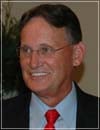
Larry Criss is Pastor of Fairmont Grace Church located at 3701 Talladega Highway, Sylacauga, Alabama 35150. You may contact him by writing; 2013 Talladega Hwy., Sylacauga, AL 35150; by telephone at 205-368-4714 or by Email at: larrywcriss@mysylacauga.com
Broadcaster:

Comments

0 / 2000 characters
Comments are moderated before appearing.

Be the first to comment!

Joshua

Joshua

Shall we play a game? Ask me about articles, sermons, or theology from our library. I can also help you navigate the site.