Bootstrap
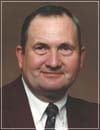
Carroll Poole

Christ , The Water Of Life

Ezekiel 47:1-9
Carroll Poole September, 23 2012 Audio
0 Comments
Carroll Poole
Carroll Poole September, 23 2012

Sermon Transcript

Auto-generated transcript • May contain errors

100%
Christ, the water of life. We're reading here from Ezekiel
47 and the first nine verses. I have been locked into this
passage all week and I can't get out. So we're going to read
it and comment as the Lord has given us some things to say about
it. So follow with me. This is one of those passages
that makes no sense whatsoever. Literally, it's a vision with
a message from God in the vision. Ezekiel says, afterward, he brought
me again unto the door of the house. And behold, waters issued
out from under the threshold of the house eastward. For the
forefront of the house stood toward the east. And the waters
came down from under the right side of the house at the south
side of the altar. Then brought he me out of the
way of the gate northward and led me about the way without
unto the utter gate by the way that looketh eastward. And behold,
there ran out waters on the right side. And when the man that had
the line in his hand went forth eastward, He measured a thousand
cubits and he brought me through the waters. The waters were to
the ankles. Again, he measured a thousand
and brought me through the waters. The waters were to the knees.
Again, he measured a thousand and brought me through. The waters
were to the loins. Afterward, he measured a thousand
And it was a river that I could not pass over, for the waters
were risen, waters to swim in, a river that could not be passed
over. And he said unto me, son of man,
hast thou seen this? Then he brought me and caused
me to return to the brink of the river. Now when I had returned,
behold, At the bank of the river were very many trees on the one
side and on the other. Then said he unto me, these waters
issue out toward the East country and go down into the desert and
go into the sea, which being brought forth into the sea, the
waters shall be healed. And it shall come to pass that
everything that liveth, which moveth whithersoever the river
shall come shall live. And there shall be a very great
multitude of fish, because these waters shall come thither, for
they shall be healed. And everything shall live whither
the river cometh." The prophet Ezekiel is not at home in Jerusalem. He is among the captives in Babylon,
carried away by Nebuchadnezzar, who had invaded Jerusalem, taken
captives, destroyed Solomon's temple after taking the gold
and the silver, destroyed the city. Now in Babylon, Ezekiel
is shown in the Spirit of the Lord, this vision. And it begins in verse 1, at
the door of the house, the house meaning the Lord's house, the
temple. Ezekiel does not know at this
point if the temple is even still standing back at Jerusalem. And this stream that he sees
flowing out, it is a Vision. There is no such stream literally
there. This vision involves two extreme
locations with the stream of water flowing from the one to
the other. The extremities being that the
stream begins at the temple in Jerusalem. some 2,500 feet above
sea level. And it flows into the dead sea
called in the scripture, the salt sea, which is almost 1,300
feet below sea level, a decline of some 3,800 feet. Now remember, Ezekiel is not
at Jerusalem. If he had been, the temple is
destroyed. So this is not literal, it's
a vision, but it's not without meaning. No part of God's word
is without meaning. It's a vision. Ezekiel is shown here, verse
1 says, a tiny stream of water issuing out from under the threshold
of the temple door. Now what do you think when you
see water coming under a door? You say, oh boy, I got a problem
in that other room. Yes. Here's water issuing out
from under the door of the temple, under the threshold. And in this
vision, we read that there was a man there that has a measuring
line and he measures a thousand cubits from the temple. a cubit being about 18 inches,
about 1,500 feet. And at that 1,000 cubit mark,
Ezekiel said, he brought me through the waters and it was about ankle
deep. It's just a little trickle coming
out from under the threshold of the door, but 1,500 feet out
yonder, it's ankle deep. He measures another thousand
cubits and brings me through the water and it's knee deep. He measures another thousand
cubits and brings me through the waters and it's up to his
loins, waist deep. He measures another thousand
cubits and verse 5 says, it was a river that I could not pass
over for the waters were risen, waters to swim in. A river that
could not be passed over. Now, the times I've heard this
text preached from through the years, and I have heard it a
few times over the last 40 years, it was always used to distinguish
between the degrees of so-called spirituality. And I've heard men preach this,
oh, and spit and slobber for an hour. If you've just made
a profession, but you're not real serious, you're only ankle
deep. But if you go a little further
and quit cussing out loud and straighten up a little bit, you're
in knee deep. But if you really get serious
and quit about everything but water, then you're in waist deep. But if you go hog wild, dive
in, you get in over your head. God will be tickled to death
with you so much more so than he was. Well, that's not what
this vision is all about. Not at all. That is as senseless
and out of context as it can possibly be. This stream that
Ezekiel sees, issuing from under the threshold of the temple door,
proceeding a thousand cubits, four times, four thousand cubits,
a little over a mile, about one and a third miles, it has become
a river that cannot be passed over. There's no mention of any
tributaries feeding the stream. It just got big. It travels down through the steep
descent of that valley, down into the Jordan Valley, pours
into the Jordan River, and the Jordan pours into the Dead Sea
or the Salt Sea. That sea is called the salt sea
because of the unusual salt content in the water. No life form can
grow there. There's no vegetation in or around
it. There's no fish or life whatever
in it. And thus it's called the dead
sea. And yet in this vision, God shows
Ezekiel, there's abundance of fish. Verse 9 says, a very great
multitude of fish. But what does all this mean?
What is the significance of such a vision given to Ezekiel? Well, first in the extremity
of the salt sea, we have a glimpse of the awful and deep depravity
of fallen humanity. Salt has been used to symbolize
those who turn away from God. You remember the story of Lot's
wife, how that the angel of the Lord had taken her along with
her husband and her two daughters and had graciously removed them
from the city of Sodom before judgment fell. But she looks
back after having been told not to look back. And when she did,
she turned to a pillar of salt. That's in the book of Genesis.
And our Lord even made reference to it in the Gospel of Luke and
said, remember Lot's wife. So this descent from the highest
of the high, from the holy mount, the temple mount, all the way
down to the Dead Sea, the deepest depth of depravity. It's the
story of human history in rebellion against God, fleeing heaven and
pursuing hell at full speed. It's the history of humanity. But then what does this vision
really mean? What is it the Lord's showing
Ezekiel? Well, I have read numerous writers that suggest several
things. One said this stream, this river, Ezekiel saw, is the
word of God, the scriptures. They just increase and get bigger
the more you read and study. Some say it's the church, the
people of God through the ages. Others say it's the gospel with
its mighty influence wherever it goes. But I see this stream,
this river, as Christ himself, Christ himself. In Revelation
chapter 22, the last chapter of the Bible, the apostle John
is also shown a vision by the same God who showed Ezekiel this
vision. In Revelation 22, John said,
and he showed me a pure river. This is the same river Ezekiel
saw. And John says it was a pure river
of water of life. Don't miss that verse, Revelation
22. A pure river of water of life. And the emphasis is not
on the water, but on the life. A pure river of the water of
life. He's not talking about the water getting wet, going
swimming, going fishing. He's talking about the life.
It's living water. So our message entitled Christ,
the water of life. Now this vision Ezekiel saw and
the vision John saw are both about Christ, our Lord. The psalmist
saw it, Isaiah 46, for there is a river. the streams thereof, or divisions
thereof, whereof shall make glad the city of God, or the church
of God. Christ is that river. Isaiah
saw it. The prophet Isaiah, Isaiah 33,
21, but there the glorious Lord, the glorious Lord Jesus, will
be unto us a place of broad rivers and streams. Christ Jesus Himself
identified Himself as the river. John 7, 37, if any man thirst,
let him come unto Me, I'm the river, and drink. And then among the final words
of Christ our Lord through John, Revelation 22, 17, the invitation
is, and let him that is a thirst, Come, come unto me. Christ is
the river, the only river that satisfies the thirsty soul. Now in this vision given to Ezekiel
here in chapter 47, I want to consider four things briefly,
very obvious things that speak of Christ our Lord, the river
of life. Number one, the source of the
river. Look at what Ezekiel says in verse one, and behold, waters
issued out from under the threshold of the house eastward. The house
being the temple. Some have suggested this water
is in the outer court and it was the water that was literal
and that washed away the mass and the blood of the sacrifice
is slain. But no, the door here is not
to enter the outer court or to enter the holy place, but the
holy of holies, that door that was shut all the time. Of course, in the Old Testament
it's called a veil, here called a door. It was only entered ceremonially
and symbolically by the high priest once a year on the Day
of Atonement. And this most holy place, the
Holy of Holies, wherein was the Shekinah glory and the presence
of God Himself, that's where the water issued from, from God. Now John gives us this more clearly
in the verse we referred to a moment ago. Revelation 22 1 and he showed
me a pure river of water of life Clear as crystal from where? John said proceeding out of the
throne of God and of the lamb the lamb Christ Jesus Was one
with God from eternity? God the Son in the beginning
was the Word the Son of And the word was with God and the word
was God. He said, I and my father are
one, he said. So in this scream, God the Son
proceeds, issues out from, marches forth from the throne of God
with all the power and authority of the Godhead, Father, Son,
and Holy Ghost. He is the fullness, Paul said,
of the Godhead bodily. He is the representation, the
manifestation, the embodiment of God in this world. Now, He did not originate in
Bethlehem when He was born. We're going to be coming up on
the Christmas season here in a little while, and even the
unbelieving world will get in on all the hoorah of it, the
commercialism of it, and so on, and everybody will sing a little
bit about Jesus in those days. But the thing they don't understand
and will not confess is that the Lord Jesus Christ did not
originate at Bethlehem. No, He proceeded forth from the
very throne of God. He's God become man, God in the
flesh. And so that's what Ezekiel sees
here. The stream proceeds out from
the throne of God. where he had been forever. So
Ezekiel don't really see the source of the stream. The source
is unseeable. The source is eternal God. Secondly, not only the source,
but let's consider something of the strength of this stream.
Now, first we read that the door is shut. No man on the outside
could go in. and get the water out even if
you wanted to. Because of sin and depravity,
no man wants to. The great Scottish preacher Alexander
McLaren, he said it like this, the river rose in the house of
the Lord and amidst the mysteries of the divine presence, it took
its rise. One might say from beneath the
mercy seat. where the brooding cherubim sat
in silence and poured itself into a world that had not asked
for it, that did not expect it, that did not desire it, and that
would not have it. The river that rose in the secret
place of God symbolizes for us the great thought which is put
into plainer words by the Apostle John who said, we love him because
he first loved us. We come to him because he came
to us. So the door was shut. It was
shut tightly. And notice here that the water
does not issue from between the door and the threshold, but from
under the threshold. Oh, the depth, the lowliness
through which our Lord came. He's disallowed of men, Peter
said, but he came anyway. He came lowly. He came through the virgin womb
of a peasant girl from Nazareth. He is condemned to death by Herod
from his birth. He is accused of being the bastard
son of a Roman soldier. He is rejected in the common
knowledge of his day that no good thing can come out of Nazareth. His miracles were attributed
by men to the power of the devil rather than to the power of God.
We're talking about one, the Son of God who so loved his people. that he came into this mess of
sin and shame and rebellion and hatred against him, he came anyway. He came anyway. His earthly life in the eyes of men was one sharply declining, a
downhill run. He started out with some favor.
He wound up despised and hated and crucified. We'll see this,
this stream in Ezekiel's vision rushes into that sharp decline
in that Judean Jordan Valley toward the Jordan Valley. This
is Christ coming down. John chapter six alone. records
not less than seven times that Christ is He who came down from
heaven. He says it over and over. I came
down from heaven. Oh, the strength of this river.
It came not with an open door. The world didn't want Him. He
came from under the threshold, proceeding out from the throne
of God. Unwanted, unasked for, unreceived,
he came anyway. Ezekiel saw in the 4,000 cubits
with no tributary streams, no added sources, the little trickle
coming from under the threshold has become a mighty river, unstoppable
in its flow. and too great to cross, waters
to swim in. From what I've read, even today,
travelers are amazed at the barrenness and the desolation of that wilderness
area going down into that valley. It speaks further of the rejection
of Christ by this world. How alone He was in this world
with people like you and me. And yet He wasn't alone. But
according to verse 7, the barrenness and dryness of the wilderness
did not conquer the river, the river conquered the wilderness.
See that? Verse 7, Now when I had returned,
behold, at the bank of the river were very many trees on the one
side and on the other. All the miracles, all the good
things, the healing, the raising from the dead, all that Christ
did in a life-giving way while he walked this earth. It's the
strength of the Son of God in human flesh. Not only the strength,
but the third thought would be the sacrifice of this river. If you take a map and see that
great valley from Jerusalem proceeding down into the Jordan Valley,
the Jordan River. It's somewhat above the salt
sea, the Dead Sea. So this river, this vision Ezekiel
is seeing, cannot empty directly into the Dead Sea. It has to
empty into the Jordan River first and then flow down to the Dead
Sea. So the Jordan comes into the
picture. The Jordan is symbolic of death. You remember Christ
was baptized in the Jordan, identifying with us. We're baptized to identify with
him. He was baptized to identify with
us. And this gives meaning to all the mentions of the Jordan
in the Old Testament. It's often likened to death.
It's likened to the uncrossable as it was in Joshua's time. Remember
when the Lord backed the waters up so the people could cross
over. You remember also Elijah smote
the waters of the Jordan with his mantle, and they were parted
hither and thither, and he passed over. And later, Elisha the prophet
did the same thing. This Jordan is the river that
Naaman, the Syrian leper, was commanded to wash in. You remember
that story in 2 Kings chapter 5. It was disgusting to him,
this muddy Jordan. And he preferred the rivers of
Damascus. He said, I know where there's
better rivers than this to wash in. But no, the commandment from
the prophet was to go and wash in the river Jordan, dip seven
times. But now in Ezekiel's vision,
this stream that proceeded out of the throne empties itself
into Jordan, into the river of death. Christ our Lord made himself
of no reputation. He humbled himself. He emptied
himself into that muddy river. He emptied himself in obedience
to death, even the death of the cross. Unlike Naaman, he wasn't there
to wash himself. He was already clean. He was there to take the defilement
of Naaman's leprosy and sin upon himself. That's why he went to the cross.
He was there to take my leprosy, my sin, upon himself. Unlike Joshua, Elijah, or Elisha,
he wasn't there to cross the river. He came to conquer the
river. The stream of purity is going
to become one with the muddy, filthy waters of the Jordan. Waters of sin. He who knew no
sin was made sin for us that we might be made the righteousness
of God in Him. Waters of shame. Waters of death. It's the only route to the Dead
Sea. The Son of Man must be lifted up. It's the only way. Now in this vision that Ezekiel
saw, when the waters emptied into the Jordan, what happened?
The muddy Jordan did not mar the purity of the good stream. When Christ our Lord took our
sin upon Him, it did not mar Him. No, this stream flowing in, Cleaned
up the river. Cleaned up the river. Death never
affected Christ. Christ affected death. And for those in Christ today,
death is conquered. Death is defeated. The sin, the
shame, the filth is gone. The river is pure. We can say
with Paul, O death! Where is thy sting? O grave,
where is thy victory? For the child of God, death is
a precious thing. It's our ride out of here. It's
our ride, our deliverance out of these decaying and sin-cursed
bodies. The fourth thought would be the
success of the river. The story doesn't end. with cleaning
up the river, but it flows on into the dead sea. For centuries, for centuries
upon centuries, the muddy Jordan has emptied
into the dead sea and it's hopeless. Hopeless. The Jordan never affects the
salty water of the Dead Sea. The Dead Sea always takes in
and defiles the waters of the Jordan. But in this vision Ezekiel saw,
when this stream proceeding from the throne of God, which is Christ,
Entered the Jordan, the river of death, the crucifixion. He
conquered death. And the waters were healed, it
says here. And when it empties into the
Dead Sea, look what happens. Verses 8 and 9. Then said he
unto me, these waters issue out toward the east country and go
down into the desert and go into the sea, which being brought
forth into the sea, The waters shall be healed, and it shall
come to pass that everything that liveth, which moveth, whithersoever
the rivers shall come, shall live. And there shall be a very
great multitude of fish, because these waters shall come thither,
because these waters that proceeded from the throne of God have come
into this filthy place. There's going to be a great multitude
of fish. They shall be healed and everything
shall live whether the river cometh. The Dead Sea no longer conquers
the river. The river conquers the Dead Sea. Sinners don't conquer Christ.
Christ conquers sinners. This is the gospel, Christ, the
water of life. And may I say those sinners he
does not conquer, he did not come to conquer. All you need this morning to
go to hell is for God to leave you alone. You'll take it from
there. This whining message of the religious
world today begging you to not to leave God
out. That's not the issue. The truth
is, if your heart's not changed, if you're not brought to repent
and bow and worship, he's left you out. That's the deal. And that's the thing that ought
to scare you to death this morning. It's that you're not charged
with staying. You're not in the driver's seat. God is. I'm not pleading with my loved
ones to be mindful of God. I'm pleading with God to be mindful
of my loved ones. He's the one who can change things,
not anybody else. I pray for our young folk here
at the church. I encourage you to pray for them.
Young folk, old folk, pray for all of us. Why? There's no hope
for any of us in this world, that's why. There's no hope for
any of us in ourselves, that's why. There's only hope for us
in Christ. In Christ, the water of life. That's why we're going to keep
singing the old songs. My hope is built on nothing less
than Jesus' blood and righteousness. What can wash away my sin? Nothing
but the blood of Jesus. Rock of ages cleft for me. Let me hide myself in thee. If you want to study something,
get your encyclopedia, world book, or most of you, the internet,
and study the Dead Sea. The high, cliff-like banks the extreme depth of it, the lifelessness
of it, all the hopelessness associated with it, the helplessness associated
with it. And you'll see yourself in the
helplessness and hopelessness of a sin nature. And the only
hope for any of us is that little stream that proceeded out. from
under the threshold, out from the throne of God, which is Christ
our Lord, that made His way and came all the way into the Jordan
of death, crucified on a cross, rose and came on in time all
the way to the Dead Sea. of my heart. If you can cry to him for mercy
this morning, he has mercy. But if you don't have time, neither
will he. I'm talking to us about Christ. The water of life. In this very unusual greatly
neglected passage of scripture. What is God talking about? He's
talking about His Son. He's talking about His Son, Christ,
the water of life. Let's stand together.
Carroll Poole
About Carroll Poole
Carroll Poole is Pastor of East Hendersonville Baptist Church, Hendersonville, NC. He may be reached via email at carrollpoole@bellsouth.net.
Broadcaster:

Comments

0 / 2000 characters
Comments are moderated before appearing.

Be the first to comment!

Joshua

Joshua

Shall we play a game? Ask me about articles, sermons, or theology from our library. I can also help you navigate the site.