Bootstrap
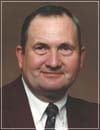
Carroll Poole

Rahab's Faith

Hebrews 11:31
Carroll Poole July, 8 2012 Audio
0 Comments

Sermon Transcript

Auto-generated transcript • May contain errors

100%
I want to speak about faith today. But first, this is not my text.
I want to show you a beautiful statement of just five words. The more I meditate on it, the
better it gets. And I believe somebody here right
now needs this today. Five words in verse 13. These
all died in faith. When we consider the great multitude
of saints that have already passed through this world, people with the same trials and
troubles you have, the same heartaches, heartbreaks
that you have, the same flesh same failures,
same shame you have. These all died in faith. You think about that. Think about
that. Alright, Hebrews 11 we know is
the great faith chapter of the Bible and in it we have a list
of saints and their experiences in life. I think Many times this
chapter is referred to and preached from emphasizing the subject
of faith apart from its place in the context of the book of
Hebrews overall. The overall theme of Hebrews
is to declare and to illustrate the superiority of grace to law. and faith to works. And it covers
the superiority of Christ to angels, the superiority of Christ
to Moses, the superiority of Christ to the Old Testament priesthood,
the superiority of Christ to the Old Testament sacrifices,
the superiority of Christ to all the old covenants, Faith
in Christ is better than any and all of that. And the point
here in chapter 11 is that this list of saints, many of whom
lived in the time and under the administration of the law, were
all justified by faith. They did all the things mentioned
in this chapter by faith. Nothing is said here to have
been accomplished or wrought through the keeping of the law.
But it's all by faith. And I want to speak a few minutes
about one character mentioned in one verse. In verse 31, the
character is a woman by the name of Rahab. By faith, the harlot Rahab Perished
not with them that believed not when she had received the spies
with peace Those who believed not perished
Rahab believed and perished not Faith is the issue Faith is the
subject at hand. Rahab's story is found in the
Old Testament book of Joshua, chapter 2. If you'll be turning
with me there, Joshua chapter 2, and we'll be referring to
some of the verses in that chapter. But before we consider Rahab
and her story, I'd like to comment for a moment
on what faith is and what it is not. Contrary to modern teaching,
faith is not a human decision where you decide in the power
of your own so-called free will to believe this or that. But clearly, faith is the gift
of God. Then obviously, no one has real
faith except those to whom God gives it. Some people talk like everybody's
got faith. Exercise your faith. Release
your faith. So and so is of this faith and
that faith another faith, though there's one faith, it belongs
to God, it believes God, it embraces Christ. So faith is the gift of God.
We're not referring to positive thinking. We're not talking about Just think it and it's so. Something
good is going to happen to you today. Nothing like that. No. And we're not referring to just
some mustered up confidence in the flesh. Not talking about getting yourself
in a good mood. No. We're talking about faith,
the gift of God. Something so powerful that it
changes your life. Something that brings you to
embrace Christ to the extent that you'll let everything else
in life go, but you won't let Him go. It's bigger than you. It's beyond
you. Faith is not something You lay
hold of is something that lays hold of you and won't let go. Faith is really
the life of God in us. The supernatural presence and
power and persuasion of God, the Holy Spirit in a sinner's
heart. that brings that sinner to believe
God and trust in Christ, that is faith. Believes God, embraces
Christ, and all else is something humanly concocted to
satisfy flesh. That's the bottom line. All right, in Joshua chapter
2, the children of Israel are camped on the wilderness side
of Jordan. Moses is dead. And the Lord tells
Joshua in chapter 1 to get ready and instruct the people to get
ready. Within three days you shall pass
over this Jordan and go in and possess the land. Four times
in chapter 1 the Lord tells Joshua to be strong and to be courageous
and that he was. In chapter 2 Joshua sends two
spies across the river to spy out Jericho. The first city they
had come to upon crossing the Jordan. And when they get over there,
we could say, as luck would have it, but that's
not so. We could say it just so happened. That's not so. The truth is as
providence would have it. as God's sovereign grace would
arrange it. The two men went to a harlot's
house whose name was Rahab. Now many despisers of sovereign
grace and God's truth have tried to make this occupation of Rahab
that of an innkeeper. that she just ran an inn. The
Bible says she's a harlot. Now it's true in the Old Testament
the Hebrew word that's used could mean innkeeper, but the Greek
word used in Hebrews 11 and in James chapter 2 mean just what
it says, harlot. A woman whose business is to
entertain men for their sexual enjoyment. Considering this culture here
in Jericho, it would be hard for us to understand how her
profession was looked upon in Jericho in those days. religion was very pagan. They
worshiped various gods and goddesses. In all their worship, there was
a deification of natural forces, especially sexual. Their worship of false gods and
goddesses involved giving license to the satisfying of fleshly
appetite. Rahab was right in the middle
of this. This was part of her business. She was not looked
upon as a fallen woman. She was not looked upon as a
sinful woman or a prostitute, but rather as
a priestess and very honorable. in that pagan culture. She was
far, far from God, we'd say, but really she's no further from
God than anybody else because He's everywhere. But she was a vile sinner, a
harlot, not just an innkeeper. You say, well, now is that why
the two men came to her house? I don't know, but God does. We do know that's where they
were supposed to go. And whatever their motive was,
that's God's business. But the story tells us here that
somebody saw her, or saw them, go into Rahab's house. And they
went to the king of Jericho, and he sent messengers to her
house to bring these two men forth. She hid these two spies and told
the king's men that they had been there, but they had left. They're gone. So she got rid
of the king's messengers and protected the two Israelites. Verse 8 says, And before they
were laid down, she came up unto them on the roof, that's where
she had hid them. And verse 9 begins
her testimony. We could say her public profession. Here's what she says, verse 9. We know some things. We know
some things. Now a lot of people might have
considered it, thought it, but she said, I know it, I know it. Faith is not born in Rahab because
of what she was, what she did or what she didn't do, not at
all. As we've said, faith is not just
mustered up confidence in her flesh. No, faith is the gift
of God. Rahab's believing did not result
in faith. Faith resulted in her believing. It was the gift of God called
faith that caused her to believe. Now in verse 9, look at the strong
conviction of her faith. She said unto the men, I know
that the Lord hath given you the land, and that your terror
is fallen upon us, and that all the inhabitants of the land faint
because of you. She said, I know. She never said
maybe so, or it could be. She said, I know. The Lord hath
given you the land." How did she know? How could she know
for sure? Others may have thought it, considered
it a possibility, but she said, I know it. How did she know it? Faith was imputed in her heart. God made her know it. That's
how she knew. That's how she knew. Now, the
Lord did use the talk of the town, but it was the Lord Himself who
persuaded her in heart. She says in verse 10, For we
have heard how the Lord dried up the water of the Red Sea for you when you came out of
Egypt, and what you did unto the two kings of the Amorites
that were on the other side of Jordan, Sihon and Og, whom ye
utterly destroyed. She said, We have heard. The whole town had heard it from
each other. But Rahab heard something more. All the talk was just talk to
the others. But Rahab heard the Lord speak
in her heart. The Lord spoke it to her. She
was convinced. She believed. that the God of
the Israelites really is God. She believed it. That's what
she says in verse 11. And as soon as we had heard these
things, our hearts did melt. Neither
did there remain any more courage in any man because of you. For
the Lord your God, He is God in heaven above. and in earth
beneath. In both these verses, 10 and
11, for we have heard, and verse 11, as soon as we had heard,
the rest heard each other. And that's all she heard with
her ears, but she heard something in her heart. God persuaded her
heart. She believed it was so. It was faith that did this. It
wasn't taking the other's word for it. It wasn't taking the
other's opinions for it. See, that's why some people cannot talk other
people into being a Christian. That's why one person cannot
talk another person into being a child of God. This is God's family, God's children,
and He births children into His family. You have no right to bring a
child down to my house and say, This is yours. I've talked them
into being your child. Uh-uh. No. That's my business. And God's family is His business. So it wasn't just the talk around
town. It was the Lord persuaded her
heart. What she heard got a hold of
her heart. I mean, it really got a hold of her heart. It was
a strong conviction. She believes and she says, I
know, I know in my heart God's given the Israelites the
land. The Lord did his work in her
heart before these spies ever came. He'd already been working. He'd
done it. And this strong conviction of
faith in her heart was demonstrated in what she did when the spies
came. The courage of faith is seen
in what she did. She hid the spies. She put her
life on the line for these two Israelites. because she knew
in her heart which way it was going. She would not and could not,
in her heart, go against God. A lot of folks seek to create
controversy over the fact that Rahab lied to her countrymen and said, oh, they was here,
but they're gone, when all the time she had them hid upon the
roof. People try to create controversy
over that. And use Romans 13.1, let every
soul be subject under the powers that be. Give honor to the king, all that
kind of stuff. But you see, Rahab was not rebellious
in what she did. Just as the apostles were not
rebellious when they said we ought to obey God rather than
men. They weren't just trying to be
hard to get along with. They just had a conviction that God's right
and we're going to believe Him and we're going to stand on what's
right. That was the position of the
three Hebrew children. That was the position of Daniel.
They weren't being rebellious, nor was Rahab. A.W. Pink said this about it,
by her actions Rahab exemplified what God requires from every
true child of his, to renounce allegiance with his enemies,
however closely related, whether father, mother, sister, or brother,
and refuse to join with them in opposing God. This is Rahab's position. That's what she did, put her
life on the line. First John chapter 3 and verse
16, we ought to lay down our lives for the brethren. That's what Rahab did. She claimed
these Israelites as her brethren and put her life on the line
for them. If she had been caught, she'd
have been dragged out of that house and killed, no doubt. But it was this faith It was
God in her heart that demonstrated such courage in this hour. She knew in her heart that judgment
was coming. Do you? She desires with all her heart
to be on the right side when judgment comes. Do you? Most folks say, no, I'll just
take my chances. That's a long way off. I'll think
about it on down the road. Listen, unless God imputes this
faith to believe Him and trust His Son, you will never think
about it. You will never think seriously
about it. This is God's business. She begins to plead with these
two men for mercy. Faith will do that. Nothing else
will. Verse 12, and the children. Excuse
me, verse 12. Now, therefore, I pray you swear
unto me by the Lord. Since I have showed you kindness.
That you will also show kindness unto my father's house. Give
me a true token and that you will save alive my father and
my mother and my brethren and my sisters And all that they
have and deliver our lives from death She believed God for herself
and for her family You say you can't believe God for somebody
else she did and They were believers later when
God got through, but Rahab's faith delivered them as well
as her. And the men answered her, our
life for yours, if you utter not this our business. And it
shall be when the Lord has given us the land that we will deal
kindly and truly with thee. Then she let them down by a cord
through the window, for her house was upon the town wall, and she
dwelt upon the wall. And she said unto them, Get you
to the mountain, lest the pursuers meet you, and hide yourselves
there three days, until the pursuers be returned, and afterward may
ye go your way. And the men said unto her, We
will be blameless of this thine oath, which thou hast made us
swear. Behold, when we come into the land, Thou shalt bind this
line of scarlet thread in the window which thou didst let us
down by. Thou shalt bring thy father and
thy mother and thy children and all thy father's household home
unto thee. And it shall be that whosoever
shall go out of the doors of thy house and into the street,
his blood shall be upon his head, and we will be guiltless. And
whosoever shall be with thee in the house, his blood shall
be on our head, if any hand be upon him. They said, we want to be clear
now on what we're doing, what we're agreeing to here. The scarlet
thread or rope that you're letting us down by. You have it hanging
in the window when we come, that'll be the token. That'll be the
sign, the symbol of where you are and you'll be safe. Chapter six. In verse 20, when
this takes place, Joshua gives the command, chapter 6, verse
20, so the people shouted when the priests blew the trumpets.
And it came to pass when the people heard the sound of the
trumpet, the people shouted with a great shout that the wall fell
down flat so that the people went up into the city, every
man straight before him, and they took the city. and they
utterly destroyed all that was in the city, both man and woman,
young and old, ox and sheep, and ass with the edge of the
sword. Joshua had said unto the two men that had spied out the
country, go into the harlot's house and bring out thence the
woman and all that she hath, as you swear unto her. And the
young men that were spies went in and brought out Rahab and
her father and her mother and her brethren and all that she
had. And they brought out all her
kindred and left them without the camp of Israel. And they
burnt the city with fire and all that was therein, only the
silver and the gold of the vessels of brass and of iron they put
into the treasury of the house of the Lord. And Joshua saved
Rahab the harlot alive, and her father's household, and all that
she had. And she dwelleth in Israel even
unto this day, because she hid the messengers which Joshua sent
to spy out Jericho. That's not the end of the story.
It's only the beginning. You see, faith is alive. Faith is God going somewhere. And He's going in the hearts
of His people. Faith lives on and moves on. In the gospel, the righteousness
of God is revealed from faith to faith, Paul said. From one measure to another measure. From eternity to eternity. Faith
lives on and moves on. It's God going somewhere. We do not learn until Matthew
chapter 1 that Rahab had married an Israelite
man named Salmon. We do learn in Ruth chapter 4
that Salmon was the father of Boaz. But we do not learn there that
Rahab was the mother of Boaz. It's not until Matthew chapter
1 verse 4 we learn that Salmon begat Boaz of Rahab. Rahab is the mother of Boaz,
who married Ruth, you remember. Only then do we learn that Rahab
is Boaz' mother, Ruth's mother-in-law. So Rahab is Obed's grandmother, Jesse's great-grandmother, and
David's great-great-grandmother. You mean the harlot from Jericho?
Yeah. She is King David's great-great-grandmother. God could have chosen any Hebrew
woman he wanted, any godly woman in Judah to carry on this line
of Judah in the house of David, but he chose a harlot from Jericho. It's not that she qualified,
it's that God qualified her. Excuse me. from this bunch of
legalist know-it-alls that can cross every T and dot every I
and can tell me what God can and cannot do. This book teaches
me that God can do anything He wants to, anytime He wants to,
with anyone He wants to, and He'll wade through more hell
than you can create to get it done. He's God. From Matthew 1, we learned that
Rahab, wife of Salmon, mother of Boaz, grandmother of Obed, great-grandmother
of Jesse, great-great-grandmother of David, is in the direct ancestry
of Christ our Lord. in the eternal purpose of our
sovereign God, Rahab is a mother in Israel. Long before she's a harlot in
Jericho, and long after she was a harlot
in Jericho, she's a mother in Israel. Could you imagine in the days
of Joshua 2, the very serious and sweet conversation of the
women in the camp of Israel as they talked. And women do talk, you know,
they talk together about the glorious prospect of
one of them being in the seed line of the Messiah. Little did they know that even as they spake across the river inside Jericho
there was a harlot whose heart burned within her over what she
heard about Israel's God. And she yearned in her heart
to be His. Faith was doing the work. Yes, it was. By divine inspiration, in the
book of Joshua, she's called Rahab the harlot. The Apostle Paul in the New Testament,
writing by divine inspiration, she's called Rahab the harlot. The little epistle of James,
writing by divine inspiration, she's called Rahab the harlot. That title followed her. She's a harlot. She's a sinner.
She's a harlot. She's a sinner. She's a harlot.
She's a sinner. It followed and followed and
followed and followed. just like it follows us. Only in Matthew chapter 1 and
verse 5, as she is seen in Christ and Christ in her, is she called
only Rahab, just Rahab. The harlot is gone. In Christ, the harlot is gone. In Christ, the sinner is gone. Unto him that loved us and washed
us from our sins in his own blood. By faith, the harlot Rahab perished
not with them that believed not. Not because she hid the spies,
but when she had received the spies with peace. If you're God's
child, this business of faith, called the faith of God's elect,
it's not you and your doing. It's God in you. It's his doing. And it's going to take eternity
to reveal. Just reading the story of Rahab,
And then thinking about me and thinking about you, it's going
to take eternity to reveal what all it took and what all God
did to get to you in your low estate. No one but God would have stooped
that low to get to such a wretch as you.
and I. But He did. He did. And He's
forever to be praised for it. Bless His holy name. The faith,
the faith of Rahab. Stand together.
Carroll Poole
About Carroll Poole
Carroll Poole is Pastor of East Hendersonville Baptist Church, Hendersonville, NC. He may be reached via email at carrollpoole@bellsouth.net.
Broadcaster:

Comments

0 / 2000 characters
Comments are moderated before appearing.

Be the first to comment!

Joshua

Joshua

Shall we play a game? Ask me about articles, sermons, or theology from our library. I can also help you navigate the site.