Bootstrap
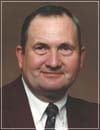
Carroll Poole

Faith Speaking In Wisdom

Ecclesiastes 8:12
Carroll Poole February, 12 2012 Audio
0 Comments
Carroll Poole
Carroll Poole February, 12 2012

Sermon Transcript

Auto-generated transcript • May contain errors

100%
As we read these verses here
in Ecclesiastes 8, our message this morning would be faith speaking
in wisdom. Faith speaking in wisdom. Solomon, you know, is the wisest
man who ever lived of the sons of Adam. There are three Old
Testament books ascribed to this wise man Solomon. Proverbs, Ecclesiastes,
and the Song of Solomon. Each of these three carries a
distinct message, and yet the three form a blessed unity. The
book of Proverbs, you know, consists of brief statements of law. Proverbs. Not how we think things are,
not how we wish things were, but how things are. Proverbs. Ecclesiastes, the book we're
in this morning, majors on experience in this life. Solomon tells of
his many ventures and adventures and pursuits in life. and what
he's learned about life in this world. Then the Song of Solomon consists
of describing what it is to be in love. The love story of Christ
and his church. To put it in the words of the
hymn writer Fanny Crosby, what it is to be lost in love. Solomon tells that story. And so the order of those three
books in our Old Testament is proper and covers the years of
Solomon's life, really. In the beginning, Proverbs, this
is how God says it is. And then in Ecclesiastes, it's
as if he's saying, I can't just take God's word for it. I've
got to try everything under the sun. and prove it to myself and
learn from myself. And then that having failed,
we come to the song of Solomon, enjoying the love of Christ,
God's way, God's way. Now, in the last chapter of this
book of Ecclesiastes, it is obvious that Solomon is up in years when
he writes this. And so he speaks not only in
the great measure of wisdom given him by God, but also in the added
wisdom of life's experience living in this world. Today, it seems
like people are mostly interested in life in this world. Not too
many people talking about interested in the life to come. Well, that's exactly what Solomon's
talking about strictly is life in this world, things under the
sun. As a matter of fact, that phrase
is a key recurring phrase in this book of Ecclesiastes. In
these 12 chapters, he makes that little statement under the sun
29 times, 29 times. So he's talking about this world. unto the Son. He makes it very
clear. And he concluded that all of
life without God is vain. That's a huge statement. Some
of us hadn't concluded that yet. But he concluded that all of
life without God is vain. All of nature, all of humanity,
all of geography, all of science, all of history, all of everything
is vain without God. And Solomon uses that word in
its various forms, vain, vanity, vanities, 38 times in these 12
chapters. So what he's concluding is that
life under the sun, in this world, without God, is vanity. And he said several times, vanity
of vanities. Of all the vanities there is,
vanity. But now we come to our thought
here. Faith speaking in wisdom. In verse 12 of this 8th chapter
of Ecclesiastes, In the latter part of the verse, Solomon says,
Yet surely I know that it shall be well with them that fear God,
which fear before Him. What makes this such a tremendous
statement is that other places in the book and all around it,
Solomon seems to kind of say the opposite. He says in verse
14, for instance, there is a vanity which is done upon the earth. In other words, it makes no sense. It don't add up. What don't add
up? That there be just men unto whom
it happeneth according to the work of the wicked. Again, there
be wicked men to whom it happeneth according to the work of the
righteous. I said that this also is vanity. What does it matter whether a
man does good or evil? Looks like it all comes out the
same. Verse 15, Then I commended mirth,
because a man hath no better thing under the sun than to eat
and to drink and to be merry. That's what this world's all
about. For that shall abide with him of his labor the days of
his life, which God giveth him under the sun. Now, Solomon says
in the next verse, verse 16, he says, I've really applied
myself to know the truth. When I applied my heart to know
wisdom, and to see the business that is done upon the earth,
for also there is that neither day nor night seeth sleep with
his eyes. Here's what I found out. Then
I beheld all the work of God, that a man cannot find out the
work that is done under the sun, because though a man labored
to seek it, Yet he shall not find it. Yea, father, though
a wise man think to know it, yet he shall not be able to find
it. Solomon in all his wisdom said,
here's what I found out. I haven't found out. A man in this life just can't
find out all about it and understand what God does and why He does
it. But Solomon did find out some things. Look at verse 9.
All this have I seen and applied to my heart unto every work that
is done under the sun. There is a time wherein one man
ruleth over another to his own hurt. A man rules over other
men and he thinks he's doing himself good, but he could be ruling over others
to his own hurt. And he goes on to say here, I've
seen the wicked rule And when it comes time to die, they die
like other men and are buried. And they're soon forgotten in
the very city in which they ruled and lived. Nobody fears them
anymore. They're dead and gone. It's all
such a vain cycle. Live, work, fight, gain, then
die and leave it all here. So I asked this morning, why
is it, how is it today that men ignore God and do not fear God
in a land like ours where His gospel has been preached so much? Well, verse 11 kind of tells
us the answer. Verse 11. Because sentence against an evil
work is not executed speedily. In other words, because God don't
send judgment on today's sin today, we'll do it again tomorrow. And because He don't send judgment
speedily, Men think He won't send judgment at all. Because sentence against an evil
work is not executed speedily, therefore the heart of the sons
of men is fully set in them to do evil. We got by with it yesterday. We'll get by with it today and
from now on. That little phrase in that verse,
fully set, the heart of the sons of men is fully set in them to
do evil. Fully set in the Hebrew carries
the meaning of the sails of a ship full of wind. When the sails
are set and they're full of wind, The ship is going in that direction.
It's a fact. There's no stopping it. The wind
rules in the matter. So it's saying here, when men's
hearts are fully set, like a sail full of wind, fully set to do
evil, they're going that way. and cannot convince themselves
or be convinced by anyone else to do otherwise. Now, as God's children, we have
a big problem with Him not speedily judging the wicked. He's already judged them. Let
me rephrase that. We have a big problem with Him
not speedily executing. the judgment. At the same time,
we are extremely grateful for His mercy in not judging us according
to our sins. So Solomon here is a man who's
seen it all, he's done it all, and he agrees with us all, life
is not fair. A godly man makes plans, he works hard, he asks for God's
blessings and his project fails. A wicked man makes plans, never
acknowledges God and everything falls into place and he prospers. A godly man tries to bring his
children up in the nurture and admonition of the Lord, teach
them right, pray for them, keep them in church, and they go astray,
bring much grief and sorrow to parents. The wicked do just the
opposite, and their children do everything right and make
their parents proud. So often we've seen the godly
suffer physically, some for years and years, and wicked people
never sick a day in their life. Why? That's the never-ending
question. Why? Is life so unfair? Why is life so unfair? Well,
can I tell you a little secret? God loves his children enough
to kill us while we live. That's the secret. If everything in life went your
way, you wouldn't be worth shooting, most of us not anyway. But if everything went your way, You couldn't get along with nobody. But he brings his children, whatever
it takes, to die to this world, to how it thinks, to what it
thinks, and to lean on our God. Now a lot of us have got a ways
to go, but I'm telling you this is the process. He brings his
children to die to the world, how it thinks, what it thinks,
and to lean on our God. Every one of his children is
headed in that direction. So in great wisdom, Solomon makes
this profound statement in verse 12. Yet, that is in spite of
all that other. In spite of how things may appear,
he says here, though a sinner do evil and hundred times and
his days be prolonged. That neighbor, that fellow on
the job, that boss man, that boss lady that despises you,
that does you wrong and you think, How long, oh Lord, David prayed
that, oh Lord, how long? How long? Solomon says here, the wise man
says now, though a sinner do evil an hundred times, and his
days be prolonged. Looks like he's getting by with
it. Yet, surely, I know. What is it you know, Solomon?
What is it you surely know? Yet surely I know that it shall
be well with them that fear God. Now, life in this world never
taught Solomon this. He's already said it don't seem
to matter how you live. The good seem like have it bad
and the bad seem like have it good. So it's not life that taught
him this truth. Faith taught him this wisdom.
Surely I know it shall be well with them that fear God. Here's a man who had experimented
with anything and everything in life and was never satisfied. You ought to read about Solomon
and his life in the Bible. I wouldn't recommend you read
a lot of other junk. Unbelievable wealth and it never
satisfied. A thousand women 700 wives, 300 concubines. That ought to satisfy
a man or kill him one. Never satisfied. He built buildings. He built cities, vineyards, gardens. He got into horses, built stables,
thousands of them, everything imaginable and nothing satisfied. He might even went trout fishing.
That used to do it for me. He did everything. Nothing satisfied. But it's the
faith of God's elect, the gift of God in the hearts of His children
that lived in Solomon's heart, taught him that nothing can take
the place of the fear of the Lord in one's heart. Matthew Henry says this, of the
book of Ecclesiastes. And I want to read you these
words. Solomon, having experienced so much, resolves, like his father,
to teach transgressors God's way and to give warning to all
to take heed of splitting upon those rocks which had been fatal
to him. The fundamental error of the
children of men and that which is at the bottom of all their
departure from God is the same with that of our first parents,
hoping to be as gods by entertaining themselves with that which seems
good for food, pleasant to the eyes, and desirable to make one
wise. Now, the scope of this book is
to show that this is a great mistake, that our happiness consists
not in being as gods to ourselves, to have what we will and to do
what we will, but in having Him that made us to be a God to us. That's the fact. Yet, in spite of all the seeming
unfairness in life, yet surely I know that it shall be well
with them that fear God. It may not seem like it all the
time in this world, but it's so. A story was told long ago
about a farming community. And one man, very ungodly, was
so good at farming. And he became very aggravated
at hearing his farmer neighbors talk about God's blessing on
their crops and praying to God for rain for their crops. And finally, he got so aggravated,
he just wrote an article, put it in the local newspaper, And he said, I work hard. I know
farming. I take every advantage. I do
everything necessary. I do everything possible. I never
pray. I never talk to God. I never
talk about God like all these others do. And yet I have the
finest crops. And I have the greatest yield
per acre of any farmer in the county." Well, the next day in the same
newspaper, there was a reply. And someone said simply, briefly,
God does not settle His accounts in October. There's more to it than a fall
harvest. Yet surely I know that it shall
be well with them that fear God. This is the greatest thing anyone
can learn in life. It's great for these young folks
sitting here, these teenage boys and teenage boys and girls and
all you young folks. To learn and to know and have
it settle in your heart this truth that it shall be well with
them that fear God and honor God in your life. I know you're not being encouraged
to do that at school or around friends, but you can know this. This is God's word. Ecclesiastes
8.12, the wisest man who ever lived other than the Lord Jesus
Christ. Solomon, in all his great wisdom,
he said, surely I know that it shall be well with them that
fear God. Young folks, you don't have to
sell out. You don't have to go along with what people want you
to go along with. You have a God. All right, two
questions remain. Who are they that fear God? And
secondly, am I one of them? First, who are they that fear
God? Well, whether they confess it or not, All men fear God and
the terror of His law and the terror of sinking into hell. They can talk atheist all they
want to. But the fear spoken of here is
something different. The fear Solomon is talking about
is a reverence for God that's born out of love for God. He's talking about a fear of
grieving God. It's not dealing with the consequence
of my disobedience, but it's fear of grieving Him who loves
me so. Grieving Him who chose me from
eternity. grieving Him who sent His Son
to die on the cross for me." It's a filial fear rather than
a slavish fear. Today, when we hear the statement,
so-and-so is a Christian, it can mean many things. or it can mean nothing. A hundred years ago, they didn't
use that terminology, so-and-so is a Christian. Instead, they
said, he is a God-fearing man. She is a God-fearing woman. It's not worth much to be called
a Christian in our day. From the White House on down
to the poorhouse, it means nothing. But to be called God-fearing
is another matter. God-fearing people aren't perfect
by any means. But what I'm saying is that there
is something in the heart that don't want to grieve the Lord. When I was a boy in school and
would get into trouble, just a time or two, mind you, I wasn't
bad as some of y'all. But I would rather the principal
beat me half to death than for my mama to know what
I did. It wasn't just the punishment.
I was far more afraid of him than I was her when it comes
to the punishment. But I'd rather endure all he
dished out than to grieve my mother's heart. See the difference? So do you fear the Lord this
way? Is it fear of getting caught?
That's no good. Is it fear of punishment? That's
no good. Or is it fear of grieving him? Ephesians 430, Paul said, and
grieve not the Holy Spirit of God. Grieve is a love word. You can't grieve someone who
don't love you. They'll just hate you all the
more. But grieve is a love word. This is why David said in Psalm
51, four against thee, the only have I sinned. He said that in
his confession to God against the only. Well, did he not do
Bathsheba wrong? Yes. Did he not do Uriah wrong? Yes. But his sin was against God who
loved him so. God who had chosen him and blessed
him and exalted him and given him a great name and given him
a great kingdom. And the words of 2 Samuel 12,
8 must have cut David to the heart. The Lord said to him,
after all I've done for you, if all that had been too little,
I would have given you more. I would have done more. So what can a man say? when he's not satisfied with
the blessings of God and wants more. David repented. And you know
the story. He loved the Lord and he honored
the Lord the rest of his days. And he said, the only thing lacking
now for me to be fully satisfied is to awake in his likeness.
Then I'll be satisfied. Well, part of his likeness is
sinlessness. So the question this morning
is not who's getting this deal or that deal in the world. I mean, this is the thing in
every home where there's siblings, brothers and sisters. It's all
time an argument, which one's getting the best deal in this
or that. He got to do so-and-so. She got to do so-and-so. He didn't
have to. I didn't have to. It's not about that. It's not
who's getting the best deal in this world. The question is,
do I fear the Lord? Do I trust him as Solomon did? Do I surely know, as Solomon
did, that it shall be well with them that fear him, reverence
him, honor him, live to his glory? Our prayer should be this morning,
Dear Lord, put this fear in my heart today and every day. that it may be well with my soul
forever. May we stand.
Carroll Poole
About Carroll Poole
Carroll Poole is Pastor of East Hendersonville Baptist Church, Hendersonville, NC. He may be reached via email at carrollpoole@bellsouth.net.
Broadcaster:

Comments

0 / 2000 characters
Comments are moderated before appearing.

Be the first to comment!

Joshua

Joshua

Shall we play a game? Ask me about articles, sermons, or theology from our library. I can also help you navigate the site.