Bootstrap
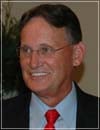
Larry Criss

But God

Galatians 4:1-7
Larry Criss September, 25 2011 Audio
0 Comments
Larry Criss
Larry Criss September, 25 2011
But God

Sermon Transcript

Auto-generated transcript • May contain errors

100%
Turn, if you will, in your Bibles
to Galatians chapter 4. Galatians chapter 4. We'd like
to read just a few verses in this chapter. Years ago, I was
visiting a friend in the hospital, and I went in during the lunchtime. They were serving lunch to the
patients, and I told him, Shannon, you just sit there and eat, or
lay there and eat, and I'll do the talking. Just go ahead and
enjoy your lunch." And I could tell he was having some difficulty
with the meat on his plate. And finally he just pushed it
aside, Lou, and he said, I declare, Larry, the more I chew this,
the bigger it gets. So finally he just gave up on
it. And often, often when I come to God's Word, I feel the same
way. The more I chew it, the more
I think about it, the more I meditate on it, the greater and the bigger
it gets. And especially this passage here
in Galatians chapter 4. Let's begin reading at verse
1. Now I say that the heir, as long as he is a child, differeth
nothing from a servant, though he be Lord of all. but is under
tutors and governors until the time appointed of the Father.
Even so, we, when we were children, were in bondage under the elements
of the world. But when the fullness of the
time was come, God sent forth his Son, made of a woman, made
under the law. to redeem them that were under
the law, that was His purpose in coming, that we might receive
the adoption of sons. And because you are sons, God
has sent forth the Spirit of His Son into your hearts, crying,
Abba, Father. Wherefore, thou art no more a
servant, but a son. And if a son, then an heir of
God through Christ. you're well aware that between
the Old Testament and the New Testament, 400 years transpired.
400 years that God did not speak
by the prophet to the people. 400, they referred to as the
400 silent years, since God spoke by the last prophet Malachi until
John the Baptist, 400 years later, came on the scene. Oh, what takes
place? What happens in this world? when
God doesn't speak to men. What takes place? Well, religious
tradition flourishes. It continues on. True godliness,
when our Lord came to this earth, as our text speaks of, God sent
forth His Son. When He came to this earth, true
godliness had come down to a Simeon here, who waited to see the Messiah,
the Redeemer. before he departed this world,
and an anna there who looked for the consolation of Israel,
to the point, you remember our Lord's words to the religious
leaders, to the teachers, to the instructors of the people?
He told them, he laid this accusation at their feet, to the Pharisees,
the leaders, mind you, the builders. He said, you make void, you set
aside, you make void the Word of God by what? Your tradition. Your tradition. And you teach
for doctrine the commandments of men. Doesn't that sound familiar? Doesn't that sound familiar,
Louie? In our day, men's ideas about
God, Who God is? Most men that stand in most places
this morning declaring to speak for God will present people with
a God who's not God at all. Who doesn't resemble any more
the God of the Bible as a pygmy does a giant. No, they teach
for doctrine the commandments of men, and the same charge can
be laid toward them that was laid before the feet of the Pharisees.
You make void the Word of God by your tradition. They teach
a Christ that can't have His way, a Christ that only made
salvation possible. That's foreign to God's Word,
Carlos, and I thank God that it is. Our text doesn't say that
God sent forth His Son to make an effort at redemption, to try
only to attempt to redeem His people, but He sent Him forth
on this mission, on this work, to obtain eternal redemption
for His people. In your bulletin this morning,
my pastor has nine stubborn statements where there is no middle ground,
he says. They're either true or not. They can't be both. There can't
be a compromise. And one of those statements are
the redemption of Christ's people by the Great Shepherd. Either
He redeemed them or He didn't. There can't be any in between.
And there can't be any compromise on that. Either our Great Shepherd
did what He came to do, either He redeemed His people on the
cross, then and there, affectionately and completely and forever, or
He's a failure. There's no in-between. Thank
God He was not a failure. And the idea of salvation today
is taught on the tradition of men as well. Oh, they speak about
a free will, that thing that does not exist. There's no such
critter. It does not exist. But even then,
when our Lord came to this earth amid that religious darkness
and the teachings of traditions of men, even in His day and even
in our day, there was a remnant according to what? are written
according to what? According to the election of
Grace. And there is the day. There always
has been. And Lord, there always will be,
thank God, as long as this world stands. The very fact that God
allows this world to continue is evidence that there is yet
a remnant according to the election of grace. Isn't that encouraging? Isn't that a blessing to know
that God Almighty is yet by His grace and power calling out a
people for His namesake? Those very people. Those same
people that before the world ever was, before He ever spoke
it into existence, He gave a multitude into the hands of His Son that
His Son became responsible for. And in the fullness of time,
God sends forth His Son, we're told in verse 4, to redeem those
very people. to redeem those. And the day
He's calling out those people, those He redeemed, those He shed
His blood for, will most certainly, without question, without doubt,
without the loss of one, they'll be brought to Christ. Oh, sovereign
grace! the power of God, abraded to
the footstool of sovereign mercy, where they'll bow before Him,
just like that proud rebel Saul of Tarsus, and just like the
proud rebel speaking to you right now, and ask God to be merciful
unto them. Thank God there's a remnant according
to the election of grace. Let's turn for a moment and look
at that passage again. Romans chapter 11. We all fall
into what I call that Elijah syndrome sometimes, don't we?
Those pity parties where we say, well, I'm the only one left.
Elijah fell into that. He was just a man. He stood on
Mount Carmel, that great battle between his God and the prophets
of Baal, and you know how that Turned out, the God that answered
by fire, he was God. And a little while later, Jeff,
we see that same man, that same man that stood in the power and
with the God behind him, encouraging him and strengthening him, we
see that same man running and hiding at the threat of a woman. Jezebel said, I'll take your
life. And he said, God just let me
die. He was just the man. Verse 1 of Romans 11, I say then,
had God cast away his people, God forbid, God forbid, it can't
happen. It'll never happen. For I also
am an Israelite of the seed of Abraham of the tribe of Benjamin. God hath not cast away his people
which he foreknew. Want ye not what the scripture
saith of Elias or Elijah? How he maketh intercessions of
God against Israel, saying, Lord, they have killed thy prophets,
and dig down thine altars, and I am left alone. That's how Elijah
felt at the time. But it wasn't true. And they
seek my light. But, but, what saith the answer
of God unto him? God speaks and says, I have reserved
to myself 7,000 men who have not bowed the knee to the image
of Baal. Even so, Paul applies that to
his day. And he says, even so at this
present time, in the day in which Paul lived, at the time he penned
these words, he says, even so at this present time, there is
a remnant according to the election of grace. And even so today. At this present time, right now,
thank God, there's a remnant according to what? Their desert? Their merits? Their free will? No. They're surrendered according
to the election of grace. That must be saved. That must
be brought to Christ. That must be brought to glory.
Because it's all based not upon themselves, not upon their works,
but upon God's effectual grace. Verse 6. Paul says, if by grace,
then it is no more of works, otherwise grace is no more grace.
But if be of works, then it is no more grace, otherwise work
is no more work. It's either all of one, all of
work, or all of the other, all of grace. And thank God it's
all of grace. God, we read back in Galatians
4, but when the fullness of the time must come, verse 4. But God, that's the title of
my message. That's easy to remember. Just
two words, all but full of grace and truth. But God, in His own
time, according to His purpose of grace, sent forth His Son. Exactly on time. Exactly on time,
at the very place, through the very means, at the very time
that was prophesied by the prophets hundreds of years before, 700
years before Isaiah prophesied that a virgin shall be with child
and shall bring forth a son and that shall call his name Immanuel,
which means what? God with us. God with us. That baby in the manger, that
baby, that little dark-skinned Jewish male baby is none other
than God Almighty in the flesh. He's that one who made everything
that is made. That's what John said when he
introduced his gospel. In the beginning was the Word.
And the Word was with God. And the Word was God. And without
Him was not anything made that was made. And John said, and
that Word, that eternal Word, was made flesh and dwelt. Tabernacled is the Word. Dwelt
among us for a little while. God Almighty in the flesh. My soul, what a wonder. That's
what our text says. But God sent forth His Son. Tim James often says, if you
talk to Tim and ask him how things are going, I called him one time
when he was having an illness, had contracted some sort of virus
and they couldn't figure out what it was or how to treat him.
That seems to be the case sometimes with doctors, isn't it? But I
said, Tim, how are you doing? He said, Larry, everything's
on schedule. I like that, don't you? Everything's
on schedule. Christ came forth proclaiming,
as we read in the 40th Psalm, and Paul repeats in Hebrews chapter
10, Christ's response to the Father sending Him into the world
with these words. When He entered this world through
the womb of the Virgin, He said, I come to do thy will, O my God."
And he did it. He did it all. He did it completely. And he did it as a substitute
for his people. All that Christ did in his life.
And all that he suffered in his death, he did as a substitute
for his people. He declared, I come to do thy
will, O my God. It's no wonder the angel sang
that night. There is born unto you this night
in the city of David, the very place where God said he should
be born. In the city of David, what? Who? A Savior. A Savior. That's who He is? That's what
He came to do? Not to make salvation possible? Do you find any comfort in that? Do you? Do you find any comfort
in being told, if you realize your condition, if you know what
you are by nature, If you have some inkling, just some idea
of the helpless state you're in, to have somebody tell you,
and you know that you're dead in trespasses and sins, and somebody
tells you, God's done all he can and now it's up to you. Do you find any comfort in that?
My soul. No, I don't. Do you, Lord? Oh, no, but to be told about
this one, to be told, but God, oh, but God, that changes everything. There's hope now. Oh, if God
condescends to come in the flesh to redeem these people, there's
hope now. But God, but God, what? But God, what? Sent forth His
Son. Remember your condition? Paul
describes it in verse 3 of Galatians 4. We were in bondage. We're in bondage under the elements
of the world. In bondage. We were enslaved
to our fallen nature. Nothing free there. Nothing free. When Adam fell, we fell in him. And Adam fell completely from
God. Adam fell from God. He lost his
desire for God. He lost his ability to worship
God. He lost everything spiritual. He died that day, just like God
told him that he would. But God, we're told in verse
4, yes, we're in bondage from which we could not free ourselves. We didn't even want to be free.
We're so enslaved to sin, we don't even know it. We don't
even realize it until God turns the light on. As old Barnard
said, until God gets a man lost, he doesn't even know he's lost. He'll be content just playing
games. He'll be content with just a
little worldly religion. He'll be content with that. He'll
be satisfied with that. He'll deceive himself into thinking
everything's right between him and God. Oh, until God Almighty
turns the light on. God turns the light on. And he
awakes. And he realizes he's lost. He's lost. He realizes he can't
take the first step. He cannot help himself. He realizes
for the first time in his life, and what a blessed revelation
it is, when God opens the heart of a man and he realizes he's
lost. I'm lost. I'm undone. I'm in bondage. And I cannot
free myself. Oh, what a blessed revelation
that is. Oh, and if someone tells him,
if you'll do your best, And he says, that's not enough. That's
not enough. That won't bring me peace with
God. Someone says, well, if you take
the first step. That's the problem. I can't.
I can't. If you open my heart, my heart's
deceitful above all things and desperately wicked. There's no
help there. I need a new heart. I need a
new heart. I don't need reformation. I need
a new birth. I don't need reformation. I need
regeneration. I need Him to come to where I'm
at and speak light to my dead self. I need Him, the Son of
God, who Himself is the resurrection and the life, to come to where
I am. I can't go to Him. I can't reach
up to Him. It's just a gulf too far. I can't
reach over. Oh, but if he's pleased to come
to where I'm at. He who said, I'm the resurrection
and the life. The hour is coming, he said.
And now is, that the dead shall hear the voice of the Son of
God, and they that hear shall what? They shall live. Lazarus, Live! Lazarus, come forth! That's our mighty Savior. That's
Him. Oh, He's mighty to save. When
the fullness of the time was come, God sent forth His Son. That's the only hope for any
sinner but God. But God. That's exactly right. But God, or I'm hopeless. But God, or I remain in bondage. But God, or I remain where I
am, lost, undone, and condemned. We look out at creation and we
ask, how did it come to be? Who's responsible for this? The
psalmist said, when I consider the heavens, the work of thy
hands, and the moon and the stars which thou hast made, who's responsible? The wise acres, those smart men. They say it's the result of a
big bang. Isn't that intelligent, Louis?
Isn't that smart? Oh no. Thank God we know better. We turn to the first book and
we read, but God. God in the beginning created
the heavens and the earth. But God is the answer to the
reason of creation. And but God is the answer to
the new creation. Our Lord told Nicodemus, you
must be born again. He said, that's something that
must be done. But he didn't tell him it's something
that you can do. It must be done, Nicodemus. You can't see the kingdom of
God unless it's done. But it's not something that you
can do. It takes a miracle of God's mighty
grace. It takes, as we've said, Christ
coming to the tomb of our dead hearts and breathing life into
us as only He can do. Before there can be acts such
as faith or repentance or willingness to come to Him, there must first
be life. Men are told, if you believe,
you'll be born again. Well, that's just not right.
The very opposite is true. We must be born again first in
order to believe. Oh, but when the fullness of
the time must come, blessed divine intervention. I like that, don't
you? God sent forth His Son. Oh, may we, the subject of Christ,
be enabled to behold our King. Because I declare to you, and
you know it as well, that's the remedy for weary pilgrims to
behold the captain of their salvation. That's the remedy, that's the
cure for those tempest-tossed, to behold the captain of their
salvation, walking upon the sea and saying, peace be still. Just one word. From His sweet
lips can bring peace to our troubled souls. Nothing else can. Nothing
else can. First behold His coming into
this world. Notice when He came. We already
hinted at this. When did He come? It was God's
time. It was God's appointed time.
God's decreed time. God had arranged everything. to this time when His Son, the
God-man, should come into His world as prophesied, as promised,
as pictured throughout the Old Testament, as agreed upon, in
that everlasting covenant of God's grace. That covenant that
Paul speaks about in Hebrews chapter 13. Now the God of peace
that brought again from the dead our Lord Jesus, that great Shepherd
of the sheep, through the blood of what? The everlasting covenant. What is that? That's that covenant. entered in by Father, Son, and
Holy Spirit before the world began concerning the salvation
of all His sheep. The Son agreed in the fullness
of time to come and do everything." Everything. Carlos, everything. Everything necessary for our
salvation, everything that God Almighty required, everything
that His holy law demanded, everything that justice required, the Son
of God came and did for the redemption of all His people. What a Savior! You mean He left nothing undone? You mean Jesus paid it all? He paid it off. You mean to tell
me that the blood of Jesus Christ, God's Son, cleanses us from all
sin so completely, so thoroughly, that in that day when we stand
before a holy God, He'll look at us and we're told He sees
us without fault. Without fault before the throne
of God. Without any trace of sin. No
trace of sin upon us whatsoever. That's exactly right. That's
the result of the work of the Son of God that He accomplished
on the behalf of His people. All that time had come. Unlike
any other event or time in human history, this is the hand upon
which the doors of eternity turn. Eternity past and eternity to
come revolve on this particular time. Turn, if you will, to John
chapter 12. Our Lord speaks of this. This
is the night of His betrayal. This is the night that they would
come to the garden to take Him. And just hours before in John's
Gospel chapter 12, he uttered these blessed words in verse
23. And Jesus answered them saying,
The hour has come. The hour has come. Oh, the hour
has come that I should be made sin. The hour has come that I'll
tread the winepress of the fierceness of the wrath of God all alone. The hour has come that the Son
of Man should be glorified. Verily, verily, I'll say unto
you, Except a corn of wheat fall into the ground and die, it abideth
alone. But... Oh, there's that blessed
little word again. But if it dies, It bringeth forth,
without question, without doubt, if it die, it bringeth forth
much fruit. Thank God, much fruit. The Lord Jesus Christ is the
captain of many brethren. Many brethren. There will be
before the throne of God a multitude cleansed by the precious blood
of the dying Lamb, the Son of God Himself, a multitude that
none can number, that not might be saved, but shall be saved,
and saved with an everlasting salvation. That's when He came,
in the fullness of God's time. But now secondly, secondly, notice
who came. Notice who came, looking again
at our text. But when the fullness of the
time was come, God sent forth His Son. His Son, brothers and
sisters. And everything depends on Him. Everything. John said he saw
in the hand of Him that set upon the throne in Revelation 5 a
scroll. All the decrees of God. And the
angel cried, Who's worthy to take the scroll, the book, and
to loose the seals thereof? And there was no man in heaven
and earth, or under the earth, that was found worthy to open
the book and to loose the seals thereof. And John said, I wept
much. I wept much. Oh, but what did
the elders say to John? John, weep not. Behold! Behold! John, look at this! Look at this sight! Look at this,
John. Behold, the Lion of the tribe
of Judah hath prevailed. Bless God, He always does. Our Savior doesn't try to do
something, He doesn't. He accomplishes His purpose.
He has His way in the whirlwind, and the clouds are but the dust
of His feet. He has His way in the armies
of heaven and among the inhabitants of the earth. None can stay His
hand. If they can, He's not God, Lord. None can stay His hand. Or say
unto Him, What doest Thou? Our Savior, our Redeemer, that
One that was sent forth by God the Father, is mighty the same. God sent forth His Son. And without Him, Without Him,
what do we have? Without Him, what's left? Our great God and Savior has
come. He who had no beginning has come. He who created all things came. He came down to man. Turn, if you will, to Hebrews
chapter 1. Hebrews chapter 1. The writer says in verse 1 of
Hebrews 1, God who at sunry times and in diverse manners spake
in times past to the fathers by the prophets, having these
last days spoken unto us by who? His Son. whom He had appointed
heir of all things, by whom also He made the worlds. All things
were made by Him, who being the brightness of His glory and the
expressed image of His person, and upholding all things by the
word of His power, when He had by Himself..." Don't you like
that? "...when He had by Himself purged
our sins, sat down at the right hand of the Majesty on high."
Oh, that's the opposite of man's religion, isn't it? It always
tells a man what he must do to appease God. Oh, but the Scripture
tells us that what the Son of God did in order to bring us
to God. He is our peace who had broken
down the wall of partition that was between us. Oh, the God-man. God sent forth His Son, and the
Son exclaimed, I come to do Thy will, O my God. He sent forth
his son made of a woman. Why was that necessary? Because
his brethren Those He came to redeem. Those He came to save. They were flesh and blood. So
He likewise took part of the same. He became what He was not
and would never be again. He would always be one with them. Oh, because the children were
flesh and blood, He likewise also took part of the same. He was made of a woman. And Paul
says also, he was made under the law, not to destroy the law,
oh no, but to fulfill it. And he did. And now last of all,
why did he come? Why did he come? Look again at
our text in Galatians chapter 4. Why did Christ come? But when the fullness of the
time was come, God sent forth His Son, made of a woman, made
under the law, verse 5, to redeem them that were under the law. To redeem them. To do for them
what they could not do for themselves. To redeem. That's why He came. Not to try to redeem, not hope
to redeem, but to actually and to truly redeem. Brothers and sisters in Christ,
that's where our comfort lies. The most comforting doctrine,
the most simple heart that I find in God's Word, Louie, is this. He redeemed me from my sins. The most comforting fact I find
in God's Word is the fact, the truth, the glory of an effectual
redemption. A redemption that got the job
done. Redemption that actually and
really and truly and forever completely put away all my sins
forever. Bless God, what a Savior. He entered in. One time into
the holy place, having obtained glory to His name, having obtained
eternal redemption for us. Joseph, call His name Jesus. Joshua, the salvation of the
Lord, because He shall. I love that. People read that
and speak of it only one day out of the year. Bless God, it's
good news every day out of the year. He shall save His people
from their sins. Either He did or He didn't. Bless God, He did. He did. He saved His people from their
sins. In Isaiah chapter 53 we're told,
It pleased the Lord that bruised him. When thou shalt make his
soul an offering for sin, thou shalt put him to grief. And what's
the outcome of that? What's the outcome? When our
Redeemer cried out, My God, why hast Thou forsaken Me? When He
was made sin, made sin, what's the outcome of that? What's the
result of all that? Why did God do that? For a maybe? For I hope so, bless God, no."
Never, never the prophet went on to say, he shall see it through
the veil of his soul and be what? Satisfied. Can you imagine? Can you imagine the Son of God
looking down from the throne of His glory and seeing one,
just one? For whom He died, suffering for
the same sins He supposedly put away in hell, and by any stretch
of the imagination, being satisfied? No! No! Bless God, no. There won't be one sinner for
whom He died will suffer for those same sins. Bless God, He
put them away. And now God is faithful. And
not only faithful, He's just. He's just when He justifies a
sinner. Why? Because Christ put away
their sins. Remember when Judas led the mob
to the garden that night? And he said to them, if it's
me you seek. Oh, can you not picture Him?
Can you not picture our great Redeemer? our substitute, standing
out before that angry, bloodthirsty mob and saying, if it's me you
seek, let these go their way. You can't have both of us. If
you take me, they're going free. And he stood before the wrath
of the Holy God. before the justice of the Holy
God and said, here I am, take me, exact your vengeance upon
me. Let the wrath of your offended
justice fall on me. But when it does, bless God,
my sheep are free. They're free. They're forever
free. So completely that in that day,
he'll stand before God and he'll say, Father, I and the children
that Thou hast given me, I have lost none." Turn, if you will,
we'll wrap this up, but will you turn to Exodus chapter 15?
God has brought Israel across the Red Sea. And they saw that
great work we're told in the closing verses of chapter 14,
which God did. Not which they did, but which
God did for them. And it says, The people feared
the Lord and believed the Lord. And Moses led the children of
Israel in this song of praise to God. Oh, it's such a blessed,
blessed passage. But let's just look at verse
13. Among those things which they praised God for in this
song, it says, Thou and Thy mercy has led forth the people which
Thou has redeemed. Was that everybody? No. No. Many perished in the Red
Sea, Pharaoh and his mighty army. No, he led forth the same people
that he redeemed, the same people who were in those houses where
the blood of that innocent man was applied, those are the same
people that He brings through the Red Sea. The same one He
redeemed by blood, He redeems by power. Thou, in thy mercy,
hast led forth the people which thou hast redeemed. Thou hast
guided them in thy strength unto thy holy habitation. Look down,
if you will, at verse 17. Thou shalt bring them in. Thou shalt bring them in. I go
to prepare a place for you that where I am there ye may be also. Thou shalt bring them in. and
plant them in the mountain of thine inheritance, in the place,
O Lord, which thou hast made for thee to dwell in, in the
sanctuary, O Lord, which thy hands have established. The Lord
shall reign forever and forever." Jude closed his epistle with
these words. Now unto him, we'll close this
message in the same way. Now unto him that is able to
keep you from falling, Now think about that. What a
task that is. Oh, that's a work worthy of God. To Him that is able to keep you
from falling. Jeff, think about it. Think about
what grace is necessary to keep you from falling. And what mighty
grace that must be in the hands of our great Savior that He's
able to keep a sinner like me from falling. But you didn't
stop there. Unto Him that is able to keep
you from falling and to present you what? Faultless, Carlos. Faultless. Bless God's faultless. Not just
sinless. He said faultless. Faultless
before the presence of God Himself. Faultless before the throne and
His glory. To Him be glory and majesty and
power both now and forever. Amen. Amen. Hallelujah. What a Savior. What a Savior. God bless you.
Larry Criss
About Larry Criss
Larry Criss is Pastor of Fairmont Grace Church located at 3701 Talladega Highway, Sylacauga, Alabama 35150. You may contact him by writing; 2013 Talladega Hwy., Sylacauga, AL 35150; by telephone at 205-368-4714 or by Email at: larrywcriss@mysylacauga.com
Broadcaster:

Comments

0 / 2000 characters
Comments are moderated before appearing.

Be the first to comment!

Joshua

Joshua

Shall we play a game? Ask me about articles, sermons, or theology from our library. I can also help you navigate the site.