Bootstrap
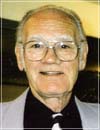
Scott Richardson

What Is A Sinner

1 Peter 3:18
Scott Richardson October, 20 1996 Audio
0 Comments

Sermon Transcript

Auto-generated transcript • May contain errors

100%
Chapter 3, I'll talk to you a
little while. Trust will honor God, glorify the Son, the Holy Spirit, and edify those that are in Christ
Jesus. And if it please God to make someone who's not interested
in the gospel to become interested in the gospel for the glory of
God in the name of our Lord Jesus Christ. That's our objective. 1 Peter chapter 3, verse 18, we'll consider part of this verse. In this particular chapter here, the apostle speaks concerning
wives, concerning a man's wife. From the history of the human
race, there has been wives. Adam had
a wife. Her name was Eve. God joined them together. And here it says, likewise, ye
wives, be in subjection to your own husbands. Boy, that seems
to be out of place in our day, doesn't it? Wives being in subjection
to their husbands. That indicates that the husband
has a place in the home, in the family, as the chief, as the example, as the father. Very important role the man plays,
the husband, the father. Very important. But he's talking about wives
here. He talks about husbands. He says, Husbands, love your
wives as the Lord loved his church
and gave himself for it. And that is a great love and
tremendous, that is a tremendous charge, isn't it? Laid on a man
that he should love his wife like Christ loved the church.
No greater love than this, that a man would lay down his life
for another. That's love, isn't it? Oh, to
give a pint of blood, that's an act of love. Oh, but that
cannot be compared with this great act here of laying down
your life, shedding your blood. Christ shed His blood. He shed His blood for us who
are unlovely. He shed His blood and gladly
and willingly and cheerfully suffered, shed His blood, laid
down His life, was made sin, for those who were unlovely. Unlovely! The lovely one laid
down his life for those who are unlovely. That's real love, isn't it? It's not such a great thing for
you to do something for someone that you love. do something for
your children, and certainly would be no argument
from anybody about that, to do something for your children,
do something for your wife. And you know why the natural
man does that? Because his children and his
wife is only an extension of Himself, and after all, He's
just doing it for Himself. But that's not the way it was
with our Lord. He did it for those that were
unloved, those that hated Him, those that were enemies in their
wicked minds, those that were against Him, not for Him. But anyhow, Likewise, ye wives,
be in subjection to your husband, that if any obey not the word,
they also may without the word be won by the conversation of
the wives, a faithful wife. And while they behold your chaste
conversation coupled with fear, Well, he goes on and he says
in verse 6, I'm not, this is not my subject, I'm just trying
to get over here to the 18th verse. I'll get there. You wait. Bear
with me. Talking about the wives. Now
listen, verse 6 he said, Even as Sarah obeyed Abraham,
Sarah, the wife of Abraham, says even as she obeyed Abraham, calling
him Lord, her obedience was seen in what
she done. She called him Lord. Whose daughters ye are, as long
as ye do well, and are not afraid with any amazement. Likewise,
ye husbands, dwell with them according to knowledge, giving
honor unto the wife as unto the weaker vessel, and as being heirs
together of the grace of life, that your prayers be not hindered." Then he comes on down through
in speech of these things about, let him hate evil, he that will
love life and see good days, let him refrain his tongue from
evil, and his lips, that they speak no guile or deceit,
let him eschew evil, that is, let him hate evil and do good. Well, what should I do in this
life? Well, do what's right. Just do
what's right. Do good, let him seek peace,
and pursue it. For the eyes of the Lord are
over the righteous, and his ears are open unto their prayers.
But the face of the Lord is against them that do evil. And who is
he that will harm you? That is, those that are in Christ. Now, you remember I told you
that he's writing here to the saints of God and to the faithful
at Colossae, and the Bible is written to believers and not
to unbelievers. So when he uses expressions like
this, who is he that will harm you?
Those that are in Christ, they're safe in Christ. They're as safe
as God can make them safe. And who is he that will harm
you, if ye be followers of him which is good? But if ye suffer
for righteousness' sake, happy are ye, and be not afraid of
their terror, and neither be troubled. If you suffer for God's
sake, be happy about it. All right, now he goes on in
verse 18. He says, For Christ, also hath
once suffered for sins, the just for the unjust, that he might
bring us to God, being put to death in
the flesh, but quickened by the Spirit." Now, I think in order
to understand some things here where it says, For Christ also
hath once suffered for sins. We've got to find out what a
sinner is. A man's got to know that he's
a sinner. before he can be affected by what is said here. Christ
has suffered for sins, the just for the unjust, that he might
bring us to God. Who is he going to bring to God?
He is going to bring sinners. He is going to bring those that
are unjust. He is going to bring them to
God Almighty. But what is a sinner? Well, let me begin by making a statement. When a man, a woman, a boy or
a girl, when a member of Adam's fallen race takes his true place, his true place, there is only
one true place that a poor, hopeless, helpless, doomed, damned, fallen
sinner can take if he's going to be introduced to the grace
of Almighty God, to God's divine favor. Only one place that he
can take, and that's a true place. when a man takes his true place
as one thoroughly lost, thoroughly through and through, from the
top of his head to the soles of his feet. There's no soundness
in him. He's full of bruises and putrefying
sores. There is not one good thing in
him. Now when a man takes his true
place as one thoroughly lost, guilty and undone, as one in
whom there is not so much as a single solitary point on which
the eye of infinite Holiness can rest with complacency as
one who is so bad that he cannot possibly be worse. That's the true ground. That's
the true ground of those who are recipients of divine faith. when they take their place on
that true ground, that they are so bad that they cannot be worse. When that takes place, and that
will only take place as a result of something God does by way
of revelation. He's got make you see yourself
as you really are, hopeless and helpless. You see, that's the
reason why this place is not filled up this morning. That's
the reason why this part of the building lies vacant and these
seats lie vacant. Why? It's because those that
are here for the most part are gone, singled them out. He found
these that I preached to for the most. He found them where
they were wallowing in their own blood, in their hopeless and helpless
condition. He found them that way. They
didn't know they were that way. But He worked a work in them
and revealed unto them how ungodly and how doomed and damned and
how lost they were. And when they seen their state,
their plight, when they seen that, they cried out, God, show
mercy to me, a poor sinner. Help me, a poor sinner. I can't
save myself. I'm hopeless. There's not a good
thing in me. I own what you say to be true
about me. They own up to it. They say,
You're right, nothing good about me. When that takes place, this
is what happens. There is an immediate, a perfect,
divine settlement of the entire matter. You see, the grace of
God, the grace of God, the favor of God, grace is unmerited. That is, you're not worthy of
it. How could a sinner who's against
God be worthy of the grace of God? Grace is unmerited favor. It's the divine favor of God. It lies with Him. He's the God
of all grace, not just some grace, but all grace. and He is sovereign
in His dispensing of His grace, of His favor. I say when a man takes his true
place before God, hopeless and helpless, so bad that he cannot
possibly be worse, there is an immediate a perfect, a divine
settlement of the entire matter. The grace of God, divine favor,
deals with sinners when I know myself to be a sinner. When I know myself to be a sinner. Thank God this morning. I thank
Him. I thank the God and Father of
our Lord Jesus Christ that there was a time when I did not know
myself to be a sinner. I thank God there was a time
when I found out that I was a sinner. See? I'm telling you, the majority
of the peoples that make up this earth do not know. that they're
sinners. But I'm saying that God in grace
deals with sinners. And when I know myself to be
a sinner, the entire matter is settled once and for all. Now, listen to this, the more
clearly anyone anyone or a unity of persons can come together
and prove me to be a sinner, the more clearly he establishes
or entitles me to the love of God and to the work of Christ. Because Christ came to redeem sinners. And Paul said,
in whom I am chief. Paul said, I'm the chief of sinners.
And the more clearly you can prove to me what I really am
before God, the more clearly you establish my title to the
love of God and the work of the Lord Jesus Christ. I'm only a sinner and nothing
at all, but Jesus Christ is my all in all. Now, over here in 1 Peter, Chapter 3, verse 18, he says,
For Christ also hath once suffered for sins, or sinners. Now, listen to this. He describes
sinners in the next, or the second word of the next sentence. He
says, the just. For Christ also hath once suffered
for sins, The just, that's Christ. For the unjust, that's the sinner. That's the
sinner. Now, if I'm unjust, well, let
me read this to you here first. In Ecclesiastes chapter 7, chapter
8, of the book of Ecclesiastes,
number, read this verse, verse 20, in connection with what it
says in 1 Peter 3 and 18, Christ also hath once suffered for sins,
the just, he's the just one, the just for the unjust, that
he might bring us, that he might bring us, that he might bring
us to God. Now, listen to this, For there
is not a just man upon the earth that doeth good, and sinneth
not. Now, you remember, this is the
Word of God. Every word of God is pure. This came from the very lips
of God. This is what God. anathema that's
laid upon Adam's fallen race. He says there's not a just man.
There's not a just man upon the face of the earth that doeth
good and sinneth not. That takes in your mother, your
sister, your children, your brothers, your grandmother, your daddy.
That takes in every one of us. The difference between you and
one who is called a saint and one who is called the faithful
in Colossae is that you don't know it, but he does. You don't know it and you won't
agree to it. You don't believe it. You don't believe what God
said. You don't believe that. You say,
well, now that can't mean that. For there is not a just man upon
the earth that doeth good, and sinneth not." Well, I'm not included
there. Well, you're up on this earth, aren't you? Listen, I had to answer them
questions. I had to look them straight in the eye. Well, let
me say this now. The Bible says that there's not
a just man that doeth good upon the face of this earth. Now,
if I am unjust, if I'm unjust, I'm one of those for whom Christ
died. Marvelous revelation, isn't it?
Huh? For Christ also hath once suffered
for sins. Christ, the just one, suffered
for the unjust that he might bring us to God. Now, if I'm unjust, I am one of those for whom Christ
died, and I, little I, and I am entitled to all the benefits
of His accomplishment by way of death. I'm entitled to those
benefits. I'm entitled to sonship. Where's that over here in the
book of... Let me read this to you. 1 John. Listen to this. This will tell you something
about what the sinner that knows he's a sinner who stands upon
this ground of his sinnerhood, one who has clearly understood
the awfulness of his plight, his condition of his state as
a sinner. Behold what manner of love the
Father hath bestowed upon us, us, those who are in Christ,
those that have taken the true ground of their sinnerhood before
God. And the matter has been entirely
met because God Deals the sinner through the grace of God. Now
listen, Behold what manner of love the Father hath bestowed
upon us, that we should be called the sons of God. Oh, I'm unworthy, I'm so terrible,
I'm this, I'm that. I certainly am not entitled to
be called the sons of God. Well, I know you're not. Neither
am I. That's divine favor. That's grace. There's a reason
why he can call you a son of God. There's a reason why. Because you actually have been
paid a son of God. Oh, what manner of love! Who can describe this love that
the Father hath bestowed upon us that we should be called the
sons and daughters of God Almighty? Oh, listen, therefore the world
knoweth us not. You don't. If you're here this
morning and you're not in tune with what I'm saying, you're
not mad at me or anything like that. I understand that. But
you say, well, I just don't know where he's coming from or where
he's going. I don't understand him. He says
that He's implying here, the implication that he makes here
is that he's a son of God. Maybe I'm not, but he thinks
he is. I can't see in him, I can't see
any difference in him and anybody else. It says, we should be called
the sons of God, therefore the world knoweth us not. The world
can't see that in us. The world can only see in me
a stuttering, stammering, poor excuse for a man. That's all they see in me. They
see in me my blots and my blunders. That's what they see. They can't
see anything else. But God sees something else.
See? Therefore the world knoweth us
not." Why does not the world know who we are? Because it knew
him not. Because it doesn't know him.
Beloved now. See that next verse? Beloved
now. He calls the people of God beloved. He said, Beloved, they're beloved
of God, they're beloved of Paul, they're beloved of John. Beloved,
now are we the sons of God. Remember, I told you several
times prior to this what the word now means, N-O-W. Now means now. It doesn't mean then. It doesn't
mean sometime out in the future. It doesn't mean that. If language means anything, now
means now, right now. Now are we the sons of God, right
now. And it doth not appear what we
shall be, but we know that when He, the Lord Jesus Christ, shall
appear, we shall be like Him, for we shall see Him as He is. Now listen, if I am unjust, and
I am unjust, well, then I am one of those. I am one of those
for whom Christ died, And I am entitled to all the benefits
of his death, and sonship is one of those benefits. And another benefit of his death
is the forgiveness of sins. This building, if it was made
up in leaves, sheets of notebook paper, piled one upon the other in perfect
conformance and stacked in this room. This room would not hold
all of the sins that I've committed in my 73 years. That's a lot of sins, isn't it? And
I'm not proud of it, and I'm not bragging. But I know I'm
a sinner. I know there's nothing about
me, in me, pertaining to me, that entitles me to the benefits
of the death of the Lord Jesus Christ, save the fact that I'm
a poor sinner and nothing at all. But Jesus Christ is my all
in all. What about the prodigal son?
All men are prodigal. There was this fellow who said,
Father, I've worked for you hard and long. I've spent many an hour in the
field, in the barley and in the oats, in the corn and the wheat. tended the cattle, and doctored
the cattle, and took care of the camels and the horses, and
all that. And he said, I've had enough!
I want no more of it. He said, Give me what's entitled
to me! Give me my inheritance! I don't
want to wait until you die to get it. I want it now. And the father certainly was
grieved, but he gave the boy's inheritance. Gave him not what
he was entitled to. He wasn't entitled to anything.
But it was grace on the part of the Father that gave him that.
And that old boy took everything that he had, and he went off
into a far country, and he spent all that he had on the lust of
his plenish. Wining and dining, and all that
goes along after he spent all of his money,
every penny that he had. And he didn't have nothing. He
went to his friends that he spent his money on, and no man would
give him to eat. They wouldn't have anything to
do with him. They said, You haven't got anything to help us. We've
already drank that up. And so he was literally starving
to death. And he went down to where they
fed the swine. And he did eat the husk that
was given to the swine. And he shook his head and he
said, There's got to be something better than this. And finally
he said it. The Bible says he came to himself. And he said, In my father's house. He said, there's plenty of food,
there's warmth, there's love, there's all that I need. He said,
I'll go back to my father's house and I'll tell him that, my God,
I was wrong and I'm sorry. And I no longer consider myself
to be a son. Put me back in the house in the
stables Let me be as unto a servant, not as a son." And he came, making
this long, hard road back. And when he got back, he kept
looking. But in the meantime, his father
knew he was coming back. And his father went out, went
off to the porch, went down in the field. His look, my soul,
something filled his view, and that that filled it was his son,
his wayward son that had spent all unrighteous living. Seen him there in his tattered
rags, lost his pride, lost everything! And he came back with his head
down, and the father seen him, and said, Father, run! The father
is a type of God, the reception of sinners. When sinners come
to the end of themselves and have nothing, have nothing to
commend themselves, the only thing they can cry out is, I'm
sorry! I hate what I did! And his father came running.
And his father didn't scold him. His father didn't say, well,
I knew what had happened. I knew what had happened. You
went down there and you spent every penny that I've worked
for, that I've given you, and you spent it all in riotous living. Now you haven't got anything.
So here you come whimpering back, trying to get in good. The father
didn't say that. The Father grabbed him, the Bible
says, and embraced him, and pulled him in, and smothered him with
kisses, and kissed him, and kissed him. He kissed him on the cheek,
he kissed him on the forehead, he kissed him on the back of
the neck, he kissed him on the lips, and drew him to his breast,
and he said, My son that was lost, my son that was dead, but
now he's alive. And he turned to his servants
and he said, make a feast! Make a feast, he said, build
a fire! Get the fatted calves! And let's
eat, drink, and be merry! For my son, which is lost, is
found. And them old boys jumped in there
and tore them garments off of him. And the father said, Bring the
best garment in the house out there. Bring the best garment
in the house. Bring it out here. And they brought
the best garment in the house. And they took it out and they
put it on him. And they put a ring on his finger
and shoes on his feet. And they sat down and had a big
party. Oh, listen, it's plain. It's plain, brethren. It's as
plain as plainness itself that I'm unjust. There's not a just
man upon this earth. I'm on this earth and I'm unjust. So it's plain that Christ died
for me, that Christ suffered for my sins. It demands no effort
whatsoever. I'm not called upon to be anything
but just what I am. And that's all I am. I'm a sinner. I'm a sinner by birth, I'm a
sinner by choice, and I'm a sinner by nature. Nothing but a sinner. I rise no higher than that. I'm
a sinner. Oh, listen. He made all this. If He's for me, who can be against
me? Can anybody be against me if
God's for me? No. If we search the Bible from
the first page to the last page, you will not find one syllable
about being saved by revelation or, I mean, realization. I'm
sorry, you'll be saved by revelation. You won't find one word of being
saved by realization. be saved by experience or saved
by appropriation? No, sir. The gospel of our Lord
Jesus Christ applies itself to all that are on the ground of
being lost before God. Christ died for sinners, and
that's just what I am. How do I know it? Is it because
I feel it? Well, I can say I feel it. But
I'm not saved by my feelings. When God saved me, I didn't feel
like I was a sinner. I didn't feel like I was that
far off from God. How do I know it? Christ died
for sinners, and that's exactly what I am. But how do I know
it? How? How? Because I feel it. because of some experience or
because of some appropriation? No. How do I know? I know by
the Word of God. One more scripture, and I'll
quit. Over here in the book of 1 Corinthians, I mean, yeah,
1 Corinthians, chapter 15. Chapter 15. Listen to what it
says. Chapter 15, verse 1, Moreover, brethren,
I declare unto you the gospel which I preach unto you, which,
which, now remember, I'm declaring the gospel, the gospel, gospel.
I'm not ashamed of the gospel, for it's the power of God unto
salvation to every man that believeth, to the Jew first, For therein
is revealed the righteousness of God." Now listen, moreover,
brethren, I declare unto you the gospel. What is the gospel? The gospel is the good news that
Christ redeemed me, paid my debt, and I won't have to pay it, clothed
me in His own righteousness, makes me accepted in the Beloved,
that I have eternal life and I'll never die. That's the good
news. The gospel which I preached unto you, which also ye have
received, wherein ye stand, by which also ye are saved. The
gospel. If ye keep in company what I
preached in memory, what I preached unto you, unless ye have believed
in vain, here it is. For I delivered unto you, first
of all, that which I also received. How that Christ died for our
sins according to the scriptures. that he was buried, and then
he rose again the third day, according to the Scriptures.
And that he was seen of Cephas, and then of the twelve, and that
he was seen of about five hundred brethren at once, of whom the
greater part remain under this present, but some are fallen
asleep." How do I know it? Because I feel it? Because I
realize it? Because I've appropriated? No! How then? by the Word of God. He suffered for my sins, the
just for the unjust. Now listen, if it were according
to our feeling, that would be a deplorable way, wouldn't it?
That would be a sinking sand. That would be like jumping in
a boat with a hole in it. Because our feelings are hardly
the same throughout the length of the day. Our feelings rise
and fall like the temperature. Moves like the wind. Oh, listen,
but the Scriptures, the Bible says, are ever the same. The Bible says forever, O Lord,
thy Word is settled in heaven. Oh, now it's a happy thing to
realize and to feel and to experience. That's a blessed thing. But if
we put these things, feeling, realization, and appropriation,
if we put these things in the place of the Lord Jesus Christ,
we shall never have them or the Christ that gives them. If I'm occupied with Christ,
if He's mine, I'm His. the reason why I live, if He's everything to me. If
my whole scene is filled with Him, if I'm occupied with Christ,
I shall realize. But my realization in the place
of Christ is not to be. But if my realization is put
in the place of the Lord Jesus Christ, I won't have Him for
I won't have realization either one. If I am occupied with anything
in, of, or about myself apart from what I am, poor, poor, hopeless,
helpless sinner, oh, listen, if I'm occupied, interested in
anything pertaining to myself, of myself, about myself, I have
not yet come into the full application and appropriation of my sinnerhood. Nothing. Well, I'll talk more
about it maybe tonight. Maybe tonight. Maybe talk about
the leper. You remember the leper? Leprosy
is a type of sin. That leper had to be healed. And he couldn't be healed until
the leprosy had went all over his body, from the top of his
head to the bottom of his feet. And then he was qualified to
be healed. Let's stand and be this man.
Scott Richardson
About Scott Richardson
Scott Richardson (1923-2010) served as pastor of Katy Baptist Church in Fairmont, West Virginia.
Broadcaster:

Comments

0 / 2000 characters
Comments are moderated before appearing.

Be the first to comment!

Joshua

Joshua

Shall we play a game? Ask me about articles, sermons, or theology from our library. I can also help you navigate the site.